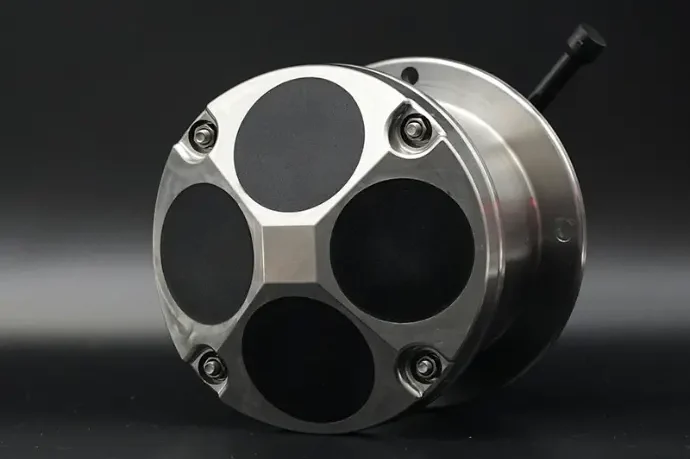
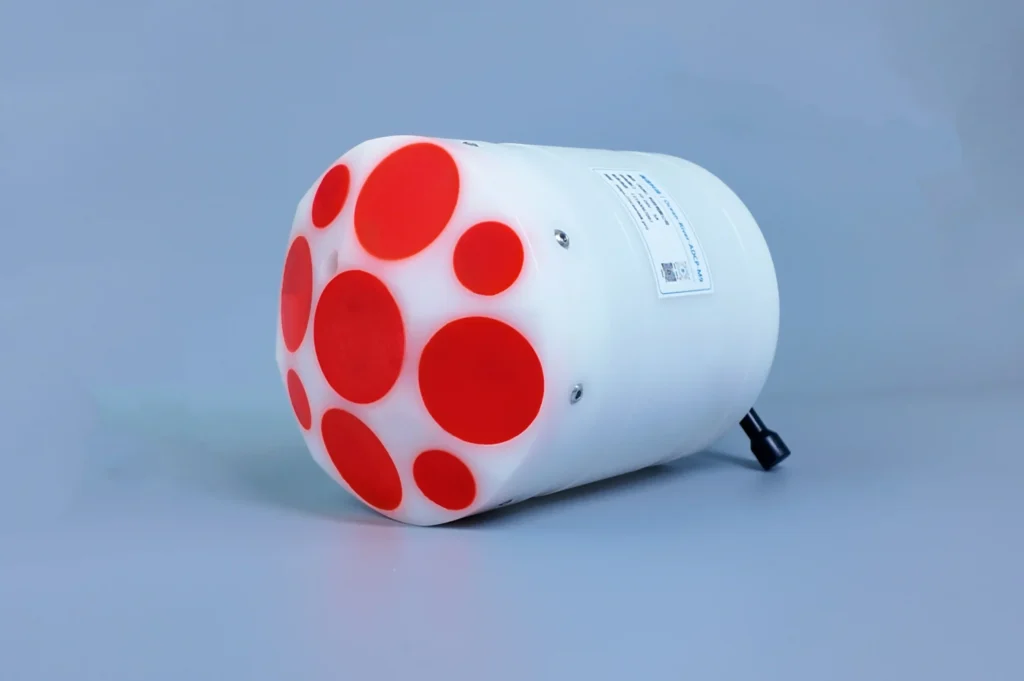
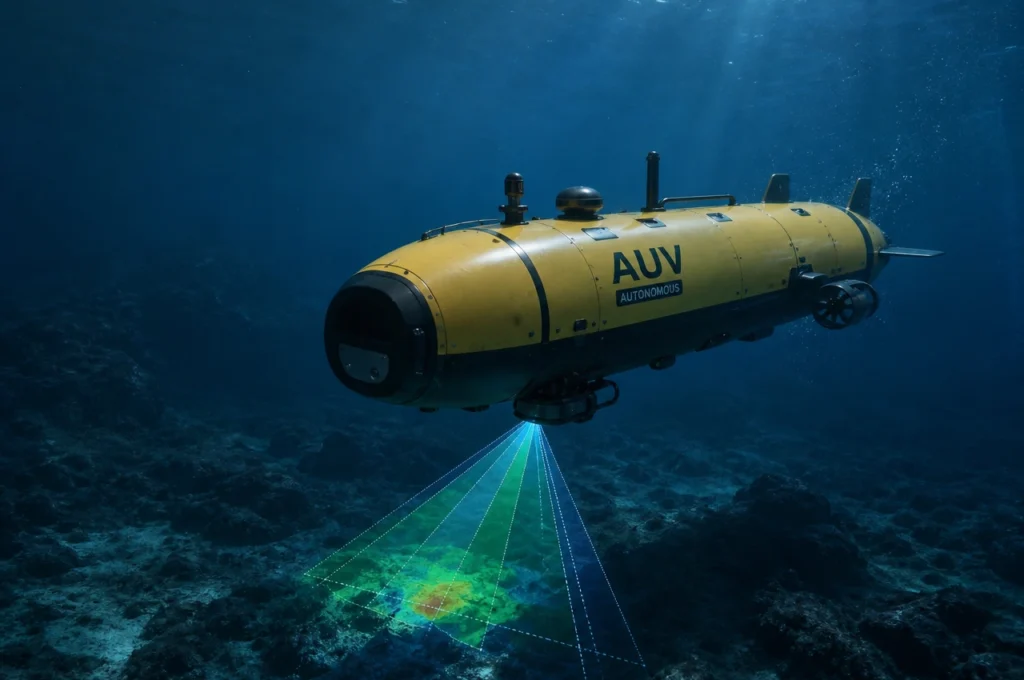
If you’re comparing ADCPs for sale, you’ve probably noticed that headline prices can differ by tens of thousands of dollars — and the cheapest option on paper often becomes the most expensive one in the field. When evaluating an Acoustic Doppler Current Profiler (ADCP) or Doppler Velocity Log (DVL), the natural instinct is to line up specification sheets: frequency, beam count, depth rating, accuracy. Then purchasing compares quotes. Then the numbers land in a spreadsheet, and the conversation narrows to a single column.
But anyone who has managed a field deployment knows: the purchase price is the smallest number that matters.
A 2025 survey of hydrological agencies across 14 countries found that 63% of ADCP-related operational delays traced back to factors decided before the purchase order was signed — lead time, training, integration complexity, and service responsiveness. None of these appear on a quote. Yet they determine the real ADCP price far more than the invoice line item ever will.
This article unpacks seven hidden cost drivers that define what you actually pay for an ADCP over its service life. Each section includes concrete evaluation questions you can bring to your next supplier conversation.
1. Lead Time: The Cost of Waiting
Hidden cost: 8–14 weeks of idle operations
An ADCP listed for sale with an attractive headline price but a three-month lead time isn’t just late — it misses measurement windows. In river hydrology, the difference between a May deployment and an August deployment is an entire flood season of lost data. In offshore wind, a delayed current profiler can stall a UXO survey vessel at a daily standby rate that dwarfs the ADCP’s invoice value.
What drives lead time variation?
- Manufacturing geography: Suppliers with production and engineering co-located under one roof can turn engineering changes in hours. When R&D, assembly, and calibration are separated by time zones, every revision cycles through days of coordination.
- In-stock philosophy: Some manufacturers build to order. Others maintain buffer inventory of core models. The difference for a customer is 3 days vs. 12 weeks.
- Customization responsiveness: Need a non-standard transducer frequency or a specific connector? A manufacturer with in-house transducer fabrication can deliver a custom unit inside a standard lead time — not instead of it.
Field Example
Mekong River Basin — Flood Season Monitoring
→ A hydrological authority needed 8 river ADCP units before monsoon onset (June).
→ Supplier A quoted 14-week lead time — delivery in September, missing the entire measurement window.
→ Switching to a supplier with in-stock 600kHz units meant deployment by late May — capturing the full flood season dataset.
→ The “cost” was not the unit price difference. It was a year of missing data vs. a year of complete data.
Questions to ask suppliers:
- “Which models do you hold in stock right now — not ‘available to order,’ but physically in inventory?”
- “If I need a parameter change mid-order, how many days does engineering sign-off take?”
- “What’s the longest lead-time component in this unit, and where is it sourced?”
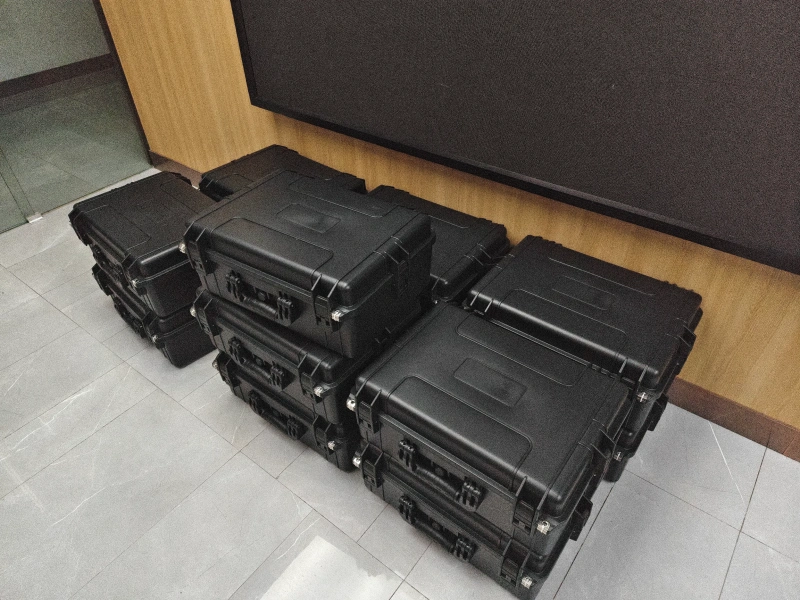
ADCPs to be delivered soon by Oceantek
2. Training & Onboarding: The Learning Curve Tax
Hidden cost: 2–5 extra operator-days per unit
A “budget” ADCP that requires a week of operator training is not budget. A unit with an intuitive interface, multi-language software, and clear diagnostic feedback pays for itself within the first two deployments — not because it’s cheaper, but because your team spends more time measuring and less time troubleshooting.
Where the hours go
| Training Dimension | High-Friction Experience | Low-Friction Experience |
|---|---|---|
| Mounting & calibration | Proprietary jigs, multi-step manual alignment | Standard mounting patterns, guided calibration wizard |
| Data output format | Proprietary binary, vendor-locked post-processing | Open-standard formats (MATLAB, Python, CSV-ready) |
| Diagnostic feedback | Cryptic error codes, manual lookup | Plain-language diagnostics with suggested actions |
For a hydrographic survey team running 5–10 ADCP units, the difference between a one-day onboarding and a five-day onboarding is 40 operator-days per year. At field rates, that alone can exceed the hardware cost.
Questions to ask:
- “Can a new operator run a standard discharge measurement after one day of training?”
- “Is your software available in the language my field crews actually speak?”
- “If we hire a new technician next year, is retraining included or billed separately?”
3. Integration & Ecosystem Lock-In
Hidden cost: System replacement cascades and proprietary protocol traps
ADCPs rarely operate alone. They feed into positioning systems (GNSS, USBL), CTD chains, telemetry links, and data loggers. A unit that speaks only a proprietary protocol forces you to either replace the surrounding infrastructure or build custom middleware. Either path adds cost that never shows up on the ADCP quote.
The compatibility checklist
- Data protocols: Does the unit output standard NMEA formats, or only a vendor-specific binary stream?
- Physical interfaces: RS-232/422, Ethernet, or a proprietary connector that requires an adapter cable at €300 each?
- Power requirements: Wide-range DC input (9–36V) or a narrow window that demands a dedicated power supply?
- Software ecosystem: Can you process data in Python, MATLAB, or QPS — or only in the manufacturer’s licensed software?
Field Example
North Sea — Multi-Vendor Survey Vessel Integration
→ A survey contractor replaced an aging ADCP on a vessel that already had integrated GNSS, MRU, and acquisition software from three different vendors.
→ The new ADCP output standard NMEA telegrams over Ethernet — the vessel’s existing QINSy setup recognized it immediately. Zero middleware. Zero integration days.
→ The alternative would have been a proprietary protocol unit requiring a dedicated topside processor and 3–5 days of software integration — at survey vessel day rates, a cost that eclipses the ADCP itself.
Questions to ask:
- “Show me the data output format. Can I parse it with a standard Python script?”
- “Which third-party acquisition software has this unit been tested with?”
- “If I switch ADCP suppliers in five years, does anything else in my system need to change?”
4. After-Sales Response: When Hours Matter
Hidden cost: Mission downtime measured in days vs. hours
Underwater acoustic equipment operates in a hostile environment — saltwater, pressure, biofouling, vessel vibration. Failure is not a question of if, but when. And when it happens, the difference between a 24-hour response and a 2-week email chain across time zones is the difference between a footnote and a failed campaign.
This is where manufacturing geography becomes an operational advantage. A supplier with engineering, production, and support in one facility can triage a technical issue, fabricate a replacement part, and ship it — without the multi-hop coordination that stretches a simple fix into weeks of downtime.
What real after-sales support looks like
- Pre-delivery sea trials: The unit arrives having already passed real-ocean validation — not just a lab bench test. Vibration, attitude calibration, acoustic performance under wind and waves are verified before you touch the unit.
- 7×24 technical access: Not a ticket system that queues behind enterprise contracts. Direct engineer access when a mission-critical unit is down.
- Local spare parts: International courier for a €50 O-ring is a €200 line item and a 5-day wait. A local support hub turns that into an overnight delivery.
Questions to ask:
- “If my unit fails at 10 PM local time on a Saturday, who answers the phone?”
- “Where is the nearest spare-parts depot to my operational area?”
- “Do you run real at-sea trials on every unit before shipping, or only spot-checks?”
5. Fleet Consistency: The Multi-Frequency Advantage
Hidden cost: Managing 4 suppliers = 4× training, 4× spares, 4× support contracts
Most organizations don’t buy one ADCP. They buy a fleet across frequencies and deployment modes: a 600kHz unit for shallow rivers, a 300kHz for coastal surveys, perhaps a 75kHz for deep-ocean moorings, and a DVL for AUV navigation.
When these come from four different manufacturers, the hidden tax multiplies:
- Training: Four different software packages. Four different calibration workflows. Four different diagnostic interfaces.
- Spares: Four sets of cables, mounting hardware, and consumables — none interchangeable.
- Support: Four vendor relationships to manage. Four renewal dates. Four phone numbers.
A supplier with a full-frequency portfolio — from 75kHz deep-water to 600kHz shallow-water, including DVL and single-point current meters — collapses four learning curves into one. The operational savings come from standardization, not from any single unit’s price tag.
| Scenario | Multi-Vendor Fleet | Single-Vendor Fleet |
|---|---|---|
| Software platforms | 4 different UIs to learn | 1 unified acquisition & processing suite |
| Spare parts | 4 SKU sets, no cross-compatibility | Shared cables, mounts, and consumables |
| Operator training | 4 separate sessions, 4× cost | One training covers all frequencies |
| Service escalation | 4 different support portals | One point of contact, one SLA |
| Data integration | 4 output formats, 4 parsers | Consistent data structure across all units |
Oceantek supplies multi-frequency ADCPs, including:
- 75kHz ADCP for deep sea and marine survey: ADCP-75-DR-PA4 , ADCP-75-SC-PA4
- 600kHz ADCP for hydrologic monitoring:ADCP-600-DR-FA4 , ADCP-600-SC-FA4 , HADCP-600
- 300kHz ADCP for coastal and offshore survey:ADCP-300-DR-FA4 , ADCP-300-SC-FA4
- Dual-frequency ADCP for shallow water project: River-ADCP-M9
No matter which frequency ADCP you purchase, Oceantek provides complete supporting software, after-sales service and technical support.
6. Field-Proven Reliability: The Cost of Untested Equipment
Hidden cost: 1–3 redeployments when a unit fails mid-campaign
Spec sheets are written in controlled conditions. The real world has suspended sediment that attenuates acoustic signals, thermoclines that bend beams, and trawl nets that snag mooring lines. A unit that looks identical on paper can perform dramatically differently in the field — and the cost of discovering this mid-campaign is catastrophic.
Signals of field-readiness
- Comparative test reports: Has the manufacturer published side-by-side results against established reference instruments in real water bodies — not just lab tanks?
- Deployment diversity: Has the same unit been used in the Tibetan Plateau (4300m altitude, near-freezing), the Amazon (35°C, 3000 NTU turbidity), and the South China Sea (deep-water, high-salinity)? Environmental breadth is a proxy for engineering robustness.
- Fleet-scale track record: A single demo unit doing well is one thing. Hundreds of units operating across hydrological networks for multiple flood seasons is another.
Field Example
Flood Control Network — Multi-Year Consistency
→ A flood control authority deployed 30+ horizontal ADCP units across a major river basin for real-time discharge monitoring.
→ After three flood seasons, equipment consistency tests showed measurement deviation within ±1.5% across the entire fleet — comparable to reference instruments already in the network.
→ The “cost saving” wasn’t a lower unit price. It was not having to re-baseline the monitoring network every wet season.
Questions to ask:
- “Can you share a comparison test report against a TRDI/Nortek reference unit in conditions similar to my deployment?”
- “What’s the largest single-customer fleet of your ADCPs currently in operation?”
- “What’s your unit failure rate in the first 12 months of deployment?”
As a professional manufacturer of ADCPs, Oceantek is able to provide comparison test reports and equipment consistency reports:
7. The Replacement Cycle: When “Save Now” Means “Replace Sooner”
Hidden cost: 3–5 year premature replacement cycle
A well-built ADCP should serve for 7–10 years with routine maintenance. A unit that fails at year 4 because of transducer de-lamination, connector corrosion, or electronics degradation effectively doubles your per-year hardware cost — even if the purchase price was 30% lower.
Several design choices directly predict service life:
- Transducer material: Piezoelectric ceramic composition and bonding quality determine acoustic stability over years of thermal cycling and pressure exposure.
- Housing integrity: Titanium vs. engineered polymer vs. anodized aluminum — material choice affects corrosion resistance, depth rating, and biofouling resistance.
- Connector design: Wet-mateable, pressure-rated connectors with redundant O-ring seals vs. standard commercial connectors that become a single point of failure.
- Firmware updateability: Can the unit accept field firmware updates, or does every improvement require a return-to-factory?
Questions to ask:
- “What’s the oldest unit of this model still in active field service?”
- “Show me the transducer aging data — how does sensitivity drift over 5+ years?”
- “If a firmware update adds a new feature next year, can I apply it in the field?”
Hidden Cost Summary: What You See vs. What You Pay
When evaluating the true ADCP price, these seven factors collectively outweigh the purchase order by a wide margin. The table below summarizes what’s invisible on a quote — and what to look for instead.
| Cost Factor | Visible on Quote? | Real Impact | Decision Lever |
|---|---|---|---|
| Lead time | ❌ No | Missed seasonal measurement windows; idle vessel/crew costs | In-stock availability; manufacturing responsiveness |
| Training burden | ❌ No | Extra operator-days; higher error rates in early deployments | UI intuitiveness; multi-language support; structured training |
| Integration friction | ❌ No | Middleware development; ecosystem lock-in; future switching cost | Open protocols; standard connectors; third-party software compatibility |
| Service responsiveness | ❌ No | Extended mission downtime; data gaps in long-term records | Local support infrastructure; pre-delivery sea trials; 7×24 access |
| Fleet consistency | ❌ No | Multiplied training, spares, and support overhead across frequencies | Full-frequency portfolio from a single supplier |
| Field reliability | ❌ No | Failed deployments; re-baselining costs; reputational risk | Comparative test data; fleet-scale track record; environmental breadth |
| Service life | ❌ No | Premature replacement at 3–5 years instead of 7–10 | Materials quality; transducer aging data; field firmware updates |
Supplier Evaluation Checklist: The 7 Questions That Matter
Bring this to your next supplier conversation. A vendor who can answer all seven clearly and with evidence is one who understands that your real budget isn’t the purchase order — it’s the operational outcome. Because the real ADCP price reveals itself over years, not at checkout.
- In-stock status: Which models are physically in inventory today — not build-to-order?
- Operator readiness: How many hours from unboxing to first valid measurement for a new operator?
- Data portability: Can I process your output with standard open-source tools — no licensed software required?
- Support responsiveness: What’s your guaranteed response time for a mission-critical failure — and who backs it up locally?
- Portfolio coverage: Can you supply every frequency and deployment mode my organization needs over the next five years?
- Proof of performance: Share a comparison test against a reference instrument in conditions similar to mine — not a lab tank.
- Longevity evidence: What’s the oldest unit of this model still in active service, and what does its performance data look like?
The Real Bottom Line: ADCP Price Is a Five-Year Number
The ADCP market has four established global players, and the differences between them are not always visible on a specification sheet. What separates a cost-effective deployment from an expensive one is rarely the instrument price — it’s the procurement lead time, the operator learning curve, the integration friction, the service responsiveness, and the fleet-level consistency over years of operation.
Choosing a supplier is not a one-transaction decision. It’s a five-to-ten-year operational relationship. Evaluate accordingly.
An ADCP that arrives in three days instead of three months, that your operators master in an afternoon, that outputs data your existing software already understands, and that is backed by engineers who answer the phone when a flood is rising — that’s the ADCP with the lowest real price, regardless of what number appears on the invoice.
Looking for an ADCP? Find the Right Unit — Without the Hidden Costs
Contact our hydrology engineering team for a customized recommendation.
Continue Reading
- → Who Makes the Best ADCP? A Comparative Look at the Four Global Leaders
- → How to Buy a DVL: Reliable Manufacturer + In-Stock Supply + Solid After-Sales Support
- → How to Choose an ADCP for Oceanographic Research
- → ADCP Frequency Selection: 75kHz vs 300kHz vs 600kHz — A Complete Tutorial
- → Best ADCP Models for River Flow Measurement