
600kHz Doppler Velocity Log
DVL-600-PA5
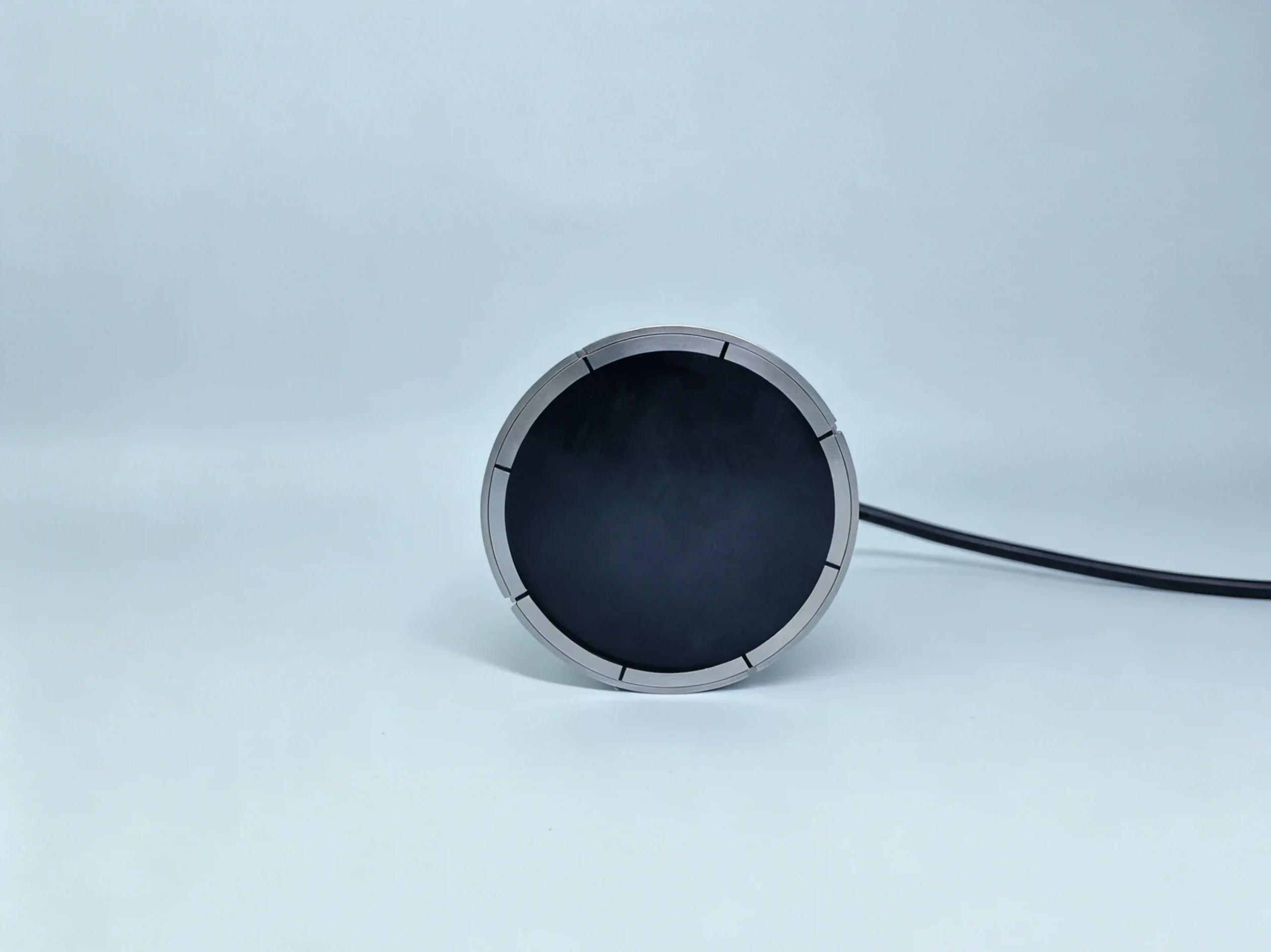
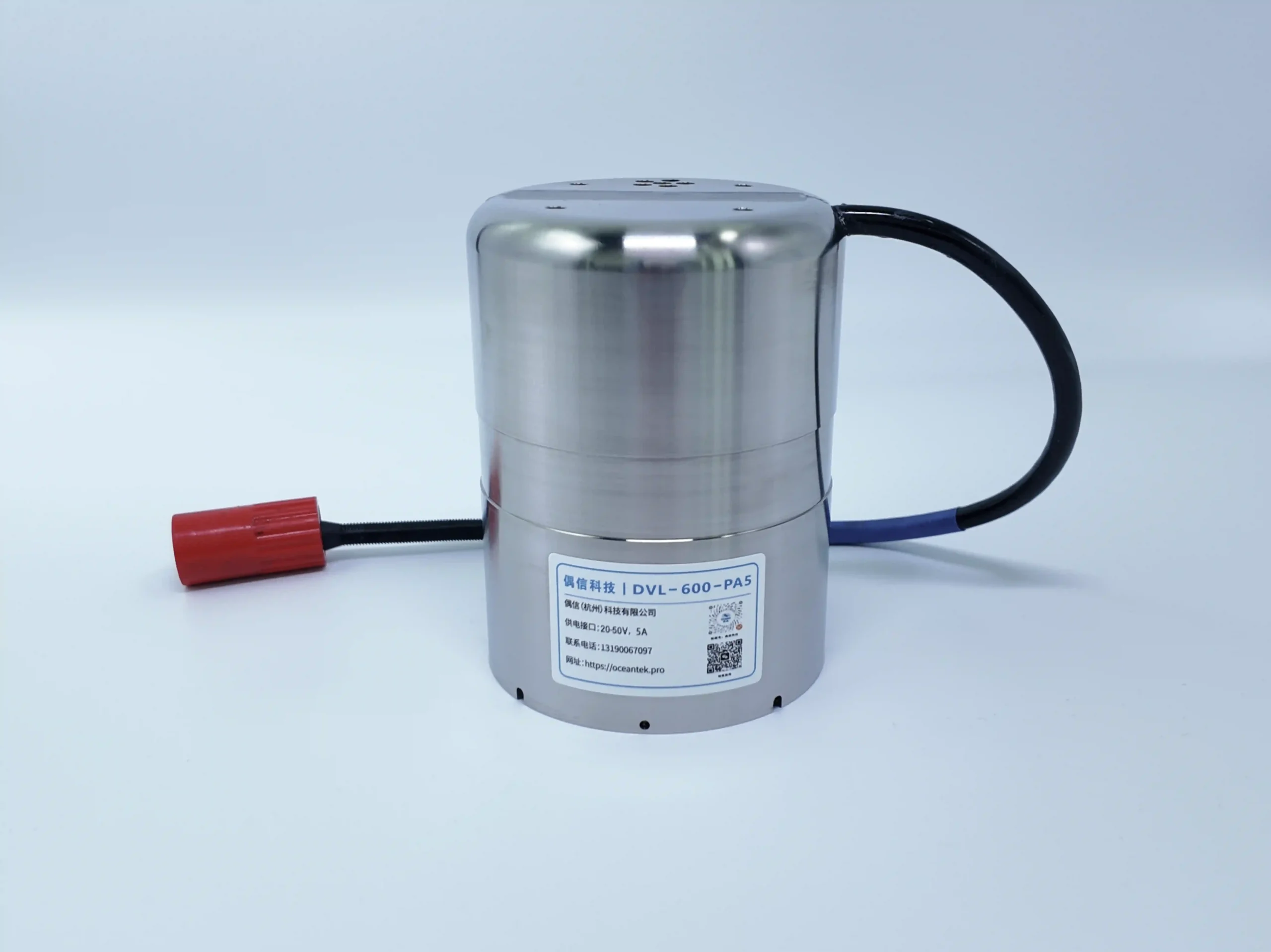
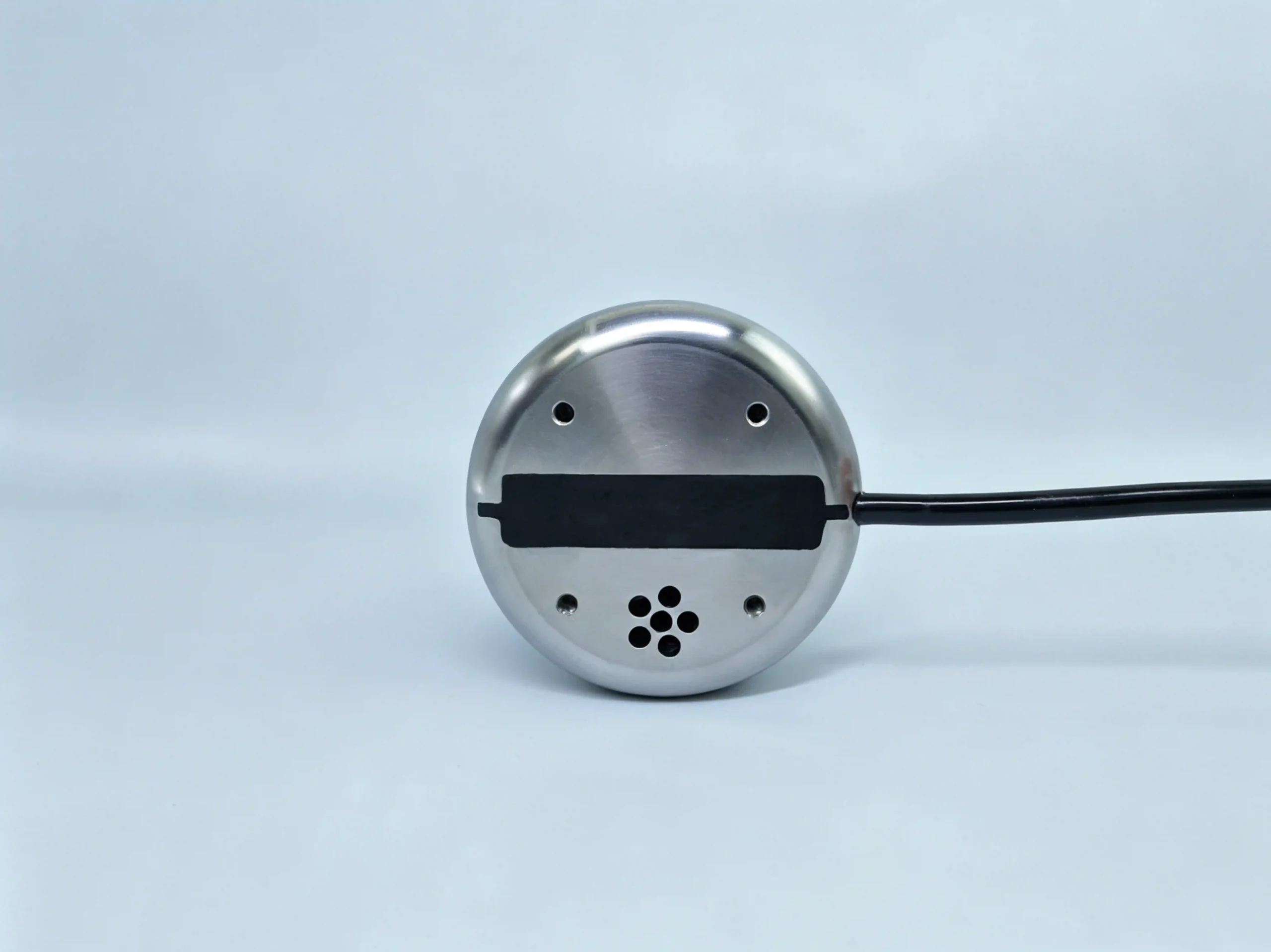
The DVL-600-PA5 is a 600kHz phased-array Doppler Velocity Log built for one job: telling an underwater vehicle exactly how fast it’s moving and how high it is above the seabed. With a planar phased-array transducer in a Φ92mm × 112mm titanium housing weighing under 1.8 kg, it fits into the smallest AUV payload bays and the tightest ROV tooling frames — without compromising navigation performance.
Overview
Bottom-track lock to 110m altitude at ±0.3% ± 3mm/s velocity accuracy. When the seabed drops out of range, it switches automatically to water-track mode. Standard RS-232/RS-422 serial output in PD0/PD6 format — plug directly into your INS. Built-in temperature, pressure, and attitude sensors provide the full navigation sensor suite in a single instrument.
Key Features
110m Bottom-Track Range
Matches the Teledyne RDI Workhorse 600kHz industry benchmark. 1 mm/s velocity resolution, ±2° direction accuracy, ±0.8° RMS compass.
Dual-Tracking: Bottom + Water
Automatic switching between bottom-track (≤110m altitude) and water-track (>110m). Seamless transition keeps your INS updated when the seabed drops out of range.
Φ92mm Ultra-Compact Titanium Housing
1.8 kg, Φ92mm × 112mm — the most compact DVL in its class. Flush-mounts into small AUV hulls and inspection-class ROV frames. Titanium alloy, depth-rated to 6,000m.
≤5W Average Power Draw
Optimized for battery-powered small unmanned platforms. Less power to the DVL means more endurance for your payload sensors and propulsion.
Phased-Array Transducer
Planar phased-array with electronic beam steering — flat transducer face, no protruding ceramic elements. Stable bottom-tracking in complex seabed terrain and turbid water.
Beam Angle 30° · Beam Width 3.5°
Wider beam angle than typical ADCPs — optimized for bottom-echo return strength on sloped or uneven seabed. Maintains lock where narrower beams would lose signal.
Two Tracking Modes, One Instrument
The DVL-600-PA5 switches automatically between modes based on altitude — no vehicle intervention needed. All DVL models are Direct-Reading: real-time serial output, vehicle-powered.
Bottom-Track Mode
0.7m – 110m Altitude
- 5-beam velocity relative to seabed
- ±0.3% ± 3mm/s navigation-grade accuracy
- Simultaneous altitude measurement
- Primary mode for 90% of AUV/ROV missions
- 30° beam angle for sloped terrain stability
Water-Track Mode
>110m Altitude · Automatic Fallback
- Velocity relative to water column
- Activates when bottom-lock is lost
- Keeps INS updated during deep-water transit
- Resumes bottom-track automatically when seabed returns
- Also outputs current profile data as secondary stream
Direct-Reading only. The DVL-600-PA5 outputs real-time velocity and altitude data via RS-232/RS-422 in PD0 / PD6 format.
Compatible with all major INS platforms
Specifications
| Category | Technical Specification | Parameter |
|---|---|---|
| Bottom Tracking | Depth Range | 0.7–110m (Height above seabed) |
| Measurement Accuracy | ±0.3% ± 3mm/s | |
| Resolution | 1mm/s | |
| Water Tracking | Depth Range | >110m (Height above seabed) |
| Transducer & Hardware | Operating Frequency | 600kHz |
| Data Output Rate | 2Hz | |
| Array Configuration | Planar Phased Array | |
| Beam Angle | 30° | |
| Beam Width | 3.5° | |
| Internal Storage | 64 GB Micro SD Card | |
| Depth Measurement | Altitude Measurement Resolution | 1mm/s |
| Altitude Measurement Accuracy | ±1% ± 0.5cm | |
| Communication | Communication Interface | RS-232 or RS-422 |
| Standard Sensors | Temperature Sensor | Range: -5℃~45℃; Accuracy: ±0.1℃ |
| Pressure Sensor | Range: Subject to depth rating; Accuracy: ±0.25% | |
| Attitude Sensor (Roll & Pitch) | Range: ±85°; RMS Accuracy: ±0.2°; Resolution: 0.1° | |
| Heading Compass Sensor | Range: 0–360°; RMS Accuracy: ±0.8°; Resolution: 0.1° | |
| Power Supply | Power Input Interface | 10–26V |
| Average Power Consumption | ≤5W | |
| Structure | Housing Material | Titanium Alloy |
| Environment | Operating Temperature | -5℃~45℃ |
| Storage Temperature | -40℃~70℃ | |
| Depth Pressure Rating | 1000m / 3000m / 6000m | |
| Physical Property | Weight (In Air) | ≤1.8kg |
| Overall Dimension | Φ92 × 112mm | |
| Optional | Available Options | - |
Applications
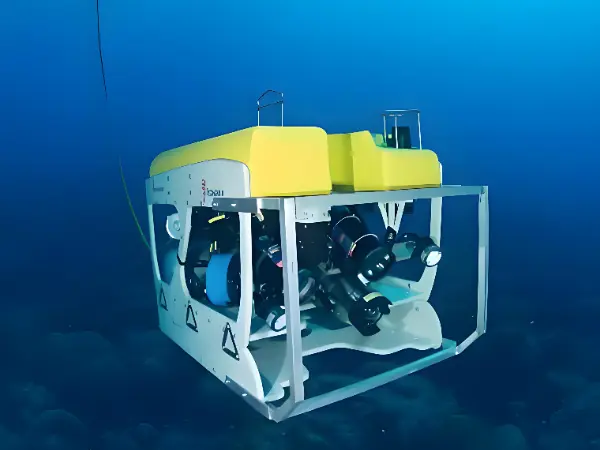
ROV underwater robot
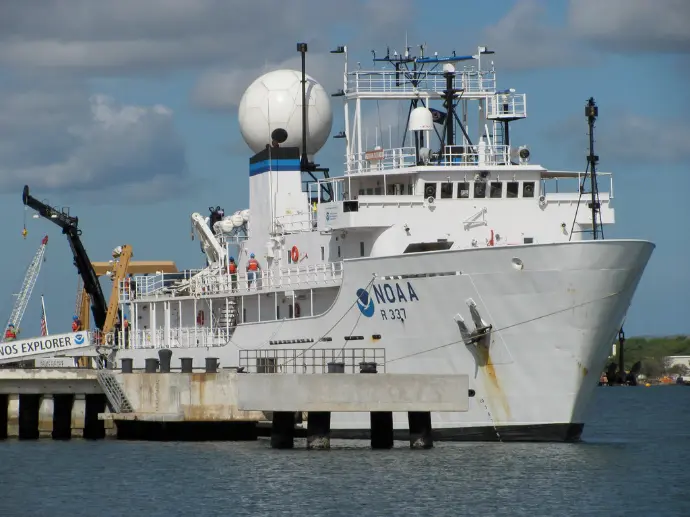
Oceanographic research vessel
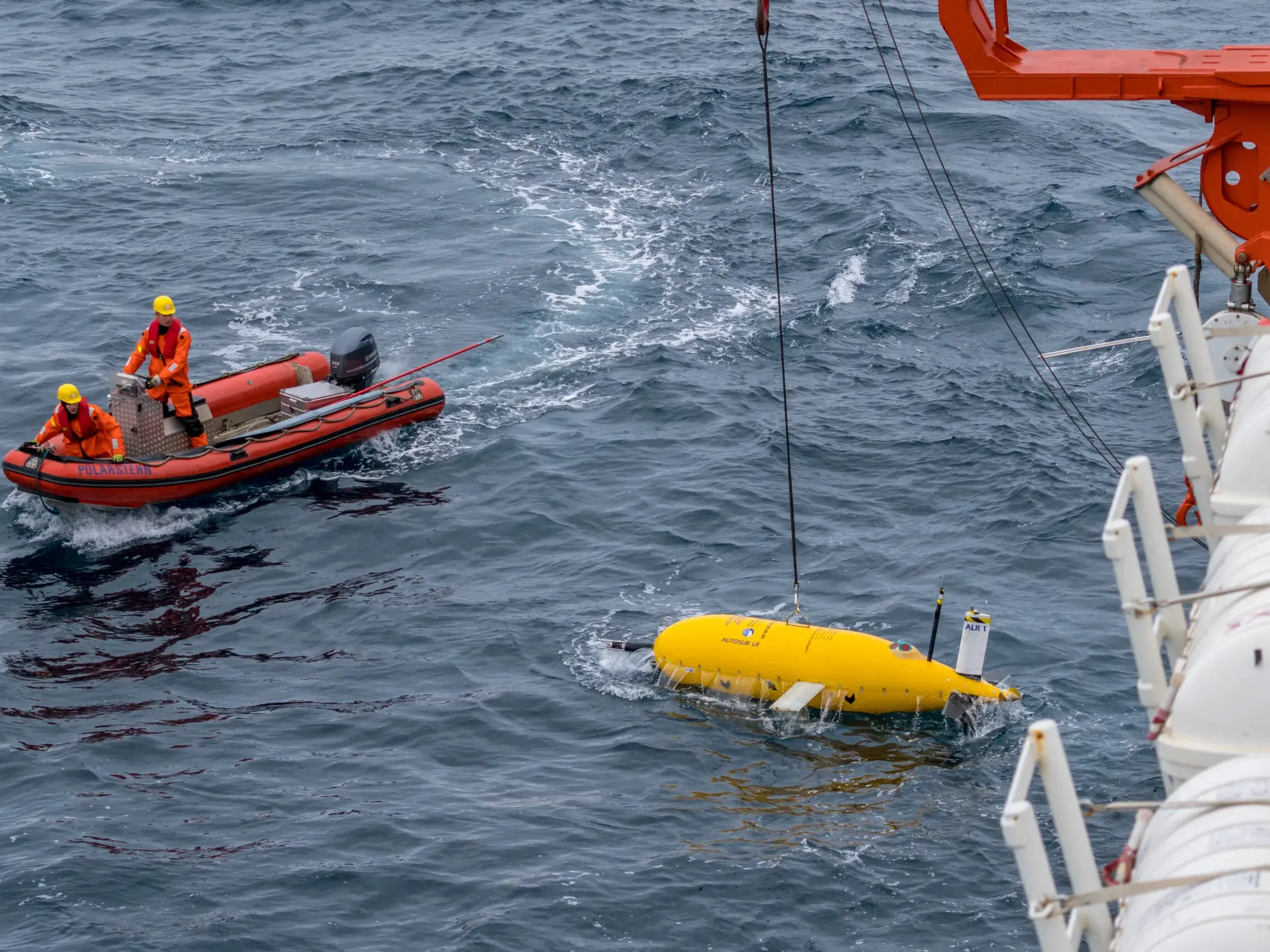
Autonomous Underwater Vehicle
Why Choose the DVL-600-PA5
Three reasons engineers choose the PA5 over other DVL options.
Fits Where Others Won't
With Oceantek, you pay for titanium, electronics, and engineering. Typical savings: 30% or more vs equivalent-spec Teledyne RDI or Nortek instruments.
Extends Your Mission, Not Your Power Budget
≤5W average draw means the DVL isn’t the reason your AUV surfaces early. On a typical inspection-class AUV, switching from a standard DVL to the PA5 can add 15–25% more survey time on the same battery.
Phased-Array Reliability at Depth
Planar flat transducer face — nothing protrudes to catch on handling gear or launch-and-recovery lines. Electronic beam steering means no moving parts to calibrate or wear out. Titanium housing to 6,000m as standard.
Frequently Asked Questions
Quick answers about the DVL-600-PA5
How do I choose between the DVL-600-PA5 and the DVL-600-FA4?
Both are 600kHz DVLs with the same 110m bottom-track range and velocity accuracy. The difference is size and weight. The PA5 is Φ92mm, 1.8 kg — designed for small AUVs, gliders, and compact ROVs where volume is extremely constrained. The FA4 is a piston transducer in a larger housing — better suited for work-class ROVs and larger AUVs where space is not the limiting factor. Choose the PA5 for compact platforms; choose the FA4 for standard installations where cost-effectiveness is the priority.
What INS / navigation systems does the PA5 integrate with?
Does the PA5 require a Self-Contained (battery) configuration for autonomous vehicles?
No. All DVL models, including the PA5, are Direct-Reading only — they draw power from the vehicle’s supply (10–26V DC) and output velocity data in real time via serial connection. There is no internal battery option. This is standard for navigation sensors: the DVL is an always-on subsystem powered by the vehicle bus, same as your INS, depth sensor, and altimeter.
What happens when bottom-lock is lost beyond 110m?
The DVL automatically switches to water-track mode — measuring velocity relative to the water column at a configurable distance from the transducer (typically 5–10m). Accuracy is slightly lower and subject to currents, but it keeps your INS continuously updated. As soon as the seabed returns within range, bottom-lock resumes automatically. No vehicle or pilot intervention needed.
Get a Quick quote
Tell us about your project and we’ll provide a customized quotation within 24 hours — including recommended configuration, lead time, and shipping.
Other DVLs
DVL-600-FA4
600kHz piston DVL with 4-beam Janus configuration. 110m bottom-track, 20° beam angle for strong returns on soft seabeds. The cost-effective workhorse for work-class ROVs and large AUVs. Direct-Reading.
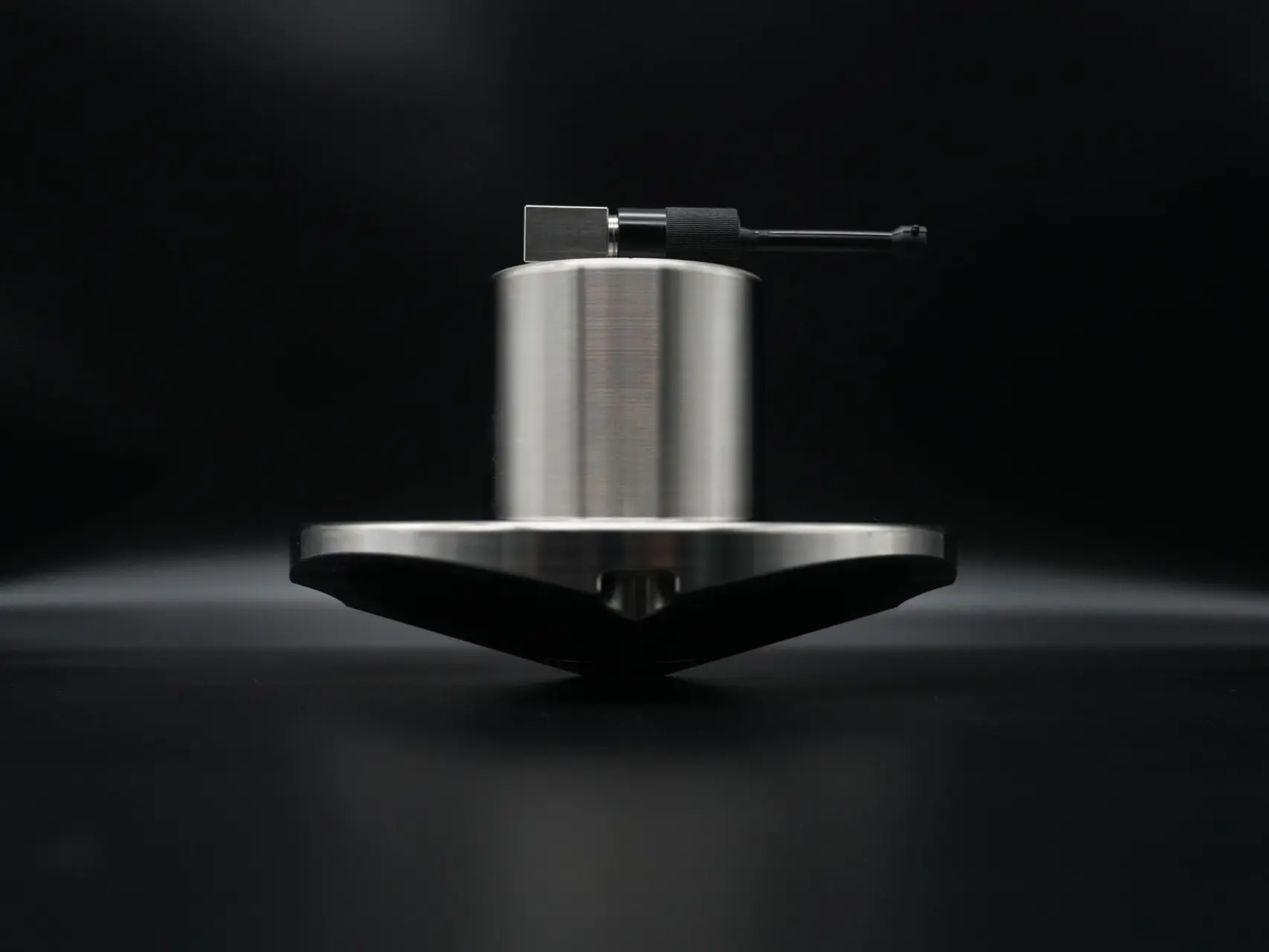
DVL-300-FA4
300kHz deep-water DVL — 220m bottom-track, double the range of 600kHz models. For AUVs and ROVs operating beyond the continental shelf. Titanium housing to 6,000m. Direct-Reading.