
600kHz ADCP Current Profiler
Ocean-ADCP-600-PA5
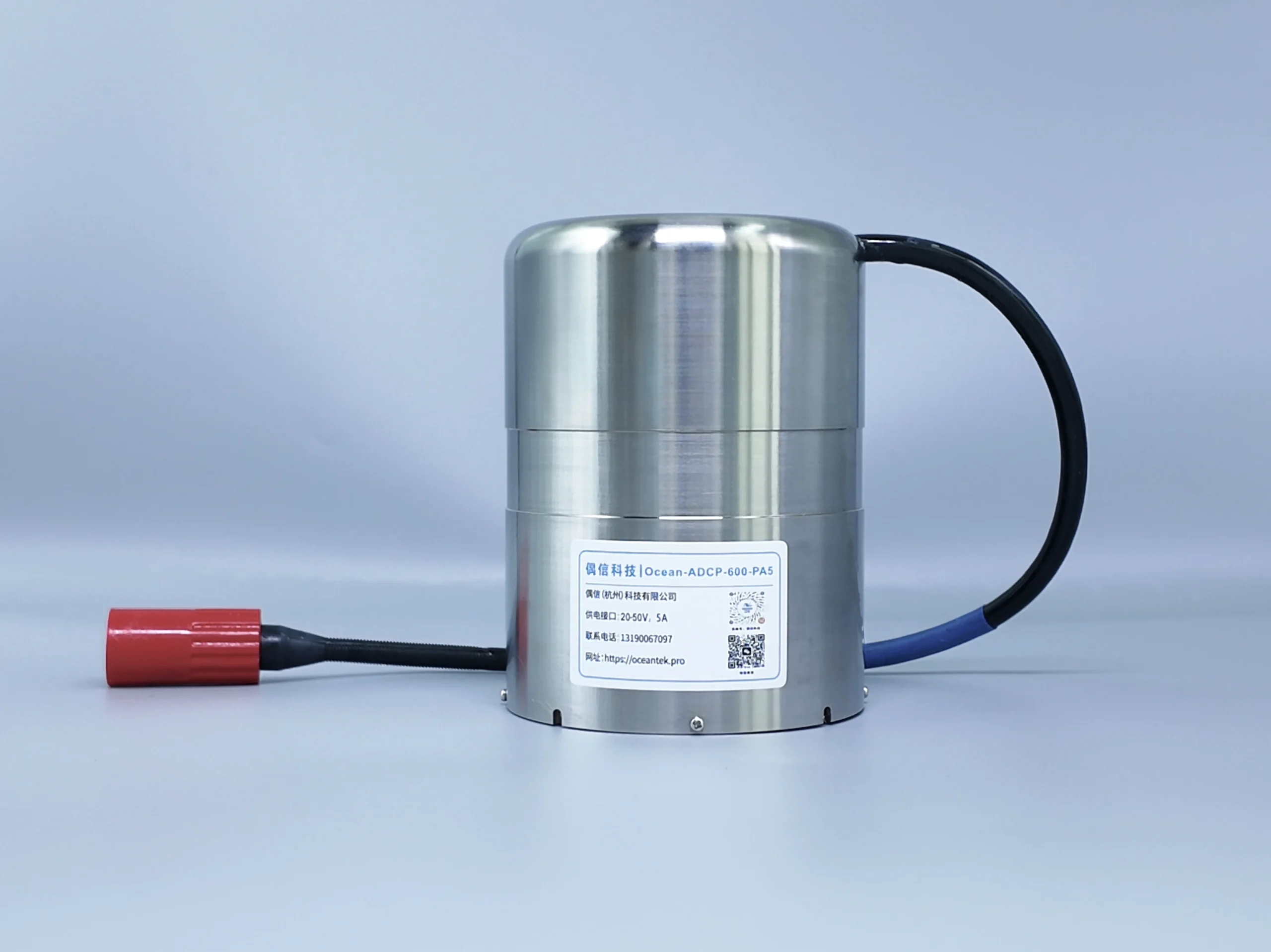
The Ocean-600-ADCP-PA5 delivers the same 600kHz profiling performance as the FA4 piston model — in a significantly smaller, lighter, and more power-efficient phased-array package. With a Φ92mm diameter and ≤5W power consumption, it is designed for deployment scenarios where space is tight and every watt counts: buoys, autonomous vehicles, and compact fixed platforms.
Overview
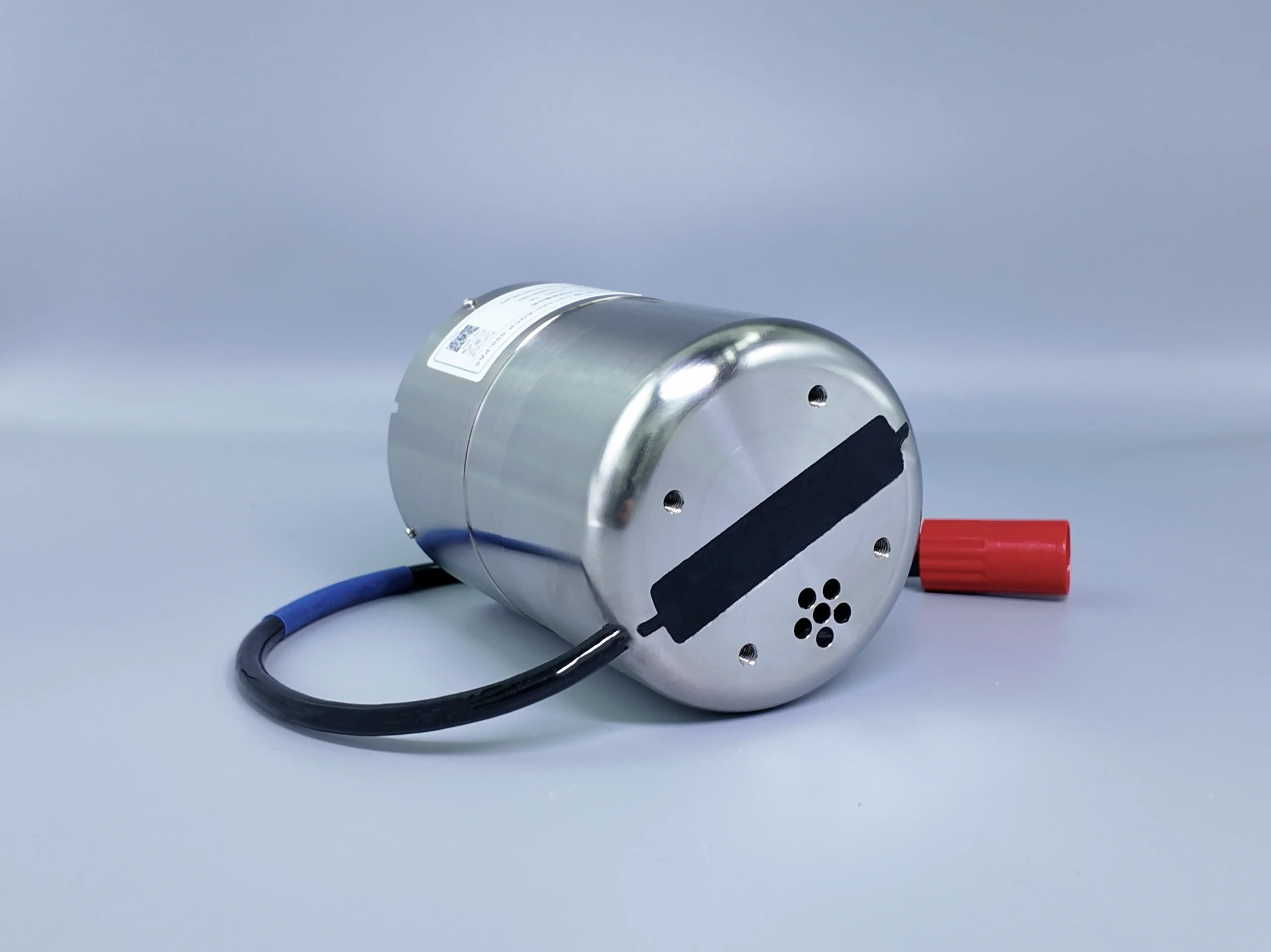
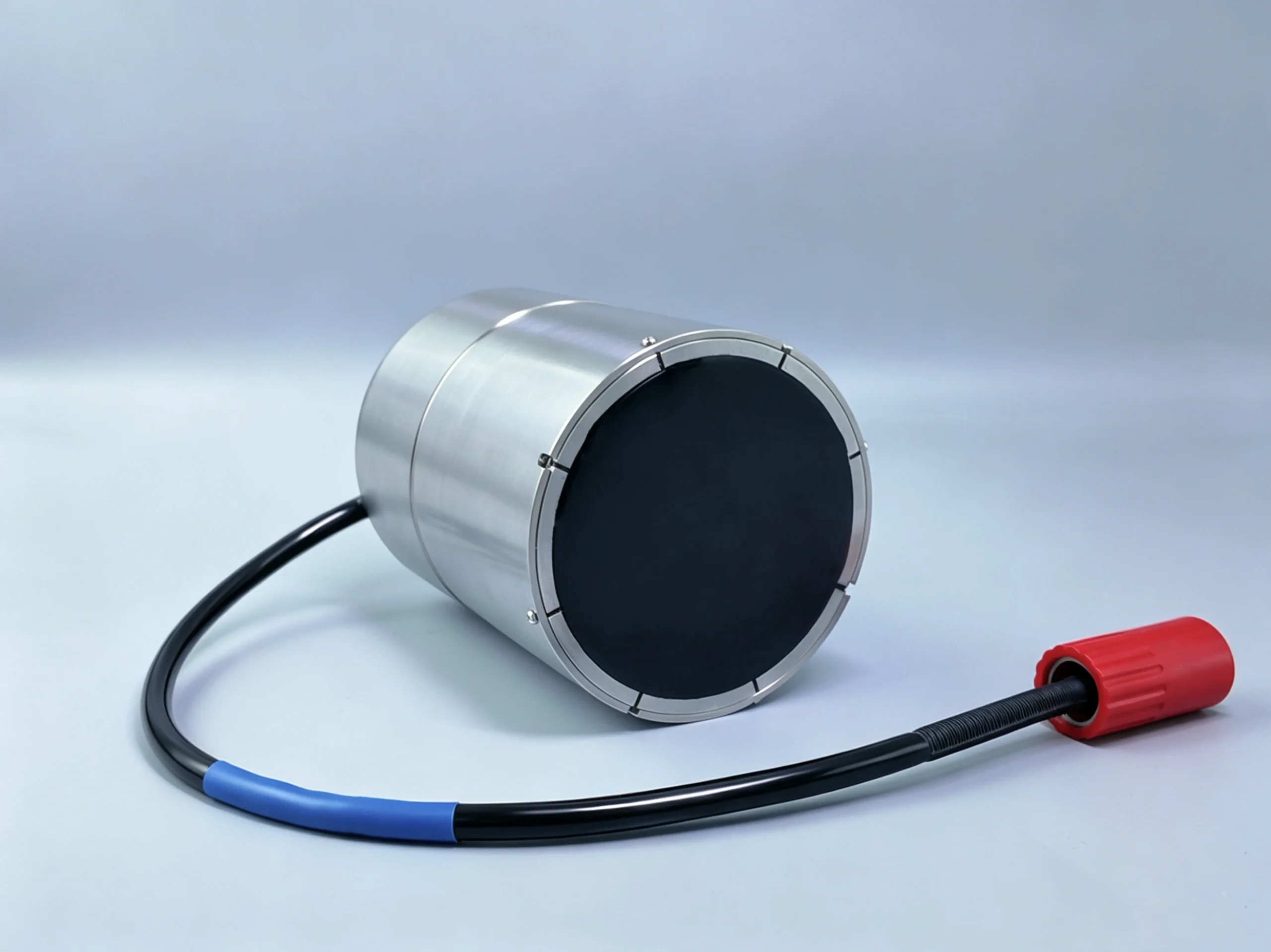
Built around a 5-beam Janus-configuration phased-array transducer with electronic beam steering, the PA5 achieves precise velocity measurement with a flat transducer face — no protruding ceramic elements. The titanium alloy housing is pressure-rated to 6,000m. Available in Direct-Reading (cabled real-time) and Self-Contained (battery autonomous) configurations.
Key Features
High Accuracy — ±0.3% ±3 mm/s
Matches the Teledyne RDI Workhorse 600kHz industry benchmark. 1 mm/s velocity resolution, ±2° direction accuracy, ±0.8° RMS compass.
70m Profiling Range at 600kHz
The same high-resolution 600kHz profiling reach as the FA4 piston model.No range trade-off for the compact form factor.
Bottom Tracking & Navigation
Bottom tracking range from 0.8 m to 120 m enables stable position and velocity reference in shallow-to-medium depth waters, ideal for nearshore and river applications.
Phased-Array Beam Steering
Electronic beam forming on a flat transducer face — no protruding ceramic
elements, no moving parts. Beam alignment remains stable over long deployments.
Ultra-Compact Form Factor
Φ92mm micro-casing — the most compact 600kHz ocean ADCP in its class.Fits into buoy wells, AUV payload bays, and tight platform mounting points where a standard-diameter ADCP won’t go.
Ultra-Low Power Consumption
≤5W in standard operation — approximately half the power draw of a comparable piston-type ADCP. Enables longer autonomous deployments on battery.
Specifications
| Category | Technical Specification | Parameter |
|---|---|---|
| Velocity & Direction Measurement | Operation Mode | Direct Reading |
| Underwater Profile Range (Broadband / Narrowband) | 55m / 70m | |
| Current Measurement Accuracy | ±0.3% ± 3mm/s | |
| Velocity Resolution | 1mm/s | |
| Velocity Range | ±5.0 m/s (Default); ±20.0 m/s (Max) | |
| Flow Direction Range | 0-360° | |
| Flow Direction Accuracy | ±2° | |
| Number of Cells | 1 - 255 | |
| Cell Size | 0.5m - 4m | |
| Data Output Rate | 2Hz (No Bottom Track); 1Hz (With Bottom Track) | |
| Bottom Tracking | Depth Range | 0.7 - 110m (Height above seabed) |
| Measurement Accuracy | ±0.3% ± 3mm/s | |
| Resolution | 1mm/s | |
| Transducer & Hardware | Operating Frequency | 600kHz |
| Configuration | Planar Phased Array | |
| Beam Angle | 30° | |
| Beam Width | 3.5° | |
| Internal Storage | 64 GB Micro SD Card | |
| Depth Measurement | Altitude Measurement Resolution | 1mm/s |
| Altitude Measurement Accuracy | ±1% ± 0.5cm | |
| Communication | Communication Interface | RS-232 or RS-422 |
| Temperature Sensor | Range: -5°C to 45°C; Accuracy: ±0.1°C | |
| Standard Sensors | Pressure Sensor | Range: According to depth rating; Accuracy: ±0.25% |
| Attitude Sensor (Roll & Pitch) | Range: ±85°; RMS Accuracy: ±0.2°; Resolution: 0.1° | |
| Heading Compass Sensor | Range: 0-360°; RMS Accuracy: ±0.8°; Resolution: 0.1° | |
| Power Supply | Power Supply Interface | 20-50V |
| Average Power Consumption | ≤5W | |
| Structure | Housing Material | Titanium Alloy |
| Environment | Operating Temperature | -5°C - 45°C |
| Storage Temperature | -40°C - 70°C | |
| Pressure Depth Rating | 1000m / 3000m / 6000m | |
| Physical Properties | Weight (in Air) | ≤1.8kg |
| Dimensions | Φ92 × 112mm | |
| Optional | Available Options | External Battery, Bottom Track Function, AC / DC Power Converter |
Applications
Ocean current observations
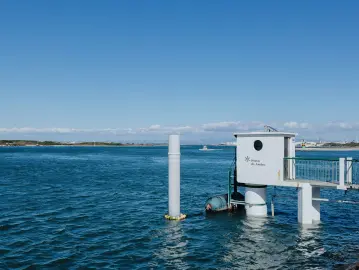
Coastal Hydrological Survey

Marine Engineering Survey
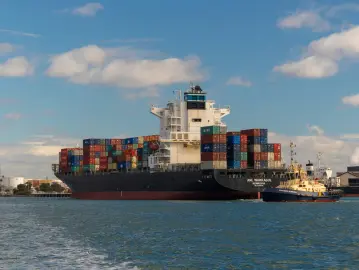
Port and Channel Monitoring
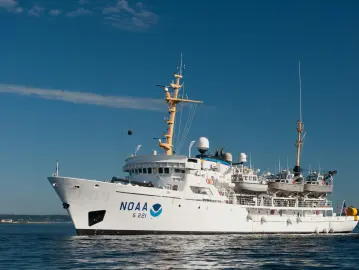
Marine Science Research
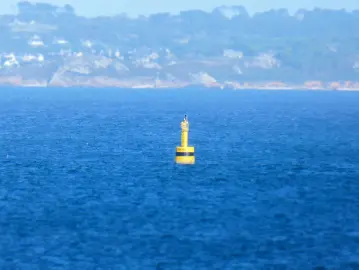
Ocean Observation Platform
Why Choose This Model
Φ92mm micro-casing
the most compact 600kHz ocean ADCP available. Fits into buoy wells, AUV payload bays, and tight mounting points where a standard-diameter instrument won’t go.
≤5W power consumption
roughly half the draw of a piston-type 600kHz ADCP. Means smaller solar panels for fixed installations, longer endurance on battery packs, and less thermal load in enclosed payload bays.
Phased-array precision
flat transducer face with electronic beam steering. No protruding ceramic elements to damage during handling, and beam angles that stay calibrated over multi-month deployments without mechanical drift.
Learn More About 600kHz ADCPs
In-depth guides, comparisons, and real-world data to help you make an informed decision.
Physics-based comparison: range, resolution, power trade-offs
Every parameter decoded: what each spec means for your project
Complete guide to phased array ADCP technology
Nortek vs SonTek vs TRDI vs Oceantek – side-by-side analysis
Practical buyer’s analysis: performance, price, and service comparison
7 hidden cost drivers beyond the purchase price
Frequently Asked Questions
Quick answers about the Ocean-ADCP-600-FA4
How is the Ocean-600-ADCP-PA5 different from the Ocean-600-ADCP-FA4?
Both are 600kHz instruments with the same 70m profiling range. The difference is the transducer and packaging. The PA5 uses a phased-array — it’s smaller (Φ92mm), lighter, and draws less power (≤5W). The FA4 uses a piston transducer — it’s larger but more cost-effective. Choose the PA5 for space- or power-constrained platforms. Choose the FA4 for general-purpose use where budget is the priority.
If the range and frequency are the same, why would I pay more for the PA5?
Three reasons: (1) If your mounting location can’t fit a standard-diameter ADCP — common on compact buoys and small AUVs. (2) If your power budget is limited — the ≤5W draw means smaller solar panels or longer battery endurance. (3) If weight matters — the PA5 is noticeably lighter, reducing load on buoy masts and vehicle frames. If none of these apply, the FA4 gives you the same profiling data at a lower cost.
Can this be used in a river or canal?
The PA5 is designed for marine environments. For river discharge measurement, the River-ADCP-M9 is purpose-built for shallow-water hydrology and ISO 748-compliant surveys. For fixed-station river monitoring, the HADCP-600 is the correct instrument. Using a 600kHz ocean ADCP in very shallow fresh water is possible but not optimal.
What does "phased-array" mean in practical terms?
Unlike a piston transducer that physically vibrates to generate a beam, a phased-array uses multiple small ceramic elements on a flat face. By controlling the phase delay between elements electronically, the beam is steered without any moving parts. The result: a flat transducer face (no protruding elements), more compact housing, and beam angles that stay stable over time — particularly valuable for long-duration deployments.
Get a Quick quote
Tell us about your project and we’ll provide a customized quotation within 24 hours — including recommended configuration, lead time, and shipping.
Other Ocean ADCPs
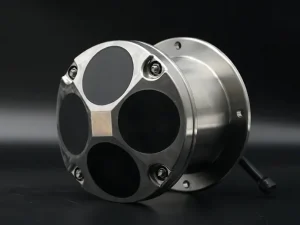
Ocean-ADCP-600-FA4
600kHz piston ADCP for shallow-water coastal profiling. 70m range, 0.25m blind zone — the highest-resolution instrument in the Ocean ADCP lineup. DR & SC configurations.
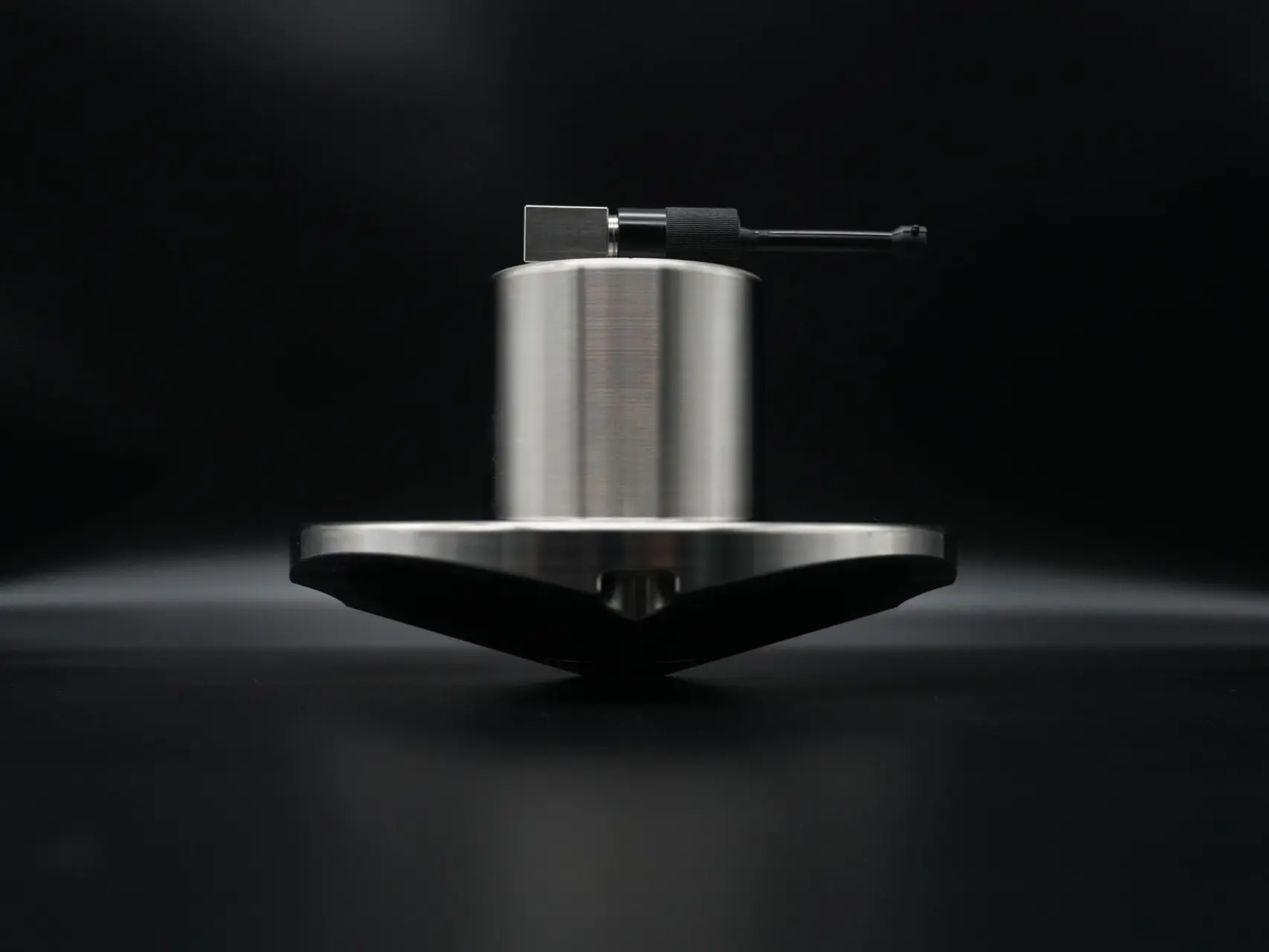
Ocean-ADCP-300-FA4
300kHz piston ADCP — the most versatile in the lineup. 220m range covers the full continental shelf. The default choice for offshore wind metocean campaigns and research vessel surveys. DR & SC.
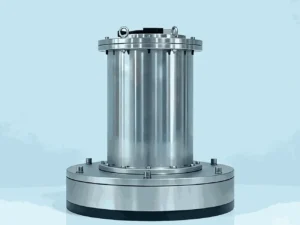
Ocean-ADCP-75-PA4
75kHz phased-array ADCP for deep-ocean profiling. 600m range, 6,000m-rated titanium housing. Built for abyssal mooring arrays and basin-scale circulation studies. DR & SC.