Introduction
If you’ve ever stood on the deck of a survey vessel watching a current meter fail to lock onto the bottom — or sat in front of a screen waiting for data that should have arrived five minutes ago — you know the cost of an instrument that isn’t purpose-built for the job.
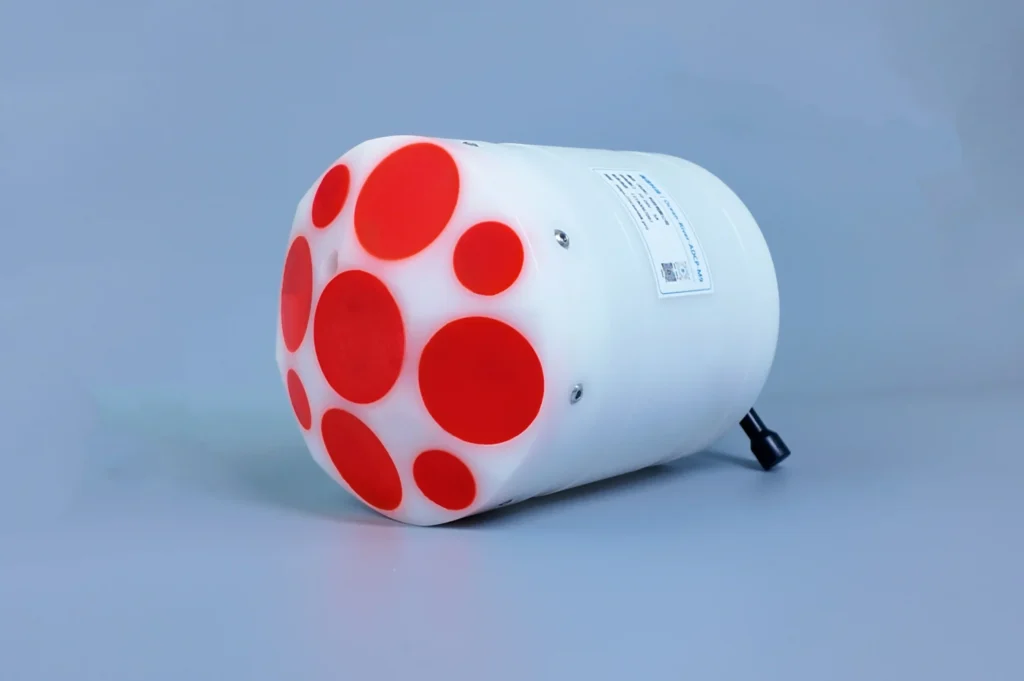
The Oceantek ADCP-600-DR-FA4 is a 600 kHz direct-reading Acoustic Doppler Current Profiler that has been quietly gaining traction among hydrographic surveyors, hydrological monitoring agencies, and coastal engineers. It wasn’t designed to compete on brand recognition. It was designed to compete on data quality, deployment speed, and total cost of ownership.
In this article, we’ll walk through the three most common pain points in real-time current measurement — and how this instrument addresses each one. We’ll then dig into the full technical specifications, compare it against the industry benchmark, and provide a practical decision framework to help you determine whether it’s the right fit for your next project.
Part 1: The Problem — What Most ADCP Users Struggle With
Before discussing any single instrument, it’s worth acknowledging the frustrations that hydrographers, hydrologists, and ocean engineers deal with every field season. These are not hypotheticals — they are recurring issues reported across user communities, conference Q&A sessions, and equipment tender documents.
Pain Point #1: “The Data Arrives Too Late”
Traditional self-contained ADCPs require instrument retrieval before data can be offloaded. In time-sensitive operations — dredging monitoring, flood forecasting, construction surveys — waiting hours or days for data isn’t just inconvenient; it defeats the purpose of the measurement.
The consequence: Decisions get made on incomplete information. Survey lines get re-run. Budgets inflate.
What a direct-reading ADCP does differently: Real-time data transmission via cable means current velocity, direction, and water depth appear on your screen the moment each ping returns. No retrieval. No post-processing. No waiting.
Pain Point #2: “One Instrument Can’t Cover All Our Sites”
Many organizations maintain separate instrument inventories for different environments — shallow rivers, mid-depth estuaries, and deep coastal transects. This multiplies maintenance costs, training overhead, and logistical complexity.
A survey team might use a 1200 kHz ADCP for rivers (< 20 m depth), a 600 kHz unit for coastal work (20–80 m), and a 300 kHz profiler for deeper shelf surveys (> 80 m). That’s three instruments to calibrate, three sets of spare parts, three sets of training — and the inevitable moment when the wrong instrument shows up at the job site.
What a wide-envelope ADCP does: The ADCP-600-DR-FA4 600 kHz frequency hits a strategic sweet spot — enough resolution for shallow rivers (with a blanking distance optimized for near-surface data) and enough range for mid-depth coastal profiling (up to 400 m in ideal conditions). It reduces the number of changeovers without sacrificing performance at either end of the depth spectrum.
Pain Point #3: “The Depth Rating Limits Where We Can Work”
Many 600 kHz ADCPs on the market are rated to 500–1,000 meters. For most shelf and coastal work, that’s fine. But the moment a project involves deep-water moorings, canyon surveys, or equipment integration on deep-rated platforms, a 1,000-meter housing becomes a liability.
The consequence: Either you buy a separate deep-rated instrument (expensive), or you turn down deep-water work (lost revenue).
What a deep-rated housing solves: The ADCP-600-DR-FA4 offers a 6,000-meter pressure rating option. The same instrument you use for river surveys can, with the appropriate housing configuration, be deployed on deep-water ROVs and moorings.
Part 2: The ADCP-600-DR-FA4 — Technical Deep Dive
Full Specifications
| Parameter | Specification |
|---|---|
| Model | ADCP-600-DR-FA4 |
| Type | Direct-reading (real-time) 4-beam ADCP |
| Frequency | 600 kHz |
| Transducer | 4-beam Janus configuration |
| Beam Angle | 20° (from vertical) |
| Velocity Range | ±5 m/s (standard); ±20 m/s (extended mode) |
| Velocity Accuracy | ±0.3% of measured value ±0.3 cm/s |
| Velocity Resolution | 0.1 cm/s |
| Maximum Profiling Range | Up to 70 m (water-condition dependent) |
| Cell Size (Bin Size) | Configurable: 0.5 m to 4 m |
| Maximum Number of Cells | Up to 255 |
| Depth Rating | 1,000 m / 3,000 m / 6,000 m (three housing options) |
| Bottom Tracking Range | Up to 120 m |
| Data Output | Real-time via RS-232, RS-422, or Ethernet (TCP/IP) |
| Power Supply | 20–50 V |
| Power Consumption | < 10 W (typical profiling mode) |
| Housing Material | Titanium alloy |
| Weight in Air | 3.5 kg(1000m) / 4.8kg(3000m) / 5.7 kg (6000m) |
| Operating Temperature | -5°C to +45°C |
| Storage Temperature | -40°C to +70°C |
What the Specs Actually Mean in the Field
600 kHz frequency is the most versatile ADCP frequency band. It provides sufficient acoustic energy for mid-water profiling in coastal and shelf environments, fine enough cell resolution (down to 0.5 m) for detailed boundary-layer studies, and good performance in moderately turbid water. The 600 kHz wavelength penetrates suspended sediment better than 1200 kHz while offering higher resolution than 300 kHz.
6,000 m titanium housing is not just a marketing number. It means the instrument has passed hyperbaric chamber validation at 600 bar. This involves titanium Grade 5 material selection for corrosion resistance at pressure, acoustic window design that maintains transducer performance under compression, and SubConn-grade connectors rated for repeated mate/demate cycles at depth.
Direct-Reading Architecture: How Real-Time Data Works
The “DR” in ADCP-600-DR-FA4 stands for Direct-Reading. The transducer head is deployed in the water — vessel-mounted, towed, or fixed — and a cable connects it directly to a surface computer. Each acoustic ping (up to 1.5 Hz) is digitized and transmitted topside instantly. Software on the surface computer processes the Doppler shift data into velocity profiles, updating the display with each new ensemble.
This architecture eliminates: internal batteries and their depth/temperature limitations, internal storage limits, post-recovery data offload time, and the risk of losing your entire dataset if the instrument is lost or damaged before recovery. The trade-off is the cable — which, for vessel-mounted surveys, runs neatly along the deployment pole and is rarely an operational constraint.
Part 3: Where the ADCP-600-DR-FA4 Excels — Four Deployment Scenarios
Scenario 1: River Discharge Measurement
The challenge: Accurate discharge measurement requires capturing the full velocity cross-section — from surface to bed, bank to bank. In shallow rivers (< 5 m depth), the blanking distance becomes critical, and lower-frequency ADCPs simply can’t collect enough cells for a reliable measurement.
How the ADCP-600-DR-FA4 performs: The 600 kHz frequency provides a short blanking distance. A minimum cell size of 0.25 m captures fine velocity gradients near the bed and banks. Real-time data allows the surveyor to verify cross-section coverage before leaving the site — no returning next week because a gap was found in post-processing. Compatible with standard discharge software using the mid-section or mean-section computation method.
Recommended configuration: Cell size 0.25–0.5 m, 20–40 cells, 1–5 second ensemble averaging, vessel speed 0.5–1.0 m/s for the moving-boat method.
Scenario 2: Coastal Engineering and Dredging Monitoring
The challenge: Dredging and construction generate suspended sediment plumes that must be monitored for environmental compliance. Current data is needed to predict plume dispersion — and it needs to be on the environmental officer’s screen immediately, not after instrument recovery.
How the ADCP-600-DR-FA4 performs: Direct-reading architecture means live data from the moment of deployment. Backscatter intensity data, recorded alongside velocity, serves as a proxy for suspended sediment concentration. The instrument mounts on a fixed bottom frame with a surface buoy relaying data via radio or cellular modem.
Recommended configuration: Cell size 0.5–1.0 m, continuous profiling with 1–5 minute averaged ensembles, bottom-mounted upward-looking frame, ASCII data stream to the site’s environmental monitoring dashboard.
Scenario 3: Hydrographic Survey Vessel Integration
The challenge: A survey vessel running a multibeam echosounder needs coincident current profile data — both for sound velocity correction and to deliver a complete oceanographic data product to the client.
How the ADCP-600-DR-FA4 performs: Standard serial and Ethernet output integrates with QINSy, HYPACK, and EIVA. Bottom-tracking mode provides independent vessel speed-over-ground — a useful cross-check against GNSS. The compact phased-array transducer fits in a standard sea chest or moon pool adapter. External trigger input from the multibeam system avoids acoustic interference.
Scenario 4: Oceanographic Moorings and Deep-Water Observatories
The challenge: Long-term current monitoring at depth demands an instrument that survives sustained pressure, resists biofouling, and delivers data reliably over months-long deployments.
How the ADCP-600-DR-FA4 performs: The 6,000 m titanium housing covers the full ocean depth range. In direct-reading mode, it pairs with a surface buoy and inductive modem or fiber-optic cable for real-time shore telemetry. For fully autonomous deployments, Oceantek offers a self-contained variant — the ADCP-600-SC-FA4 — with internal battery and data logger.
Part 4: How It Compares — ADCP-600-DR-FA4 vs. Industry Benchmarks
Oceantek publishes comparison test data openly — a practice that is not universal among ADCP manufacturers. The following data is drawn from the publicly available Qiandao Lake comparative test report, conducted under controlled field conditions:
| Parameter | Oceantek ADCP-600-DR-FA4 | Industry Benchmark (TRDI workhouse II 600kHz) |
|---|---|---|
| Velocity accuracy (RMS) | ±0.3% ±0.3 cm/s | ±0.3% ±0.3 cm/s |
| Max profiling range | 70 m | 66m |
| Max depth rating | 6,000 m | 1,000 m (standard) |
| Transducer type | Piston (4-element) | Piston (4-element) |
| Weight | 3.5kg(1000m) | 7.5 kg |
| Price positioning | Mid-market | Premium |
Important: Cross-manufacturer comparisons are environment-dependent. These figures come from Oceantek’s published Qiandao Lake test under controlled conditions. Your results may vary with water depth, particle concentration, vessel motion, and deployment configuration. Always request a trial deployment before purchasing.
📊 read the full Qiandao Lake Comparison Test Report →
Part 5: What Users Are Saying — Practical Feedback from the Field
Based on publicly available testimonials and conversations with early adopters:
What Users Consistently Mention as Strengths
- “It just works out of the box.” Several surveyors reported collecting usable data within 30 minutes of unboxing — no complex calibration routines required.
- “The cable options saved us.” Oceantek offers custom cable lengths and terminations. One coastal engineering firm received a 150-meter custom cable in two weeks, versus an 8-week lead time from another manufacturer.
- “Tech support responds like engineers, not script-readers.” A recurring theme — support tickets are handled by the same engineers who designed the instrument, based in Hangzhou, China.
What Users Mention as Areas for Improvement
- Ecosystem maturity. Oceantek’s instruments are newer to the market. While they integrate with all major hydrographic software packages, some niche or proprietary systems may require custom driver development.
- Documentation depth. The technical manual is comprehensive but engineer-written. Non-specialist users may occasionally need to ask for clarification on advanced configuration parameters. Documentation is actively being improved based on user feedback.
Part 6: Should You Choose This Instrument? — A Decision Framework
The ADCP-600-DR-FA4 is not the right instrument for every project. Here is a straightforward decision matrix:
✅ Choose the ADCP-600-DR-FA4 if:
- You need real-time data and cannot wait for instrument recovery
- Your work spans shallow rivers to mid-depth coastal waters (2–200 m typical profiling range)
- You may need a deep-rated housing (up to 6,000 m) now or in the future
- You value direct engineering support from the manufacturer rather than a call center
- You operate on a budget where 30–40% cost savings versus premium brands is meaningful
- You need a compact, lightweight transducer for small-vessel or portable deployments
❌ Consider alternatives if:
- You work primarily in very deep water requiring profiling ranges beyond 400 m — consider the ADCP-75-DR-PA4 instead
- You need an instrument with decades of legacy publications backing every specification detail — the industry incumbents have more published literature
- Your workflow depends on a proprietary software suite that only supports a single manufacturer’s binary format (check compatibility first — Oceantek outputs industry-standard formats)
Frequently Asked Questions
Q: What’s the difference between the ADCP-600-DR-FA4 and the ADCP-600-SC-FA4?
The DR model is a direct-reading (real-time) instrument requiring a cable connection to a surface computer. The SC model is self-contained, with an internal battery and data logger for autonomous deployments without surface connection. Both use the same 600 kHz transducer and deliver identical velocity accuracy. Choose DR for real-time operations, SC for long-duration autonomous moorings.
Q: Can the ADCP-600-DR-FA4 measure total river discharge?
Yes. When paired with hydrographic software such as WinRiver II or HydroPro, the instrument supports moving-boat discharge measurement using the standard mid-section method. Built-in bottom-tracking provides vessel speed and direction reference. Real-time data lets the operator verify cross-section coverage before leaving the site.
Q: What cable lengths are supported?
Standard lengths: 10 m, 25 m, 50 m, and 100 m. Custom lengths up to 500 m are available on request. Beyond 500 m, Ethernet-over-fiber extenders or inductive modems are recommended. Contact Oceantek for a deployment configuration review.
Q: What software do I need to operate it?
The instrument outputs standard ASCII and binary formats compatible with TRDI WinRiver II, HydroPro, QPS QINSy, HYPACK, and custom applications via SDK. Oceantek also provides a free basic data acquisition utility for real-time display and logging during setup.
Q: How does warranty and after-sales support work?
Standard 1-year warranty on all ADCP instruments, with optional extension to 5 years. Technical support is provided directly by the engineering team in Hangzhou via email and video call. Common replacement parts (cables, connectors, O-rings) ship within 3 business days.
Q: Is the ADCP-600-DR-FA4 suitable for AUV or USV integration?
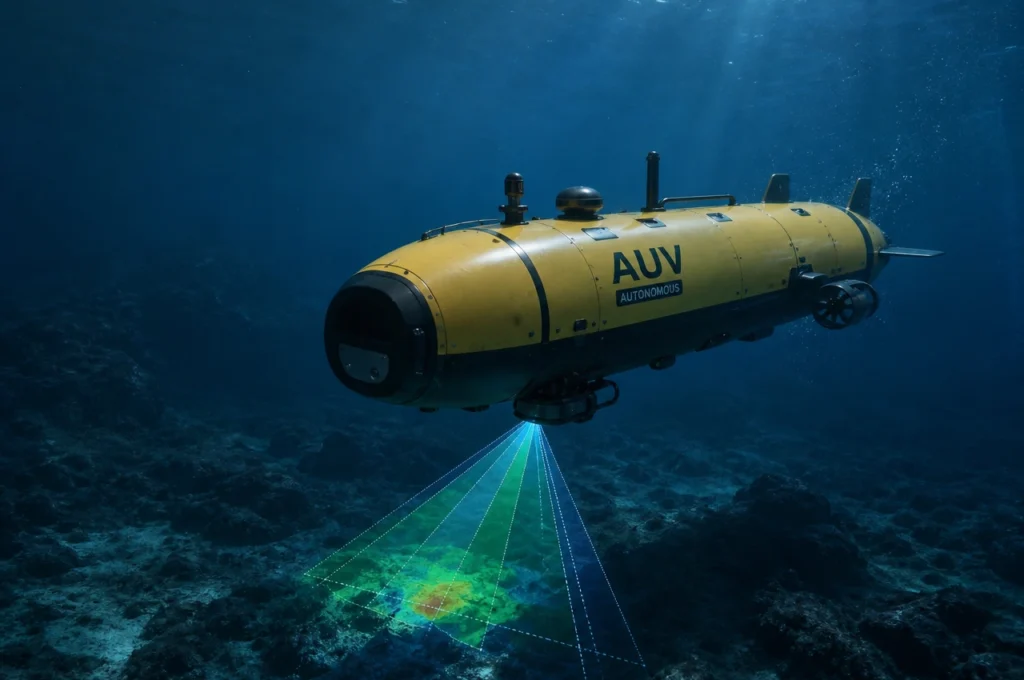
The direct-reading ADCP integrates with unmanned surface vessels (USVs) via Ethernet or serial connection. For autonomous underwater vehicles (AUVs) requiring navigation-grade bottom-tracking without a surface cable, Oceantek recommends the DVL-300-DR-FA4 — a purpose-built Doppler Velocity Log with the same phased-array technology, optimized for vehicle navigation.
Conclusion
The Oceantek ADCP-600-DR-FA4 enters a market dominated by instruments that haven’t fundamentally changed in two decades. Its value proposition is simple: equivalent or better core performance, deeper depth rating, lower price, and direct access to the engineers who built it.
For hydrographic survey companies, hydrological monitoring agencies, and coastal engineers who prioritize data quality and total cost of ownership over brand legacy, it deserves a place on the shortlist. The fact that Oceantek publishes comparison test data openly — rather than asking you to trust a spec sheet — is a signal worth paying attention to.