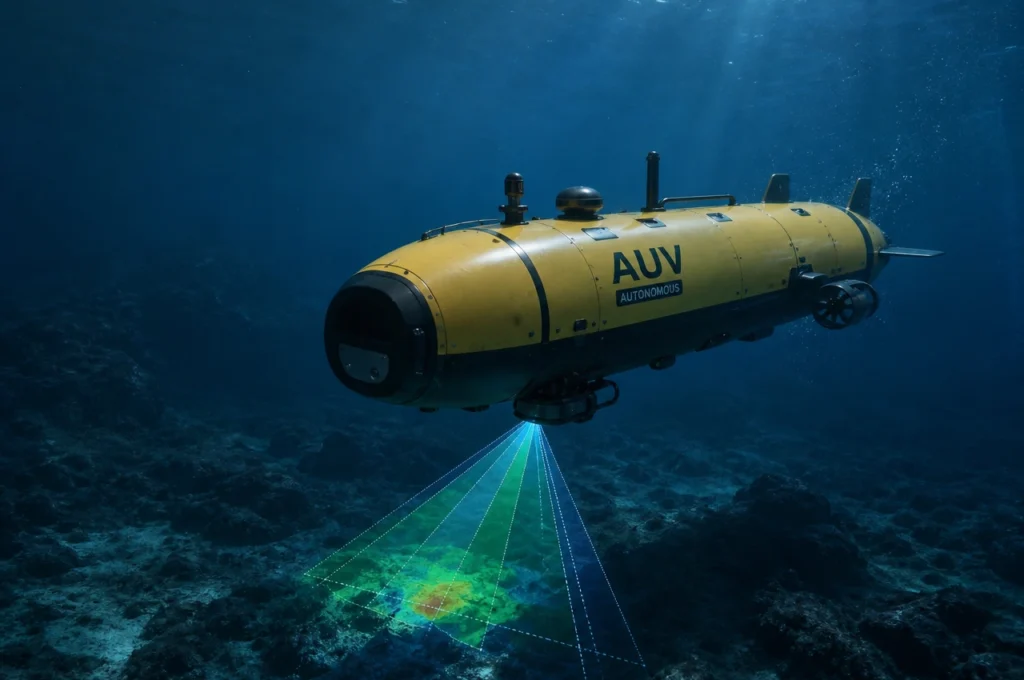
If you work with underwater unmanned systems, you already know this: the DVL (Doppler Velocity Log) is the “eyes” of your underwater robot. Pick the wrong one, and your entire project can go off course — sometimes literally. Long lead times, steep prices, and hard-to-reach after-sales support have burned too many teams. The good news? DVL technology has matured significantly. The real question today isn’t whether you can find a DVL — it’s how to find a reliable manufacturer, secure in-stock availability, and get after-sales service that actually shows up.
Oceantek has been deep in underwater acoustic navigation for years, building a DVL product line that spans multiple frequencies and operational scenarios. Let’s walk through the three questions every buyer should ask — and what answers actually matter.
Question 1: Which Frequency — 600 kHz or 300 kHz?
If there’s one decision that shapes everything downstream, it’s frequency. DVL frequencies cluster around two standards — 300 kHz and 600 kHz — and they’re built for fundamentally different jobs. Understanding the boundary between them saves you from the most common (and most expensive) purchasing mistake.
600 kHz: Shallow-water precision, ultra-low blind zone
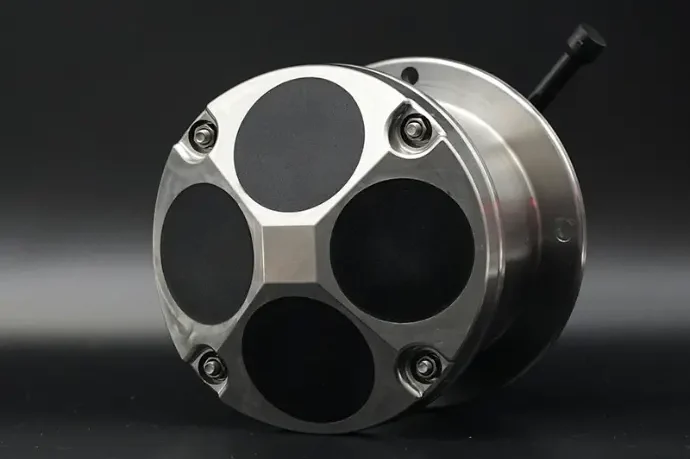
The DVL-600-DR-FA4 operates at 600 kHz with a maximum bottom-tracking depth of 110 meters and an ultra-low blind zone that reaches down to just 0.7 meters. This makes it the go-to choice for inland river dredging, harbor clearance, small ROV bottom-mapping surveys, and any shallow-water operation where you need centimeter-level precision close to the seabed. In field tests conducted on the Yellow River — notorious for its high sediment load — the unit’s narrow-beam design effectively filtered out false echoes from bubbles and suspended silt, delivering data valid rates consistently above 95%.
300 kHz: Deeper reach, stronger penetration
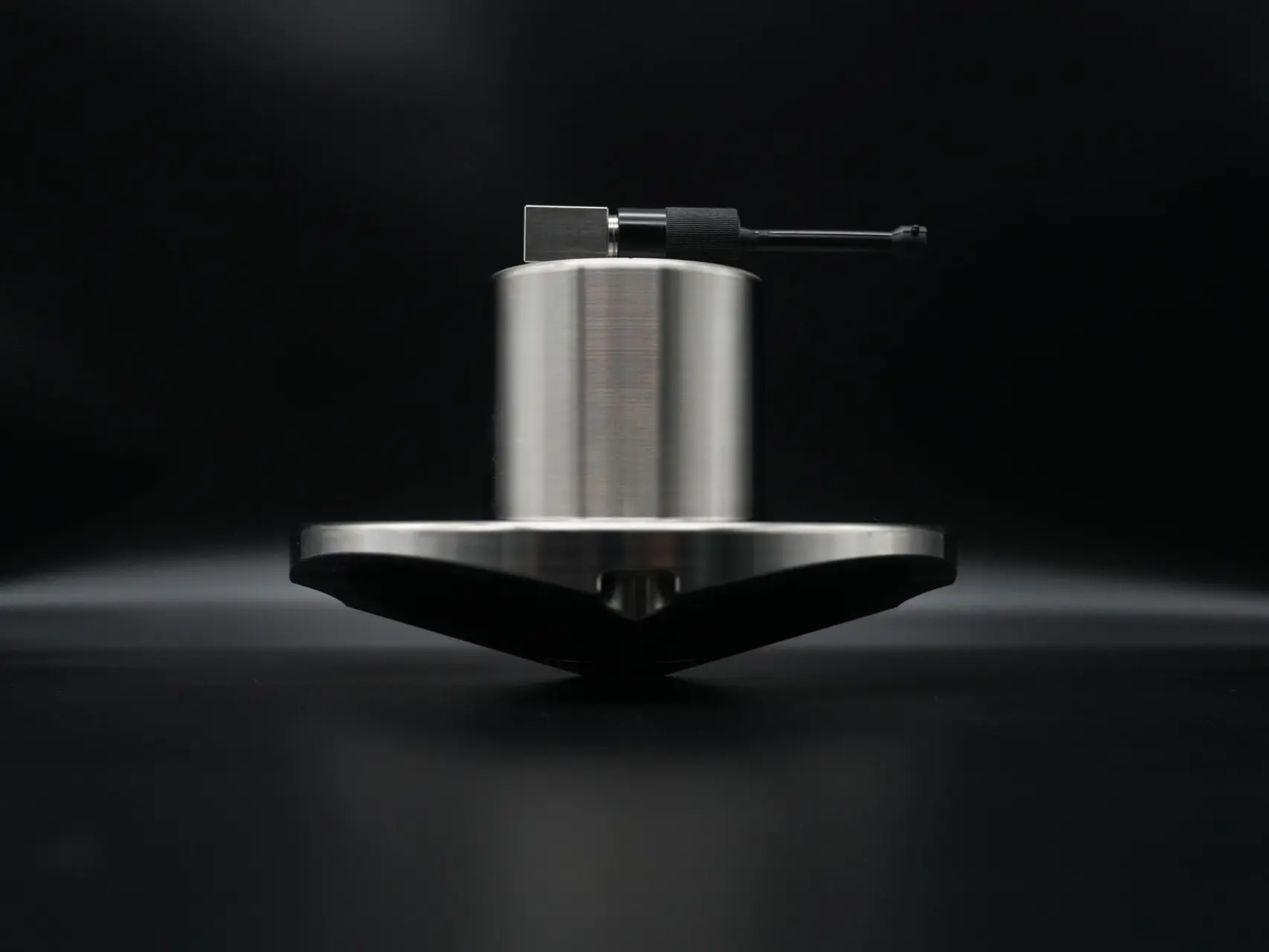
The DVL-300-DR-FA4 extends the bottom-tracking range to 220 meters with superior acoustic penetration. It’s the better fit for continental shelf surveys, offshore wind-farm pile inspections, and medium-sized AUV long-endurance missions. The core difference between the two isn’t hardware material — both use titanium alloy pressure housings — but rather the acoustic transducer design and the signal-processing algorithm tuned to each frequency band.
The practical rule of thumb
| Your Scenario | Recommended Frequency | Suggested Model |
|---|---|---|
| Water depth ≤ 100 m, need near-bottom precision | 600 kHz | DVL-600-DR-FA4 |
| Water depth > 110 m, mission range > 10 km | 300 kHz | DVL-300-DR-FA4 |
| Compact AUV/ROV where weight and size dominate | 600 kHz (phased array) | DVL-600-PA5 |
Question 2: Can You Actually Deliver? The “I Can’t Wait” Problem
Let’s be honest about the state of DVL procurement: internationally, prices range from tens of thousands to hundreds of thousands of dollars, and standard lead times stretch to three months or longer. After-sales repairs depend on international shipping loops. For a project with a tight timeline, or a bulk purchase where multiple ROVs need to deploy simultaneously, that kind of wait is simply not viable.
Oceantek takes a different approach: localized R&D and manufacturing. By keeping design, prototyping, and production under one roof, lead times shrink dramatically — often to a fraction of what overseas sourcing requires.
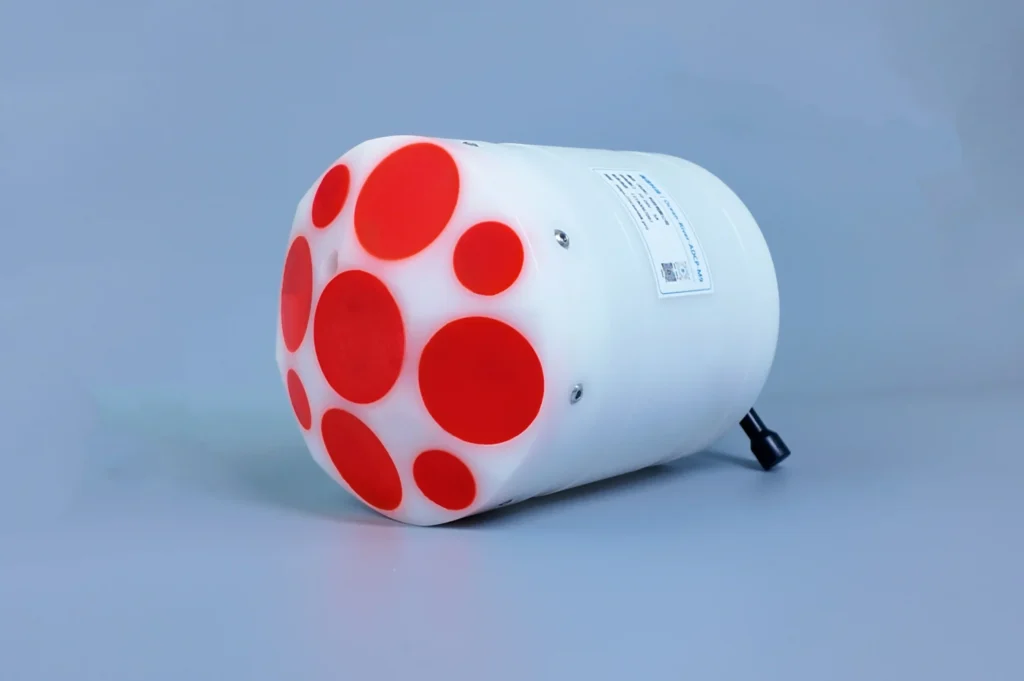
A case in point: the newly released DVL-600-PA5, a phased-array five-beam DVL, tips the scales at under 1.8 kg — roughly 30% smaller in volume than traditional four-beam designs. That lightweight profile doesn’t just make it easier to squeeze into a compact AUV payload bay; it also means faster assembly and higher production throughput. Faster production = faster delivery to your dock.
Question 3: What Does “Good” After-Sales Support Actually Look Like?
For underwater acoustic equipment, after-sales support isn’t about a warranty card. It’s about keeping your mission running. Every hour of downtime costs real money — and in some cases, a missed operational window. Here are two things Oceantek does that set a benchmark worth measuring against.
1. Sea-trial verification before you ever touch the unit
Oceantek runs real at-sea trials on the DVL-600-DR-FA4 and DVL-300-DR-FA4 before they ship. This isn’t a lab tank test. It’s full-system integration — mounting, attitude calibration, and acoustic performance verification under real-world conditions: wind, waves, complex seabed substrates, and vessel-induced vibration. The unit’s echo acquisition capability and velocity-solution stability are validated in the environment it was designed for. What lands on your bench has already passed a real-ocean stress test, not just a spec-sheet checkbox.
2. Deep technical support, not just a phone number
Oceantek maintains a dedicated after-sales team offering 7×24 technical support and structured hands-on training programs that get your operators up to speed on calibration, operation, and routine maintenance. For fleet-scale deployments, this model is especially critical: if a unit develops an issue, a local support team can respond immediately — no waiting on international spare-part shipments, no multi-day email chains across time zones, no prolonged downtime.
This combination — pre-verified hardware plus responsive local support — is what separates a vendor from a partner.
The DVL Purchasing Logic, Step by Step
Buying a DVL doesn’t have to be complicated. The logic is three steps:
- Lock in your frequency — match it to your operating depth and vehicle type. Shallow and precise? 600 kHz. Deep and long-range? 300 kHz.
- Verify real delivery capability — ask about actual stock, not quoted lead times. Localized manufacturing beats a three-month overseas queue every time.
- Assess after-sales depth — look for pre-delivery sea trials, local technical support, and structured training. A warranty is paperwork; a support team is peace of mind.
With products like the DVL-600-DR-FA4, DVL-300-DR-FA4, and DVL-600-PA5, Oceantek has put together a “scenario-matched + in-stock supply + field-proven” portfolio that gives the industry a solid reference point for what a DVL purchase should look like.
Not sure which DVL fits your project?
Use our interactive selector — it takes 60 seconds.
Or talk to an engineer directly