Doppler Velocity Log (DVL) technology is one of the most critical sensing and navigation tools deployed across the marine robotics industry today. By transmitting acoustic pulses toward the seabed and measuring the Doppler shift of the returning echoes, a DVL delivers highly accurate velocity, distance-traveled, and altitude data — even in deepwater environments where GPS is unavailable. This capability makes DVLs indispensable for a wide range of unmanned underwater systems, from compact inspection-class vehicles to full-scale autonomous underwater vehicles operating at depths of several thousand meters.
Autonomous Underwater Vehicle Navigation
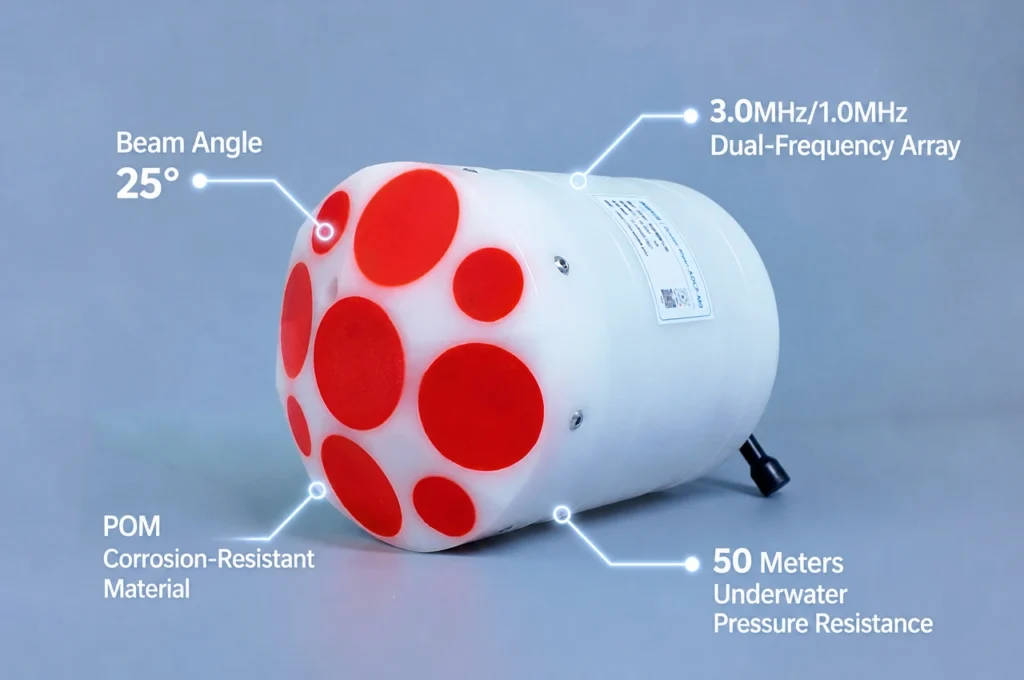
The primary application of DVL technology in marine robotics is bottom-lock navigation for Autonomous Underwater Vehicles (AUVs). When combined with an inertial navigation system (INS), DVL velocity measurements correct for inertial drift, enabling precise dead-reckoning over long-duration missions. This sensor fusion approach — often referred to as DVL-aided INS — allows AUVs to maintain positioning accuracy within 0.1% to 0.5% of distance traveled, even during multi-hour surveys without surfacing for GPS fixes. Modern DVLs with phased-array transducers, such as those in the Oceantek DVL-600-PA5 series, achieve this performance in a compact, low-power form factor well suited to energy-constrained AUV platforms.
Remotely Operated Vehicle Positioning
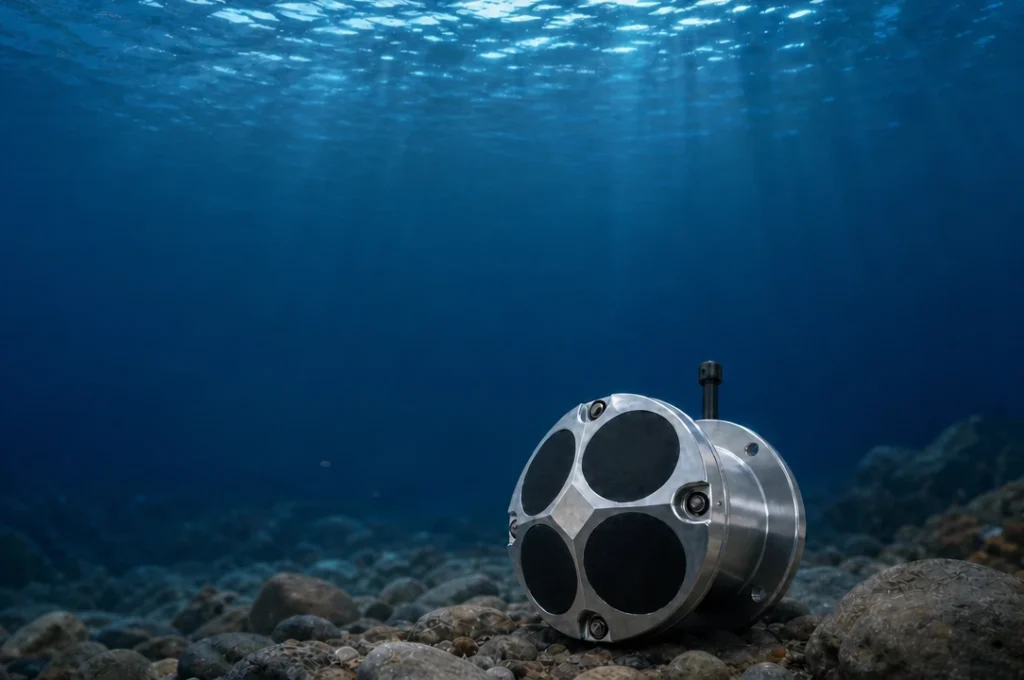
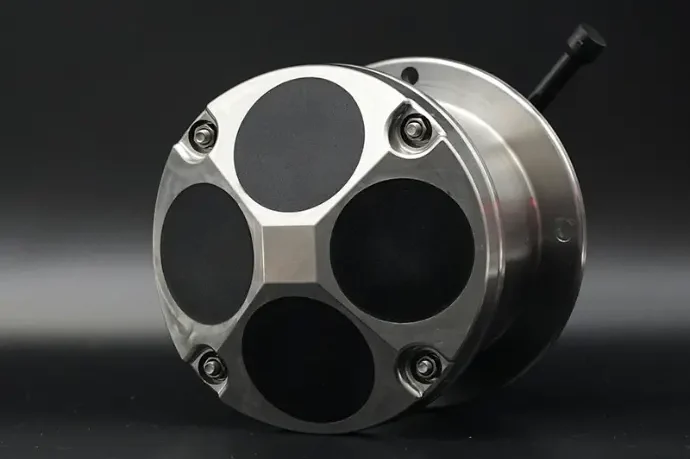
Remotely Operated Vehicles (ROVs) rely on DVL technology for station-keeping and dynamic positioning in challenging subsea conditions. During inspection, maintenance, and repair tasks on offshore infrastructure — including oil and gas platforms, wind farm foundations, and subsea cables — the DVL provides real-time velocity feedback that enables the ROV pilot or autonomous control system to hold position against currents. The Oceantek DVL-600-DR-FA4, with its deep-rated housing and high-accuracy bottom-tracking mode, is purpose-built for these demanding work-class ROV operations where reliable velocity data directly impacts mission safety and efficiency.
Current Profiling and Water Column Measurement
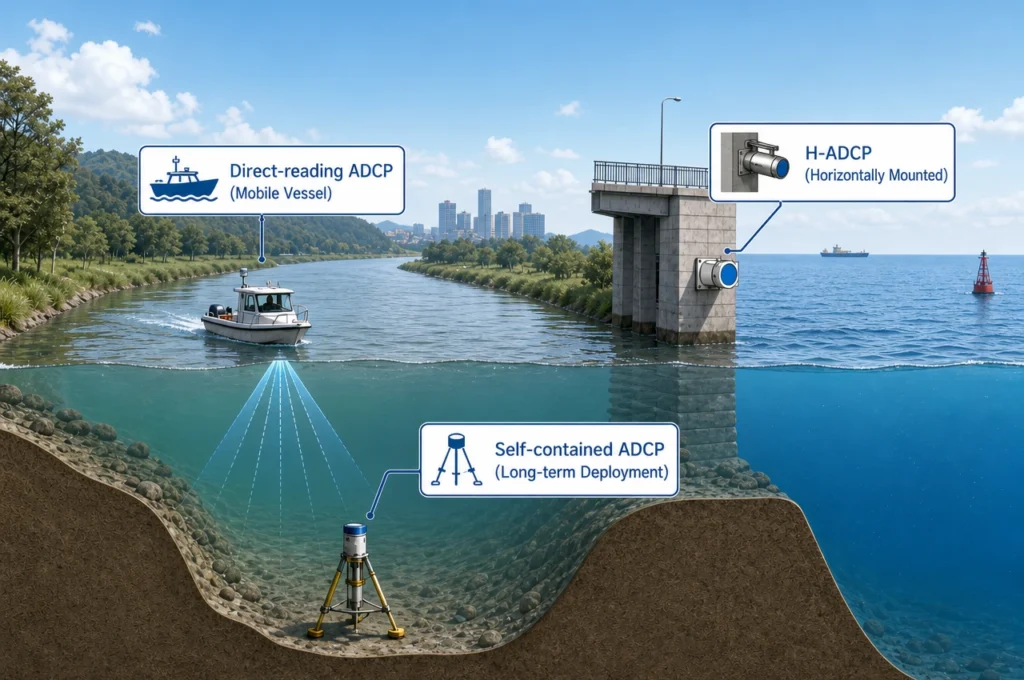
Beyond bottom-tracking, many DVLs function as Acoustic Doppler Current Profilers (ADCPs), measuring water velocity in discrete depth cells throughout the water column. This dual-use capability is valuable for oceanographic research vessels, gliders, and profiling floats that need to characterize current structure while simultaneously navigating. Engineers and researchers selecting a DVL for combined navigation and current-profiling roles often evaluate transducer configuration, frequency, and beam geometry — considerations that drive product choices toward multi-purpose instruments like the Oceantek DVL-300-DR-FA4, which balances compact size with robust water-column profiling performance for coastal and mid-depth missions.
Seabed Mapping and Bathymetric Survey
DVLs play a supporting but essential role in high-resolution seabed mapping. Multibeam echosounders and side-scan sonars generate the imagery, but the DVL supplies the precise vehicle velocity and altitude data required to georeference those acoustic returns accurately. Without DVL-corrected navigation, survey data can suffer from smearing, scaling errors, and misalignment between adjacent swaths. For autonomous surface vessels (ASVs) and low-logistics survey USVs conducting shallow-water bathymetry, integrating a DVL removes the need for expensive RTK-GPS corrections in areas where base stations are impractical, while also providing direct altitude above the seabed for safe obstacle avoidance.
Underwater Docking and Homing
A growing application for DVL technology is autonomous underwater docking — the process by which an AUV navigates into a subsea docking station for battery recharging and data upload without human intervention. These terminal homing maneuvers demand velocity precision at the centimeter-per-second level, particularly in the final approach phase where acoustic or optical guidance takes over. DVLs provide the continuous velocity reference that bridges the gap between coarse long-range navigation and fine terminal guidance, making persistent, resident AUV systems operationally viable for long-term environmental monitoring and subsea surveillance.
Pipeline and Cable Inspection
Inspection-class AUVs and ROVs performing pipeline and cable route surveys depend on DVL-derived odometry to maintain consistent standoff distance and track the asset path with high repeatability. When a vehicle must follow a pipeline for tens or hundreds of kilometers, small velocity errors accumulate into significant cross-track deviations. DVL-aided navigation suppresses this error growth, ensuring the vehicle stays within the sensor swath width required for crack detection, coating assessment, and free-span identification. The durability and deep-depth rating of instruments like the Oceantek DVL-600-DR-FA4 make them a practical choice for these extended-duration industrial survey campaigns.
Choosing the Right DVL for Marine Robotics
Selecting a DVL for a marine robotics application requires matching the instrument to the operational profile. Key factors include maximum operating depth, transducer configuration — piston-head versus phased-array — acoustic frequency, power budget, and data interface compatibility. For deepwater AUV and ROV missions where reliability at full ocean depth is non-negotiable, deep-rated piston-head DVLs such as the Oceantek DVL-600-DR-FA4 offer proven bottom-tracking range and accuracy. In applications where size, weight, and power are the dominant constraints — for example, man-portable AUVs or long-endurance gliders — compact phased-array solutions like the Oceantek DVL-600-PA5 and the mid-range Oceantek DVL-300-DR-FA4 provide strong navigation performance without compromising the vehicle’s payload or endurance budget. Matching the DVL frequency to the expected operating environment is equally important: lower frequencies reach greater ranges and deeper depths, while higher frequencies deliver finer velocity resolution in shallow-water and high-precision scenarios.
The Future of DVL Technology in Marine Autonomy
As marine robotics moves toward fully autonomous, long-endurance operations — including resident AUV systems that remain subsea for months at a time — DVL technology continues to evolve. Emerging trends include tighter sensor fusion with feature-based SLAM algorithms, integration with environmental monitoring payloads for simultaneous navigation and scientific data collection, and the development of DVLs that maintain bottom-lock at higher altitudes and over featureless terrain. The increasing adoption of DVL-aided navigation across defense, offshore energy, ocean science, and aquaculture underscores the technology’s central role in making reliable underwater autonomy a practical reality.