Measuring ocean currents is challenging enough in open water. Add a layer of ice, sub-zero temperatures, and months of darkness, and the difficulty multiplies. Yet under-ice current data is some of the most valuable — it drives climate models, informs port operations in freezing conditions, and helps engineers design structures that can survive in ice-infested waters.
This article walks through the realities of deploying ADCPs (Acoustic Doppler Current Profilers) under ice, drawing on a real-world winter deployment from China’s Bohai Sea. Whether you are planning a polar research campaign or managing a seasonally frozen port, here is what you need to know — and what equipment makes the difference.
Why Under-Ice Current Data Matters
Current measurements beneath ice cover serve a range of critical needs:
- Climate research: Polar ocean circulation directly influences global heat transport. Long-term under-ice current datasets help scientists understand how warming oceans interact with ice melt — one of the largest uncertainties in climate projection models.
- Ice dynamics modeling: Sea ice drift is driven by wind and ocean currents. Accurate under-ice current profiles are essential for predicting ice movement, which affects shipping lane safety and offshore operations.
- Port and waterway operations: Many major ports — from the Bohai Sea in China to the Baltic Sea in Northern Europe — face seasonal ice cover. Understanding tidal currents and residual circulation under ice helps port authorities manage vessel traffic, icebreaker allocation, and mooring safety during winter months.
- Offshore engineering: Subsea pipelines, platform foundations, and mooring systems in seasonally frozen seas must account for ice-induced loads. Current data under ice is a key input to these engineering calculations.
- Freshwater flux studies: River discharge into ice-covered seas behaves differently than in open water. Under-ice ADCP measurements capture this critical interface.
Despite the importance, under-ice current data remains sparse compared to open-water measurements — precisely because collecting it is hard. Let us look at why.
The Core Challenges of Winter and Polar ADCP Deployments
Deploying a current profiler in freezing conditions is not simply a matter of dropping the same equipment into colder water. Each challenge compounds the next.
1. Extreme Cold and Electronics
At -20°C or below, things break that do not break at 10°C. Battery chemistry slows dramatically — alkaline cells lose a substantial fraction of their rated capacity, and even lithium chemistries require careful derating. LCD displays on topside equipment can fail. Connector O-rings stiffen and lose elasticity, creating leak paths. Cables become brittle. Every component in the system, from the pressure housing to the communication cable, needs to be specified with cold-weather performance in mind.
2. Ice Cover Blocks Surface Access
This is the defining challenge of under-ice work. With a solid ice cap covering the deployment site, you cannot:
- Use surface buoys for real-time telemetry (they would be crushed or drifted away)
- Rely on GPS time synchronization through a surface antenna
- Visually locate your mooring for recovery
- Perform mid-deployment maintenance or data offload
Everything must be self-contained, internally powered, and capable of running autonomously for the entire deployment — with no human intervention for months.
3. Mooring Line Damage from Ice Keels
In shallow and intermediate water depths, ice keels — the submerged portion of pressure ridges that can extend many meters below the waterline — pose a direct physical threat to mooring hardware. A keel dragging across a mooring line can sever it, losing both the equipment and the data. This risk forces deployment strategies that keep all hardware well below the maximum ice keel draft depth.
4. Deployment and Recovery Logistics
Getting equipment into and out of the water through ice is not trivial. Options include:
- Deploying from a vessel before freeze-up and recovering after thaw — simplest but commits to a long, unattended deployment window.
- Drilling or cutting an access hole through the ice and deploying through it — requires ice thickness assessment, safety protocols for personnel, and specialized handling equipment.
- Using an ice-capable vessel or icebreaker for deployment and recovery — expensive and not always available.
Recovery is particularly stressful: you must first find the mooring under ice (acoustic releases are essential), then create access to retrieve it, all while racing against weather windows.
5. Power Endurance
With no way to recharge batteries and no surface solar panel option, the ADCP must run entirely on its internal power supply for the full deployment. A 3-month winter deployment means 3 months of continuous or burst-sampled profiling — every milliamp-hour counts. Battery selection, sampling strategy, and instrument power efficiency become mission-critical decisions.
Self-Contained ADCPs: The Right Tool for Under-Ice Work
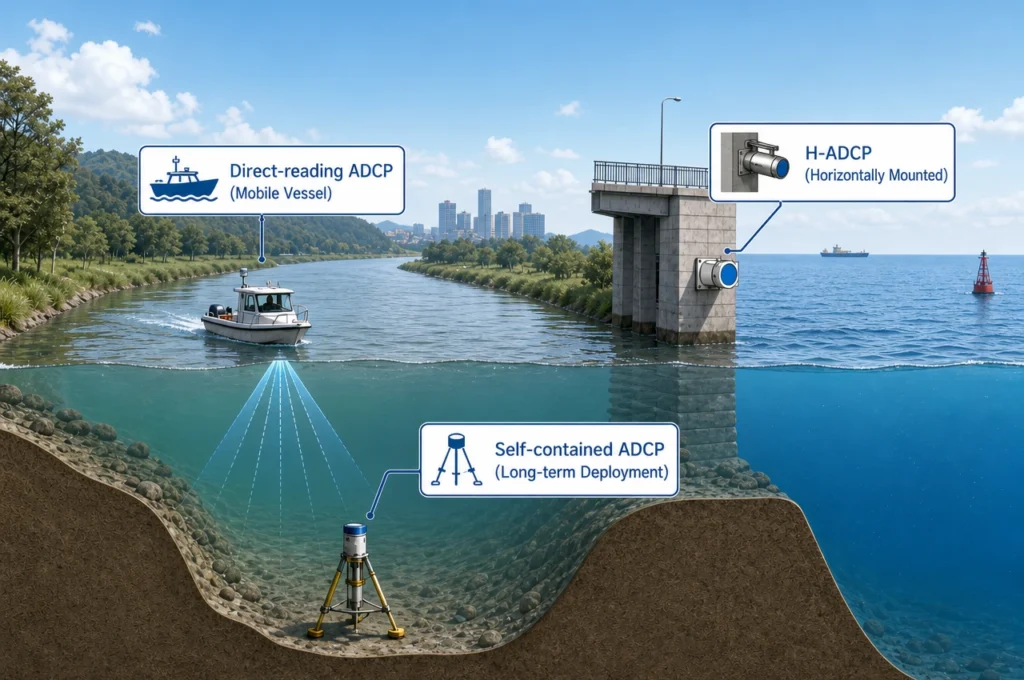
For under-ice deployments, the instrument of choice is overwhelmingly the self-contained ADCP. Unlike vessel-mounted or real-time cabled systems, a self-contained ADCP carries its own batteries, its own data storage, and operates completely autonomously on the seafloor or on a subsurface mooring.
Here is why this configuration wins for ice work:
- No surface expression: The entire system sits below the ice keel zone, safe from mechanical damage. Nothing protrudes through the ice — there is nothing for ice to grab.
- No cables to surface: Cables freeze into ice, get sheared by ice movement, or act as lightning attractors. Eliminating them eliminates failure modes.
- Deploy-and-forget: Once the instrument is on the seabed and acoustically confirmed, the deployment vessel can leave. The ADCP wakes up, samples, and sleeps on its own schedule.
- Proven in polar programs: Self-contained ADCPs have been the backbone of under-ice current measurement from Antarctic ice shelf studies to Arctic Observing System moorings for decades.
Not all self-contained ADCPs are equal, however. The demands of a 90-day winter deployment at -1.8°C water temperature — with no possibility of intervention — expose weaknesses in power management, mechanical design, and cold-weather reliability that may never surface in a 2-week temperate deployment.
Case Study: Winter Under-Ice ADCP Deployment in Bayuquan, Bohai Sea
To ground this discussion in real operational experience, let us examine a winter ADCP deployment in one of China’s most challenging seasonal-ice environments: Bayuquan (鲅鱼圈), located in Liaodong Bay in the northern Bohai Sea.
The Setting
Bayuquan is home to one of Northeast China’s busiest ports, handling bulk cargo, containers, and serving as a strategic logistics hub for Liaoning Province. Each winter — typically December through February — Liaodong Bay develops extensive sea ice cover. Air temperatures routinely drop below -20°C, and sustained cold spells push the ice edge well into the bay. Sea ice thickness in the area reaches 10–30 cm in normal winters, with pressure ridges and rafted ice creating much thicker local features.
Water depth in the deployment area ranged from 15 to 25 meters. Water temperature at depth hovered near freezing (-1.5 to 0°C) throughout the ice season. Despite the ice, tidal currents remain active — the Bohai Sea is a tidally energetic shallow basin, and understanding how ice cover modifies circulation was a primary motivation for the measurement program.
Why Current Data Was Needed
The measurement campaign had several objectives:
- Port operations support: Understanding how ice cover changes tidal current patterns helps port authorities optimize vessel scheduling and icebreaker deployment during winter navigation seasons.
- Ice forecasting: Reliable under-ice current data feeds into the regional ice forecast model, improving predictions of ice edge position and drift direction.
- Coastal engineering validation: Existing current models for the bay were calibrated on open-water data. Winter measurements were needed to validate model performance under ice-covered conditions — a critical step for the design of future port infrastructure.
- Tidal asymmetry research: Ice cover adds friction to the water surface, changing the balance between flood and ebb tidal currents. Quantifying this effect requires simultaneous ice observations and current profiles.
The Deployment Configuration
Given the shallow water depth and the presence of ice keels, a bottom-mounted frame deployment was selected. Here is how it was set up:
Installation method:
- A trawl-resistant bottom frame (low-profile, pyramidal design) was fabricated locally. The frame serves dual purposes: it protects the ADCP from fishing gear and ice keel contact, and it provides a stable, level platform on the seabed.
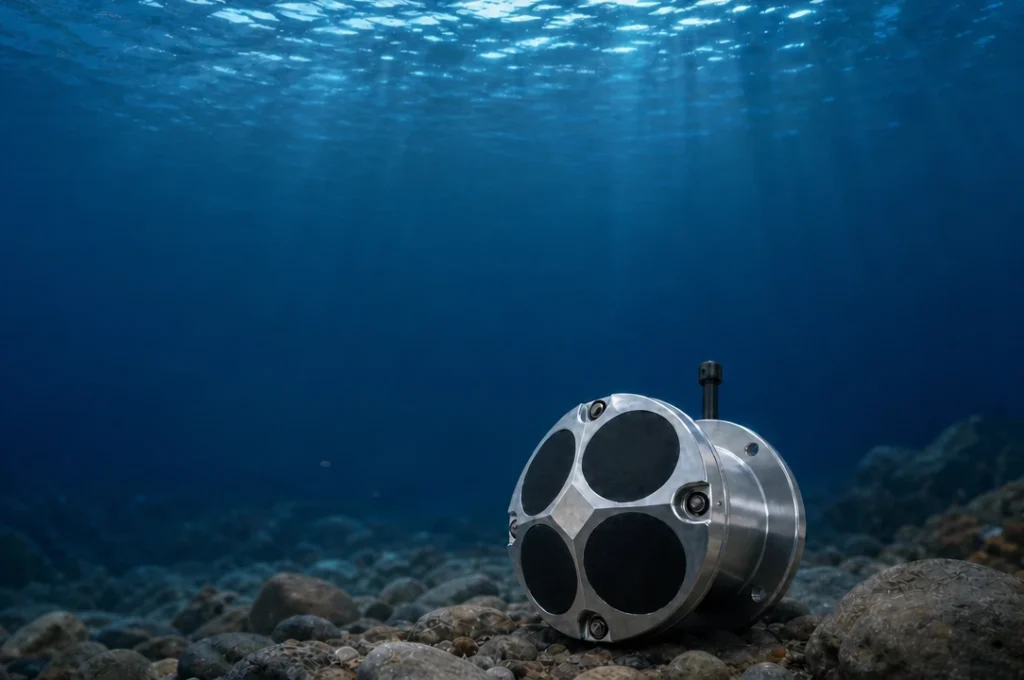
- An Oceantek self-contained ADCP was mounted inside the frame in an upward-looking configuration, measuring current profiles from the seabed to the ice-water interface.
- The entire assembly — frame, ADCP, acoustic release, and external battery pack — was deployed from a workboat before the onset of sea ice in early December.
- An acoustic release was integrated into the mooring. Upon recovery command in spring, the release decouples the frame from a small subsurface float, which ascends to the ice underside. This float carries a recovery line that divers or a surface vessel can grapple once an access hole is opened.
- No surface buoy was deployed — nothing visible above the ice. The mooring position was recorded by GPS at the time of deployment, and the acoustic release provides ranging to assist with relocation under the ice.
ADCP configuration:
- Frequency: 300 kHz, providing profiling range of approximately 80–100 meters (more than sufficient for the 15–25 m water depth) with good vertical resolution.
- Sampling strategy: Burst sampling — one profile every 20 minutes, with each burst consisting of 60 pings averaged. This interval captures tidal variability while conserving battery.
- Power: External lithium battery pack sized for 120 days of endurance at the selected sampling rate, with a 30% cold-weather derating margin.
- Data storage: Internal solid-state storage with capacity for the full deployment at the selected configuration, plus a redundant backup.
How It Performed
The ADCP recorded continuously from deployment in early December through recovery in late March — over 100 days of data — covering the full ice season. Key performance observations:
- Data return exceeded 95%: Of the expected profiles across the entire deployment, fewer than 5% were lost — attributable to a brief period of high suspended sediment concentration near the seabed during a winter storm, which temporarily reduced acoustic range.
- Clear current structure throughout the water column: Profiles showed well-defined tidal currents from seabed to within 2–3 meters of the ice-water interface (the blanking distance of the ADCP plus the surface sidelobe interference zone).
- Battery voltage remained healthy: At recovery, the lithium pack still showed over 20% remaining capacity, validating the derating calculations and the instrument’s low power consumption.
- No biofouling: Cold water suppressed marine growth — the transducer faces and housing were clean at recovery, a sharp contrast to summer deployments in the same waters that typically show significant fouling within weeks.
- Ice-water drag signature detected: The data revealed a measurable reduction in near-surface current speed and a shift in tidal phase under the ice cover, consistent with the additional frictional drag imposed by the ice. This data proved directly useful for calibrating the regional ice-ocean coupled model.
Key Takeaways from the Bayuquan Deployment
This deployment validated several critical principles for under-ice ADCP work:
- Bottom-mounted frames work. In shallow, ice-affected waters, putting the ADCP on the seabed in a protective frame eliminates ice keel risk entirely. The trade-off — losing near-surface current data to sidelobe interference — is acceptable for most applications.
- Lithium battery sizing with cold derating is essential. The 30% derating margin proved appropriate. Instruments powered by alkaline batteries would likely not have survived the deployment.
- Burst sampling is your friend. Continuous high-frequency profiling is almost never needed for under-ice work and drains batteries fast. A well-chosen burst interval captures tidal and subtidal variability while extending endurance dramatically.
- Equipment that works in the lab must also work at -20°C on deck. Pre-deployment assembly and testing happens in the cold. Connectors, cables, and seals must handle being handled at low temperatures without damage.
What Makes an ADCP Ice-Ready? Key Equipment Selection Criteria
The Bayuquan experience — and countless similar deployments worldwide — points to specific features that separate instruments that survive winter from those that do not.
Power System Engineered for Cold
Battery capacity ratings are almost universally quoted at 20°C room temperature. At 0°C, usable capacity drops. At -10°C, it drops further — and internal battery heating from discharge current is negligible at the low duty cycles typical of burst-sampled ADCP deployments. For under-ice work, look for:
- Lithium primary cells (lithium thionyl chloride or lithium sulfuryl chloride) rather than alkaline. Lithium cells maintain a flatter discharge voltage at low temperatures and deliver significantly higher energy density per gram.
- External battery pack compatibility: Internal batteries alone may not suffice for a 3–4 month deployment. The ADCP should support plug-and-play external battery connections that are pressure-rated and cold-rated.
- Low-power electronics: The instrument’s quiescent (sleep) current draw matters as much as its active ping power. Over a 90-day deployment with 20-minute sampling, the ADCP spends the vast majority of its time asleep — sleep current dominates the energy budget.
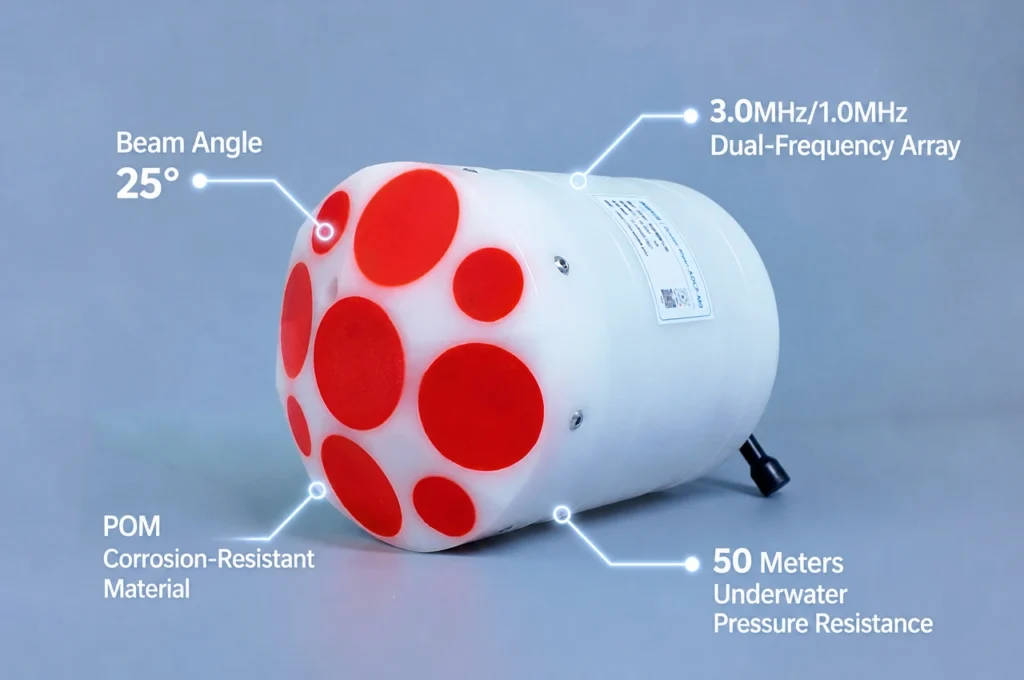
Oceantek’s self-contained ADCP series is designed with these power realities in mind: configurable burst sampling, low sleep current, and native support for external lithium battery packs sized to the deployment duration.
Pressure Housing and Materials for Sub-Zero Operation
An ADCP housing that seals reliably at 20°C may leak at -20°C. The issue is differential thermal contraction: different materials shrink at different rates as temperature drops. Key considerations:
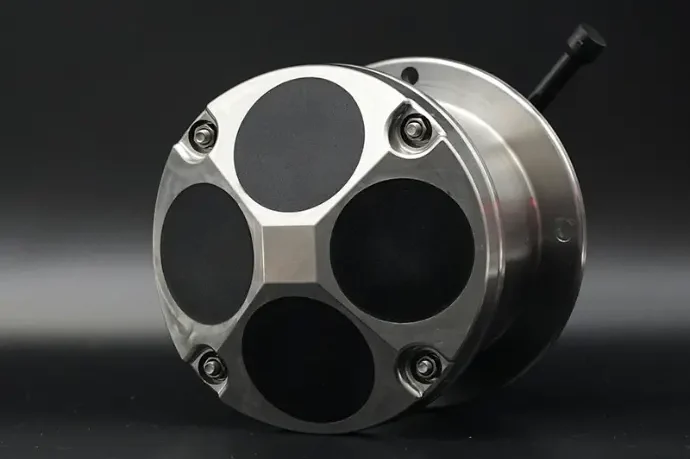
- Housing material: Titanium offers an excellent strength-to-weight ratio and corrosion resistance, with thermal expansion properties well-matched to common connector and end-cap materials. Engineered thermoplastics (such as acetal/Delrin) are also used successfully — they have some compliance that can help maintain seal compression during thermal cycling.
- O-ring selection: Standard nitrile (Buna-N) O-rings stiffen significantly below -10°C and may not rebound quickly enough to maintain a seal during pressure changes. Silicone O-rings retain flexibility to lower temperatures but have higher gas permeability. Fluorocarbon (Viton) offers a middle ground. The right choice depends on the specific temperature range and depth rating of the deployment.
- Connector integrity: Subsea connectors from manufacturers like SubConn or MacArtney are widely used and generally rated for cold-water service, but lubrication and pre-deployment inspection become extra important when deployment temperatures are extreme.
Mooring Design for Ice-Infested Waters
The mooring is as important as the instrument. For ice-affected deployments:
- Bottom-mounted frame (recommended for shallow water, <50 m): Places the ADCP on the seabed, well below any credible ice keel depth. Use a trawl-resistant design — the same frame that protects against bottom trawling protects against ice. The downside: you lose the upper portion of the water column to sidelobe interference. In 20 m of water with a 300 kHz ADCP, you might lose 3–5 m below the surface — acceptable for most applications.
- Subsurface buoy mooring (for deeper water, >50 m): Suspends the ADCP mid-water at a depth below the ice keel zone (typically >30 m depth in Arctic conditions, >15 m in seasonally frozen marginal seas). This configuration can profile a larger portion of the water column but requires careful buoyancy and flotation design.
- Acoustic release redundancy: You cannot see your mooring from the surface. If the acoustic release fails, you may never recover it. Dual acoustic releases — either two independent units or a single unit with dual burn-wire mechanisms — are strongly recommended for high-value deployments. Budget for it.
- No surface expression: In ice-covered waters, this is not a compromise — it is a requirement. Any surface buoy will be destroyed or set adrift by moving ice.
Data Integrity and Redundancy
After 3 months on the seabed under ice, the moment of recovery is high-stakes. Years of planning and weeks of field effort hinge on whether the data card reads correctly. Mitigation strategies include:
- Sufficient storage capacity: Size the internal storage for at least 150% of the expected data volume. Storage is cheap; a failed deployment is not.
- Pre-deployment bench test: Run the full deployment configuration in the lab for at least 24 hours before shipping. Verify that data files are written correctly, file sizes match expectations, and battery drain rates align with calculations.
- Post-recovery backup: Before any data processing, make a bit-for-bit copy of the raw data file. Store it separately.
Step-by-Step: Planning Your Under-Ice ADCP Deployment
Here is a practical checklist distilled from real deployments — including the Bayuquan operation described above.
Phase 1: Pre-Deployment Planning (2–3 Months Before)
- Site survey: Obtain the best available bathymetry for the deployment location. Identify the maximum and minimum water depths within the expected drift radius of the deployment vessel. Know your ice climatology: average and extreme ice thickness for the deployment period, typical freeze-up and break-up dates, and historical ice keel depth statistics for the area.
- Equipment selection: Choose ADCP frequency based on water depth and required profiling range. Select battery type and capacity with cold derating applied (factor in at least 20–30% margin beyond your calculated requirement at room temperature). Confirm that the instrument, connectors, cables, and all ancillary hardware are rated for the minimum expected temperature — not just in the water, but on deck during deployment and recovery.
- Sampling strategy design: Calculate your energy budget. For each candidate sampling interval, determine: active ping duration × number of pings per burst × bursts per day × 90 days = total active energy. Add sleep current × total sleep time. Apply cold derating to battery capacity. Ensure margin is comfortable.
Phase 2: Mooring Assembly and Testing (2–4 Weeks Before)
- Frame or mooring fabrication: If using a bottom frame, ensure it is galvanized or otherwise corrosion-protected. Verify the ADCP mounting bracket positions the transducer heads with a clear acoustic path — no frame members in the beam.
- Bench test: Assemble everything — ADCP, batteries, external power, acoustic release — on the bench. Configure exactly as planned for the deployment. Run for 24–48 hours. Check: data file integrity, battery voltage trend, acoustic release communication, compass/tilt sensor readings.
- Cold soak test (if feasible): If you have access to a cold chamber, run the ADCP at deployment temperature for several hours and verify normal operation. Not every team has this capability, but if you do, use it.
Phase 3: Deployment Day
- Final pre-deployment check: On deck, before the instrument goes over the side: confirm battery voltage, start recording (or confirm delayed-start timer is set correctly), verify acoustic release is communicating, record GPS position.
- Deployment method: If deploying through an ice hole, lower the assembly slowly and steadily on a line. Avoid swinging or impact with the ice edge. If deploying from a vessel before freeze-up, use a controlled descent — a quick release or free-fall risks landing the frame on its side.
- Position confirmation: After the mooring is on the seabed, range to the acoustic release from at least two surface positions to triangulate the seabed location. Record these positions. Ice will drift, and your access hole next spring may not be directly above the deployment point.
Phase 4: Recovery
- Locate the mooring: Use the acoustic deck unit to range to the release from multiple positions through the ice. Correlate with your deployment GPS and triangulated position. Be patient — acoustic ranging under ice can be more challenging than in open water due to under-ice reverberation and the irregular ice underside.
- Create access: Ice auger, chainsaw, or icebreaker — the method depends on ice thickness and available equipment. Safety first: know your ice bearing capacity before putting personnel and equipment on it.
- Send the release command: Once the access hole is ready, command the acoustic release. Retrieve the float and recovery line. Haul the frame to the surface — be prepared for the possibility of sediment suction holding the frame. A steady, controlled pull is safer than jerking.
- Post-recovery procedure: Rinse the ADCP with fresh water immediately. Download data before powering down. Make a backup copy. Inspect O-rings, connectors, and housing for any signs of water ingress or damage. If the instrument will be redeployed soon, replace O-rings and batteries as a precaution.
Why Oceantek Self-Contained ADCPs Are Built for This
The Bayuquan under-ice deployment was powered by an Oceantek self-contained ADCP — and the choice was not accidental. Here is what sets this instrument series apart for extreme-environment deployments:
Field-proven in harsh conditions. Oceantek ADCPs have logged thousands of hours in environments ranging from tropical moorings to polar waters. The Bohai Sea winter deployment — with its combination of freezing temperatures, ice cover, and extended duration — is exactly the kind of scenario the instruments were engineered for.
Low power consumption, long endurance. One of the standout design features is low sleep current. In a 3-month deployment where the ADCP spends 95%+ of its time asleep between burst samples, sleep current dominates the energy budget. Oceantek’s electronics are optimized for this operational profile, enabling multi-month deployments without oversized external battery packs.
Flexible deployment configurations. The same instrument body adapts to bottom frames, subsurface buoy moorings, and inline mooring strings — without requiring different end-caps or housing modifications. This means your spare instrument can serve multiple deployment types, and your mooring design is not constrained by the ADCP form factor.
Mechanical design that handles the cold. Oceantek’s pressure housing and connector interfaces are engineered for cold-water service, with O-ring materials and lubrication specified for sub-zero operation. The instrument is rated for the full range of temperatures encountered in under-ice work — from the -40°C deck of a winter workboat to the near-freezing but stable temperature at depth.
Practical data recovery. Internal solid-state storage is sized generously for long deployments. Data offload is straightforward — connect via the standard communication interface, download, and you have your files. No proprietary formats, no decoding headaches.
Cost-effective for research programs. Polar-capable oceanographic instruments often come with polar-capable price tags that strain research budgets. Oceantek’s self-contained ADCPs deliver the essential capabilities — reliability, endurance, cold-weather performance — at a price point that makes multi-instrument deployments feasible for a wider range of programs.
Frequently Asked Questions
Can you deploy an ADCP under ice?
Yes. Self-contained, bottom-mounted ADCPs are routinely deployed under ice for multi-month measurement campaigns. The key is proper planning: the instrument must be fully autonomous (no surface connection), protected from ice keels, and powered for the full deployment duration.
What type of ADCP is best for winter deployments?
A self-contained ADCP — one that carries its own batteries and data storage internally — is the best choice for under-ice deployments. Vessel-mounted and real-time cabled ADCPs are impractical when ice cover prevents surface access. Within self-contained instruments, look for low power consumption, external battery pack compatibility, and cold-rated mechanical design.
How long can a self-contained ADCP record under ice?
With lithium battery packs and burst sampling (e.g., one profile every 15–30 minutes), deployments of 90–120 days are achievable. The exact endurance depends on water depth (which determines ping count per profile), sampling interval, and battery capacity. Adding an external battery pack extends this further — 6-month overwinter deployments are feasible with proper sizing.
How do you recover a bottom-mounted ADCP when the sea is frozen?
Recovery uses an acoustic release system: a deck unit sends a coded acoustic command to a release mechanism on the seabed mooring. The release decouples a subsurface float from the frame; the float rises to the underside of the ice. Once an access hole is cut or drilled through the ice at the recovery location, the float and its attached recovery line are retrieved, and the frame is hauled to the surface.
What battery type works best for cold-water ADCP deployments?
Lithium primary cells (lithium thionyl chloride) are the preferred choice. They maintain higher voltage and deliver more of their rated capacity at low temperatures compared to alkaline cells. Always apply a cold-temperature derating factor (20–30% margin) when calculating required battery capacity for winter deployments.
How thick can sea ice be for under-ice ADCP deployment?
The ice thickness itself does not directly affect the ADCP on the seabed — the instrument is below the ice and protected by the water column. The practical limitation is deployment and recovery access. Through-ice deployment and recovery using augers or chainsaws is practical in ice up to approximately 1 meter thick. For thicker ice, an ice-strengthened vessel or icebreaker may be required. The more important parameter is ice keel depth, which determines how deep the mooring must be set to avoid contact.
What is the difference between a self-contained ADCP and a real-time ADCP for ice work?
A self-contained ADCP logs data internally and operates autonomously on battery power — it is deployed, left on the seabed for months, and recovered for data download. A real-time ADCP transmits data continuously via a cable to a surface unit (on a vessel, buoy, or shore station). For under-ice deployments, the self-contained configuration is strongly preferred because there is no safe way to maintain a cable connection through moving sea ice.
Conclusion: Ice Should Not Stop Your Measurements
Under-ice current measurement is undeniably more demanding than open-water work. It requires more planning, more careful equipment selection, and more patience during deployment and recovery. But with the right approach — bottom-mounted deployment, a properly cold-rated self-contained ADCP, lithium batteries with conservative derating, and redundant acoustic releases — it is a solved problem.
The Bayuquan winter deployment in China’s Bohai Sea demonstrated that a well-configured self-contained ADCP can deliver over 100 days of clean, continuous current profile data through the full ice season, with no intervention and no data loss. That dataset now informs port operations and ice forecasting for one of Northeast Asia’s busiest winter ports.
Whether your next deployment is in the Bohai Sea, the Baltic, the Arctic, or a frozen Great Lake, the principles are the same: plan for the cold, build in margin, and choose equipment that has been proven in the conditions you will face.
Explore Oceantek’s self-contained ADCP product line for your next under-ice deployment — or contact our team to discuss your specific requirements. We have helped researchers and port operators from the tropics to the poles get the current data they need, and we are ready to support your project.
Published July 2026. Based on operational experience from winter ADCP deployments in the Bohai Sea and best practices from the polar oceanographic community.