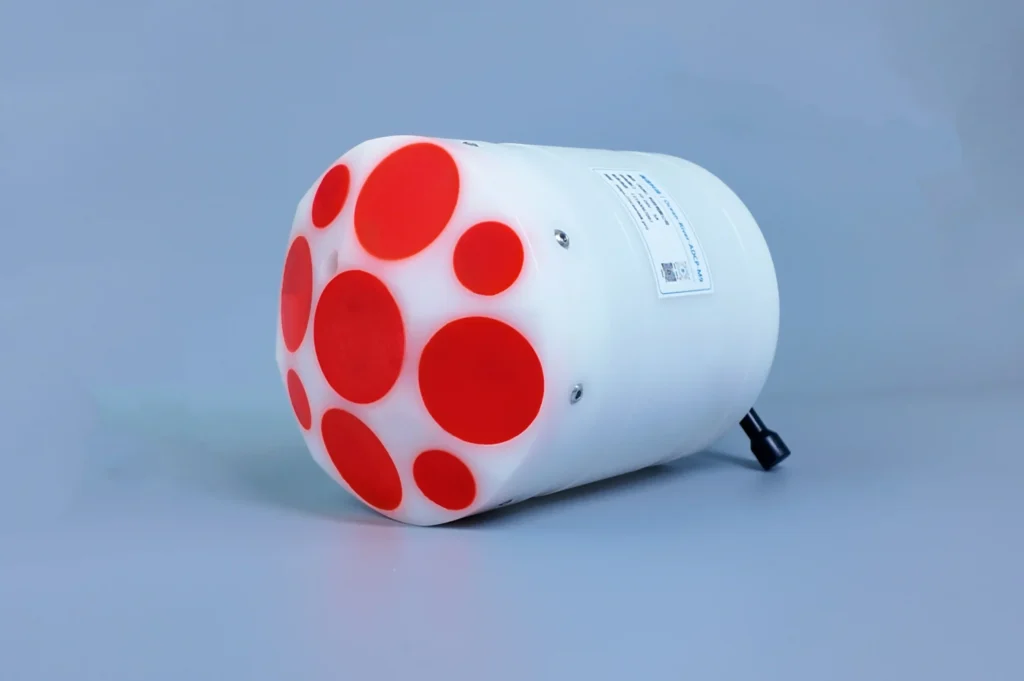
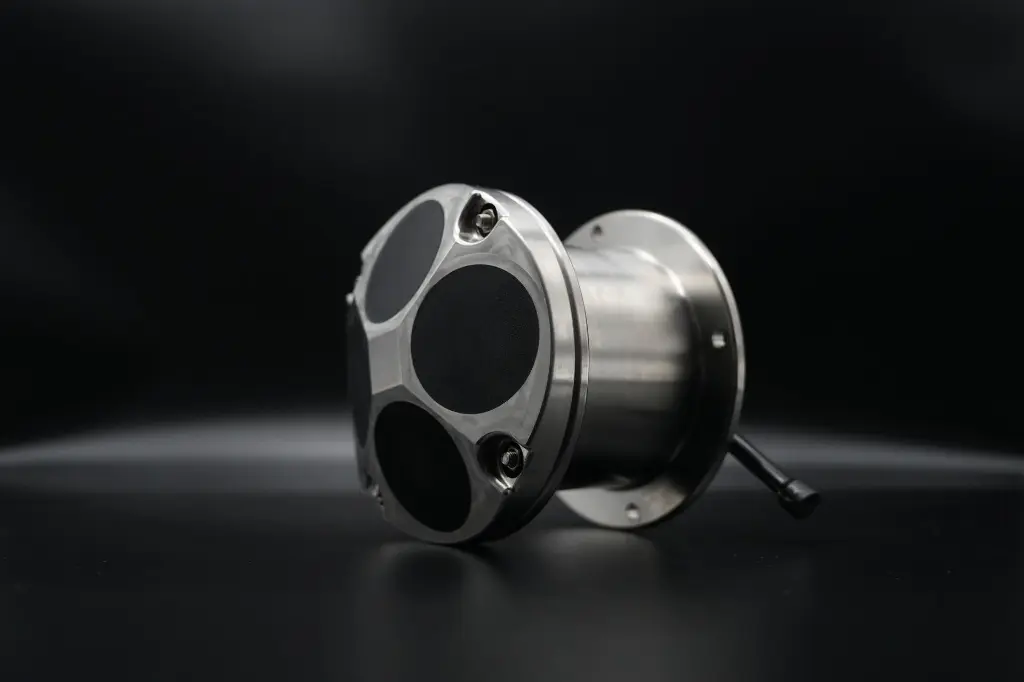
As the pace of unmanned underwater vehicle (UUV) research and development continues to accelerate, Autonomous Underwater Vehicles (AUVs), Remotely Operated Vehicles (ROVs), and subsea intervention robots are placing four uncompromising demands on onboard Doppler Velocity Logs (DVLs): miniaturization, high precision, deep sensor integration, and extreme depth tolerance.
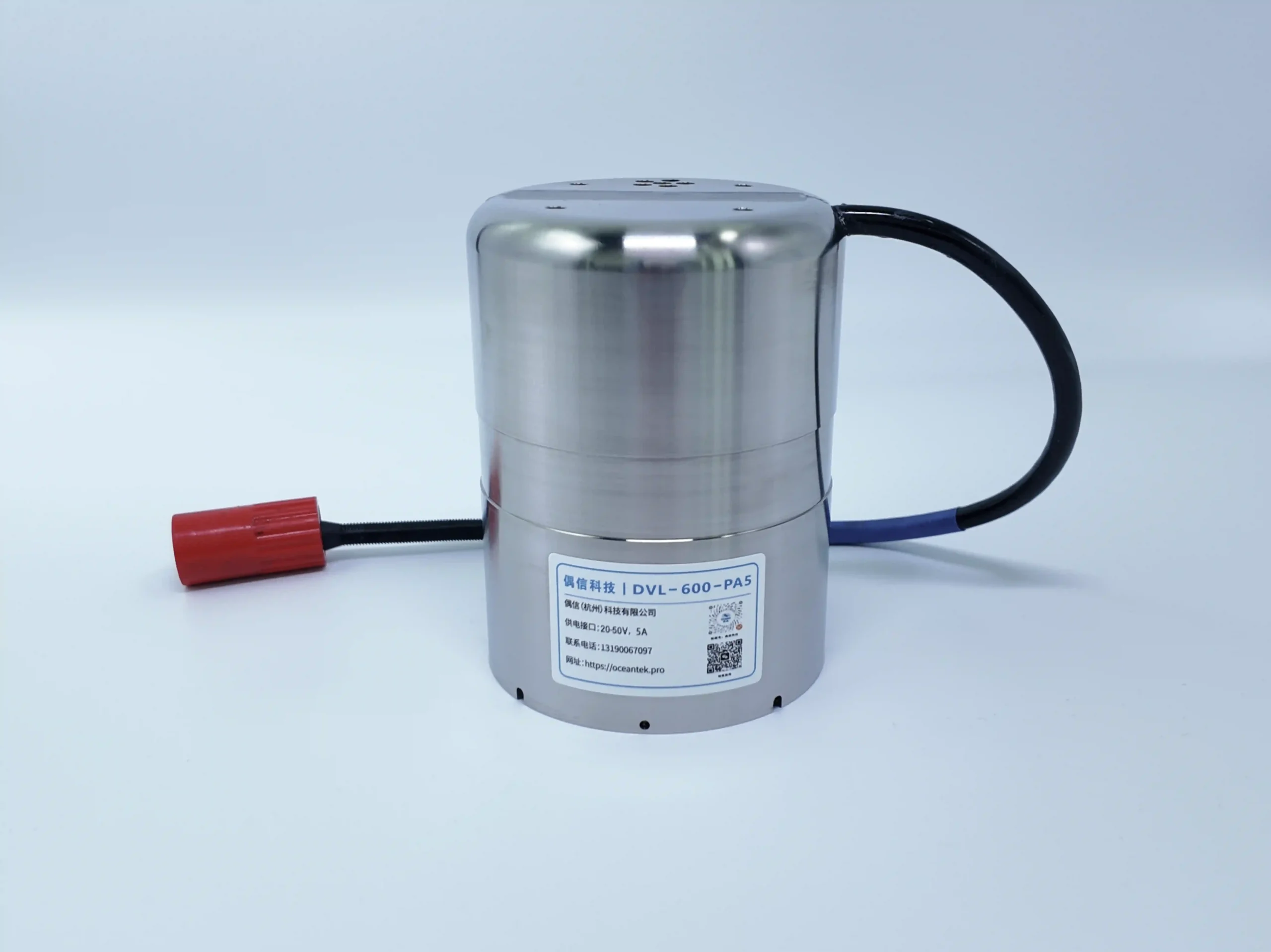
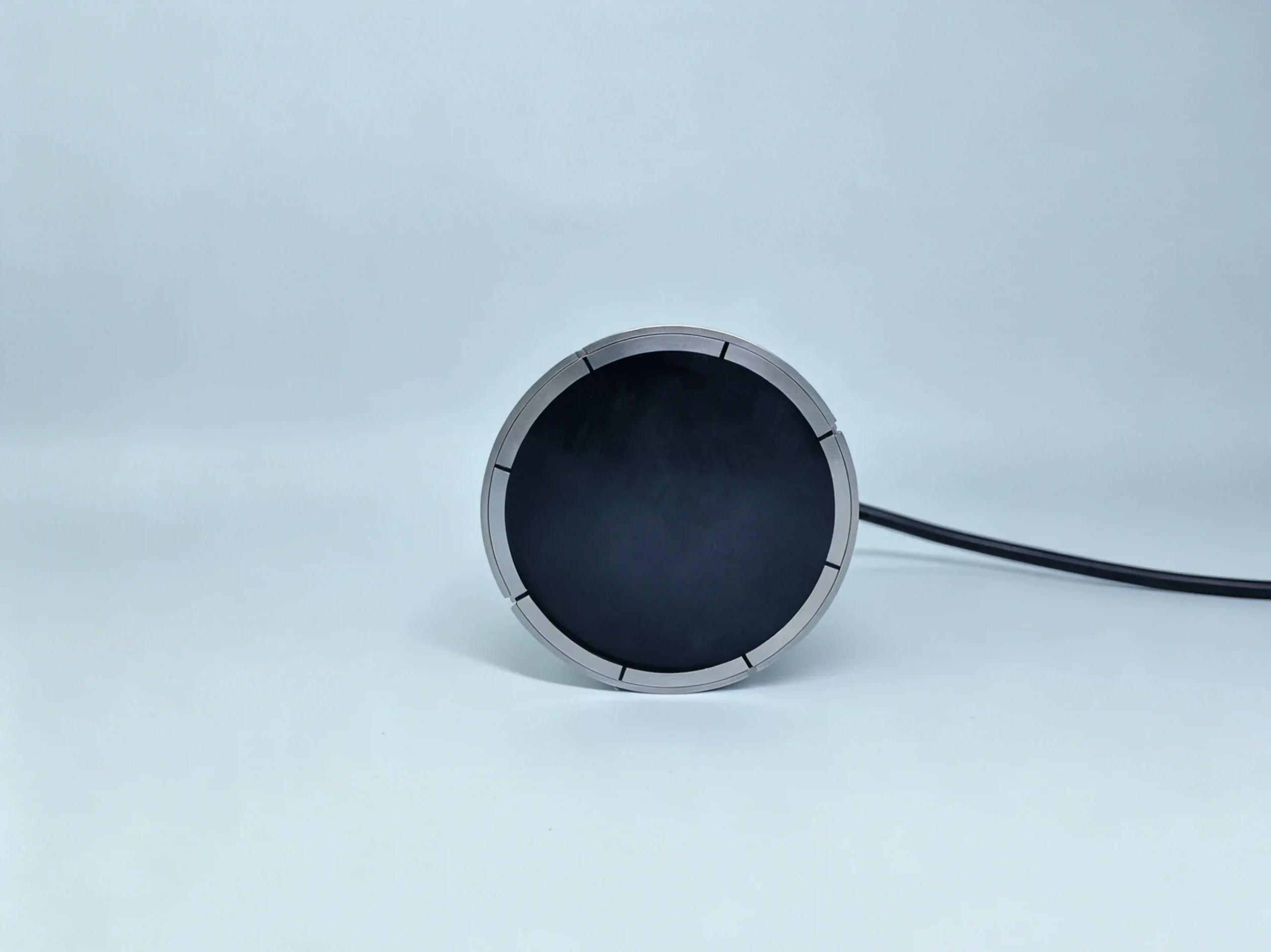
Oceantek Technology has responded with the official launch of its self-developed phased-array product — the DVL-600-PA5. Built around a 600 kHz planar phased-array transducer architecture, the DVL-600-PA5 packs velocity measurement, depth sensing, attitude detection, and temperature-pressure monitoring into a single Φ92 × 112 mm compact body. Available in 1,000 m, 3,000 m, and 6,000 m depth-rating configurations, the device breaks through the limitations of traditional piston-array DVLs across hardware design, algorithmic performance, and system integration — positioning itself as the preferred navigation solution for domestic small and mid-size underwater vehicle platforms.
1. Phased-Array Hardware Innovation: Planar Architecture Shatters Traditional DVL Constraints
Conventional mechanical piston-array DVLs typically employ a four-transducer discrete layout. This design demands significant installation space, requires tedious beam calibration, and offers poor conformal adaptability to compact vehicle hulls.
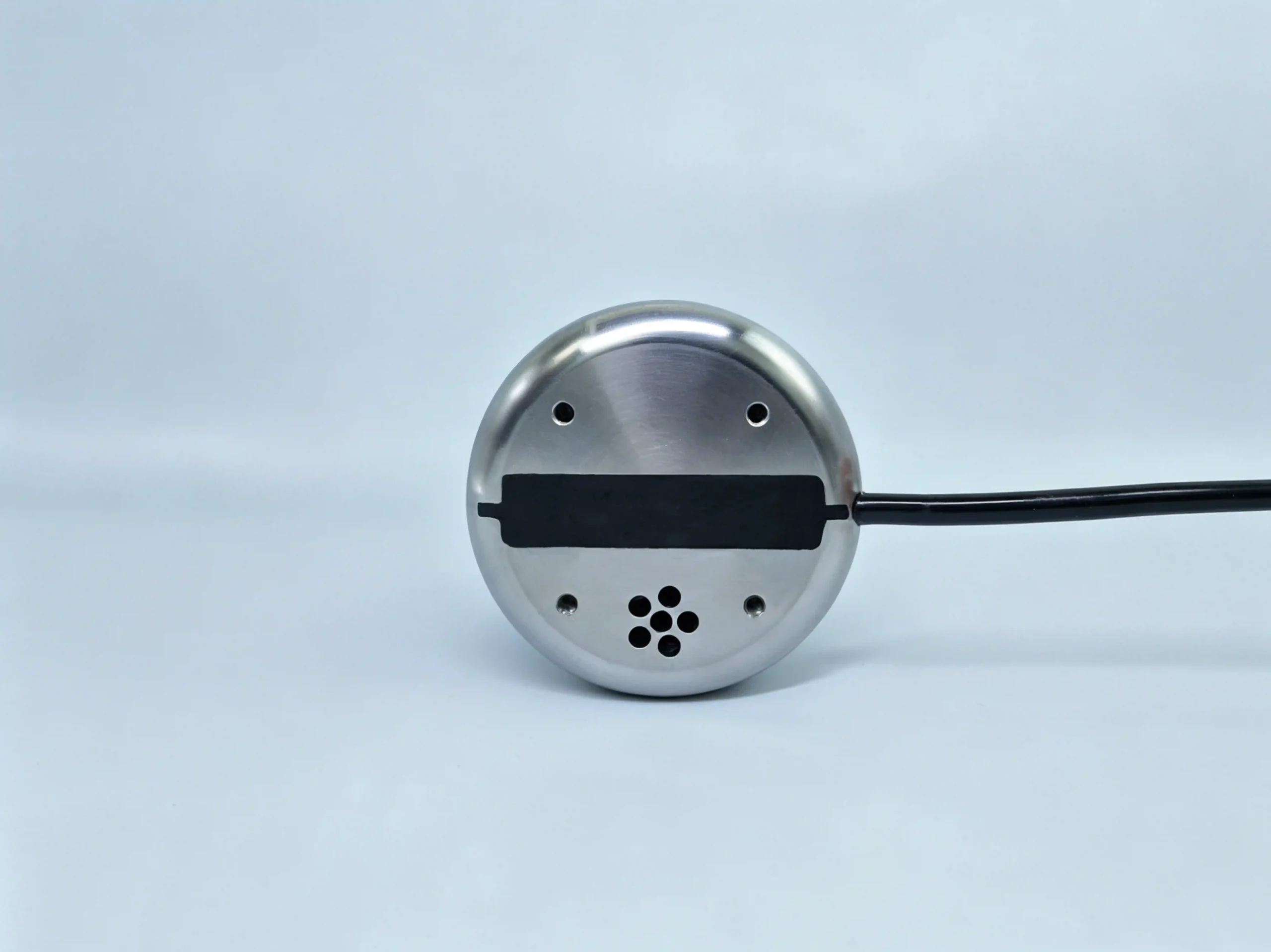
The DVL-600-PA5’s core breakthrough lies in its fully planar phased-array transducer design. The entire unit transmits and receives acoustic signals from a single flat end-face, with a beam angle of 30° and a beam width of 3.5°. Operating at a 600 kHz main frequency, it strikes an optimal balance between detection range and velocity precision: the bottom-tracking effective range spans 1 to 110 meters, with an exceptionally low minimum tracking distance that enables reliable near-seabed operations — a critical advantage for shallow-water low-altitude missions and subsea cable-controlled robot close-proximity survey scenarios.
On the hardware side, the device is equipped with 64 GB of built-in Micro SD storage, capable of archiving vast quantities of raw velocity and attitude data to support long-endurance untethered AUV missions. The entire housing is machined from titanium alloy, with an in-air weight of ≤1.8 kg. This compact footprint drastically reduces the payload burden on underwater platforms, directly resolving the buoyancy-trim imbalance issues that plague small ROVs burdened by overweight sensor packages.
2. Precision Velocity Measurement: Dual Bottom- and Water-Tracking, Millimeter-Grade Accuracy Anchors Underwater Navigation
Velocity measurement accuracy is the core competitive metric of any DVL product. The DVL-600-PA5 delivers dual bottom- and water-tracking capability, covering the full spectrum of underwater velocity measurement scenarios.
Bottom-tracking mode achieves a measurement accuracy of ±0.3% ±3 mm/s, with a velocity resolution of 1 mm/s — capturing minute displacements with precision. Even in challenging environments such as shallow-water silt substrates and gravel seabeds, the system maintains stable velocity data output, overcoming the soft-bottom lock-loss and beam-dropout issues that have long plagued traditional DVLs.
Water-tracking mode leverages the 600 kHz acoustic signal to penetrate the water column. During mid-water hovering and water-column profiling operations, it measures vehicle velocity relative to ambient water currents by analyzing acoustic returns from suspended particulate scatterers.
The device is uniformly configured with a stable 2 Hz data output rate and offers dual RS232 and RS422 communication interfaces, providing flexible connectivity with a wide range of underwater host control systems. Data transmission is stable and interference-resistant, fully meeting the real-time demands of navigation filter computation. The integrated altimeter unit delivers accuracy of ±1% ±0.5 cm with 1 mm height resolution, synchronously feeding the vehicle’s height-above-bottom into the navigation solver. Combined with velocity data, this enables precise dead-reckoning positioning and provides a critical correction data source for subsea Inertial Navigation Systems (INS).
3. Multi-Sensor Integration: A One-Stop Sensing Solution That Streamlines Subsea System Integration
Unlike DVL products on the market that require aftermarket add-on sensors, the DVL-600-PA5 achieves native in-body integration of four major sensing units: temperature, pressure, attitude, and electronic compass — drastically simplifying internal wiring and installation space within submersible pressure housings.
The temperature sensor operates across -5°C to +45°C with a measurement accuracy of ±0.1°C, capturing real-time ambient water temperature around the device to support sound-speed environmental correction. The pressure sensor, custom-matched to each depth-rating specification, delivers measurement accuracy of ±0.25%, directly converting readings to actual underwater depth — eliminating the additional cost of installing a standalone depth gauge.
The built-in attitude sensing module covers a ±85° pitch and roll range, with RMS accuracy of ±0.2° and resolution of 0.1°. The electronic compass provides full 0–360° heading measurement with RMS accuracy of ±0.8°, precisely identifying even subtle heading changes.
Critically, the entire sensor cluster operates on the same hardware acquisition clock as the DVL velocity measurement engine, guaranteeing temporally synchronized data streams. This dramatically reduces timing misalignment errors that arise in multi-device integrated navigation architectures and significantly shortens the system integration and commissioning cycle.
4. Broad-Condition Adaptability: Multiple Depth Ratings for Full-Scenario Multi-Water Deployment
On the structural and environmental reliability front, the DVL-600-PA5’s titanium alloy pressure housing delivers corrosion resistance and withstands high hydrostatic deformation. The operating temperature range spans -5°C to +45°C, with the storage temperature range extending to -40°C to +70°C — ensuring dependable equipment transport, storage, and operational stability whether deployed in tropical high-temperature waters or in the low-temperature storage environments of polar scientific expeditions.
Power input is compatible with a 10–26 V DC range, with average power consumption ≤5 W. This low-power profile integrates seamlessly with AUV onboard power systems, effectively extending vehicle endurance and operational range. The product requires no additional modification to be carried aboard compact scientific survey AUVs, pipeline inspection ROVs, underwater dredging robots, and subsea cable route inspection platforms.
Technical Specifications at a Glance
| Oceantek DVL-600-PA5 — Key Specifications | |
|---|---|
| Acoustic Performance | |
| Operating Frequency | 600 kHz |
| Transducer Type | Planar phased array (single-face, 4-beam electronic steering) |
| Beam Angle / Beam Width | 30° / 3.5° |
| Bottom-Tracking Range | 1–110 m |
| Bottom-Tracking Accuracy | ±0.3% ±3 mm/s |
| Velocity Resolution | 1 mm/s |
| Water-Tracking Mode | Supported (600 kHz particle-scatter Doppler) |
| Data Output Rate | 2 Hz |
| Integrated Altimeter | |
| Altitude Accuracy | ±1% ±0.5 cm |
| Height Resolution | 1 mm |
| Integrated Sensors | |
| Temperature | -5°C to +45°C, ±0.1°C accuracy |
| Pressure (Depth) | ±0.25% FS accuracy (depth-rating matched) |
| Attitude (Pitch / Roll) | ±85° range, RMS ±0.2°, 0.1° resolution |
| Compass (Heading) | 0–360° range, RMS ±0.8° |
| Sensor Clock | Unified hardware clock (synchronized multi-sensor sampling) |
| Physical & Power | |
| Dimensions | Φ92 mm × 112 mm |
| Weight (in Air) | ≤1.8 kg |
| Housing Material | Titanium alloy |
| Depth Ratings | 1,000 m / 3,000 m / 6,000 m (selectable) |
| Power Input | 10–26 V DC |
| Average Power Consumption | ≤5 W |
| Communication | RS232 + RS422 (dual simultaneous) |
| Onboard Storage | 64 GB Micro SD card |
| Environmental | |
| Operating Temperature | -5°C to +45°C |
| Storage Temperature | -40°C to +70°C |
Frequently Asked Questions
Traditional piston-array DVLs use four separate transducer heads that require individual mounting, alignment, and cabling. The DVL-600-PA5 replaces this with a single-face planar phased array that electronically steers all four acoustic beams from one flat surface. This eliminates mechanical alignment drift, drastically reduces physical volume, and delivers superior beam coherence — particularly in challenging soft-seabed conditions where piston systems frequently lose bottom-lock.
The DVL-600-PA5 natively integrates five sensing functions in one device: Doppler velocity log (bottom- and water-tracking), precision altimeter, temperature sensor (±0.1°C), pressure-based depth sensor (±0.25% FS), 3-axis IMU for pitch and roll (RMS ±0.2°), and electronic compass for heading (RMS ±0.8°). All sensors share a unified hardware sampling clock, eliminating temporal misalignment errors common in multi-device navigation architectures.
Oceantek offers three depth-rating configurations: 1,000 m for coastal survey and harbor inspection; 3,000 m for continental shelf and offshore energy operations; and 6,000 m for deep-sea exploration and full-ocean-depth scientific missions. The core electronics and transducer are identical across all three — the difference lies in the pressure housing specification.
The DVL-600-PA5 is purpose-built for small and mid-size unmanned underwater platforms, including scientific survey AUVs, pipeline and cable inspection ROVs, underwater dredging and construction robots, and subsea infrastructure monitoring platforms. Its compact Φ92×112 mm form factor and sub-1.8 kg weight make it especially suited to vehicles where payload volume and mass are primary design constraints.
Yes. Oceantek Technology has achieved full-chain indigenous R&D for the DVL-600-PA5. The phased-array transducer, signal processing motherboard, and all embedded algorithm software are developed and manufactured in-house. This vertical integration enables faster delivery, responsive after-sales support, and customized firmware tuning — advantages that are difficult to replicate with imported products dependent on overseas supply chains.