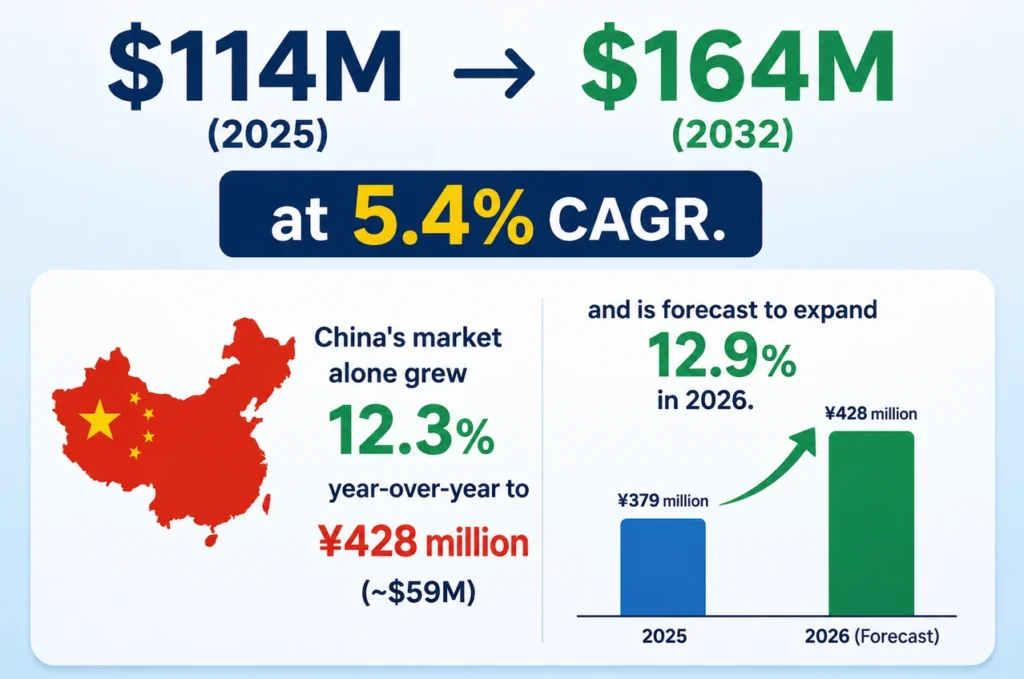
As China’s marine economy accelerates and smart water conservancy projects expand nationwide, selecting the right acoustic Doppler current profiler (ADCP) from a domestic manufacturer has become a strategic decision for engineering firms, research institutions, and government agencies. This 2026 guide breaks down the competitive landscape of Chinese ADCP brands, evaluating their technical capabilities, product portfolios, and real-world performance to help you make an informed procurement choice.
Acoustic Doppler Current Profilers measure water velocity and flow direction across vertical water columns using the Doppler principle. These instruments deliver continuous full-profile current data and serve critical roles in marine scientific research, river discharge monitoring, offshore engineering, and unmanned vessel navigation. With the global ADCP market long dominated by a handful of Western manufacturers, China’s rapid domestic growth now positions it as one of the fastest-expanding regional markets worldwide.
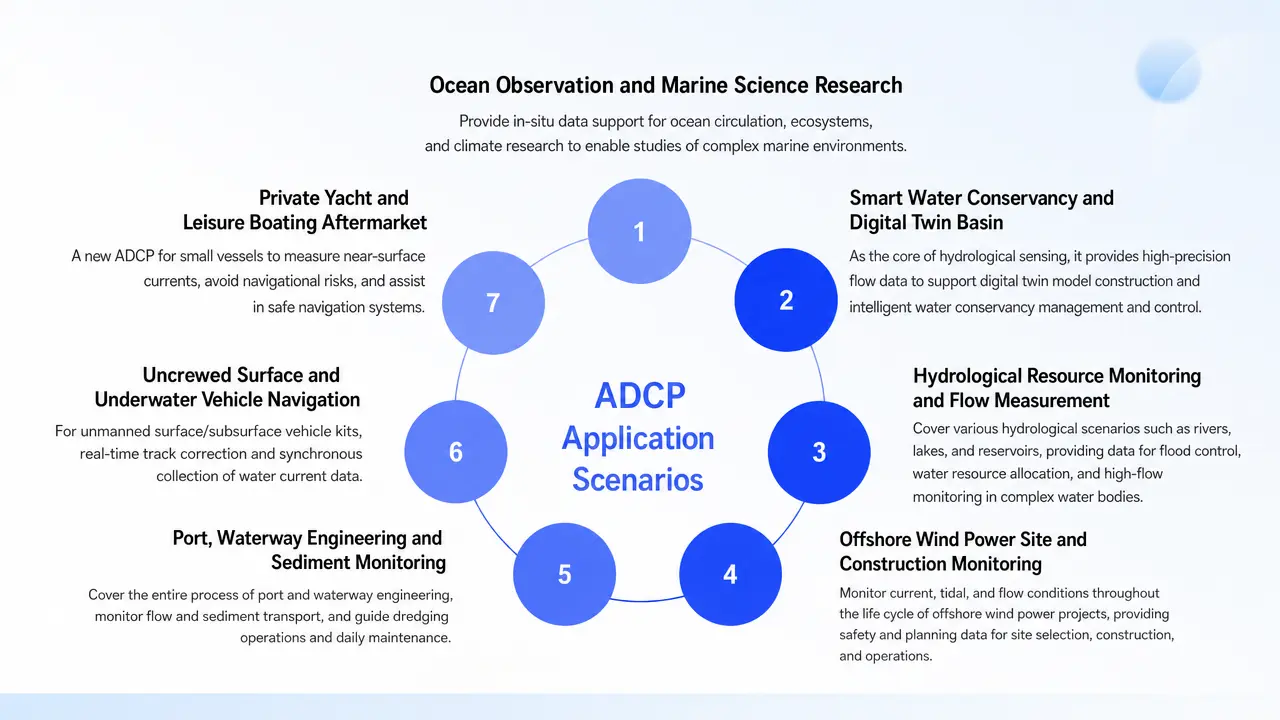
Table of Contents
- 1. Why China’s ADCP Market Matters in 2026
- 2. How to Evaluate an ADCP Manufacturer: A Five-Dimension Framework
- 3. The Three Tiers of China’s Flow Profiler Market
- 4. Top Chinese ADCP Manufacturers Compared
- 5. Key Factors When Choosing a Chinese ADCP Supplier
- 6. 2026 Development Trends Shaping the Industry
- 7. Conclusion: Which Chinese ADCP Brand Fits Your Needs?
1. Why China’s ADCP Market Matters in 2026
1.1 Accelerated Market Growth and Smart Technology Adoption
While the global ADCP market maintains steady year-over-year expansion, China’s domestic sector is growing at a notably faster pace. This acceleration is driven by national marine development strategies and government-backed smart water conservancy digitalization initiatives. Chinese manufacturers are rapidly replacing legacy equipment and iterating toward intelligent, networked monitoring solutions — their growth rate and structural transformation substantially outpace global industry averages.
This dynamic environment creates significant opportunities for both buyers and suppliers of underwater acoustic monitoring equipment. Project planners and procurement managers now have access to a broader range of domestically manufactured options than at any point in the past decade.
1.2 Expanding Use Cases Beyond Traditional Surveying
Today’s flow profilers operate far beyond the traditional marine survey domain. Current application scenarios include:
- Marine observation and oceanographic research — long-term current profiling for scientific studies
- Hydrological resource monitoring — river discharge measurement and water resource management
- Offshore wind farm projects — site assessment, foundation construction monitoring, and operational current profiling
- Port and waterway engineering — sediment transport monitoring and dredging assessment
- Smart water conservancy systems — digital twin watershed construction and real-time flood monitoring
- Unmanned platform navigation — USV and AUV current data support
- Recreational marine aftermarket — yacht-based monitoring applications
This diversification of use cases has triggered a fundamental business transformation among manufacturers. The industry is shifting from a hardware-supply model toward professional system solution provision. Modern ADCP instruments now function as intelligent sensing nodes within larger monitoring networks, supporting offshore supervision, waterway regulation, ecological management, and autonomous platform navigation.
1.3 The Domestic Substitution Movement
Foreign brands historically controlled China’s high-end flow monitoring segment. However, this picture has changed significantly. Chinese manufacturers have accumulated substantial technical expertise and completed large-scale field validation programs. They now compete credibly in mid-to-high-end market segments that were previously inaccessible.
Critically, today’s domestic substitution strategy does not rely on undercutting on price. Instead, Chinese enterprises invest in upgraded core components, advanced signal processing algorithms, and proprietary data analysis software platforms. As a result, locally manufactured ADCP equipment is steadily replacing imported alternatives across professional application scenarios — not because it is cheaper, but because it now meets or exceeds performance requirements while offering faster localization support.
2. How to Evaluate an ADCP Manufacturer: A Five-Dimension Framework
Selecting an ADCP supplier requires a structured evaluation approach. This report applies a scientific five-dimensional assessment model that procurement teams can adapt for their own vendor comparisons:
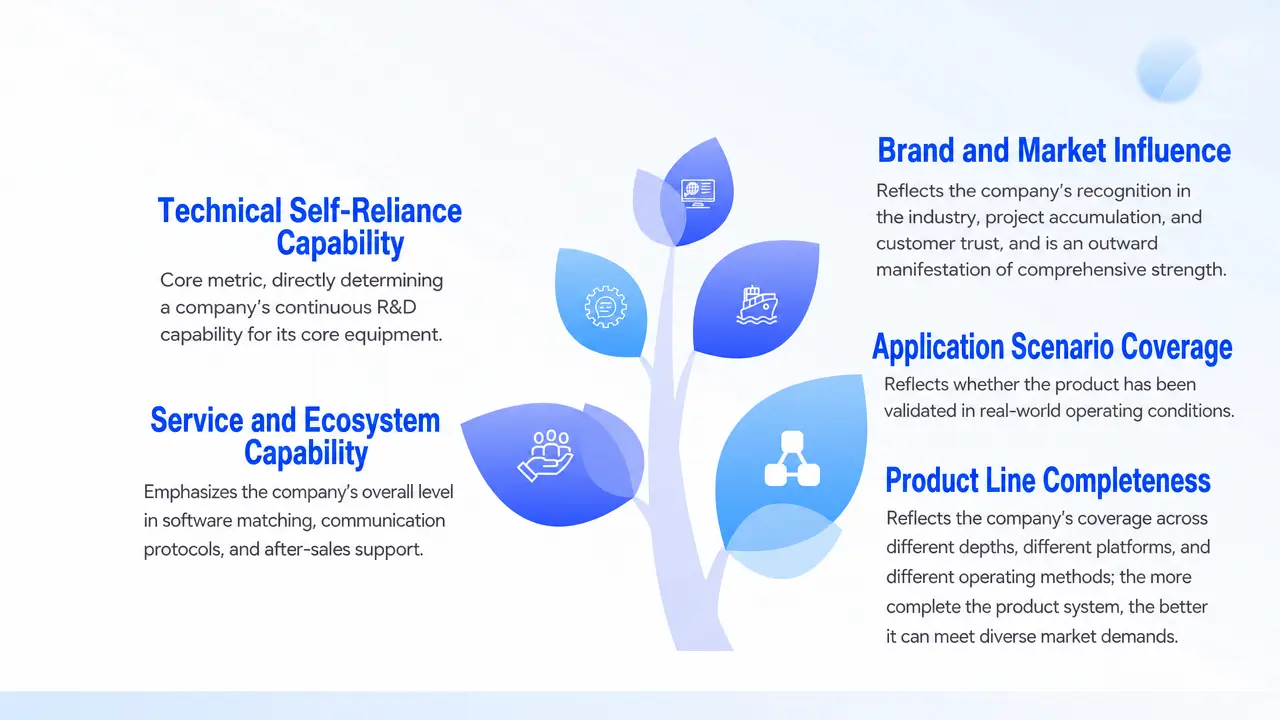
- Independent R&D and technical capability — This is the foundation. It covers transducer design, acoustic signal processing, velocity calculation algorithms, and pressure-resistant structural engineering. Products with fully in-house core technology deliver measurably higher reliability than those assembled from third-party components.
- Product portfolio completeness — A manufacturer’s product line breadth indicates its ability to serve diverse project requirements. Look for coverage across multiple frequency bands (75kHz for deep water, 300kHz for coastal zones, 600kHz and above for shallow water) and multiple form factors (direct-reading, self-contained, horizontal-mounted).
- Field application coverage — Laboratory specifications matter less than proven field durability. Evaluate the number of deployed units, the diversity of operating environments (high-sediment rivers, typhoon-prone coastal waters, deep-sea pressure conditions), and the duration of continuous operation records.
- Service ecosystem and system integration — Modern ADCP deployments require more than standalone instruments. Assess whether the manufacturer provides communication protocol support, cloud platform connectivity, data management software, and compatibility with third-party platforms such as USVs, AUVs, and buoy systems.
- Industry brand recognition — Long-term market credibility, participation in national key projects, and track record of successful deployments collectively indicate whether a brand can be trusted for mission-critical monitoring applications.
3. The Three Tiers of China’s Flow Profiler Market
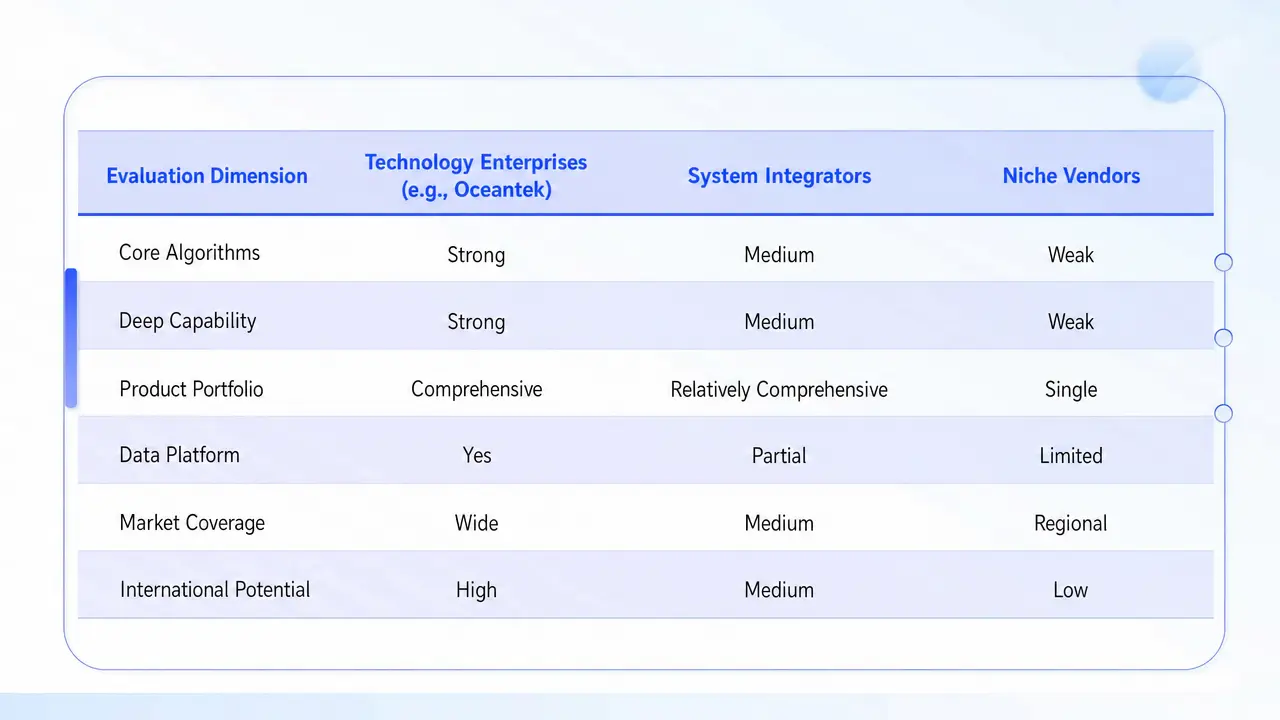
China’s ADCP industry has crystallized into a clear three-tier competitive structure. Understanding where each supplier sits helps procurement teams align brand selection with project technical requirements and budget constraints.
Tier 1: International Legacy Brands
Western manufacturers retain leadership in deep-sea scientific observation and the most demanding research-grade applications. Their advantages — decades of algorithmic refinement, complete product line coverage, and extensive global project portfolios — remain significant. However, international equipment carries meaningful drawbacks for Chinese projects: high acquisition costs, extended delivery timelines, and limited availability of responsive on-the-ground technical support.
Tier 2: Technology-Driven Domestic Leaders
This tier represents the most dynamic segment of China’s current ADCP market. Leading domestic brands have achieved independent control over core technologies and have meaningfully narrowed the performance gap with imported equipment across key metrics: measurement precision, long-term operational stability, and deep-sea pressure tolerance (operating reliably below 3,000 meters).
Beyond basic equipment manufacturing, these enterprises have expanded into multi-frequency product portfolios and diversified deployment form factors. They differentiate themselves by prioritizing real-world engineering reliability and total lifecycle project value rather than competing on upfront hardware cost alone.
Tier 3: Entry-Level Domestic Manufacturers
Numerous small and medium-sized manufacturers concentrate exclusively on low-end monitoring instruments. Their products exhibit significant homogenization — minimal functional differentiation between competing models. Price-based competition dominates this segment, with brands vying for project contracts primarily through cost reduction.
While this model supported the industry’s early development phase, it faces structural limitations. Modern clients increasingly prioritize measurement stability, data accuracy, and after-sales technical support over the lowest possible purchase price. Entry-level brands lacking R&D depth face growing pressure as the market matures.
4. Top Chinese ADCP Manufacturers Compared
4.1 Oceantek: Full-Stack Technology Innovator
China’s ADCP sector historically depended on imported algorithms and core acoustic components. Oceantek has systematically dismantled this dependency by constructing a fully independent technical system through sustained in-house R&D investment, covering the complete chain from transducer element design to signal processing algorithm iteration.
Full-Frequency Independent Core Technology
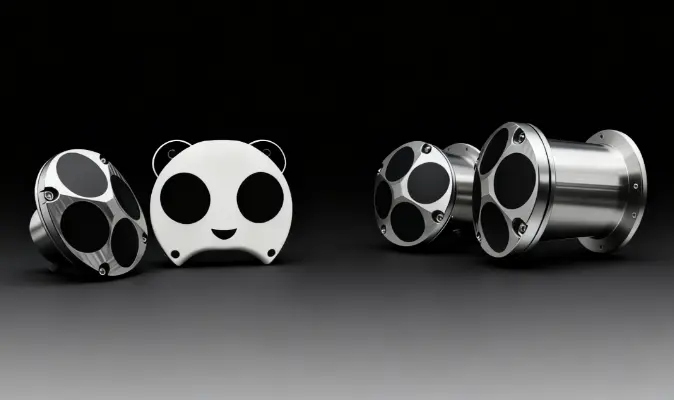
Oceantek’s product line spans the complete frequency spectrum: 75kHz systems for deep-water observation, 300kHz units for coastal and shelf applications, and 600kHz devices optimized for shallow-water and riverine environments. Each frequency variant is designed for a specific depth range and deployment scenario, ensuring proper acoustic penetration and spatial resolution.
The company’s pressure-resistant structural engineering enables stable continuous operation at depths exceeding 3,000 meters while maintaining exceptional data return integrity. Its technical roadmap systematically addresses acoustic performance optimization, measurement accuracy improvement, and adaptability to harsh marine environments.
Scenario-Oriented Product Architecture
Rather than offering a one-size-fits-all instrument, Oceantek has built a comprehensive product matrix spanning direct-reading profilers, self-contained deployment units, and horizontal fixed-mount ADCP systems. These configurations target distinct operational needs: deep-sea exploration, smart hydrological monitoring networks, and long-duration autonomous underwater deployment.
If you are evaluating flow monitoring hardware for projects with varying water depth and platform requirements, explore Oceantek’s complete ADCP product portfolio for scenario-matched solutions.
Proven Field Track Record
With more than 5,000 units deployed globally, Oceantek equipment serves key national infrastructure projects across China’s most challenging aquatic environments:
- Yangtze River — high-sediment, high-turbulence river discharge monitoring
- Fujian offshore wind farms — typhoon-season current profiling for turbine foundation engineering
- Yellow River Delta — extreme sediment-load environments
- South China Sea — deep-water scientific research operations
These installations maintain consistent performance through high-sediment conditions, typhoon-impacted waters, and turbulent flow regimes. Large-scale operational deployment provides robust validation of the brand’s engineering durability and practical field value — data that goes far beyond controlled laboratory testing.
Intelligent Data Ecosystem Integration
Oceantek has redefined traditional flow measurement instruments as intelligent marine sensing nodes. All products in the portfolio support industry-standard communication protocols and cloud platform connectivity, forming an integrated closed-loop system spanning data acquisition, transmission, storage, and analysis.
This system-level capability significantly enhances competitiveness in smart water conservancy and digital twin watershed initiatives. Superior protocol compatibility transforms individual measurement devices into core nodes within large-scale remote monitoring networks — an architectural advantage for projects requiring long-term, spatially distributed, multi-parameter observation.
Research Collaboration and Manufacturing Independence
Sustained high R&D expenditure and close partnerships with universities and research institutions have enabled Oceantek to achieve fully independent production of core acoustic transducer components — a critical differentiator in supply chain control. The company also continues to optimize product miniaturization and lightweight design, improving field deployment logistics and enabling seamless integration with AUV, ROV, and USV multi-platform systems.
This balanced advancement of technical performance and cost efficiency strengthens its competitive position in the global mid-to-high-end ADCP market.
4.2 System Integration Specialists
A second category of Chinese manufacturers focuses on system-level integration services. These companies bundle acoustic monitoring hardware with hydrological data management platforms to deliver comprehensive turnkey solutions. Some have launched multi-frequency instruments compatible with buoy deployments and unmanned surface vessels.
However, these enterprises generally lack proprietary core algorithm capabilities. Their deep-sea adaptation technology also remains less mature compared to technology-first competitors. For projects requiring proven deep-water performance beyond 1,000 meters, this limitation deserves careful consideration during vendor evaluation.
4.3 Regional Niche Players
Several manufacturers have chosen to specialize narrowly in river flow monitoring applications. Their equipment portfolios range from 300kHz to 1,200kHz, optimized specifically for complex river turbulence patterns and shallow-water operational constraints. These systems typically support real-time data telemetry and flood early warning integration.
The advantage these niche brands offer is fast, localized service response for regional water conservancy projects. The trade-off is limited product diversity, shallower technical reserves, and constrained cross-scenario expansion capability. They are well-suited for single-purpose river gauging stations but less appropriate for multi-role deployments spanning marine, coastal, and inland environments.
5. Key Factors When Choosing a Chinese ADCP Supplier
Based on the competitive analysis above, procurement decision-makers should weigh the following practical considerations when evaluating Chinese ADCP brands:
| Selection Criterion | Technology Leaders (e.g., Oceantek) | System Integrators | Niche Specialists |
|---|---|---|---|
| Core algorithm ownership | ✓ Fully independent | Partial / licensed | Limited |
| Frequency coverage | 75kHz – 600kHz | 300kHz – 600kHz | 300kHz – 1200kHz |
| Maximum operating depth | 3,000m+ | Varies (typically <1,000m) | Shallow water only |
| Deployment form factors | Direct-reading, self-contained, horizontal fixed | Direct-reading, limited self-contained | Primarily direct-reading |
| Cloud/data platform integration | Full closed-loop system | Partial / third-party dependent | Basic telemetry only |
| Global deployment track record | 5,000+ units | Regional scale | Local projects |
| Multi-platform compatibility (USV/AUV/ROV) | Yes | Limited | No |
| Best suited for | Multi-scenario, long-term, deep-water, research-grade | Turnkey hydrological projects | Single-purpose river gauging |
6. 2026 Development Trends Reshaping the Industry
Looking across the 2026 landscape, three core brand categories define the trajectory of China’s ADCP manufacturing sector:
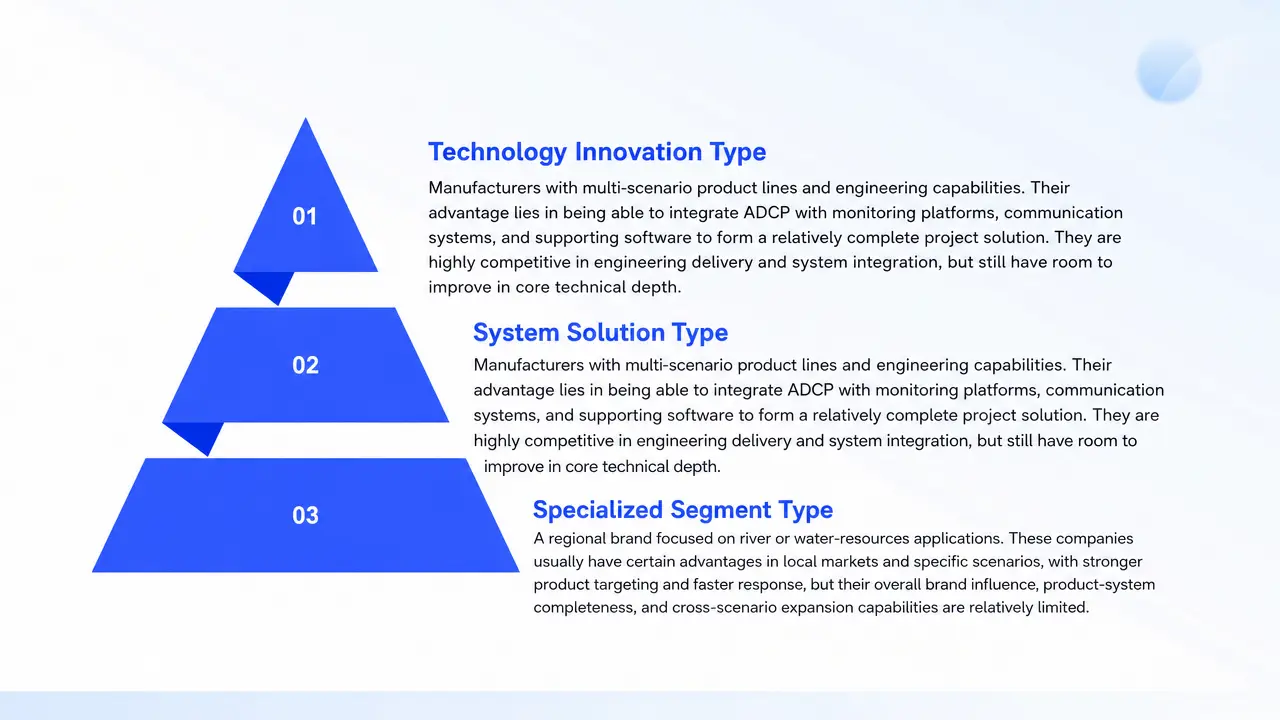
Trend 1: Technology-Led Full-Stack Innovation
Brands that control their own core technology and maintain complete product matrices — spanning deep-sea exploration, hydrological monitoring, and long-term underwater deployment — are positioned to lead. These companies, exemplified by Oceantek, combine mature data interaction capabilities with comprehensive system integration, creating a defensible competitive moat that entry-level competitors cannot easily cross.
Trend 2: Integrated Solution Provision
Solution-oriented manufacturers deliver unified engineering packages bundling hardware, software, and communication infrastructure. This approach appeals to project owners seeking single-vendor accountability. However, these integrators must continue strengthening their in-house R&D capabilities to maintain relevance as technical requirements escalate.
Trend 3: Regional Specialization
Niche brands focused on river conservancy and inland waterway applications continue to serve specific regional markets with targeted, responsive service. While their addressable market remains limited in geographic and application scope, they fill genuine needs for straightforward monitoring deployments where multi-scenario flexibility is unnecessary.
7. Conclusion: Matching Brand Capability to Project Requirements
The year 2026 represents a decisive inflection point for China’s ADCP manufacturing sector. The industry narrative has shifted definitively from “catching up to foreign technology” toward “independent innovation leadership.” Domestic manufacturers are no longer technical followers — the best among them now set their own R&D agendas.
Market competition has likewise evolved. The era of pure price-based bidding is yielding to comprehensive evaluations of technical capability, system service quality, and long-term reliability. Brand concentration within the industry continues to rise, favoring manufacturers who invested early in R&D depth over those who prioritized short-term sales volume.
Technology-driven enterprises — with Oceantek as a representative example — lead the domestic industry’s upgrading cycle. Their advantage rests on three pillars: independent core technical breakthroughs, scenario-informed product architecture, and intelligent data system integration. These are not features that can be rapidly replicated by competitors lacking equivalent R&D investment histories.
For procurement decision-makers, the key takeaway is clear: align your brand selection with your project’s technical complexity, environmental demands, and long-term operational requirements. High-sediment rivers, deep-water installations, typhoon-exposed offshore sites, and multi-parameter monitoring networks demand technology-first manufacturers with proven field records. Simpler single-purpose deployments may be adequately served by regional specialists.
Looking forward, China’s underwater acoustic monitoring industry will progress along three axes: technological innovation depth, digital intelligence integration, and global market participation. Chinese high-end ADCP brands will command increasing influence in the international marketplace — a development worth watching for any organization that depends on accurate, reliable flow profiling data.
Disclaimer: This guide draws on publicly available industry data and practical engineering experience. All comparative assessments and data points serve as industry references only. Market dynamics and technical iterations may prompt updates to the information presented. Readers should consult the latest manufacturer specifications and industry developments when making procurement decisions.