From turbid shallow coastal waters to high-pressure deep-sea areas, sediment-laden rivers to strong turbulent sea zones, complex water environments have always served as the ultimate test for underwater velocity measurement. Superimposed challenges such as abundant suspended particles, heavy bubble interference, diverse seabed sediment types, and unstable platform attitude often cause signal distortion and data interruption for conventional velocity measurement devices. This directly compromises the safety and accuracy of underwater navigation, engineering operations, and marine scientific research missions.
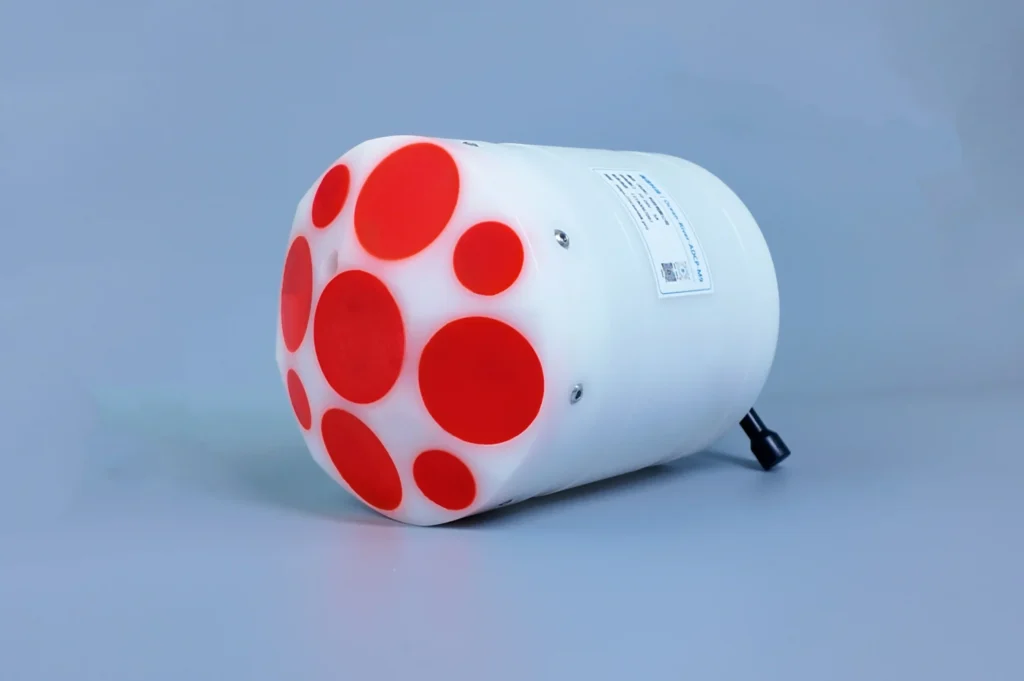
As core equipment for underwater velocity measurement and navigation, DVL (Doppler Velocity Log) performance stability and reliability under harsh operating conditions have become a key focus across the industry. With in-depth expertise in underwater acoustic technology, Oceantek has developed an independent DVL product portfolio. Through cutting-edge technological breakthroughs and scenario-oriented design, our DVL delivers stable and precise velocity measurement in complex water environments, establishing itself as a benchmark choice for domestic DVL solutions.
Four Core Challenges of Velocity Measurement in Complex Water Environments
The unique characteristics of complex water environments impose stringent requirements on DVL acoustic detection, signal processing, and attitude adaptation capabilities, with four major pain points standing out:
First, severe water turbidity interference weakens signal penetration. Coastal zones, rivers and harbors are filled with sediment, suspended solids and air bubbles, which scatter and absorb acoustic signals. This results in weak echo signals, low signal-to-noise ratio, frequent bottom tracking failure, sudden velocity data fluctuations, and even complete signal loss for conventional devices.
Second, unstable platform attitude brings significant motion interference. Underwater operational platforms such as ROVs and AUVs, as well as unmanned surface vessels, are prone to rolling, pitching and heaving under wind and wave turbulence. Drastic attitude changes cause beam deviation and velocity calculation errors, undermining overall data stability.
Third, diverse seabed sediments complicate echo recognition. Seabed materials including mud, sand, rock and seaweed feature vastly different reflection intensities. Weak-reflection seabed types generate faint echo signals, while complex terrains trigger multi-path reflection interference, making it harder to identify valid signals accurately.
Fourth, wide water depth range demands strong environmental adaptability. From shallow waters of several meters to deep seas of thousands of meters, dramatic variations in water pressure, temperature and sound propagation conditions require DVL devices to maintain high precision in shallow water while ensuring penetration capability in deep sea, and adapt to extreme environmental parameter fluctuations.
Oceantek DVL: Advanced Technology Lays a Solid Foundation for Velocity Measurement in Complex Conditions
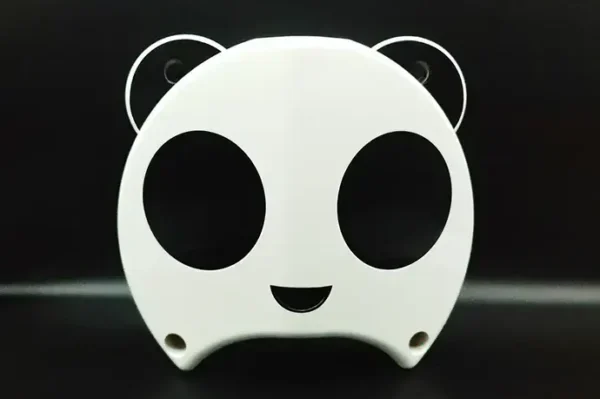
Addressing the multiple challenges of complex water environments, Oceantek independently develops core technologies covering hardware architecture, acoustic design and algorithm optimization to build a comprehensive anti-interference system. Our flagship models including DVL-600-DR-FA4 and DVL-300-DR-FA4 effectively overcome common velocity measurement pain points with outstanding performance.
1. Symmetric Four-Beam Architecture with Strong Immunity to Attitude Interference
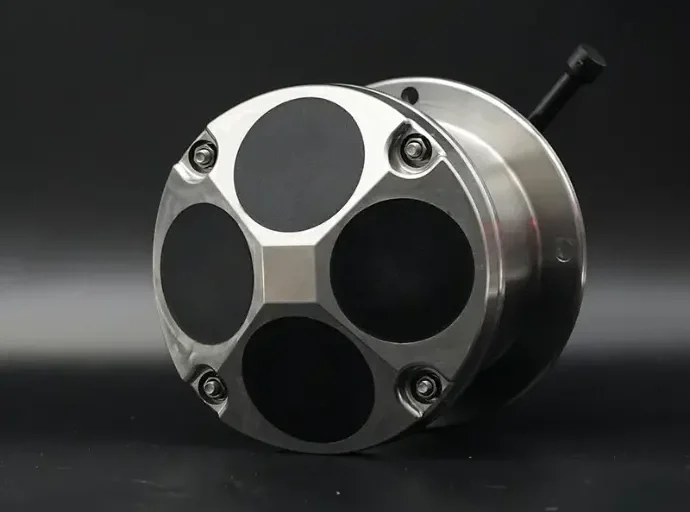
Oceantek DVL adopts a self-developed symmetric four-beam layout, different from traditional single-beam or asymmetric multi-beam designs. With vector synthesis technology, it efficiently decouples the interference of vertical motion on horizontal velocity calculation. Even when the operational platform undergoes severe rolling and heaving under Sea State 4, cross-verification of redundant four-beam data rapidly eliminates errors caused by abnormal attitude and accurately isolates real horizontal motion components.
2. Intelligent Signal Processing Algorithm for Clear Detection in Turbid Water
For sediment-rich and bubble-dense turbid waters, Oceantek DVL integrates adaptive gain control and intelligent clutter filtering algorithms with dynamic recognition and intelligent filtering capabilities. The system monitors echo signal intensity in real time and dynamically adjusts signal gain to enhance weak signal penetration. It also accurately distinguishes valid seabed echo signals from false signals generated by sediment, air bubbles and sidewall reflections to suppress clutter interference.
In field tests conducted in the turbid South China Sea, facing weak-reflection muddy seabed and strong reverberation interference, Oceantek DVL achieves an effective measurement rate of over 98%. In comparison, competing devices frequently lose bottom lock with a data interruption rate exceeding 30%.
3. Millimeter-Level Velocity Accuracy with Full-Water-Depth Adaptability
Oceantek DVL performance is benchmarked against international top-tier standards. DVL-600-DR-FA4 delivers bottom tracking accuracy of ±0.3%±3mm/s and flow velocity resolution of 1mm/s, capturing subtle flow patterns and platform motion changes with high precision.
The product lineup covers full water depth scenarios:
DVL-600-DR-FA4 features a bottom tracking range of 0.7–110m, ideal for high-precision operations in shallow waters such as coasts, harbors and rivers.
DVL-300-DR-FA4 supports a bottom tracking range of 0.7–220m, meeting medium and deep-water velocity measurement demands.
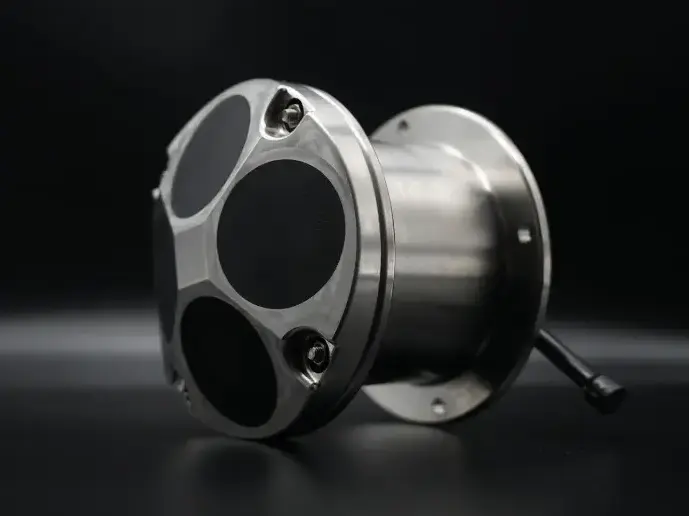
It is available in three pressure resistance ratings: 1000m, 3000m and 6000m, with an operating temperature range of -5°C to 45°C, perfectly adapting to extreme environments including deep-sea high pressure and polar low temperatures.
4. High-Reliability Hardware Design for Long-Term Continuous Operation
The unit adopts a titanium alloy pressure-resistant housing with high strength, corrosion resistance and vibration resistance, perfectly suited to harsh underwater working conditions. The circuit system has passed industrial-grade vibration and anti-interference tests, supporting continuous operation for no less than 100 days, fully meeting the demands of long-endurance missions such as marine scientific research and subsea pipeline inspection.
It supports seamless integration with mainstream Inertial Navigation Systems (INS) to form a combined DVL+INS navigation solution, suppressing inertial navigation error accumulation and enabling long-term high-precision positioning.
Field Verification: Proven Reliability Across Diverse Complex Scenarios
Oceantek DVL has completed field verification in multiple typical complex water environments across China, delivering exceptional performance and wide industry recognition.
In sediment-laden sections of the Yellow River during flood seasons, suspended sediment concentration exceeds 30kg/m³ with turbulent flow patterns. Conventional DVLs achieve an effective data rate of less than 60%, while DVL-600-DR-FA4 stably filters sediment interference via intelligent clutter filtering algorithms, maintaining an effective data rate above 95%. It accurately measures cross-section flow velocity and discharge, providing reliable data support for flood control and scheduling.
In strong turbulent sea areas of the South China Sea under Sea State 4, the platform rolling amplitude reaches ±15°, causing conventional devices to suffer velocity measurement errors over ±5%. Equipped with four-beam attitude compensation technology, Oceantek DVL controls measurement errors within ±0.5%, reliably supporting high-precision AUV topographic mapping missions.
In turbid coastal and harbor waters with a depth of 2–5m, dense suspended solids and visibility below 0.5m, Oceantek DVL can quickly lock seabed signals and output continuous and stable velocity data, suitable for waterway monitoring, underwater engineering construction navigation and other applications.
Benchmark for Domestic Substitution, Empowering the Development of Underwater Intelligent Equipment
Stable velocity measurement in complex water environments is an essential demand for underwater navigation and operations, and a critical criterion for evaluating DVL performance. Featuring independently developed core technologies, comprehensive anti-interference design, millimeter-level precision and high reliability, Oceantek DVL realizes stable and accurate velocity measurement in harsh water conditions. It breaks the technological monopoly of overseas brands and stands as a benchmark domestic alternative to imported DVL products.
Compared with overseas devices of equivalent performance, Oceantek DVL is priced at only one-third, with localized after-sales support including hour-level response and on-site service. It effectively solves the pain points of delayed after-sales service and high maintenance costs associated with foreign equipment.
From shallow coastal waters to high-pressure deep seas, sediment-laden rivers to strong turbulent sea zones, Oceantek DVL offers full-scenario adaptability. It serves marine scientific research, offshore wind farm operation and maintenance, subsea pipeline inspection, harbor waterway monitoring, underwater engineering construction and other fields, acting as a precise perception eye for underwater intelligent equipment.
Moving forward, Oceantek will continue to deepen research in underwater acoustic technology, iteratively optimize DVL product performance and enhance adaptability to complex environments. With high-quality domestic equipment, we will contribute to marine resource exploitation, water security guarantee and the high-quality development of the underwater intelligent equipment industry.