Introduction
River discharge measurement is the cornerstone of water resource management. It informs decisions on flood warning, drought response, irrigation allocation, hydropower scheduling, and environmental compliance.
Yet capturing accurate flow data from natural rivers—with their shifting beds, variable depths, and unpredictable debris—has challenged hydrologists for over a century.
The introduction of Acoustic Doppler Current Profiler (ADCP) technology changed the rules. The U.S. Geological Survey (USGS) notes that ADCP-based discharge measurement methods are fundamentally different from traditional mechanical meter approaches. An ADCP profiles the entire water column in one pass, measuring dozens of depth cells simultaneously. A task that once required over an hour can now be completed in 10 to 15 minutes from a moving boat.
This guide covers the essential applications, selection criteria, and best practices for using ADCP in routine river discharge measurement. Whether you’re outfitting a new gauging station or planning a flood monitoring campaign, the following sections will help you navigate the technology and choose the right instrument.
Key Takeaways:
- ADCP reduces a full discharge measurement from over an hour to approximately 10–15 minutes—a roughly 10× throughput improvement.
- River‑optimized ADCPs (e.g., the Oceantek River‑ADCP‑M9) can measure water as shallow as 0.06 m, eliminating shallow‑water blind spots.
- Accuracy (±0.25 % ± 2 mm/s) rivals the best international instruments, as validated in the Yangtze, Yellow River, and Fujian coastal waters.
- ADCP is now recommended in USGS standard operating procedures as the preferred method for moving‑boat discharge measurements.
1. Why River Discharge Measurement Needs Accurate Current Profiling
1.1 High Precision: Closing the Data Gap
River flow can change dramatically within minutes—particularly in tidally influenced reaches, below hydropower dams, or during flash floods. A traditional mechanical meter, lowered to just two depths per vertical, requires well over an hour to complete a single cross‑section measurement. During that hour, discharge may change by more than 20%, making the data temporally aliased.
An ADCP completes the same cross‑section in minutes while simultaneously collecting velocity at up to 255 range cells. Research on large rivers confirms that ADCP measurements agree well with conventional methods—and offer higher accuracy under high‑discharge conditions, when traditional instruments struggle with both time constraints and debris. This speed advantage is not merely about efficiency; it enables accurate measurement of unsteady flows that traditional methods fundamentally cannot capture.
1.2 Portability and Safety
Today’s hydrological field crews need equipment that supports rapid‑response flood measurement, unmanned surface vessel (USV) deployment, and single‑operator surveys in remote terrain. Lightweight ADCPs directly address this need.
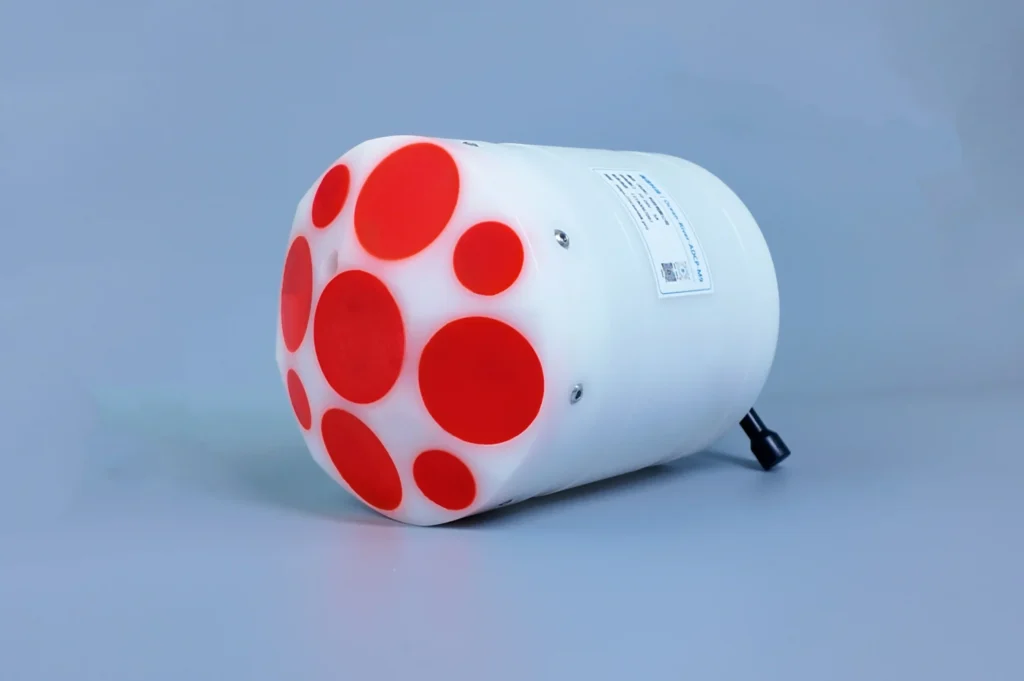
The Oceantek River‑ADCP‑M9 weighs just 1.5 kg and uses a piston‑style integrated design that a single operator can carry and deploy. Its 50 m depth rating and high‑strength engineering‑grade housing withstand flood‑stage impacts, moisture, dust, and UV radiation—conditions that rapidly degrade mechanical‑meter bearings.
For flood operations, the ADCP can be mounted on a tethered trimaran or remotely operated boat, keeping personnel safely on shore. Combined with radio‑modem or 4G telemetry, this transforms flood measurement from a high‑risk manned operation into a routine remote task.
1.3 Replacing Mechanical Meters: A Proven Transition
Field comparisons consistently show that ADCP discharge measurements agree with Price‑type mechanical current meters within 5%. USGS comparisons at three streamflow‑gauging stations found that ADCP discharges were within 4 percent of Price‑AA meter measurements. A Korean study comparing ADCP with VALEPORT, FlowTracker, and Price AA meters reported an average error of 7.7%, with strong repeatability.

Crucially, ADCPs require no annual mechanical calibration—a recurring expense for mechanical meters—and have no moving parts to wear or foul. The USGS now explicitly includes ADCP in its standard operating procedures for discharge measurement, covering both moving‑boat and mid‑section methods.
2. Key ADCP Applications in River Discharge Measurement
2.1 Moving‑Boat Discharge Measurement: The Standard Method
The moving‑boat method is the most widely used ADCP application for river discharge. The instrument is rigid‑mounted on a survey vessel—a small boat, trimaran, or tethered platform—and traverses the river from bank to bank while profiling downward. The USGS Techniques and Methods report 3‑A22 provides comprehensive guidance on this approach.
How it works: The ADCP measures water velocity relative to the instrument at multiple depths simultaneously. Simultaneously, bottom‑tracking pulses measure the instrument’s velocity over the riverbed. Subtracting boat speed from the measured water velocity yields the absolute current velocity at each depth cell. The deck‑unit software integrates these vectors across the cross‑section and computes total discharge in real time.
A critical step is the moving‑bed test. In rivers with active sediment transport, near‑bed movement can fool bottom‑tracking into a false upstream drift, producing a systematic low bias. The USGS recommends a loop test: navigate the boat in a closed path. If the trajectory fails to close, a moving bed is present and DGPS should be used as the velocity reference.
2.2 Direct‑Reading ADCP: Real‑Time Data, Immediate Decisions
A direct‑reading (shipboard) ADCP connects the submerged transducer to an on‑board deck unit via cable, displaying velocity profiles, depth, and discharge in real time. This configuration offers two decisive advantages:
- Immediate quality control: Beam correlation, error velocity, and bottom‑track continuity are all visible live. If a transect shows problems, the operator can repeat it before leaving the station.
- On‑site moving‑bed correction: Loop tests can be assessed immediately, and the velocity reference can be switched to DGPS if needed.
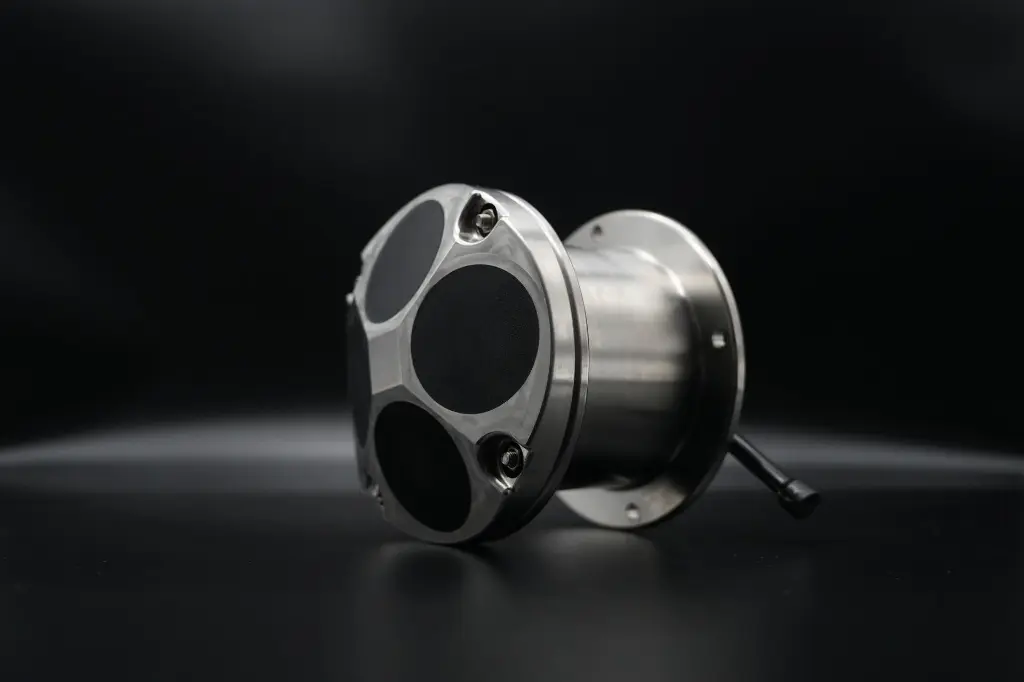
Oceantek offers direct‑reading ADCPs in the 600 kHz class with titanium alloy housing and ±0.3% ± 3 mm/s accuracy. For river‑specific applications, the company developed the River‑ADCP‑M9, a nine‑beam acoustic system designed to overcome shallow‑water and low‑velocity challenges.
The M9’s nine‑beam architecture combines dual four‑beam Janus arrays operating at 3.0 MHz and 1.0 MHz with a dedicated 0.5 MHz vertical echo‑sounding beam. This multi‑frequency strategy allows the instrument to automatically select the optimal mode for current depth and flow conditions. Key performance features include:
- Profiling from 0.06 m to 40 m depth, with a minimum cell size of just 0.02 m in ultra‑shallow water.
- Velocity accuracy of ±0.25% ± 2 mm/s and resolution of 1 mm/s—sufficient to resolve subtle pulsations even in low‑velocity flows.
- A velocity measurement range of ±20.0 m/s and full 0–360° direction coverage with ±2° accuracy.
Field comparisons at sites including the Yangtze River, Yellow River, and Fujian coastal waters showed high agreement with imported instruments. With an ultra‑light 1.5 kg body, single‑operator portability, and a 50 m depth rating, the M9 is purpose‑built for rapid deployment in small streams, flash‑flood response, and remote gauging stations.
2.3 Mid‑Section and Fixed‑Vessel Methods
Not every river reach is suitable for a continuous moving‑boat transect. Narrow channels, bridge‑pier turbulence, heavy traffic, or dense debris can make a full‑width traverse impractical. In these cases, the mid‑section method is a reliable alternative.
The Water Survey of Canada explains that a hydrographer can use an ADCP to measure discharge using the mid‑section method: the ADCP is held in place at multiple discrete verticals across the stream, capturing a full velocity profile at each station. This yields higher spatial resolution than traditional point measurements.
When to use this method:
- River width under approximately 30 m
- Sections with navigation hazards (bridge piers, rocks)
- Ice‑covered rivers where the ADCP is lowered through a drilled hole
- Conditions with extremely high debris load
3. Selecting the Right ADCP for River Discharge Applications
3.1 Frequency Selection: Matching Depth and Resolution
Frequency choice determines an ADCP’s profiling range and spatial resolution. The most commonly deployed frequencies for river discharge are:
- 3.0 MHz/1.0 MHz (multi‑frequency): Optimal for shallow to moderate rivers (0.06–40 m). The higher frequency offers fine vertical resolution (cell sizes down to 0.02 m), making it ideal where depth varies widely. The Oceantek River‑ADCP‑M9 uses this dual‑frequency approach for seamless adaptation. For more detailed guidance on frequency, see our guide on Key Parameters to Consider When Choosing an ADCP.
- 600 kHz: The industry general‑purpose frequency for medium to large rivers (5–60 m). Profiling range 55–70 m, bottom‑tracking up to 120 m.
- 300 kHz: For deep‑water sections exceeding 70 m—large reservoirs, deep estuaries, and major continental rivers. Profiling range extends to approximately 150–300 m.
Selection rule of thumb: Select the highest frequency that can profile the full water depth at your site.
3.2 Mounting Method: Boat, Trimaran, or USV
- Small boat (manned): Best for medium to large rivers with safe boat access, for widths above 50 m.
- Trimaran (tethered or radio‑controlled): USGS‑tested design offers low drag and high stability. Ideal for flood measurements.
- Unmanned Surface Vessel (USV): The most flexible option for remote sites and hazardous conditions. ADCPs are USV‑compatible via radio or 4G telemetry.
3.3 Data Transmission: Cable vs. Wireless
- Direct‑reading (cable): Real‑time display on deck‑unit laptop. Enables immediate QA/QC and moving‑bed tests.
- Wireless (radio/4G): Used for USV deployments. Slightly higher latency but sufficient for quality monitoring.
4. Case Study: USGS Standard Discharge Measurement Program Recommends ADCP
Project Background
The USGS Office of Surface Water (OSW) maintains over 8,000 streamflow monitoring stations. For decades, mechanical current meters dominated. By the early 2000s, ADCP field testing showed compelling advantages, leading to the publication of Measuring Discharge with Acoustic Doppler Current Profilers from a Moving Boat (Techniques and Methods 3‑A22) in 2009, updated in 2013.
Methodology
The USGS established rigorous procedures that elevated ADCP measurement to an auditable, quality‑controlled standard:
- Pre‑deployment checks and compass calibration
- Moving‑bed loop test with documented DGPS switch criteria
- Reciprocal transects with a minimum of two pairs
- QRev software for standardized computation and quality review
Results and Adoption
The evaluation demonstrated:
- Accuracy: ADCP discharges within 4–5% of concurrent Price‑AA measurements across tested sites.
- Efficiency: Per‑measurement time reduced from over an hour to approximately 15–20 minutes.
- Safety: Tethered and USV deployments eliminated the need for personnel to wade flooded rivers.
- Standardization: QRev ensured consistent data processing across all field offices.
The USGS experience confirms that ADCP, with proper procedures, is now the preferred method for moving‑boat discharge measurement. Instruments like the Oceantek River‑ADCP‑M9 align directly with these requirements, with specifications that match the USGS‑established performance envelope.
5. Best Practices and Tips
5.1 Site Selection: The Foundation of Good Data
Even the most advanced ADCP will yield poor results at a bad measurement section. As highlighted in our comparison of ADCP vs Traditional Current Meter, site selection remains the most overlooked source of error. Select a straight reach, 5–10 channel widths from bends or obstructions, with uniform geometry.
5.2 Moving‑Bed Tests: Never Skip This Step
The USGS requires that every moving‑boat measurement include a recorded moving‑bed test. For wide streams (>55 m), a stationary test—holding position mid‑channel for 2–3 minutes—can supplement the loop test.
5.3 Reciprocal Transects for Quality Assurance
Always collect at least two transects in opposite directions. If discharge differs by more than 5%, collect additional pairs.
5.4 Transducer Depth and Mount Rigidity
Submerge the transducer at least 0.3–0.5 m below the surface. The mount must be rigid—any wobble introduces velocity errors that cannot be fully corrected in post‑processing.
5.5 Post‑Measurement Review Before Leaving the Site
Check beam correlation, bottom‑track continuity, and extrapolation methods before demobilizing. Using software like QRev ensures standardized quality assessment.
Frequently Asked Questions
Q1: Why choose ADCP over a traditional mechanical current meter for river discharge measurement?
ADCP completes a full measurement in 10–15 minutes versus over an hour for mechanical meters. It profiles the entire water column, eliminates annual calibration, has no moving parts, and can be deployed from USVs during floods.
Q2: What is the minimum water depth for ADCP measurement?
Conventional ADCPs typically need 0.3–0.5 m. The Oceantek River‑ADCP‑M9 measures water as shallow as 0.06 m, eliminating shallow‑water blind spots.
Q3: How is accuracy ensured during flood measurements with high sediment loads?
Through moving‑bed loop tests (with DGPS correction), reciprocal transects, and real‑time monitoring of beam correlation and error velocity.
Q4: What frequency ADCP should I choose for my river?
For shallow to moderate rivers (0.06–40 m), a multi‑frequency 3.0/1.0 MHz system is ideal. For medium to large rivers (5–60 m), choose 600 kHz. For deep channels (>60 m), 300 kHz is recommended. Always select the highest frequency that reaches your site’s full depth.
Q5: Can an ADCP be used from an unmanned boat?
Yes. ADCPs are USV‑compatible with radio or 4G telemetry. This is particularly valuable for flood and hazardous‑reach measurements.
Learn More About Oceantek Direct-Reading ADCP Solutions
Oceantek manufactures high-precision river-type ADCPs purpose-built for the world‘s most demanding hydrological environments — from the shallow water to complex river flow worldwide. Our instruments deliver real-time velocity profiling, compact form factors designed for easy deployment from vessels of any size, and industry-leading reliability with continuous operating endurance exceeding 100 days.
Explore our product line to find the right ADCP for your measurement needs:
View Oceantek River-type ADCP Product Specifications →
Need expert advice on instrument selection or deployment planning? Contact our technical team sales@oceanadcp.com for application-specific recommendations.