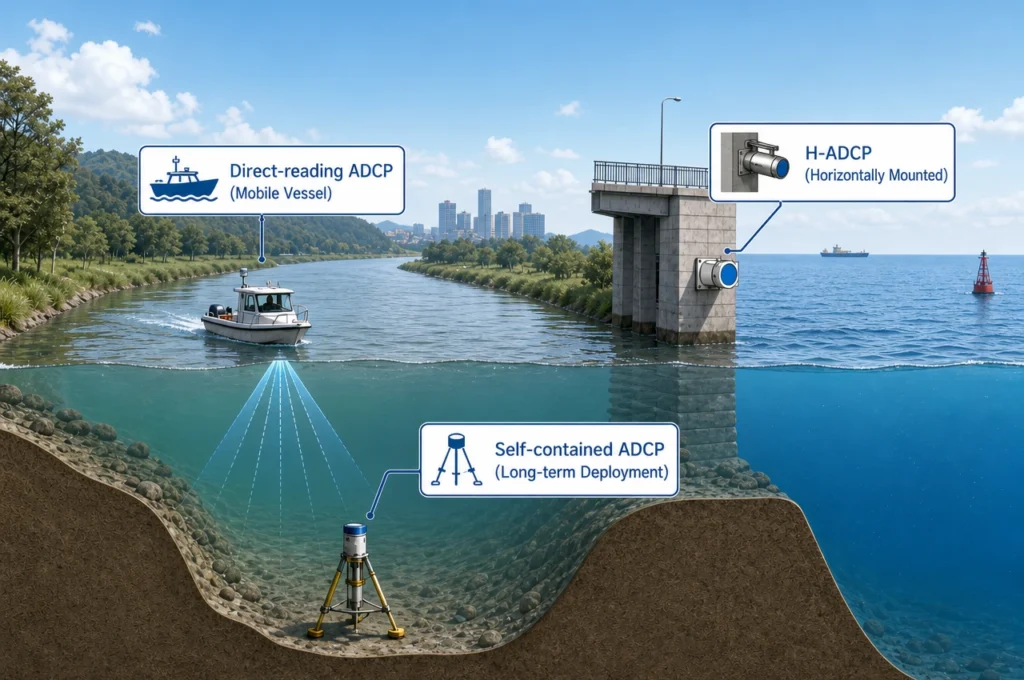
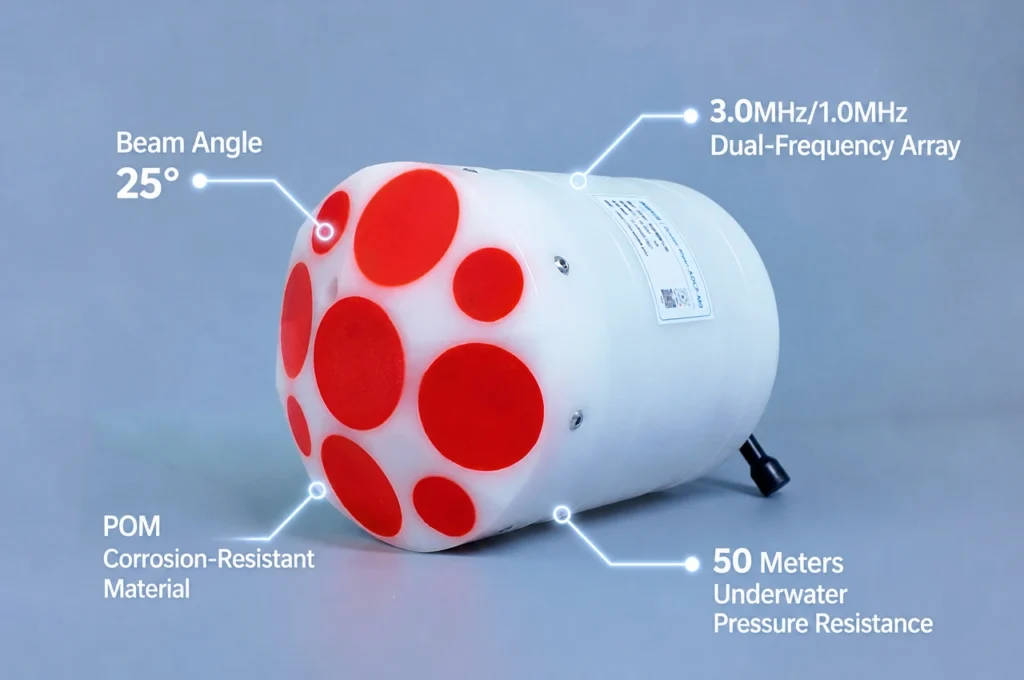
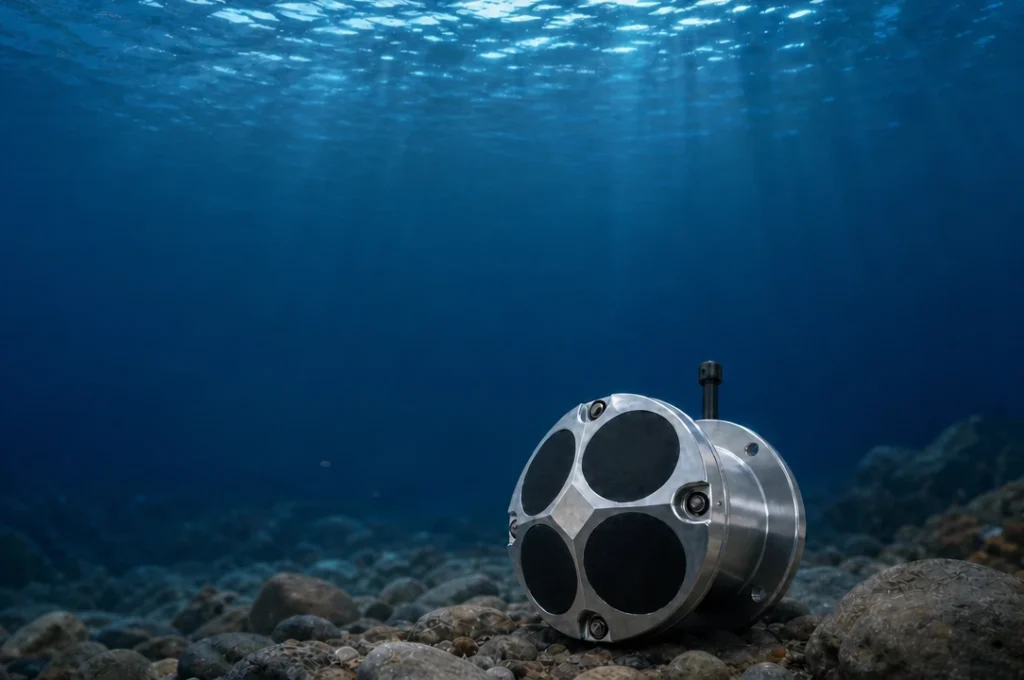
Rivers are the lifeblood of civilization — supplying drinking water, irrigating agriculture, generating hydropower, and sustaining ecosystems. Yet monitoring their flow accurately has always been a dangerous, labor-intensive, and logistically demanding task. For decades, hydrologists relied on manned boats, cableways, and wading techniques to measure discharge — exposing crews to hazards, consuming hours per cross-section, and delivering data only from limited, accessible points.
Today, the combination of Unmanned Surface Vessels (USVs) and Acoustic Doppler Current Profilers (ADCPs) is rewriting the rules of river monitoring. This integrated approach — often called “intelligent hydrodynamic surveying” — is delivering 10× efficiency gains, centimeter-per-second accuracy, and zero on-water risk. In this article, we explore how USV + ADCP technology is driving the next upgrade in intelligent river operations and why it represents a paradigm shift for hydrological agencies, engineering firms, and water resource managers worldwide.
Table of Contents
- The Challenges of Traditional River Monitoring
- What Is USV + ADCP Integration?
- 5 Key Benefits Driving the USV + ADCP Revolution
- Technology Deep-Dive: How It Works
- Oceantek ADCP Solutions for USV Platforms
- Real-World Applications & Case Studies
- How to Choose the Right ADCP for Your USV
- How Oceantek Compares to International ADCP Brands
- The Future of Intelligent River Operations
- Frequently Asked Questions
The Challenges of Traditional River Monitoring
Before exploring the solution, it’s worth understanding the limitations that hydrological agencies have struggled with for decades:
- Safety risks: Manned boats operating in flood conditions, swift currents (>3 m/s), or debris-laden waterways expose crews to capsizing, collision, and drowning hazards. The USGS reports that streamgaging is one of the most dangerous routine field activities in hydrology.
- Limited access: Shallow riffles, bridge piers, dam tailraces, and floodplains are often impossible to reach by manned vessels — yet these are precisely where critical flow data is needed.
- Time and cost: A single discharge measurement using traditional methods can take 1–3 hours with a crew of 3–4 personnel. Over a monitoring season, this translates to thousands of labor hours.
- Data inconsistency: Varying boat paths, operator technique, and magnetic interference near infrastructure introduce significant inter-measurement variability — reducing confidence in long-term trend analysis.
- Delayed response: During flood emergencies, agencies often lack real-time data to make time-critical decisions about evacuation, reservoir releases, and levee reinforcement.
These pain points created a clear demand for an autonomous, precise, and safe alternative — and the USV + ADCP combination has emerged as the definitive answer.
What Is USV + ADCP Integration?
At its core, the system consists of two complementary technologies working in lockstep:
The Unmanned Surface Vessel (USV)
A compact, remotely operated or autonomous boat — typically 1–2 meters in length — equipped with GNSS positioning, IMU-based attitude correction, obstacle avoidance sensors, and wireless communication. Modern survey-grade USVs like the CHCNAV Apache 4, Surfbee Flow Seeker, and SatLab HydroBoat 1200 GEN2 feature adaptive flow-hovering algorithms that maintain course stability even in turbulent currents — a critical capability for maintaining a straight transect during ADCP measurement.
The Acoustic Doppler Current Profiler (ADCP)
An underwater acoustic instrument that transmits high-frequency sound pulses and measures the Doppler shift of echoes reflected from particles suspended in the water column. By dividing the water column into depth “bins” and processing returns from multiple beams (typically 4 or 5), the ADCP constructs a vertical velocity profile — showing exactly how fast and in what direction water is moving at every depth increment. When integrated with a USV, the ADCP moves across the river channel, and specialized software integrates cross-sectional velocity data with depth measurements (from either the ADCP bottom track or a co-mounted echosounder) to compute total discharge — the volume of water passing through the cross-section per unit time.
When these two technologies are fully integrated — with synchronized data streams, unified power management, and real-time telemetry — the result is what industry professionals call an “autonomous flow measurement station on demand.”
5 Key Benefits Driving the USV + ADCP Revolution
1. Zero On-Water Risk — Operator Safety First
The single most transformative benefit: operators stay on shore. During the 2025 Haihe River emergency monitoring drill in China, USV-deployed ADCP systems completed traditional 2-hour workload in 40 minutes — all while personnel monitored from a safe riverbank position. In flood conditions where manned boats would never be deployed, USV + ADCP systems collect critical data without any human exposure to water hazards.
2. 3–5× Faster Measurement Cycles
Real-world deployments consistently demonstrate dramatic time savings:
- A discharge measurement at Thailand’s EGAT hydropower dam using a USV with SonTek M9 ADCP completed in 3.5 minutes per transect — versus 15–20 minutes for a manned boat.
- In Sichuan Province, China, the Suining Hydrological Center’s unmanned ship-network system completed 30 ADCP measurements covering flows from 135 to 2,800 m³/s with a single-shift crew — a workload that previously required days.
This speed is not just about efficiency — it means agencies can sample more cross-sections, more frequently, building richer datasets for trend analysis and model calibration.
3. Superior Data Accuracy & Repeatability
USVs eliminate three major sources of ADCP measurement error:
- Operator variability: Autonomous navigation ensures identical transect paths every time — stored waypoints guide the USV along the exact same line, measurement after measurement, season after season.
- Speed consistency: Adaptive throttle control maintains the optimal survey speed (~0.3–0.5 m/s) regardless of current conditions — something even experienced boat operators struggle to achieve manually.
- Attitude stability: Small USVs with low centers of gravity experience less pitch and roll than manned vessels. Combined with integrated IMU attitude compensation, this keeps ADCP beams within the ±15° tolerance required for valid velocity measurements.
4. Access to Previously Unreachable Sites
A 1–2 meter USV with a draft of less than 15 cm can navigate where no manned boat can go:
- Shallow floodplains during overbank events
- Directly upstream and downstream of bridge piers (critical for scour assessment)
- Dam tailraces with turbulent, aerated flow
- Narrow urban canals with overhead obstructions
- Ice-edge zones during partial freeze-up conditions
This access unlocks complete rating curve development — covering low, medium, and high flow conditions from a single platform — rather than the extrapolated estimates that historically introduced the largest uncertainties in discharge records.
5. Real-Time Data Pipeline for Intelligent Decision-Making
Modern USV + ADCP systems stream data via 4G/5G to cloud platforms in real time. This enables:
- Remote expert oversight: Senior hydrologists can monitor measurement quality from the office and provide real-time guidance to field crews.
- Automated QA/QC: Cloud-based algorithms flag outliers, beam correlation drops, and missing ensembles before the USV returns to shore — allowing immediate remeasurement if needed.
- API integration: Discharge data feeds directly into flood forecasting models, reservoir operation systems, and public warning platforms — closing the gap between data collection and operational response.
Technology Deep-Dive: How USV + ADCP Systems Work
Key Components of an Integrated System
| Component | Function | Typical Specifications |
|---|---|---|
| Hull Platform | Buoyancy, payload carriage, hydrodynamics | 1–2 m length; carbon fiber, HDPE, or inflatable; 15–40 kg payload |
| Propulsion System | Forward thrust, lateral station-keeping | 2–3 brushless electric thrusters; 5–6.5 m/s max speed; hot-swappable Li-ion batteries |
| GNSS + IMU Module | Position, heading, attitude compensation | Multi-constellation (GPS + GLONASS + BeiDou + Galileo); RTK-capable; 200 Hz IMU update |
| ADCP Transducer | Acoustic velocity profiling & bottom tracking | 300–1200 kHz; 4 or 5 beams; piston or phased-array; ±0.25% ±2 mm/s accuracy |
| Echosounder (optional) | Independent bathymetry for depth verification | Single-beam 200 kHz; 0.3–300 m range; co-mounted with ADCP |
| Obstacle Avoidance | Collision prevention in debris-laden waters | Millimeter-wave radar; computer vision camera; ultrasonic sensors |
| Communication Link | Command, control, and data telemetry | 2.4 GHz RC (1 km range); 4G/5G cellular; satellite backup |
| Control Software | Mission planning, real-time monitoring, data processing | Android/iOS tablet app; cloud dashboard; automated discharge computation |
The Measurement Process — Step by Step
- Mission Planning: The operator defines the cross-section waypoints and transect pattern on a tablet app. Pre-stored site configurations recall optimal settings for frequently monitored locations — including bank station coordinates, ADCP configuration parameters, and communication channel settings.
- Deployment: The USV is carried to the riverbank (most survey-grade units weigh less than 15 kg fully configured, enabling single-person deployment). A quick system check verifies GNSS lock, ADCP communication, and battery levels.
- Autonomous Transect: The USV navigates autonomously along the prescribed cross-section. Adaptive water-flow hovering technology maintains course perpendicular to flow, continuously adjusting thrust to counteract cross-currents — critical for valid ADCP measurement geometry.
- Real-Time Data Streaming: Velocity profiles, depth, position, and system diagnostics stream to the operator’s tablet and the cloud simultaneously. The ADCP’s four (or five) beams continuously sample the water column, with quality metrics updated every ensemble (typically every 1–2 seconds).
- Automated Discharge Computation: Upon completing the required number of transects (typically 4–8 for a standard discharge measurement), the software automatically computes total discharge using the mid-section or mean-section method, applies uncertainty analysis, and generates a standards-compliant report.
- Data Archiving & Integration: Results are stored in the cloud with full metadata (operator, location, time, configuration, quality flags) and pushed via API to the agency’s hydrologic database, flood model, or public information portal.
Oceantek ADCP Solutions for USV Platforms
At Oceantek, we engineer ADCP systems specifically designed for seamless integration with leading USV platforms. Our product lineup spans the full frequency range required for river and estuarine applications:
Featured ADCP Models for River USV Deployment
ADCP-600-DR-FA4 — 600 kHz Direct-Reading ADCP
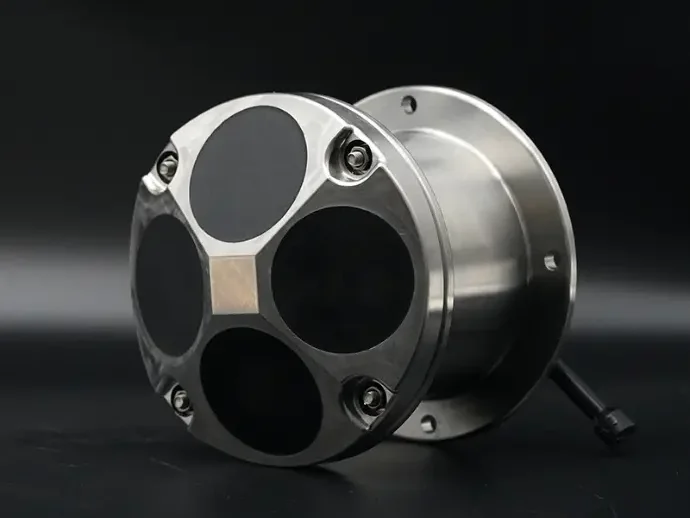
- Frequency: 600 kHz
- Beam Configuration: 4-beam Janus, piston transducer
- Profiling Depth Range: 75 m
- Velocity Accuracy: ±0.3% ±3 mm/s
- Interface: RS-232 / RS-422, compatible with standard USV payload integrations
- Ideal For: Medium-sized rivers, canals, estuaries; shallow to moderate depths
Learn more about ADCP-600-DR-FA4 →
ADCP-300-SC-FA4 — 300 kHz Self-Contained ADCP
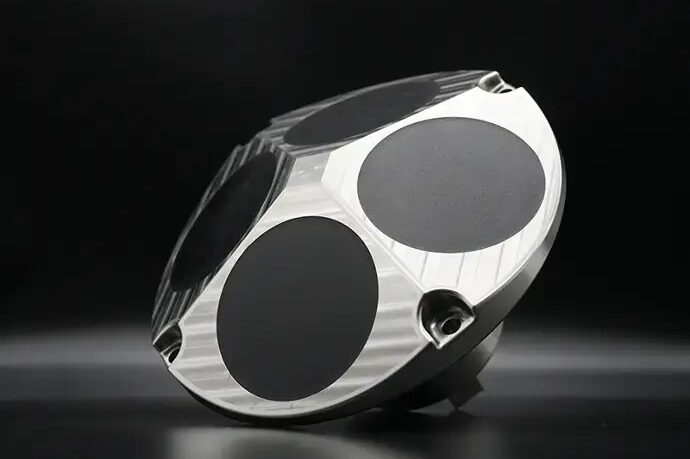
- Frequency: 300 kHz
- Beam Configuration: 4-beam Janus, piston transducer
- Profiling Depth Range: 150 m
- Velocity Accuracy: ±0.5% ±5 mm/s
- Ideal For: Large rivers, reservoirs, estuaries; deep-water cross-sections
Learn more about ADCP-300-SC-FA4 →
DVL-600K — Doppler Velocity Log
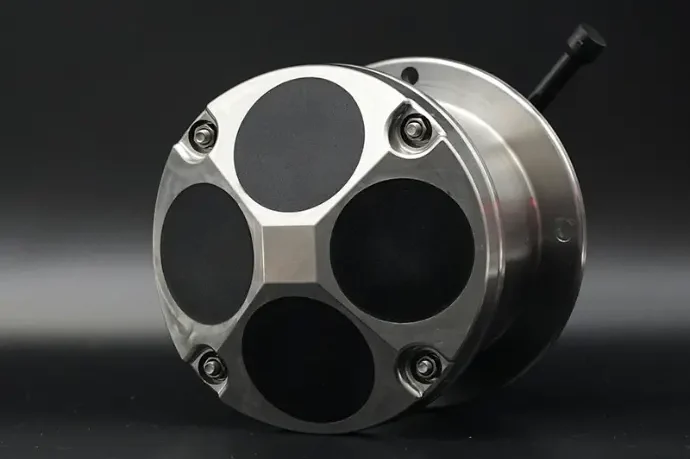
- Frequency: 600 kHz
- Application: Precision bottom tracking for USV navigation
- Accuracy: ±0.3% ±3 mm/s (bottom track velocity)
- Ideal For: GNSS-denied environments (under bridges, urban canyons)
Why Choose Oceantek ADCP for Your USV?
- Titanium alloy transducer housing: Superior corrosion resistance and durability in freshwater and estuarine environments — critical for long-duration deployments where aluminum housings degrade.
- Industry-standard communication protocols: Compatible with all major USV control systems, including CHCNAV EasySail, Surfbee Mission Planner, and SatLab HydroNav. Drop-in replacement for Teledyne RDI, SonTek, and Nortek ADCPs in existing USV integrations.
- Compact form factor: The smallest transducer footprint in the 600 kHz class enables integration with ultra-compact USV hulls without compromising hydrodynamic performance.
- Competitive cost structure: Oceantek’s domestic R&D and manufacturing eliminates the import premium typical of international ADCP brands — delivering equivalent or superior specifications at 30–50% lower total cost of ownership.
- 12-month comprehensive warranty with factory-direct technical support and firmware updates.
For agencies and firms building new USV-based monitoring programs, our technical team provides pre-sales integration consultation — including mechanical mounting drawings, interface protocol documentation, and field trial support — to ensure plug-and-play deployment from day one.
Real-World Applications & Case Studies
1. Flood Monitoring & Emergency Response
When rivers rise, accurate discharge data becomes mission-critical — and also most dangerous to collect. In July 2025, hydrological teams from China’s Haihe River Lower Reaches Bureau conducted emergency monitoring drills using USV-deployed ADCPs. The system navigated debris-filled waterways that would have been impassable for manned vessels and completed a traditional 2-hour workload in just 40 minutes — providing real-time discharge data to downstream flood control centers 80 minutes earlier than conventional methods. This time advantage translates directly to longer evacuation windows and more informed reservoir operation decisions.
2. Dam Discharge & Hydropower Assessment
At Thailand’s EGAT (Electricity Generating Authority) hydropower facilities, the Surfbee Flow Seeker USV integrated with ADCP tackled the dual challenges of high-velocity dam releases (where manned boat operation is prohibited during generation) and moving-bed conditions (where sediment transport biases bottom-track velocity). By combining GNSS-derived vessel velocity with RTK corrections, the system compensated for moving-bed bias and delivered discharge measurements of ~448 m³/s with sub-3% uncertainty — all without putting personnel on the water.
3. Urban Floodplain Monitoring — Bangkok
In Bangkok’s 200-meter-wide urban flood control channels, traditional cableway methods were impossible to deploy due to channel width. A USV with integrated ADCP completed 8-minute transects across the full width, measuring discharge of approximately 1,565 m³/s with precise repeatability (<1% inter-transect variation). The live camera feed allowed shore-based operators to visually verify measurement conditions and detect floating debris — reducing the risk of equipment damage in an environment where replacement parts would involve weeks of import delay.
4. “Air-Water Integrated” Surveys — Yibin, China
The Yibin Hydrological Center deployed a coordinated system combining drones (UAVs) for surface velocity measurement via radar and USVs with ADCP for subsurface velocity profiling and bathymetry. This “air-water integrated” approach completed full-channel discharge measurements in approximately 10 minutes — covering both the surface velocity field (via UAV radar) and the vertical velocity structure (via USV ADCP) simultaneously. The complementary datasets provide independent cross-validation and redundancy in case of equipment failure in one domain.
5. Long-Term Rating Curve Development
Traditional rating curves — the stage-discharge relationships that underpin virtually all continuous streamflow records — are developed from a limited number of discharge measurements concentrated at accessible flow conditions. USV + ADCP systems fundamentally change this by enabling more measurements, across a wider range of flows, at lower marginal cost. Agencies can now collect discharge data during the peak of flood events (when the rating curve is most uncertain), at night (using autonomous navigation with LED navigation lights), and at remote sites that previously received only 2–3 measurements per year.
How to Choose the Right ADCP for Your USV
Selecting the optimal ADCP for USV deployment depends on four key factors. Here’s a practical decision framework:
Factor 1: Water Depth & River Size
| River Type | Typical Depth | Recommended Frequency | Oceantek Model |
|---|---|---|---|
| Small streams, canals | 0.3–5 m | 1200 kHz | Contact us for 1200 kHz options |
| Medium rivers, urban channels | 1–40 m | 600 kHz | ADCP-600-DR-FA4 |
| Large rivers, reservoirs | 5–100 m | 300 kHz | ADCP-300-DR-FA4 |
Factor 2: Flow Velocity Range
Higher-frequency ADCPs (600–1200 kHz) provide finer vertical resolution but have a lower maximum profiling range. For high-velocity environments (>3 m/s), ensure your ADCP firmware supports pulse-coherent and broadband processing modes — which Oceantek systems enable automatically based on real-time flow conditions — and confirm that the USV’s hovering station-keeping mode can maintain position for valid measurement ensembles.
Factor 3: Measurement Protocol Compliance
Ensure the ADCP + USV combination supports the discharge computation methods required by your agency’s standards:
- USGS (USA): Mid-section method; QRev post-processing software compatibility
- ISO 748: Mean-section method with specified number of verticals
- Chinese MWR standards (SL 337-2006): Specified transect patterns and uncertainty thresholds
Oceantek ADCPs output industry-standard binary and ASCII data formats compatible with all major post-processing software — including WinRiver II, RiverSurveyor Live, QRev, and VMT.
Factor 4: Environmental Conditions
- High sediment/turbidity: Choose a lower frequency (300–600 kHz) for better penetration. Oceantek’s titanium transducers resist abrasion better than aluminum alternatives.
- GNSS-denied zones (under bridges, urban canyons): Ensure the ADCP has robust bottom-tracking capability as a fallback velocity reference. Our DVL-600K provides precision bottom-track velocity with ±0.2% accuracy even where GNSS signals are degraded or lost entirely.
- Cold water / ice-affected: Verify operational temperature range. Oceantek ADCPs are rated for 0°C to +40°C water temperature, with cold-water calibration validated across the full operating range.
How Oceantek Compares to International ADCP Brands
The global ADCP market — valued at approximately US$114 million in 2025 and projected to reach US$167 million by 2032 (CAGR 5.3%) — is led by several established international manufacturers. Here’s how Oceantek positions itself in this competitive landscape:
| Brand | HQ | Flagship River ADCP | Key Strengths | Price Positioning |
|---|---|---|---|---|
| Teledyne RDI | USA | RiverPro / RiverRay | Market leader since 1980s; largest installed base; phased-array technology; extensive agency approvals | Premium ($$$$$) |
| SonTek (Xylem) | USA | RiverSurveyor M9 / RS5 | Strong hydrology focus; pulse-coherent shallow-water capability; integrated with Surfbee USVs | Premium ($$$$$) |
| Nortek | Norway | Signature1000 / Aquadopp | Advanced signal processing; strong in research; high-frequency miniaturized designs | Premium ($$$$$) |
| Oceantek | China | ADCP-600-DR-FA4 / ADCP-300-SC-FA4 | 30–50% cost advantage; titanium alloy construction; drop-in protocol compatibility; rapid domestic support | Competitive ($$$) |
| Hi-Target / Haida | China | iFlow RP600 / RP1200 | Full in-house manufacturing chain; integrated with own USV platform | Budget–Mid ($$) |
| LinkQuest | USA | FlowQuest 600 | Acoustic modem integration; specialized in long-range telemetry applications | Mid–Premium ($$$$) |
Why Oceantek Offers the Best Value for USV-Based River Monitoring
While Teledyne RDI and SonTek dominate the legacy installed base — with the SonTek M9/RiverSurveyor family being the default choice for many hydrological agencies — the landscape is shifting. Three trends favor newer competitors like Oceantek:
- Agencies are standardizing on USV deployment rather than manned-boat or cableway methods. This means the ADCP is being purchased specifically for USV integration — not as a general-purpose instrument — which elevates the importance of mechanical fit, electrical interface compatibility, and communication protocol alignment over brand legacy. Oceantek ADCPs are designed from the ground up for USV integration, with compact form factors and industry-standard RS-232/RS-422 interfaces.
- Total cost of ownership (TCO) is under scrutiny. With global hydrological budgets tightening, agencies are questioning whether a 30–50% price premium for a legacy brand translates to 30–50% better data quality. In standardized discharge measurement applications — where the ADCP is essentially a calibrated sensor following a prescribed method — Oceantek delivers equivalent accuracy at a significantly lower purchase price, freeing budget for additional USV platforms, training, or expanded monitoring coverage.
- Domestic supply chain resilience matters. For agencies in Asia, Africa, and South America, import delays, export control restrictions, and overseas service turnaround times can disrupt monitoring programs for months. Oceantek’s China-based manufacturing and technical support ensures faster delivery, on-site service options, and firmware customizations that international vendors typically cannot accommodate.
Disclaimer: Teledyne RDI, SonTek/Xylem, Nortek, LinkQuest, and Hi-Target are registered trademarks of their respective owners. Oceantek is an independent manufacturer of acoustic Doppler instruments and is not affiliated with or endorsed by any of the above companies.
The Future of Intelligent River Operations
As we look ahead, several emerging trends will further accelerate the USV + ADCP revolution:
AI-Driven Anomaly Detection
Machine learning models, trained on decades of discharge measurement data, are being embedded in ADCP processing software to flag measurement anomalies in real time — such as moving-bed bias, wind-induced surface drift, or unsteady flow conditions — with recommendations for corrective action before the USV completes its transect.
Multi-USV Swarms for Large River Systems
For major rivers exceeding 500 meters in width, a single USV transect can take 15–20 minutes. Emerging concepts deploy multiple synchronized USVs — each carrying an ADCP — to simultaneously cover sub-sections of the channel, reducing total measurement time to that of a single sub-section transect. This capability is particularly relevant for the Yangtze, Amazon, Ganges-Brahmaputra, and Congo systems where cross-channel discharge variation is significant over the course of a single-boat measurement.
Edge Computing for Autonomous Adaptive Sampling
Next-generation ADCPs with onboard edge processing will enable adaptive sampling strategies: denser vertical bin spacing in high-shear regions near the bed; higher ping rates in turbulent zones; and automatic switching between broadband and narrowband modes based on real-time SNR analysis — all without operator intervention.
Integration with National Digital Twin Frameworks
Countries including the Netherlands, China, the UK, and South Korea are building national water digital twins — real-time virtual replicas of river systems fed by sensor networks. USV + ADCP systems will serve as mobile “ground truth” calibration nodes, periodically validating and correcting the continuous data streams from fixed acoustic and radar sensors, ensuring that digital twin predictions remain anchored to physical reality.
Oceantek is actively investing in these next-generation capabilities. Stay updated on our latest innovations by visiting the Oceantek blog and contacting our team for product demonstrations.
Frequently Asked Questions
What is the main advantage of using a USV with an ADCP for river discharge measurement?
The primary advantages are operator safety (personnel remain on shore), 3–5× faster measurement cycles compared to manned boats, superior data repeatability through autonomous navigation along identical transects, and access to hazardous or inaccessible sites such as floodwaters, dam tailraces, and shallow channels. These benefits combine to deliver more measurements, across a wider range of flow conditions, at lower cost per measurement — directly improving the quality of streamflow records and flood forecasts.
Which ADCP frequency is best for river monitoring with a USV?
The optimal frequency depends on water depth: 1200 kHz for shallow streams (<5 m), 600 kHz for medium rivers (1–40 m), 300 kHz for large rivers and reservoirs (5–100 m), and 75 kHz for deep reservoirs and estuaries (20–700 m). Oceantek offers models across all these frequency bands — see our product catalog for detailed specifications and deployment recommendations.
Can Oceantek ADCPs replace Teledyne RDI or SonTek ADCPs on my existing USV?
Yes. Oceantek ADCPs use industry-standard RS-232/RS-422 communication protocols and output standard binary and ASCII data formats. Mechanical mounting adapters are available for all major USV platforms. In most cases, an Oceantek ADCP can be integrated as a drop-in replacement with minimal software configuration changes. Contact our technical support team for your specific USV model and we’ll provide detailed integration documentation.
What training is required to operate a USV + ADCP system?
Modern USV + ADCP systems are designed for operation by field technicians with basic hydrometry training — no specialized robotics or programming skills required. Most operators achieve proficiency within 2–3 days of hands-on training, covering: mission planning on the tablet interface, deployment and recovery procedures, real-time quality control during transects, and basic troubleshooting. Oceantek provides comprehensive user documentation and optional on-site commissioning support for new customers.
What is the lifespan and warranty of an Oceantek ADCP?
Oceantek ADCPs are built with titanium alloy transducer housings for superior corrosion resistance. With proper maintenance (freshwater rinse after saltwater use, annual calibration verification), the expected service life is 8–12 years. All Oceantek ADCPs come with a 12-month comprehensive warranty covering manufacturing defects and workmanship, with optional extended warranty plans available. Factory-direct support ensures rapid diagnosis and resolution — typically within 48 hours for technical inquiries.
Conclusion: The USV + ADCP Upgrade Is No Longer Optional
The transition from manned-boat ADCP deployment to autonomous USV-based river monitoring is not a distant future scenario — it is happening right now, driven by:
- ✅ Irrefutable safety advantages (zero on-water personnel risk)
- ✅ 3–5× operational efficiency gains with fewer personnel
- ✅ Superior data quality through autonomous path repeatability
- ✅ Access to critical measurement sites previously unreachable
- ✅ Real-time data pipelines that enable intelligent, proactive water management
Hydrological agencies that adopt USV + ADCP technology today are not just improving their monitoring programs — they are building the data infrastructure for climate-resilient water management in an era of increasing flood risk and water resource stress.
At Oceantek, we are committed to making this transition accessible, affordable, and technically seamless. Our ADCP product line — from the 600 kHz direct-reading ADCP to the 75 kHz phased-array deep-water system — delivers the accuracy and reliability that modern river monitoring demands, at a cost structure that respects real-world budget constraints.