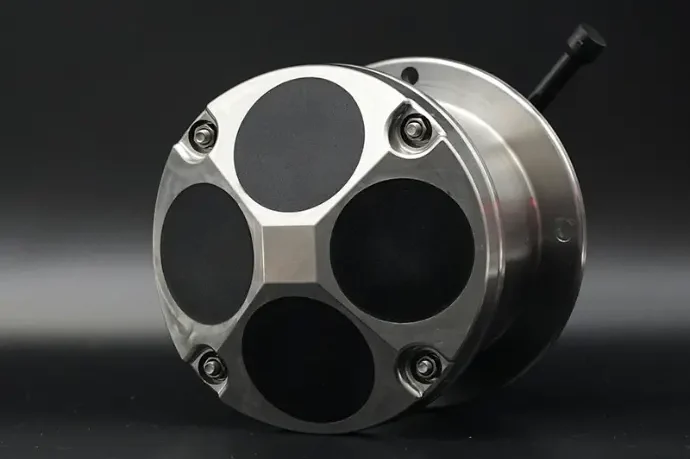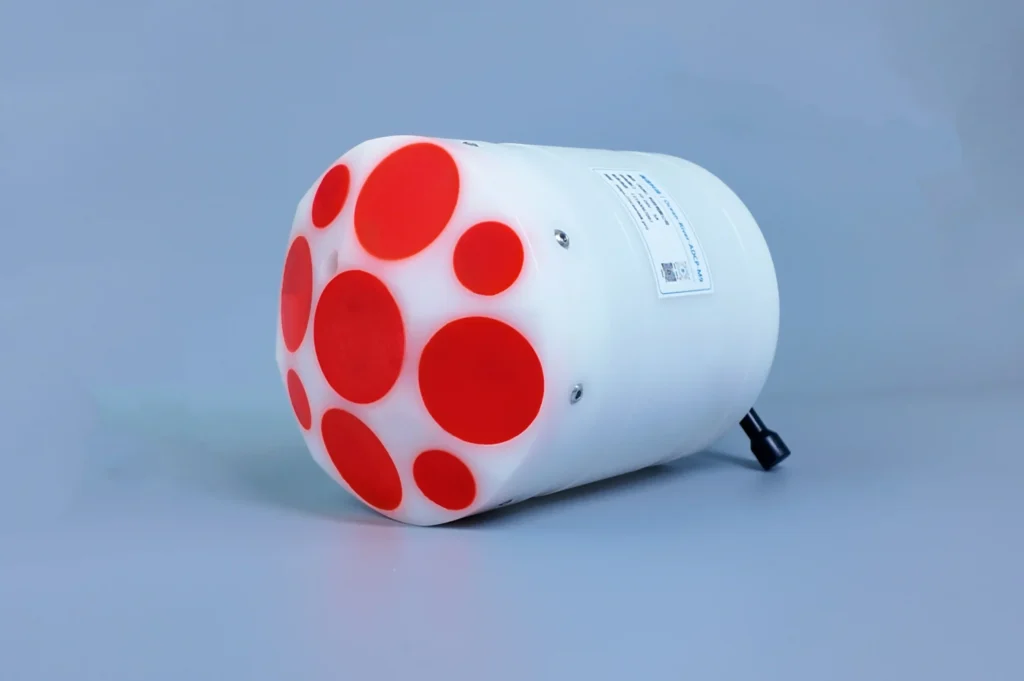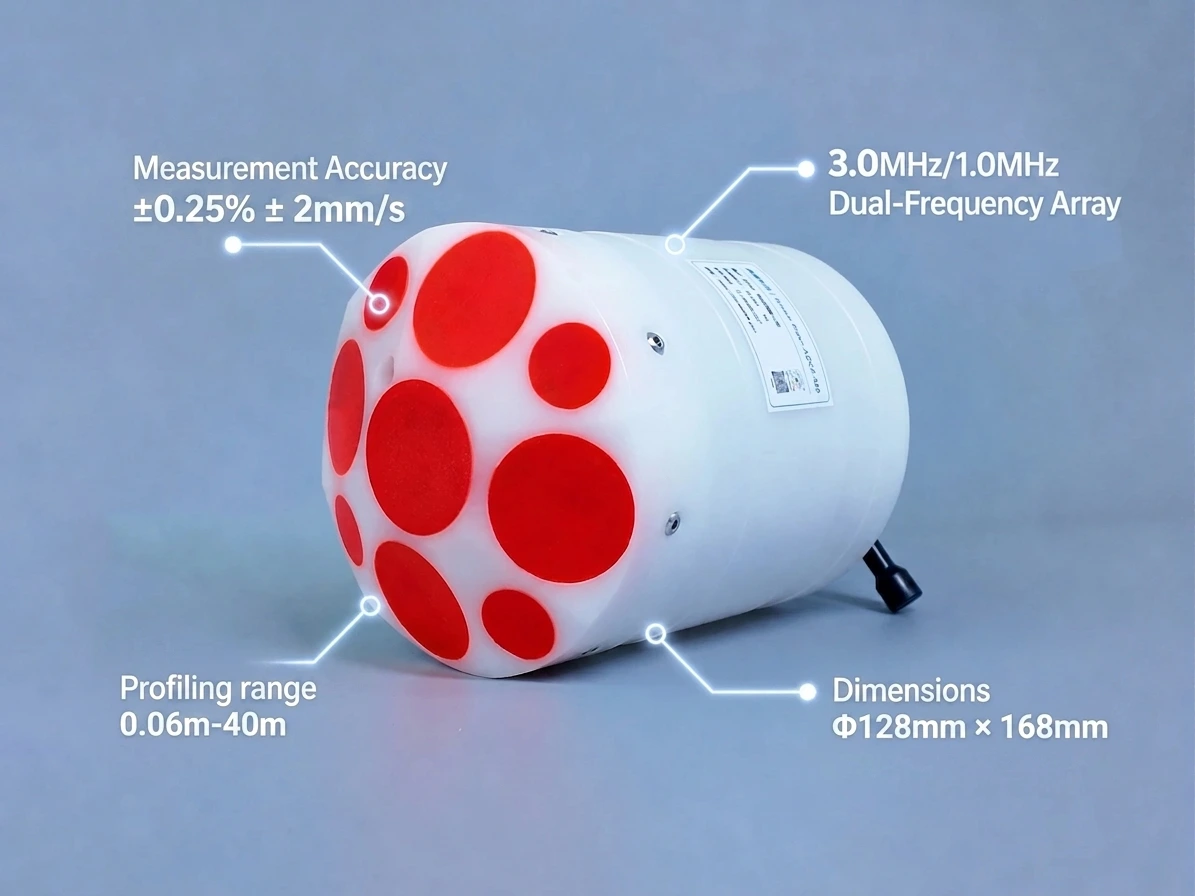
What Is the Oceantek River ADCP M9?
The Oceantek River ADCP M9 is a compact, high-resolution acoustic Doppler current profiler purpose-built for river discharge measurement. Its standout feature is a 9-beam transducer — combining one vertical beam for depth sounding, four Janus-configuration beams for 3D velocity profiling, and four additional angled beams optimized for shallow-water and boundary-layer measurement. This beam architecture delivers more complete velocity coverage across the full channel cross-section than conventional 4-beam or 5-beam river ADCPs.
Designed for moving-boat surveys, stationary side-looking deployments, and portable rapid-response measurements alike, the M9 bridges the gap between high-end research instruments and the practical needs of hydrologists, water resource agencies, and flood monitoring teams.
Why 9 Beams Matter
Standard river ADCPs use 4 beams in a Janus configuration. The M9 adds five more — and each one earns its place:
| Beam | Function | Why It Matters |
|---|---|---|
| Vertical beam (×1) | Precision depth sounding | Direct bottom tracking eliminates the need for a separate echo sounder in most conditions |
| Janus beams (×4) | 3D water velocity profiling | Industry-standard geometry for robust current measurement, with redundant velocity solutions |
| Shallow-angle beams (×4) | Near-boundary velocity + extended lateral coverage | Captures flow close to riverbanks and near the bed where single-beams miss — critical for accurate total discharge in irregular channels |
In practice, the 9-beam configuration means fewer extrapolation errors at the channel edges, more reliable discharge totals in shallow or vegetated reaches, and cleaner data in turbulent or sediment-laden water — the exact conditions where conventional instruments struggle.
Key Specifications
| Parameter | River ADCP M9 |
|---|---|
| Beam configuration | 9 beams: 1 x 500kHz + 4 x 1.0MHz + 4 x3.0MHz |
| Profiling range | 0.06 m to 40 m (water-depth dependent) |
| Cell size | Configurable, typically 0.02–4 m |
| Velocity range | ±20 m/s |
| Velocity accuracy | ±0.25% of measured velocity ±2 mm/s |
| Bottom tracking | 0.3 m to 40 m |
| tDeployment modes | Moving-boat, stationary , tethered remote |
| Weight (In the air) | ≤ 1.5 kg |
| Power | 10 – 26 V |
Where the M9 Is Used
- River discharge measurement: Moving-boat ADCP surveys following established standards for streamflow gauging, producing full-channel discharge results.
- Flood monitoring and early warning: Rapid deployment during high-water events with real-time data output for decision support and emergency response.
- Water resource management: Long-term discharge monitoring at hydrological stations, reservoir inflow/outflow verification, and inter-basin water transfer accounting.
- Irrigation and canal systems: Flow measurement in artificial channels with regular geometry, where the shallow-angle beams provide high-resolution cross-sections.
- Research-grade hydrography: Turbulence studies, secondary flow structure mapping, and sediment flux estimation in rivers and estuaries.
- Environmental compliance: Discharge verification for environmental flow releases, water rights allocation, and ecological baseflow monitoring.
Two Deployment Modes, One Instrument
1. Moving-Boat Survey
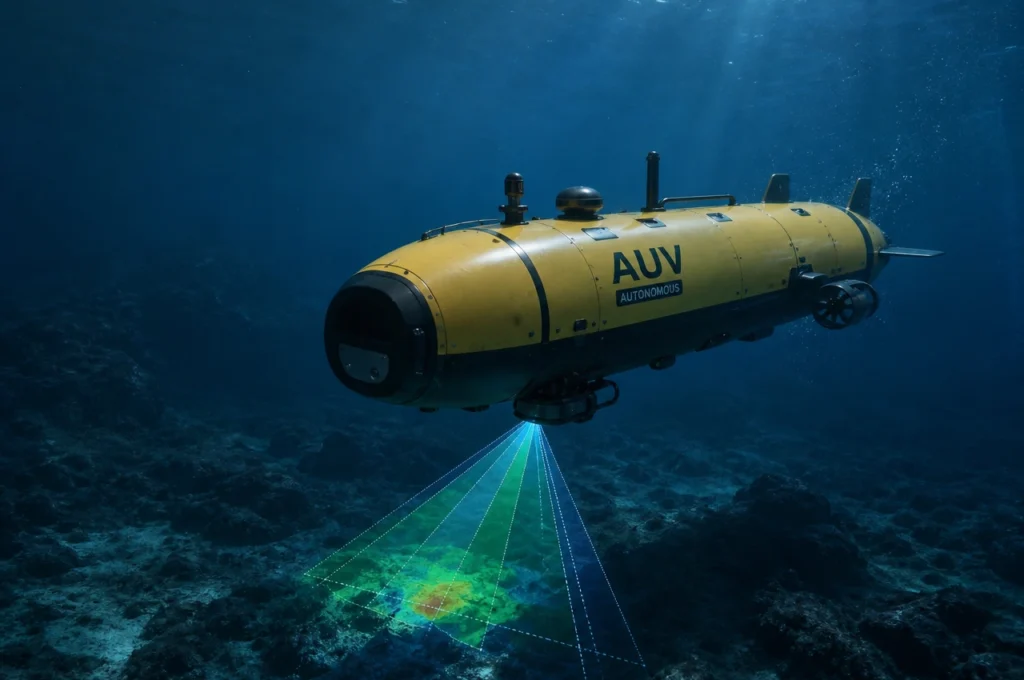
The most common configuration. The M9 is mounted on a small boat, trimaran float, or remotely controlled vessel and traversed across the river channel along predefined transects. Integrated bottom tracking and GPS provide vessel-referenced velocity. The 9-beam array captures flow from surface to bed in a single pass, and the software computes total discharge on the fly. Typical transect time: 2–5 minutes for channels 20–200 m wide.
2. Tethered Operation
During floods or in hazardous conditions, the M9 can be deployed via a tethered floating platform — controlled from the bank or bridge — eliminating the need for personnel on the water. Data streams to a laptop or tablet onshore. This capability is increasingly critical for extreme-event hydrology as flood frequencies rise.
What Makes the M9 Different from Other River ADCPs
- 9 beams vs. the industry standard 4 or 5. More velocity sampling points across the cross-section mean lower random error per transect and fewer transects needed to meet discharge uncertainty targets.
- Shallow-water performance. The additional angled beams maintain valid velocity data closer to the surface and bed than 4-beam instruments can, reducing extrapolation-dependent discharge in water <1 m deep.
- Compact form factor. Designed for portability — fits in a pelican case, manageable by a single operator even in remote field locations.
- Integration flexibility. Works with standard hydrographic software packages, GPS receivers, and external sensors (CTD, turbidity, sediment concentration probes).
- Cost efficiency. Delivers multi-beam river profiling capability at a competitive price point relative to comparable instruments in the river ADCP category.
Quick Comparison: M9 vs. Conventional 4-Beam River ADCP
| Feature | Oceantek M9 (9-beam) | Conventional 4-Beam |
|---|---|---|
| Total beams | 9 | 4 |
| Vertical depth beam | Dedicated | Not available (derived) |
| Shallow-water edge coverage | 4 additional angled beams | Limited to Janus beam footprint |
| Transects for stable discharge (typical) | 2–4 | 4–8 |
| Accuracy in <1 m depth | Higher (extra beams reduce edge extrapolation) | Lower (larger extrapolation zone) |
| Flood deployment readiness | Compact, tethered-ready | Varies by model |
Real-World Results
The River ADCP M9 has been deployed in major river systems across Asia, Africa, and South America, including:
- River discharge monitoring in high-sediment tropical rivers with >5 g/L suspended sediment concentration, where the extra beams maintain signal through acoustic attenuation
- Flood peak capture during monsoon season in braided river channels exceeding 500 m width, with discharge results validated against rating-curve estimates
- Low-flow baseflow measurement in channels as shallow as 0.3 m — conditions where conventional ADCPs require labor-intensive wading measurements instead
Frequently Asked Questions
What is a 9-beam ADCP?
A 9-beam ADCP uses nine acoustic transducers — one vertical for depth, four in Janus configuration for 3D velocity, and four at shallower angles for near-boundary flow measurement. This design captures a larger portion of the channel velocity field than 4-beam or 5-beam instruments, improving discharge accuracy especially in shallow or irregular channels.
How does the River ADCP M9 measure river discharge?
The M9 is mounted on a boat or floating platform and moved across the river channel along a transect. As it traverses, it measures water velocity in depth cells from surface to bed, tracks the boat’s movement via bottom tracking and GPS, and integrates velocity × area across the transect to compute total discharge. Results are available in real time on a connected laptop or tablet.
Can the M9 be used in shallow rivers?
Yes. The additional shallow-angle beams provide valid velocity data closer to the channel edges and bed than conventional 4-beam instruments, reducing the extrapolation zone and improving discharge accuracy in water depths under 1 meter. It can operate in water as shallow as approximately 0.2 meters.
What accessories are needed for a complete M9 system?
A typical field setup includes the M9 transducer head, a floating platform (trimaran hull or small boat mount), GPS antenna, ruggedized laptop or tablet with data acquisition software, and a portable battery pack. For stationary deployments, a bank-side mounting bracket and communication cable are added. Oceantek provides complete system packages configured to the user’s specific application.
How does the M9 compare to the SonTek RiverSurveyor M9?
Both instruments share the “M9” naming convention reflecting a 9-beam architecture. The Oceantek River ADCP M9 offers comparable multi-beam river profiling capability — vertical beam, Janus array, and shallow-angle beams for edge coverage — with a focus on portability, ease of deployment, and cost efficiency. Users evaluating alternatives to the SonTek M9 will find the Oceantek M9 a competitive option for most river discharge applications.
What type of training is required to operate the M9?
Operators familiar with basic hydrographic survey principles can become proficient with the M9 after a 1–2 day field training. The software interface guides the operator through transect setup, quality control checks, and data export. Oceantek provides user manuals, field guides, and technical support.
Get Started with the River ADCP M9
Whether you are upgrading from mechanical current meters, replacing an aging ADCP, or building a new hydrological monitoring program, the Oceantek River ADCP M9 delivers the beam coverage, portability, and reliability that modern river discharge measurement demands.
Contact the Oceantek team for a product demonstration, technical specifications, or a quotation tailored to your monitoring requirements.
Published July 2026. Specifications subject to product updates. For the latest technical data, visit the official Oceantek product page.