Dam and reservoir discharge monitoring is where ADCP selection gets unforgiving: an unverified outflow number feeds flood forecasts, energy accounting and dam-safety decisions downstream. One instrument cannot do every job — a fixed station at the gate, a moving-boat survey of the tailrace and a deep profile of the reservoir basin each need different hardware.
This article ranks the eight instruments we see most often in 2026 dam projects, by role. It is part of our Best ADCP 2026 ranking series. If you need the background first — why dams monitor discharge at all, how sedimentation and safety instrumentation fit together — start with our companion guide, ADCP monitoring for dam and reservoir sedimentation, discharge and safety, then come back here to pick a model.
📊 Executive Summary
Dam projects need three different instruments, and no single model wins all three roles:
- Best overall — discharge verification transects: SonTek RiverSurveyor M9. The nine-transducer standard for moving-boat discharge measurement, and the instrument our own applications team most often recommends for verification work.
- Best fixed station, proven record: SonTek Argonaut-SL. The most widely deployed ADCP at dam gates and tailraces.
- Best fixed station on a budget: Oceantek HADCP-600. Same index-velocity method, entry-level price band, 2 Hz real-time output.
- Best for sediment-laden discharge: Oceantek River-ADCP-600-FA5. Flagship-level accuracy (±0.25% ±2 mm/s) at roughly half the price band of the M9.
- Best for deep reservoirs: Oceantek Ocean-ADCP-75-PA4. 550–650 m profiling range for capacity and circulation surveys.
- Best for shallow spillway channels: Teledyne RDI StreamPro. A 2 MHz micro-ADCP you can deploy from a small boat in minutes.
📑 Table of Contents
- How We Evaluated
- The 2026 Ranking Table
- #1 SonTek RiverSurveyor M9
- #2 SonTek Argonaut-SL
- #3 Teledyne RDI ChannelMaster
- #4 Oceantek River-ADCP-600-FA5
- #5 Oceantek HADCP-600
- #6 Oceantek Ocean-ADCP-75-PA4
- #7 Teledyne RDI StreamPro
- #8 Teledyne RDI Rio Grande 300 kHz
- Which Model Fits Your Dam?
- Budget: What You Get at Each Tier
- FAQ
How We Evaluated
We scored each instrument across six dimensions, weighted to the realities of dam work:
- Application fit (25%) — does the profiling range match dam geometry (gate channels, tailraces, deep basins)?
- Measurement accuracy (25%) — velocity accuracy under realistic sediment load, where dam flows are often turbid.
- Station autonomy (20%) — power draw and data continuity for unattended, year-round fixed stations.
- Software and integration (15%) — discharge processing, telemetry and SCADA readiness.
- Price band (10%) — capability delivered per dollar, using indicative industry price bands only.
- Local service (5%) — field support and calibration track record in dam projects.
All specifications below are taken from the manufacturers' published datasheets (retrieved September 2026). Prices are indicative industry bands, not quotations.
The 2026 Ranking Table
| Model | Frequency | Max Range | Velocity Accuracy | Power | Price Band | Best For | Score |
|---|---|---|---|---|---|---|---|
| #1 SonTek RiverSurveyor M9 | 3.0 / 1.0 / 0.5 MHz | 0.06–80 m | ±0.25% ±0.2 cm/s | Internal battery | $40K+ | Discharge verification transects | 9.4 |
| #2 SonTek Argonaut-SL | 500 / 1500 / 3000 kHz | 120 m (500 kHz) | ±1% ±0.5 cm/s | ~0.5–1.5 W | $15–30K | Fixed gate / tailrace station | 9.2 |
| #3 Teledyne RDI ChannelMaster | 300 / 600 / 1200 kHz | 128 m (300 kHz) | ±0.5% ±2 mm/s | Low, 12–24 V | $15–30K | Horizontal profiling in canals & tunnels | 9.0 |
| #4 Oceantek River-ADCP-600-FA5 | 600 kHz | 0.5–65 m (long-range) | ±0.25% ±2 mm/s | ≤5 W | $15–30K | Sediment-laden discharge verification | 8.8 |
| #5 Oceantek HADCP-600 | 600 kHz | 90 m across | ±0.3% ±3 mm/s | 10–26 V DC | $5–10K | Budget fixed station, real-time telemetry | 8.7 |
| #6 Oceantek Ocean-ADCP-75-PA4 | 75 kHz | 550–650 m profile | ±1.0% ±5 mm/s | ≤20 W | $15–30K | Deep reservoir capacity & circulation | 8.6 |
| #7 Teledyne RDI StreamPro | 2 MHz | 0.1–6 m | ±1% | Internal battery | $15–30K | Shallow spillway & tailrace transects | 8.4 |
| #8 Teledyne RDI Rio Grande 300 kHz | 300 kHz | ~150 m | ±0.25% | Internal battery | $15–30K | Deep downstream reaches, moving boat | 8.3 |
#1 SonTek RiverSurveyor M9 — Best Overall for Discharge Verification
The M9 is the closest thing the dam industry has to a gold standard for moving-boat discharge measurement. Its nine transducers across three frequencies (3.0 / 1.0 / 0.5 MHz) let SmartPulseHD adapt cell-by-cell to turbulence and sediment, so one survey covers both the shallow margin and the deep center of a tailrace. Bottom tracking plus integrated GNSS handles moving-bed conditions that defeat bottom-track-only instruments on sand-bed rivers.
- Pros: highest accuracy and adaptability in this list; RTK upgrade option; mature discharge software ecosystem.
- Cons: the most expensive entry; heavier field kit; overkill for a single fixed station.
- Best for: periodic discharge verification campaigns and index-rating development at gates, outlets and tailraces.
#2 SonTek Argonaut-SL — Best Proven Fixed Station
For continuous monitoring at dam gates, the Argonaut-SL is the most widely deployed side-looking ADCP, with a deployment record measured in decades. At 500 kHz it profiles up to 120 m across an outlet channel while drawing roughly one watt — a figure that matters when a station must run on solar and battery for months of the year. Its ±1% velocity accuracy is ample for index-velocity discharge, where the rating against periodic moving-boat surveys does the heavy lifting.
- Pros: unmatched field record at dam structures; very low power; robust telemetry integrations.
- Cons: less precise than survey-grade instruments; horizontal profile only; mid-tier price band.
- Best for: permanent real-time stations on gates, tailraces and outlet canals where track record is non-negotiable.
#3 Teledyne RDI ChannelMaster — Best for Long Canals and Tunnels
The ChannelMaster is RDI's horizontal workhorse, profiling up to 128 m at 300 kHz. Two decades of installations in irrigation canals, diversion channels and tailrace tunnels make it the reference instrument for long, straight, man-made reaches downstream of dams — precisely the geometry where a horizontal beam can resolve the full cross-section. It is a complement to, not a substitute for, vertical-profiling ADCPs: it measures along the channel, not down through the water column.
- Pros: 20-year track record; ±0.5% accuracy on a fixed station; dependable telemetry.
- Cons: horizontal-only; needs calibration transects to produce discharge; mid-tier price band.
- Best for: fixed stations in long canals, tunnels and diversion channels downstream of dams.
#4 Oceantek River-ADCP-600-FA5 — Best Value for Sediment-Laden Discharge
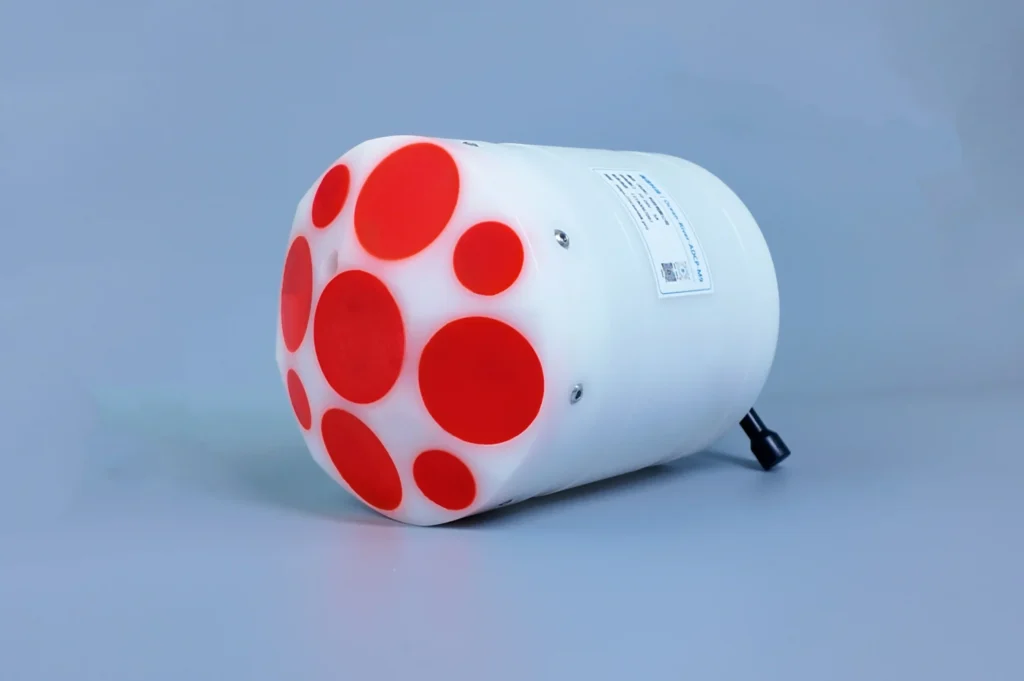
The River-ADCP-600-FA5 is a 600 kHz moving-boat profiler with five beams: four Janus beams plus a vertical piston transducer that reads the water column directly — useful in the turbid releases where dam verification runs usually happen. Published specifications: 0.5–65 m profiling range in long-range mode (0.5–50 m high-precision), ±0.25% ±2 mm/s velocity accuracy, bottom tracking to 110 m, ≤5 W average draw, broadband and pulse-coherent modes at up to 4 Hz sampling, embedded GPS and 64 GB internal storage. Reservoir inflow and outflow measurement is a listed application on the product page.
- Pros: flagship-level accuracy at roughly half the M9's price band; vertical beam helps in sediment; low power draw.
- Cons: younger brand in the dam sector; 600 kHz is not the choice for very deep reservoirs.
- Best for: discharge verification in sediment-heavy rivers, reservoir inflow/outflow surveys, ecological release checks.
#5 Oceantek HADCP-600 — Best Budget Fixed Station
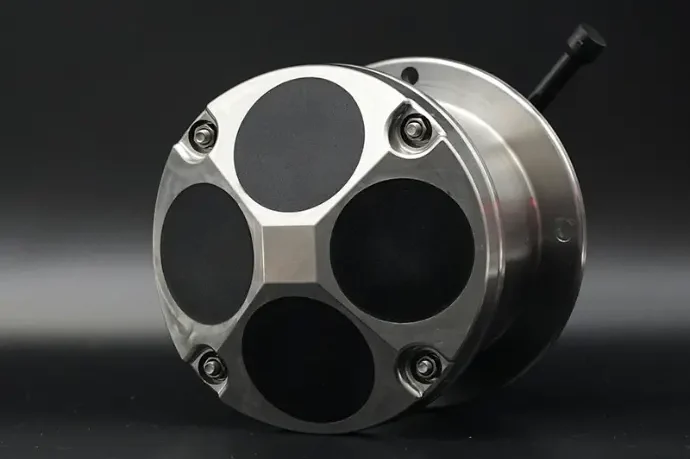
The HADCP-600 is a horizontal fixed-station ADCP built around the same index-velocity method as the Argonaut-SL and ChannelMaster, at an entry price band. Its two horizontal beams plus one vertical beam profile across channels up to 90 m wide, with published accuracy of ±0.3% ±3 mm/s and a velocity range of ±20 m/s — the margin you want during flood releases. Data refreshes at 2 Hz over RS-232/RS-422 with 64 GB onboard logging, and the vertical beam doubles as a stage reference. Like every fixed station, it needs a moving-boat rating survey to convert velocity to discharge.
- Pros: entry-level price band; 2 Hz real-time output; integrated pressure and attitude sensors.
- Cons: fixed-point measurement only; 90 m channel-width ceiling; newer installation base than the two incumbents.
- Best for: budget-constrained fixed stations, irrigation releases, flood-warning stations downstream of dams.
#6 Oceantek Ocean-ADCP-75-PA4 — Best for Deep Reservoirs
Deep basins are a different problem from gate channels: frequencies must drop for range, and cell sizes grow with them. The Ocean-ADCP-75-PA4 profiles 550 m (broadband) to 650 m (narrowband) with bottom tracking to 1000 m, in a titanium housing rated to 1500 m standard. Published specs: ±1.0% ±5 mm/s accuracy, ≤20 W average draw, 4–32 m cell sizes, self-contained mode for autonomous operation. For capacity surveys, circulation and thermocline studies in large reservoirs, it covers water that 600 kHz-class instruments cannot reach.
- Pros: deep profiling at a fraction of comparable 75 kHz system cost; self-contained deployment option.
- Cons: 4 m minimum cell size limits shallow detail; ±1% accuracy band is typical of deep profilers, not survey-grade.
- Best for: deep reservoir capacity surveys, basin circulation studies, intake-layer monitoring.
#7 Teledyne RDI StreamPro — Best for Shallow Spillway Channels
Spillway releases often run through shallow, fast concrete channels where a full-size profiler is wasted. The StreamPro is a 2 MHz micro-ADCP for 0.1–6 m depths: light enough to hand-lower from a bridge or deploy from a small boat in minutes, with ±1% accuracy — plenty for hydraulic verification of spillway and stilling-basin performance.
- Pros: fast, lightweight, bridge-deployable; purpose-built for shallow flows.
- Cons: 6 m depth ceiling; no fixed-station role.
- Best for: shallow release channels, model verification of spillway hydraulics, fish-ladder flows.
#8 Teledyne RDI Rio Grande 300 kHz — Deep Downstream Reaches
The Rio Grande in its 300 kHz configuration extends moving-boat surveying to roughly 150 m — useful for the deep downstream reaches below large dams, where 600 kHz instruments lose bottom track. It shares RDI's established discharge-processing workflow, making it a natural fit for agencies already running RDI fleets.
- Pros: deep-water moving-boat range; RDI ecosystem compatibility.
- Cons: moving-boat role only; mid-tier price band against the FA5's comparable accuracy.
- Best for: deep downstream reaches and lowland rivers below large dams.
Which Model Fits Your Dam?
| Your situation | Best pick |
|---|---|
| Permanent real-time station at a gate or tailrace, track record critical | SonTek Argonaut-SL |
| Fixed station on a tight budget, real-time telemetry required | Oceantek HADCP-600 |
| Periodic discharge verification in all conditions | SonTek RiverSurveyor M9 |
| Discharge verification in a sediment-heavy river | Oceantek River-ADCP-600-FA5 |
| Long canal or tunnel reach downstream of the dam | Teledyne RDI ChannelMaster |
| Deep reservoir capacity and circulation surveys | Oceantek Ocean-ADCP-75-PA4 |
| Shallow spillway or stilling-basin channel (<6 m) | Teledyne RDI StreamPro |
Budget: What You Get at Each Tier
| Price Band | What you get | Standout pick |
|---|---|---|
| $5–10K | A fixed horizontal station with real-time discharge telemetry — the fastest way to a live dam monitoring feed. | Oceantek HADCP-600 |
| $15–30K | The working core of dam programs: accurate moving-boat profilers (FA5, Rio Grande), proven fixed stations (Argonaut-SL, ChannelMaster), and deep-reservoir profiling (Ocean-ADCP-75-PA4). | Depends on role — see table above |
| $40K+ | Survey-grade multi-frequency capability with GNSS integration — the standard for verification work that everything else is calibrated against. | SonTek RiverSurveyor M9 |
FAQ
What is the best ADCP for dam discharge monitoring?
It depends on the job. For periodic discharge verification transects, the SonTek RiverSurveyor M9 is the most capable survey instrument. For continuous fixed monitoring at gates and tailraces, the SonTek Argonaut-SL has the longest deployment record, while the Oceantek HADCP-600 delivers the same index-velocity method at an entry price band.
How is reservoir outflow measured with an ADCP?
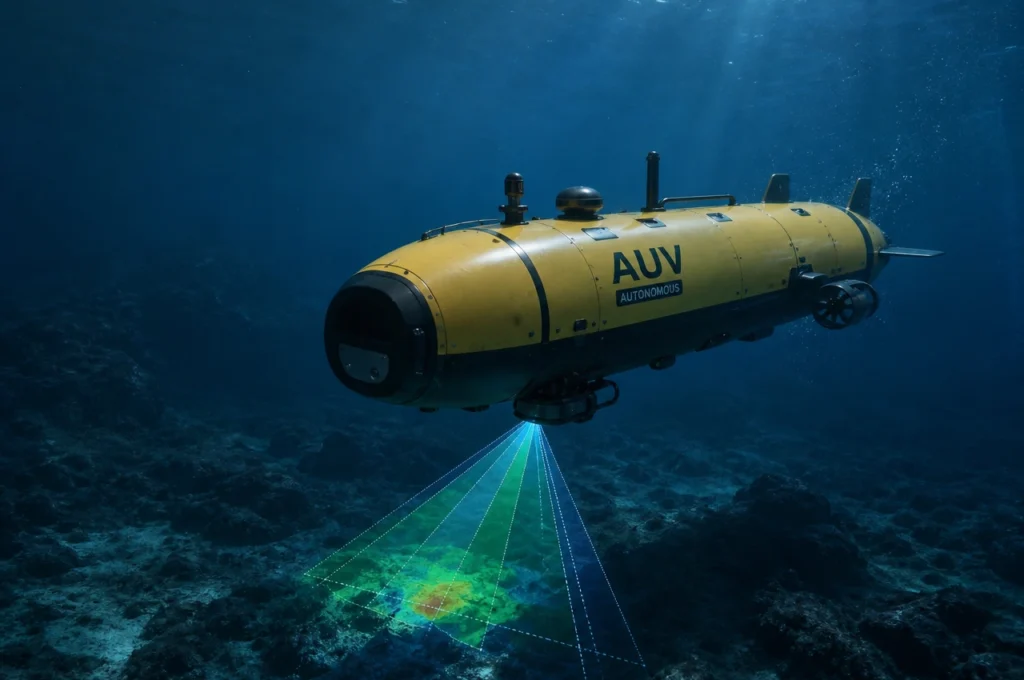
Two complementary ways: moving-boat ADCP transects across the tailrace or outlet channel measure discharge directly and establish the stage–discharge (index) rating, and fixed H-ADCP stations then monitor the same section continuously, converting measured velocity into real-time discharge using that rating.
Can an H-ADCP monitor dam gates in real time?
Yes. Horizontal ADCPs such as the HADCP-600, Teledyne RDI ChannelMaster and SonTek Argonaut-SL are mounted on the channel wall or pier, profile across the outlet channel, and report discharge via the index-velocity method — the HADCP-600 refreshes at 2 Hz for near-real-time gate control.
What ADCP frequency is best for a deep reservoir?
For reservoir basins hundreds of meters deep, 75–300 kHz profilers are needed — the Ocean-ADCP-75-PA4 profiles 550–650 m with bottom tracking to 1000 m. For shallow marginal zones and spillway channels, 600 kHz and higher give far finer cell resolution.
© 2026 Ocean (Hangzhou) Technology Co., Ltd. All rights reserved. Last updated: Octember 8, 2026.