When your equipment descends below 1,000 meters, it no longer faces “ordinary seawater.” It enters an almost entirely different world — one without sunlight, with temperatures near freezing, and pressures equivalent to hundreds of atmospheres bearing down on the housing. For engineering systems, the deep sea is not a romantic shade of blue. It is a prolonged, relentless, and unforgiving test.
Deep-sea exploration technology has advanced rapidly in recent years: manned submersibles have reached the 10,000-meter mark, AUVs and ROVs continue to gain autonomy, in-situ observation systems are trending toward long-term deployment, and deep-sea energy systems are optimizing for low power consumption and extended endurance. Yet no matter how sophisticated the algorithms or how precise the sensors become, one question remains inescapable:
Can the structural material serve reliably in the deep sea, over the long term?
This is not merely an academic question — it is an engineering decision that must be answered at the design stage for every piece of subsea equipment.
1. What Makes the Deep-Sea Environment So Challenging?
Many people understand the deep sea only as “deep water.” In reality, the true challenges arise from the superposition of multiple environmental factors — not a single stressor, but several acting together.
1.1 Hydrostatic Pressure: Not Instantaneous, But Persistent
Every 10 meters of water depth adds approximately 0.1 MPa of pressure. At 6,000 meters, external pressure approaches 60 MPa; at 10,000 meters, it exceeds 100 MPa. This is not an impact load — it is a 24-hour sustained condition that acts continuously on the housing and superimposes on structural stress. Even more critically, high pressure can alter electrochemical reaction processes and modify the surface state of metals over time.

1.2 Low Temperature and Low Dissolved Oxygen
Deep-sea water temperatures typically range from 2°C to 4°C, with correspondingly low dissolved oxygen levels. Under these conditions, a material’s repassivation capability may be compromised, corrosion behavior can differ markedly from shallow-water patterns, and long-term degradation becomes significantly harder to predict.
1.3 Localized Corrosion: More Dangerous Than Uniform Corrosion
Paradoxically, uniform corrosion rates in the deep sea can actually be lower than in shallow water. The real danger lies in localized corrosion — at bolted connections, sealing interfaces, dissimilar-metal contact zones, and narrow crevice structures. These locations can develop micro-environments that trigger pitting or crevice corrosion. For deep-sea equipment, which typically has complex structural geometries, this risk cannot be ignored.
1.4 Stress Corrosion Cracking and Hydrogen Embrittlement
Under the combined influence of high pressure and complex electrochemical conditions, certain materials exhibit increased susceptibility to stress corrosion cracking. Welded zones and residual-stress concentration areas demand particularly careful evaluation of long-term reliability.
The bottom line: deep-sea material selection is never a single-indicator problem. It is a comprehensive engineering trade-off involving strength, corrosion resistance, structural design, and service life.
2. Titanium Alloys in Deep-Sea Structures: Advantages and Boundaries
The widespread use of titanium alloys in deep-sea structural components is not accidental. Several properties make them well-suited for the deep-sea environment:
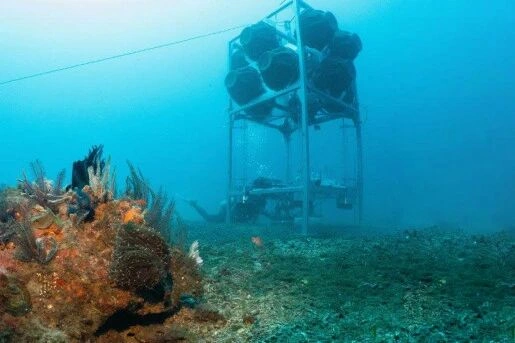
- Stable, dense oxide film: Titanium readily forms a tenacious passive layer that provides low uniform corrosion rates and strong resistance to pitting.
- High specific strength: Strength-to-weight ratio far exceeds that of stainless steel — a decisive advantage on weight-sensitive platforms such as AUVs.
- Non-magnetic: Does not interfere with acoustic sensors or magnetic compasses — critical for platforms carrying ADCPs, DVLs, or magnetometers.
- Predictable performance: In environments requiring year-long unmanned deployment, predictability itself is a form of value.
That said, titanium alloys are not “corrosion-proof.” Under extreme acidification, complex crevice geometries, or galvanic coupling conditions, sound design and risk management remain essential. From an engineering perspective, the core advantage of titanium is this: in complex environments, its behavior is more stable and more predictable.
3. Why Deep-Sea Equipment Leans Toward Titanium Pressure Housings
When a piece of equipment must descend beyond 3,000 meters and remain unmanned for a year or longer without recovery, the material selection logic shifts fundamentally. The priorities become:
- Structural safety under sustained pressure loading
- Corrosion stability in seawater over deployment timescales
- Fatigue performance and crack resistance under cyclic loading
- Maintenance cost and recovery risk
- Weight control — especially on buoyancy-limited or propulsion-limited platforms
Titanium alloys deliver strong composite performance across these dimensions. This is why so many deep-sea pressure housings and structural chambers are fabricated from titanium — not because it is the only option, but because, from an engineering risk perspective, it is the more robust one.
4. Material Selection in Practice: How Oceantek Chooses Housing Materials
At the product engineering level, material selection is never one-size-fits-all. It maps directly to the application scenario.
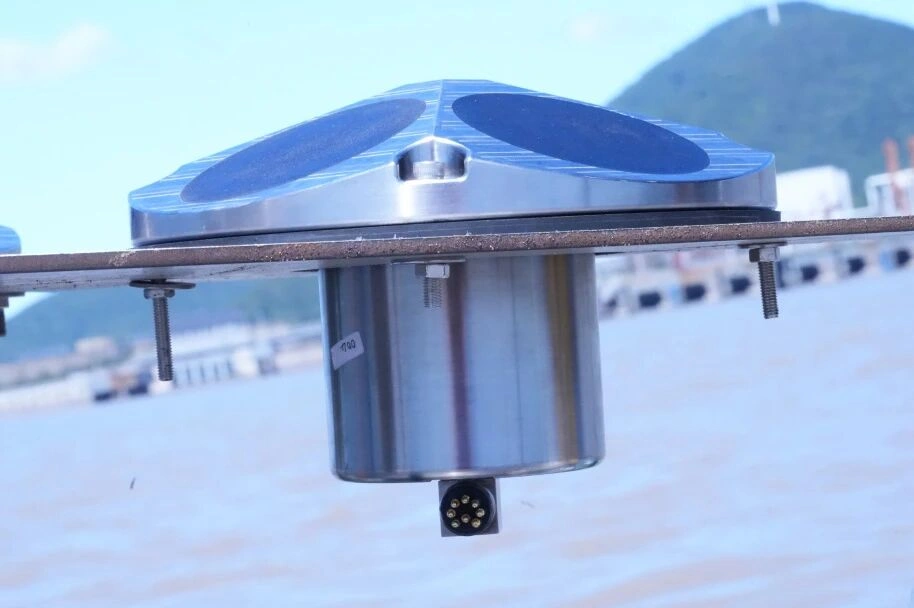
Oceantek’s product portfolio spans the full depth spectrum from coastal to hadal zones:
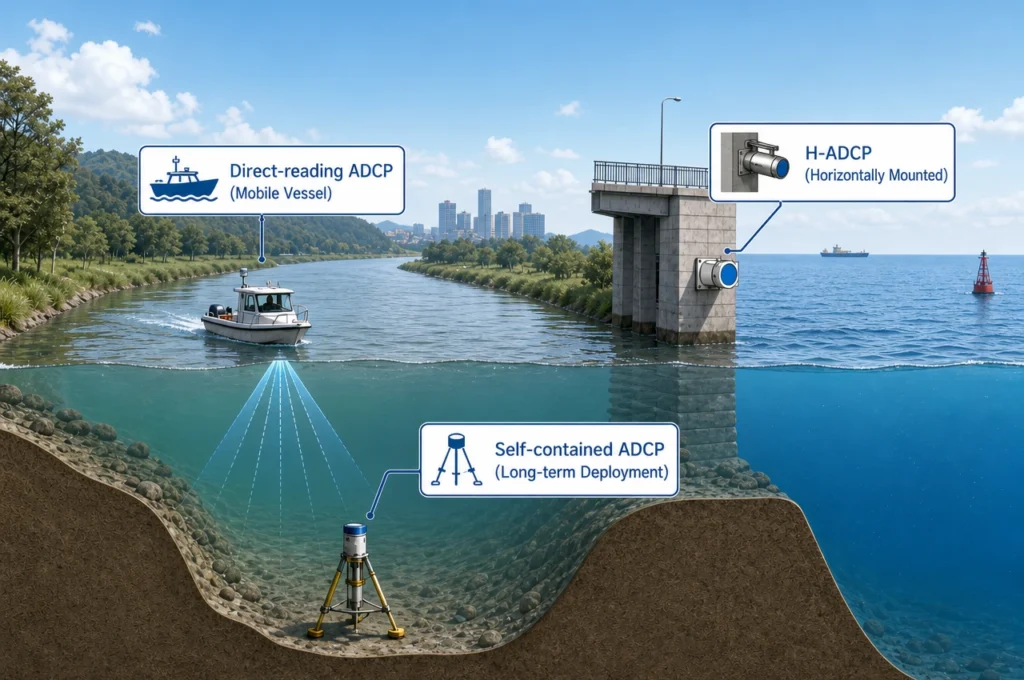
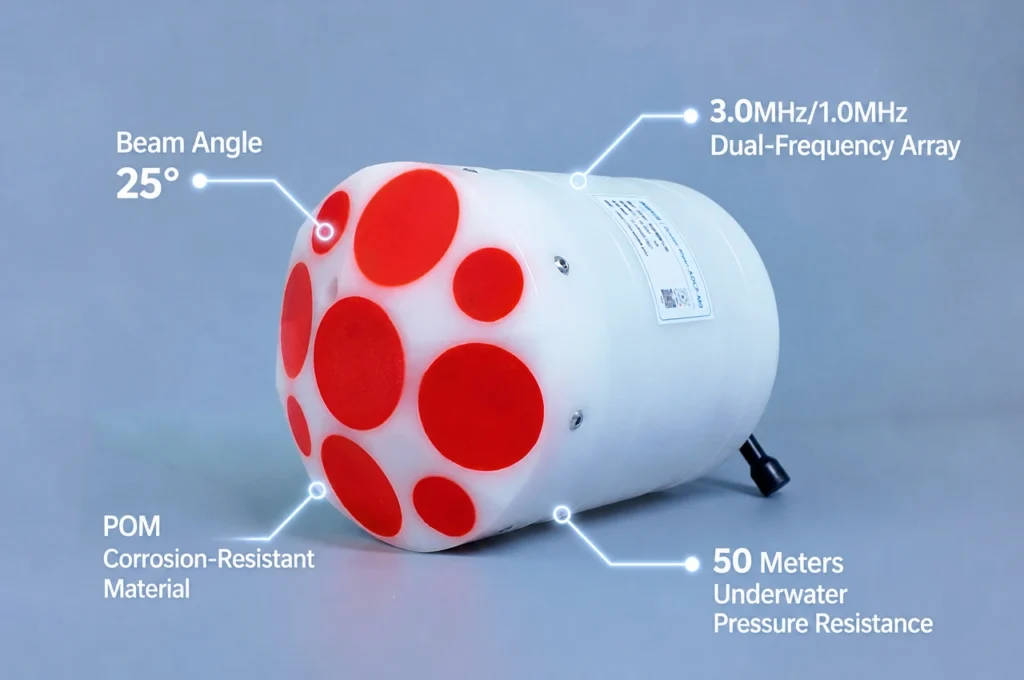
- ADCP (Acoustic Doppler Current Profiler) — long-term continuous current profiling on moorings and buoy platforms, where housing stability directly determines data continuity
- DVL (Doppler Velocity Log) — navigation for AUV and ROV platforms, demanding both structural reliability and weight minimization
- Self-contained hydrophones — long-term deployment scenarios where seal integrity and structural stability under sustained pressure are paramount
- Beidou beacons — must maintain structural integrity through ascent and surface recovery phases
Products are offered in depth-rated variants tailored to different operational requirements:
| Depth Rating | Typical Application Zone | Housing Material Recommendation |
|---|---|---|
| 1,000 m | Continental shelf, nearshore observation | Stainless steel or titanium (application-dependent) |
| 3,000 m | Continental slope, mid-depth observation | Titanium alloy preferred |
| 6,000 m | Abyssal plains, hadal zone observation | Titanium alloy standard |
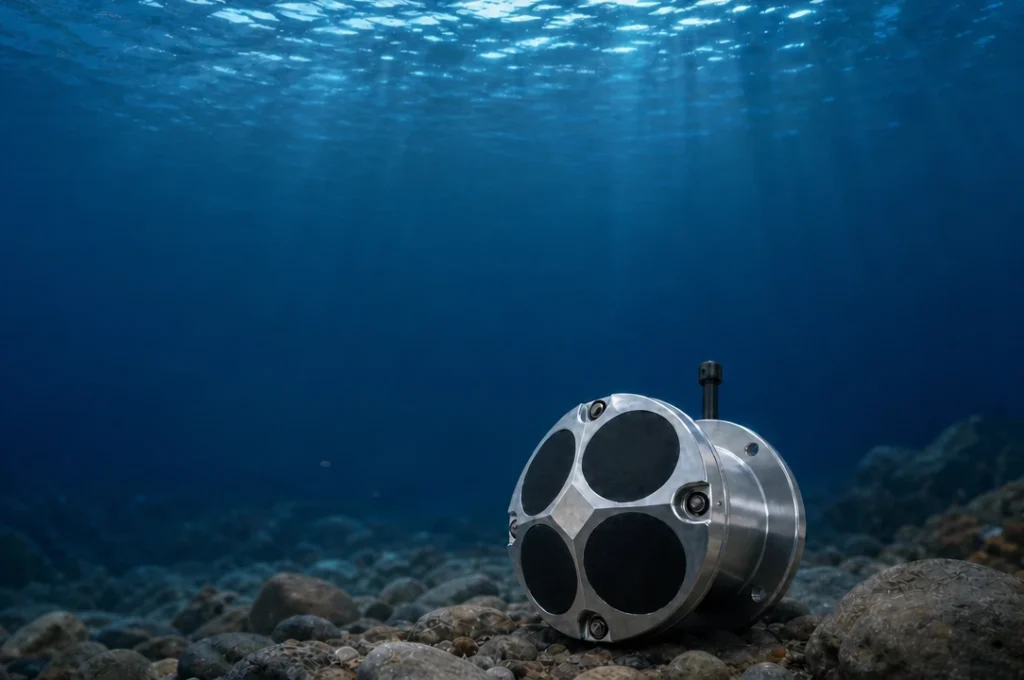
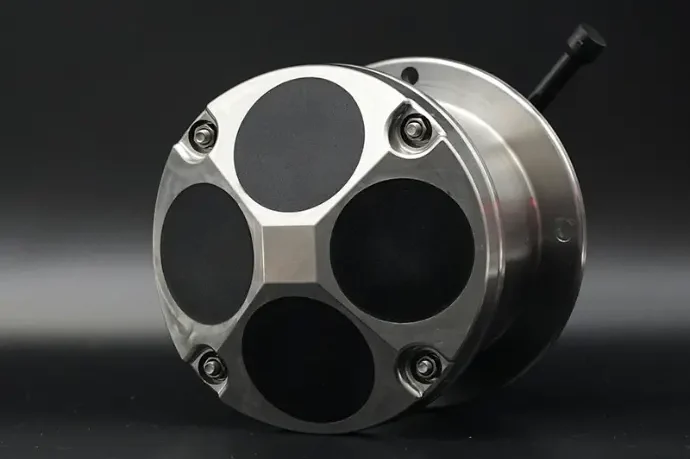
For mid-to-deep and long-deployment models, Oceantek typically specifies titanium alloy housings. The driving considerations are structural safety under high hydrostatic pressure, long-term seawater corrosion compatibility, sustained seal reliability, and structural weight management — especially critical on AUV- and buoy-deployed instruments.
In these scenarios, a titanium alloy housing is the conservative, robust engineering choice. It is not the cheapest option, nor the flashiest — but when you are talking about kilometers of water column, years of unmanned deployment, and recovery costs that are simply unacceptable to incur twice, “stable and reliable” is the best technical strategy there is.
Looking for Reliable Deep-Sea Instrumentation Solutions?
Oceantek provides ADCPs, DVLs, self-contained hydrophones, and Beidou beacons rated from coastal depths to 6,000 meters — with titanium alloy pressure housings backed by field-proven engineering.
- Browse the full Oceantek product line — ADCP, DVL, HADCP, hydrophones, and Beidou beacons across all depth ratings
- Contact our engineering team — get a material and depth-rating recommendation for your specific deployment scenario