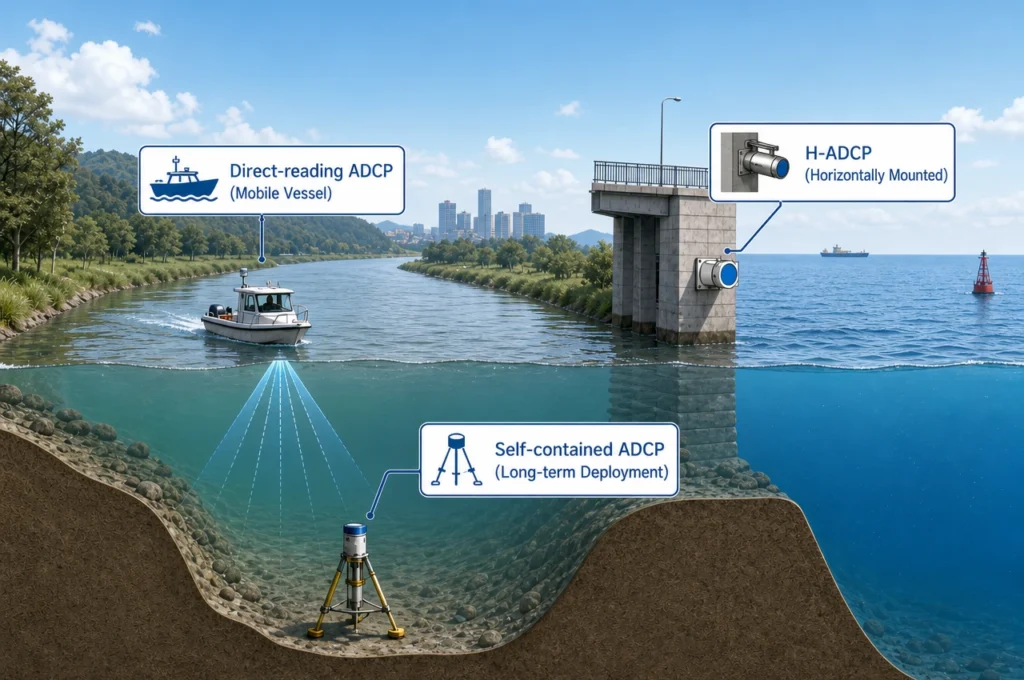
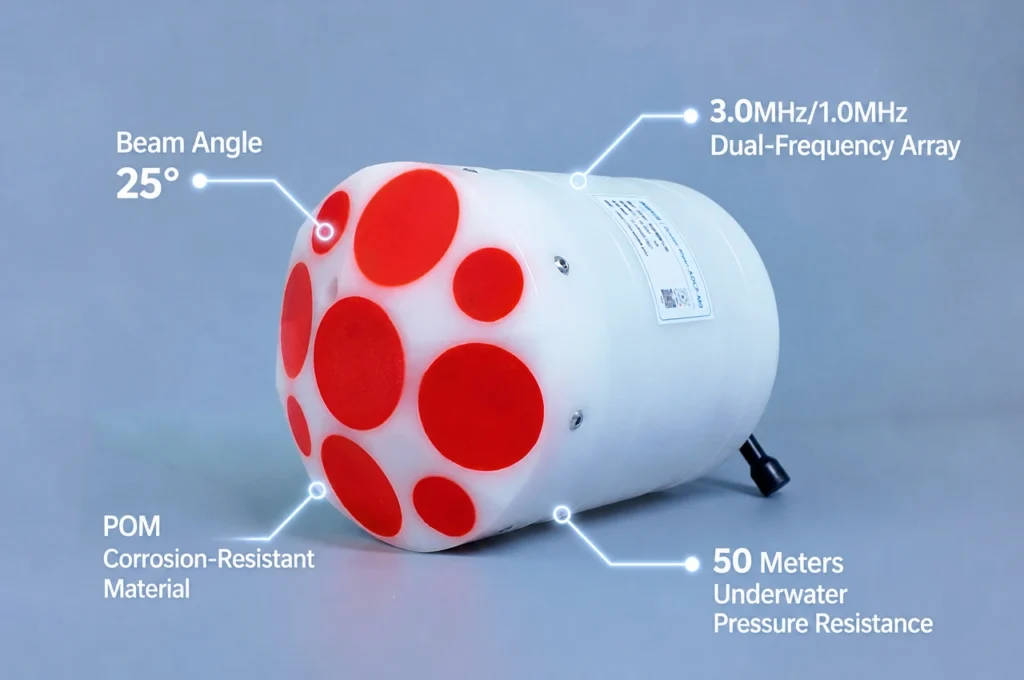
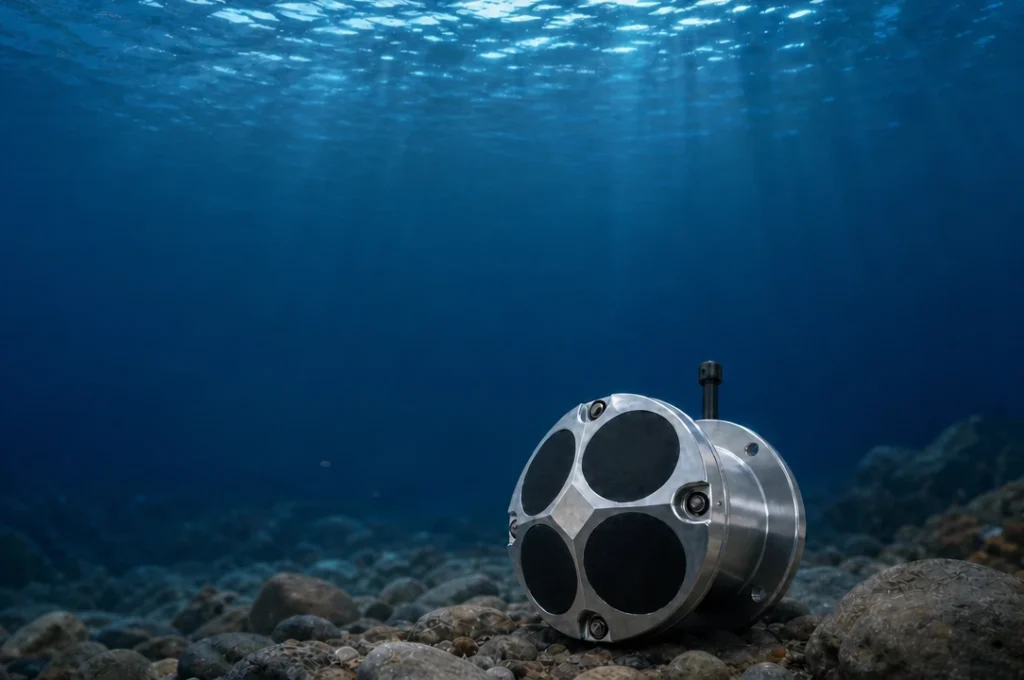
Choosing the right Doppler Velocity Log can feel hard. After all, you face many specifications and trade-offs. Frequency is one factor. Size and power are two more. On top of that, depth rating also plays a big role. One wrong choice can hurt your navigation accuracy. Even worse, the sensor may not fit your vehicle at all.
This guide makes the decision much easier. First, you will learn the five key parameters that matter most. Next, you will see which DVL fits each type of underwater platform. Finally, you will find a clear comparison of all three Oceantek DVL models. So let us begin right now.
What a DVL Does for Your Vehicle
Simply put, a DVL measures vehicle speed underwater. In other words, it is your speedometer below the surface. To do this, it sends sound waves toward the seafloor. Then it reads the returning echoes with great precision. A frequency shift in those echoes reveals exactly how fast you are moving. Moreover, most DVLs use four beams for better accuracy and redundancy.
Of course, GPS does not work below the surface at all. So a DVL naturally becomes your main source of speed data. When you pair it with an INS, you get precise navigation over long distances. As a result, every serious underwater vehicle needs a reliable DVL on board.
For a deeper introduction, read our earlier guide on what a DVL is and how it differs from an ADCP.
Why Your DVL Choice Really Matters
Above all, remember that a DVL is not a simple plug-and-play sensor. In fact, it sits at the very heart of your navigation system. Consequently, if it fails, your vehicle loses position entirely. Similarly, if it is too large, it creates drag and wastes precious battery life. Likewise, if it uses too much power, your mission ends far too early.
Therefore, you absolutely need to get it right before you buy. After all, integration takes weeks of effort. Swapping hardware later costs both time and money. So a careful choice now saves major headaches later on.
Parameter 1: Frequency (300 kHz vs 600 kHz)
Without a doubt, frequency is your single most important decision. Specifically, it controls range, accuracy, size, and power all at once. So you should start your selection process right here.
Choosing 300 kHz: Longer Range but Larger Size
To begin with, a 300 kHz DVL reaches significantly deeper. For instance, it can track the bottom at depths of up to 200 meters. Because of this, it is the right choice for large AUVs and deep-diving ROVs. However, the transducer is noticeably larger and heavier. Additionally, power draw runs higher at around 15 to 25 watts. So you trade range against size and power.
Choosing 600 kHz: Better Accuracy in a Smaller Package
On the other hand, a 600 kHz DVL gives you better accuracy. At the same time, it comes in a smaller and lighter housing. Naturally, the trade-off is a shorter bottom-tracking range. Specifically, you can track the bottom at depths of 90 to 120 meters. Meanwhile, power draw stays lower at 8 to 15 watts. As a result, this frequency is ideal for small and mid-size platforms.
A Quick Decision Rule for Frequency
- Operating deeper than 150 m? Then choose 300 kHz without hesitation.
- Operating shallower than 100 m? In that case, pick 600 kHz for the best results.
- Working across both depth ranges? If so, consider deploying a mixed fleet.
For even more detail, we also have a full guide on frequency selection: 75 kHz vs 300 kHz vs 600 kHz explained.
| Specification | 300 kHz DVL | 600 kHz DVL |
|---|---|---|
| Max bottom-tracking depth | ~200 m | ~90–120 m |
| Velocity accuracy per ping | ±0.5% ±2 mm/s | ±0.3% ±1 mm/s |
| Transducer diameter | ~180 mm | ~120 mm |
| Power consumption | 15–25 W | 8–15 W |
| Best suited for | Large AUV, deep ROV, UUV | Small/mid AUV, inspection ROV, USV |
Parameter 2: Transducer Type (Phased Array vs Piston)
Next, let us talk about the transducer itself. Certainly, this component affects size, weight, and performance. Today, you have two main options to consider.
Piston Transducers: Proven but Bulky
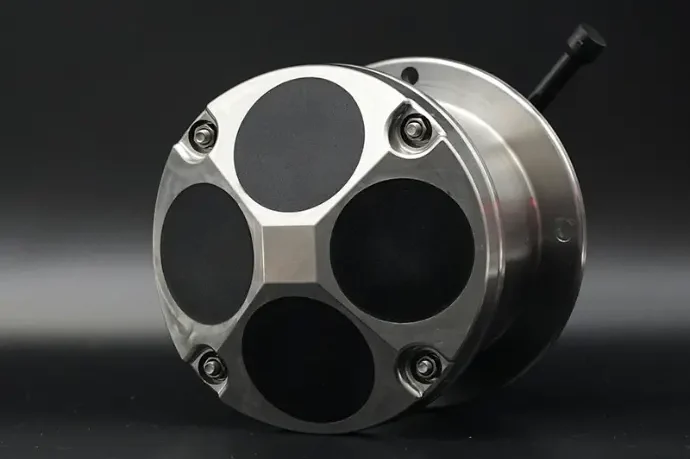
Basically, piston transducers use four separate ceramic elements. Each element points in a fixed direction. This is a truly proven and mature design. Nevertheless, the four-element layout makes the transducer head larger and heavier. Furthermore, it creates more hydrodynamic drag on your vehicle.
Phased-Array Transducers: Compact and Modern
In contrast, a phased array uses a single flat surface with many small elements. Specifically, it steers the beams electronically instead of mechanically. Therefore, the transducer is much smaller and noticeably lighter. As a bonus, it also creates far less drag. For small AUVs with tight space constraints, this is a significant advantage indeed.
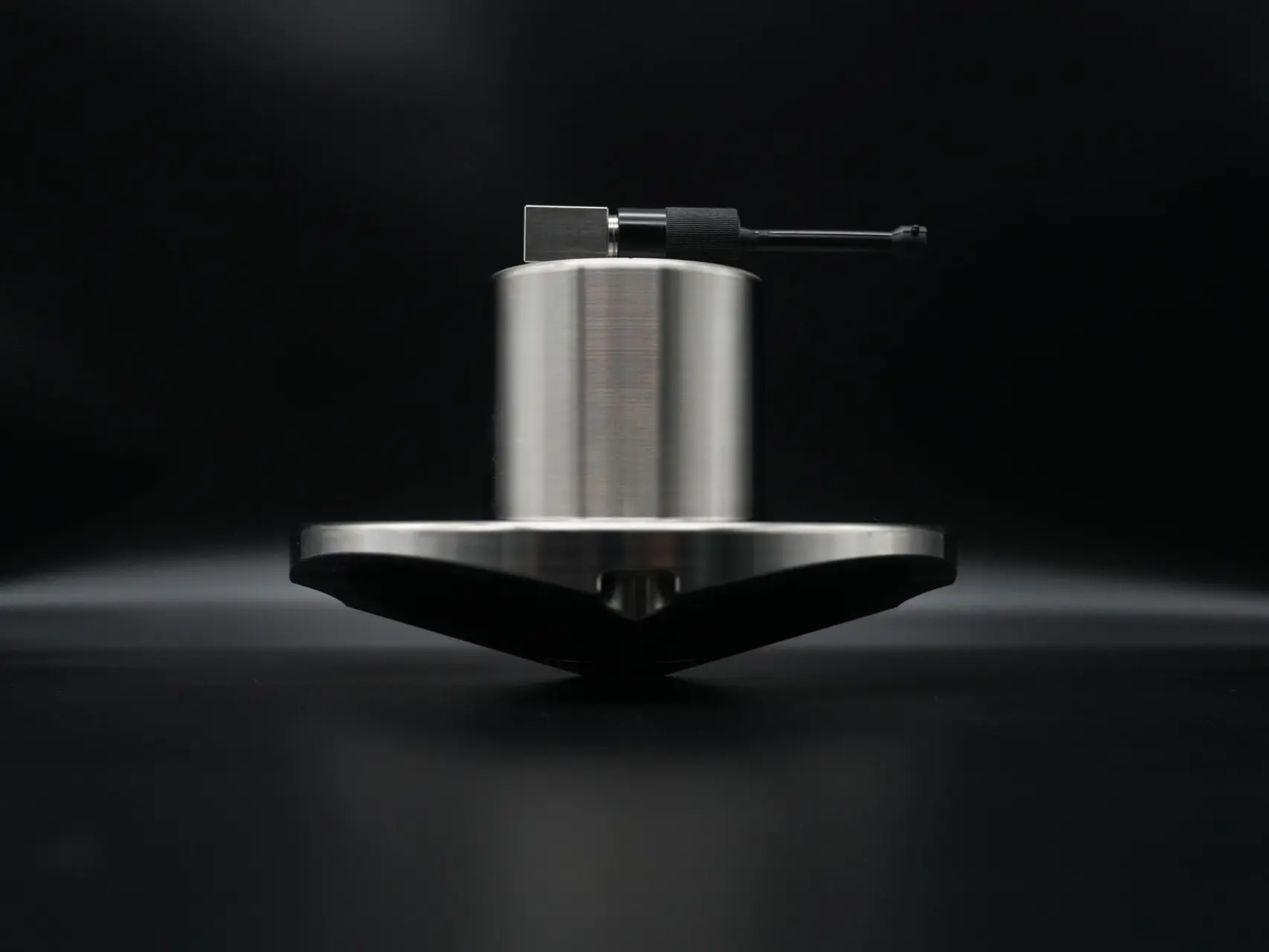
Notably, Oceantek offers both transducer types. The DVL-600-DR-PA5 uses advanced phased-array technology. It weighs under 2.5 kg in water. Its diameter measures only 120 mm. Consequently, it ranks among the most compact DVLs available anywhere today.
| Feature | Piston Transducer | Phased-Array |
|---|---|---|
| Size | Larger (4 separate elements) | Compact (single flat array) |
| Weight in water | 3–5 kg typically | Under 2.5 kg |
| Hydrodynamic drag | Moderate to high | Low |
| Beam steering method | Fixed mechanical angle | Electronic (adjustable) |
| Best suited for | Large platforms with ample space | Small and mid-size AUVs |
Parameter 3: Bottom Tracking vs Water Tracking
Furthermore, every DVL operates in two distinct measurement modes. Each mode serves a different purpose during your mission. You definitely need both for complete operational coverage.
First, bottom tracking pings the seafloor directly. It gives you absolute ground speed with the best possible accuracy. Naturally, this is your primary navigation mode. It works whenever you remain within range of the seabed. Whenever possible, you should rely on bottom tracking.
Second, water tracking measures speed against a distant water layer. You use this mode when the bottom lies too far away. For example, during mid-water transit over deep ocean trenches. Admittedly, accuracy is lower because water layers themselves move. But it is far better than having no velocity reference at all during deep transits.
In practice, most missions switch seamlessly between the two modes. A well-designed DVL handles this transition without any interruption. For more detail, read our article on bottom tracking vs water tracking in DVL systems.
Parameter 4: Depth Rating Explained
Now, let us clarify the depth rating. It tells you how deep the DVL housing can survive. To be clear, this is not the same as bottom-tracking range. Your housing must withstand the pressure at your maximum operating depth. So always add a generous safety margin.
Common depth ratings across the industry include the following levels:
- 200 m – Ideal for coastal survey and harbor inspection work
- 500 m – Suitable for continental shelf operations
- 1,000 m – Designed for deep-water survey and pipeline jobs
- 3,000 m – Built for full ocean depth and scientific research
Presently, Oceantek DVLs come with standard depth ratings from 200 m to 500 m. Additionally, options extend up to 3,000 m for deep-water models. Custom ratings are also available for OEM projects. Always confirm your vehicle’s maximum depth before placing an order.
Parameter 5: Power Draw and Communication Interface
Equally important, power draw matters enormously on battery-powered vehicles. To illustrate, a 25-watt DVL drains your battery twice as fast as a 12-watt unit. So always check the average power at typical ping rates. Do not just glance at peak or standby numbers.
Regarding communication, modern DVLs support these common interfaces:
- RS-232 / RS-422 – Works with almost any platform out there
- Ethernet (TCP/IP or UDP) – Offers higher bandwidth and easier integration
- CAN bus – Common in automotive and military-grade systems
One essential tip for you: check your vehicle’s interface before you order. An RS-232 DVL simply cannot talk to an Ethernet-only computer without an adapter. In fact, this mismatch ranks among the most common integration problems we encounter in the field.
Matching the Right DVL to Your Platform
Now let us match DVLs to real-world platforms. Each vehicle type brings its own constraints. Your choice should follow the platform’s needs first.
Small AUV (Under 2 m, Portable Class)
Space and weight are extremely tight on a small AUV. Every single watt shortens your mission endurance. So you clearly need a compact and efficient DVL solution.
Best pick: A 600 kHz phased-array DVL suits this platform perfectly. It is remarkably small, impressively light, and uses very little power. Accuracy remains excellent for typical small-AUV operating depths.
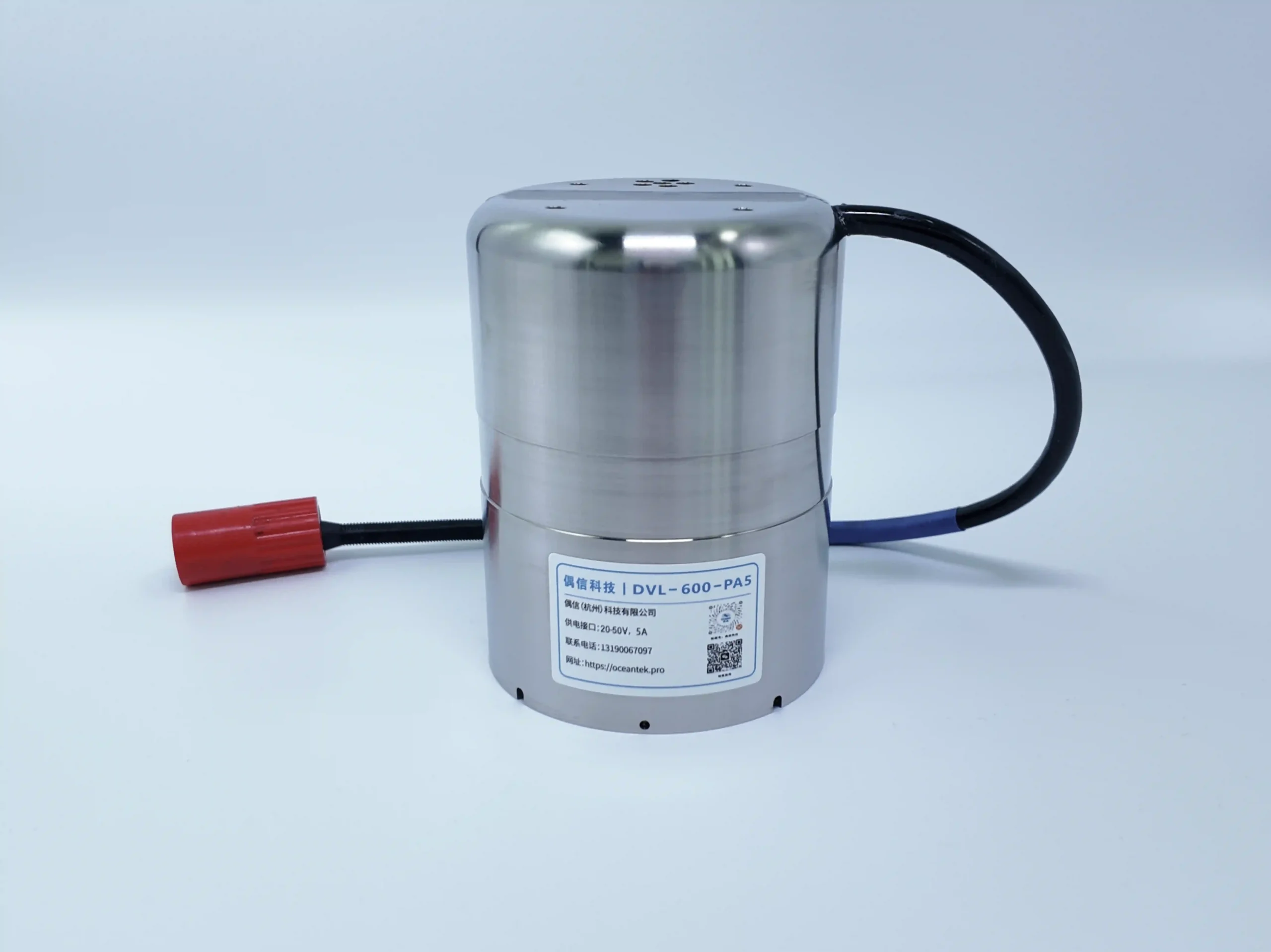
Recommended model: Oceantek DVL-600-DR-PA5. Phased array technology. Under 2.5 kg total. Only 120 mm diameter.
Mid-Size AUV (2–5 m Class)
More internal room means more flexibility in your choice. However, mission depth still drives the frequency decision. Both frequencies can work well here.
Best pick: For coastal shelf depths, go with 600 kHz for maximum accuracy. For deeper operations, switch to 300 kHz for extended range. Ultimately, let your mission depth decide.
Recommended models: DVL-600-DR-FA4 for shallow to mid-depth work. DVL-300-DR-FA4 for depths up to 200 m bottom track.
Large AUV and UUV (Over 5 m Class)
Big vehicles have ample room and abundant power to spare. They also tend to operate at greater depths. Therefore, bottom-tracking range becomes the dominant concern here.
Best pick: A 300 kHz DVL with the maximum available depth rating. The larger transducer poses no problem on a big platform. Meanwhile, the long acoustic range is exactly what you need.
Recommended model: Oceantek DVL-300-DR-FA4. Options up to 3,000 m depth rating available.
Inspection-Class ROV
Inspection ROVs demand excellent low-speed accuracy for station keeping. They typically operate near underwater structures. So bottom lock must remain stable during very slow and deliberate maneuvers.
Best pick: A 600 kHz DVL delivers the best accuracy for slow-speed operations. Additionally, the compact size fits neatly into typical inspection ROV frames.
Recommended model: Oceantek DVL-600-DR-FA4. Solid accuracy plus strong durability for demanding inspection work.
USV (Uncrewed Surface Vessel)
A USV has GPS available most of the time at the surface. So why would it need a DVL at all? First, because GPS signals can and do drop out unexpectedly. Second, because a DVL can also measure water currents below the vessel. This adds genuine value for environmental monitoring missions.
Best pick: A 600 kHz DVL mounted through the hull or on a deployable pole. The higher frequency works well in shallow surface waters. The small form factor also simplifies integration.
Recommended model: Oceantek DVL-600-DR-FA4 with surface vehicle mounting kit included.
Oceantek DVL Models at a Glance
Below is a quick side-by-side comparison of all three models. Use this table to narrow down your options quickly.
| Spec | DVL-300-DR-FA4 | DVL-600-DR-FA4 | DVL-600-DR-PA5 |
|---|---|---|---|
| Frequency | 300 kHz | 600 kHz | 600 kHz |
| Transducer | 4-beam piston | 4-beam piston | Phased array |
| Bottom-track range | ~220 m | ~120 m | ~120 m |
| Velocity accuracy | ±0.5% ±5 mm/s | ±0.3% ±3 mm/s | ±0.3% ±3 mm/s |
| Diameter | ~180 mm | ~120 mm | ~120 mm |
| Weight in water | ~4.5 kg | ~2.8 kg | <2.5 kg |
| Power (average) | ~18 W | ~12 W | ~10 W |
| Depth rating | 1000 m / 3000 m / 6000m | 1000 m / 3000 m / 6000m | 1000 m / 3000 m / 6000m |
| Interface | RS-232 / RS-422 | RS-232 / RS-422 | RS-232 / RS-422 |
| Best suited for | Large AUV, deep ROV | Mid AUV, ROV, USV | Small AUV, tight spaces |
All three models include both bottom and water tracking modes. Each one has built-in temperature and pressure sensors. Moreover, every unit ships with setup software for Windows and Linux. For detailed specifications, visit the Oceantek DVL product page.
Three Common Mistakes to Avoid
Over time, we have helped many integrators choose their DVL. Here are three mistakes we see again and again. Definitely avoid them.
Mistake 1: Picking Frequency Based on Price Alone
Admittedly, a 600 kHz DVL often costs less than a 300 kHz model. So saving money feels tempting at first glance. But if your vehicle operates at 180 meters depth, that 600 kHz unit will lose bottom lock entirely. Consequently, the money you saved will vanish on the first failed mission. Always match frequency to depth first. Only then discuss your budget constraints.
Mistake 2: Overlooking the Transducer Dimensions
Often, engineers focus heavily on the electronics housing specifications. Meanwhile, they completely forget about the transducer head itself. Yet the transducer must face open water directly. It must also fit through the vehicle’s mounting flange. On a small AUV, a 180 mm transducer may simply not fit at all. So measure your available space before you choose a model. Start with the transducer dimensions first.
Mistake 3: Underestimating the Integration Effort
Let us be clear: a DVL is not plug-and-play equipment. It must align precisely with your INS. It also needs careful calibration for your specific mounting geometry. Furthermore, it requires a reliable communication link to your main computer. As a result, plan at least two to four weeks for a first-time integration. Also, ask about software development kits before you purchase. Good integration support saves weeks of frustration later.
Why Field Test Data Matters
Specifications on paper tell only part of the story. Real performance in actual water conditions tells the rest. So always ask for published field test data before committing.
To demonstrate real-world capability, Oceantek tested the DVL-600 series in Qiandao Lake, China. During this campaign, we measured bottom tracking across varying depths and bottom types. The results showed consistent and reliable bottom lock beyond 90 meters. Additionally, velocity accuracy stayed within ±0.3 percent across all test runs conducted.
Read the complete test report here: DVL 600K Qiandao Lake Performance Test.
Frequently Asked Questions
What is the difference between a DVL and an ADCP?
In short, a DVL measures vehicle speed over the ground. Meanwhile, an ADCP measures water current speed at many depths. They share the same core acoustic technology. However, a DVL points downward at a steeper beam angle. An ADCP uses shallower angles optimized for water-column profiling. Some multi-purpose devices can handle both tasks. Nevertheless, a dedicated DVL always gives better navigation results in practice.
Can a DVL measure water currents?
Not very well, to be honest. A DVL is purpose-built for bottom tracking. Its beams are specifically set for strong seafloor returns. Need water current data? Use a dedicated ADCP for that purpose. For navigation tasks, a dedicated DVL is the right tool instead. Meanwhile, if you genuinely need both types of data, deploy two separate instruments. Alternatively, ask us about a combined solution for your project.
What is typical DVL accuracy?
Generally speaking, modern DVLs reach ±0.3 to ±0.5 percent of measured speed. Plus there is a small fixed offset of 1 to 2 mm per second. For example, a 600 kHz unit moving at 2 m per second would read approximately 2.000 m per second. The total error would be roughly ±7 mm per second. Bottom tracking is always more accurate than water tracking mode.
How deep can a DVL go?
Two separate limits apply here. First is the housing depth rating. Oceantek currently offers 220 m bottom tracking range , 6,000 m pressure rating. Second is the acoustic bottom-tracking range. A 300 kHz DVL tracks the bottom from about 200 m above it. A 600 kHz DVL reaches about 90 to 120 m above the seafloor. Be sure to check both numbers before you decide.
Do you offer OEM and custom DVL solutions?
Yes, absolutely. Oceantek provides OEM DVL modules for system integrators and vehicle manufacturers worldwide. We offer custom depth ratings, interface protocol adaptations, and transducer geometry modifications. Furthermore, we fully support private-label configurations. If you need a DVL that fits your specific platform, contact us to discuss your exact requirements.
How long does DVL integration take?
For a first-time setup on a new platform, plan on two to four weeks. This timeframe covers mechanical mounting, electrical integration, INS alignment, and calibration. Teams with prior DVL experience can usually finish in under two weeks. To speed things up, Oceantek provides an SDK and integration manual with every single unit. These tools dramatically reduce your setup time.
Your Next Steps Start Here
You now know the five key parameters that drive DVL selection. You also know which model fits each vehicle type. And you have a clear comparison of the full Oceantek DVL lineup. The next step is refreshingly simple.
- Get the datasheets. Visit the Oceantek DVL product page and download full specifications for all three models.
- Read the brand comparison. Our ADCP Brand Comparison 2026 provides valuable wider market context.
- Talk to our team. Send us your platform specifications. We will recommend the right DVL within 24 hours.
A well-chosen DVL keeps your underwater vehicle precisely on course. It protects your mission from costly navigation failures. And it gives your INS the clean velocity data it needs to perform at its best. Take the time to choose carefully now. You will definitely thank yourself later.
Oceantek manufactures acoustic Doppler current profilers, Doppler velocity logs, and underwater acoustic sensors for marine applications worldwide. Our DVLs operate on AUVs, ROVs, and USVs around the globe. Every product comes with field-validated test data and comprehensive integration support. Learn more about Oceantek and our full product range.