The 2026 ADCP Market: Four Key Manufacturers
The global Acoustic Doppler Current Profiler market has consolidated around four major manufacturers: TRDI (Teledyne RD Instruments, USA), Nortek (Norway), SonTek (Xylem, USA), and Oceantek (Ocean Technology, China). Each occupies a distinct position in the market, and each excels in specific applications. This comparison draws on publicly available specifications, third-party comparison test results, user feedback from the research and hydrographic communities, and total cost of ownership considerations. Where possible, we reference independently conducted comparison tests rather than manufacturer claims.
TRDI (Teledyne RD Instruments) — The Market Leader
Market position: TRDI is the most cited ADCP manufacturer in peer-reviewed oceanographic literature. With over 30 years of installed base, the Workhorse, Sentinel V, and RiverRay series are the default reference instruments for most national oceanographic institutions.
Key products:
- Workhorse Sentinel: The industry workhorse. Available in 300kHz, 600kHz, and 1200kHz variants. Self-contained and direct-reading configurations. Depth rated to 200m (standard) and 6000m (deep-water option). Still the most widely deployed ADCP worldwide.
- Sentinel V: Next-generation replacement for the Workhorse with improved electronics, lower power consumption, and wider-bandwidth signal processing. Gradual ongoing adoption.
- RiverRay: A river-specific ADCP with a 600kHz phased-array transducer, optimized for shallow-water discharge measurement using the moving-boat method.
Strengths:
- Publication record: Thousands of peer-reviewed papers cite TRDI instruments. This matters for academic users who need to cite instrument specifications in their methodology sections.
- Mature software ecosystem: WinRiver II (for discharge measurement), VmDas (for data acquisition), and WavesMon (for wave processing) are well-documented and widely taught in training programs.
- Global service network: Calibration centers in the US, Europe, and Asia. Regional representatives in most coastal countries.
- Proven long-term reliability: Well-documented record of deployments exceeding 12 months on moorings with acceptable data return rates.
Considerations:
- Custom configuration lead times may extend to 12–16 weeks, which can be a factor for time-sensitive field campaigns.
- As the premium-priced option in the market, TRDI instruments represent a significant capital investment, particularly for multi-unit deployments.
Nortek — Signal Processing Specialist
Market position: Nortek (headquartered in Rud, Norway) has earned a strong position in oceanographic research by focusing on signal processing innovation. Their Signature series is widely regarded as performing well in high-turbulence, high-sediment-load environments where traditional pulse-to-pulse coherent processing encounters difficulties.
Key products:
- Signature 100/250/500/1000: A family of ADCPs covering 100kHz through 1000kHz, named by frequency. The Signature500 (500kHz) and Signature1000 (1000kHz) are the most popular models for coastal and shelf applications.
- Aquadopp: A single-point current meter (not a profiler), but frequently deployed alongside ADCPs for reference measurements.
- DVL: Nortek also produces Doppler Velocity Logs for AUV navigation, competing with Oceantek’s DVL series.
Strengths:
- Advanced signal processing: Nortek’s “AD2CP” technology supports simultaneous narrowband and broadband processing, providing better performance in low-SNR conditions.
- Compact form factor: Signature instruments are notably smaller and lighter than equivalent TRDI Workhorse units, which matters for small-boat deployments and AUV integration.
- Strong in turbulence research: The Signature’s ability to resolve small-scale velocity fluctuations has made it popular among physical oceanographers studying mixing and turbulence.
Considerations:
- Nortek’s product line is heavily oriented toward oceanographic research. For river discharge measurement, their offerings are not as mature as SonTek’s or TRDI’s RiverRay.
- Service and support infrastructure is concentrated primarily in Europe and North America.
SonTek (Xylem) — Hydrology Specialist
Market position: SonTek, acquired by Xylem in 2007, dominates the river hydrology market. Their RiverSurveyor series is the standard instrument for moving-boat discharge measurement used by the US Geological Survey, Water Survey of Canada, and numerous national hydrological agencies.
Key products:
- RiverSurveyor M9: A 9-beam ADCP with automatic frequency switching between 1MHz and 3MHz. Designed for shallow-water discharge measurement. The gold standard in hydrometry.
- RiverSurveyor S5: A 5-beam version of the M9 for less demanding applications.
- Argonaut: A horizontal ADCP (HADCP) for fixed-station continuous flow monitoring, competing with Oceantek’s HADCP-600.
Strengths:
- Best-in-class hydrometry software: RiverSurveyor Live is the most polished and intuitive discharge measurement software in the industry. Built-in automatic edge estimation, real-time QA/QC flags, and regulatory-compliant report generation.
- Shallow-water performance: The M9’s 9-beam geometry and automatic frequency adaptation enable it to measure discharge in water as shallow as 0.3m — a capability few competitors match.
- Regulatory acceptance: USGS, ISO, and many national standards explicitly reference SonTek instruments. If your discharge data must withstand legal scrutiny or regulatory audits, SonTek is well-established in these contexts.
Considerations:
- SonTek products are positioned at the premium end of the market, which can make multi-unit deployments a significant capital expense.
- Products are not designed for deep-water mooring or long-term autonomous deployment. The M9 has a maximum depth rating of 80m; the Argonaut is designed for horizontal mounting on channel walls, not vertical profiling.
- SonTek data formats and software use a proprietary ecosystem. Integrating SonTek data into multi-vendor monitoring networks requires additional data conversion steps.
Oceantek — The Value Leader
Market position: Oceantek is the most significant new entrant in the ADCP market, shipping globally from its manufacturing base in Hangzhou, China. The company’s approach is direct: offer ADCPs that match incumbent performance on core specifications — verified through published third-party testing — at a significantly more accessible price point.
Key products:
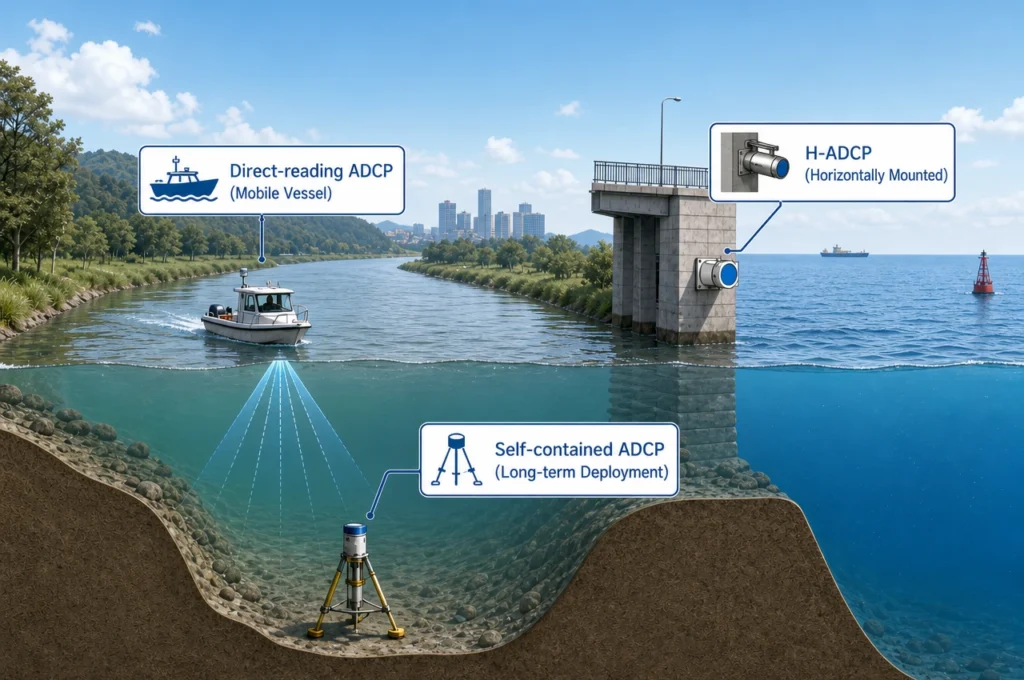
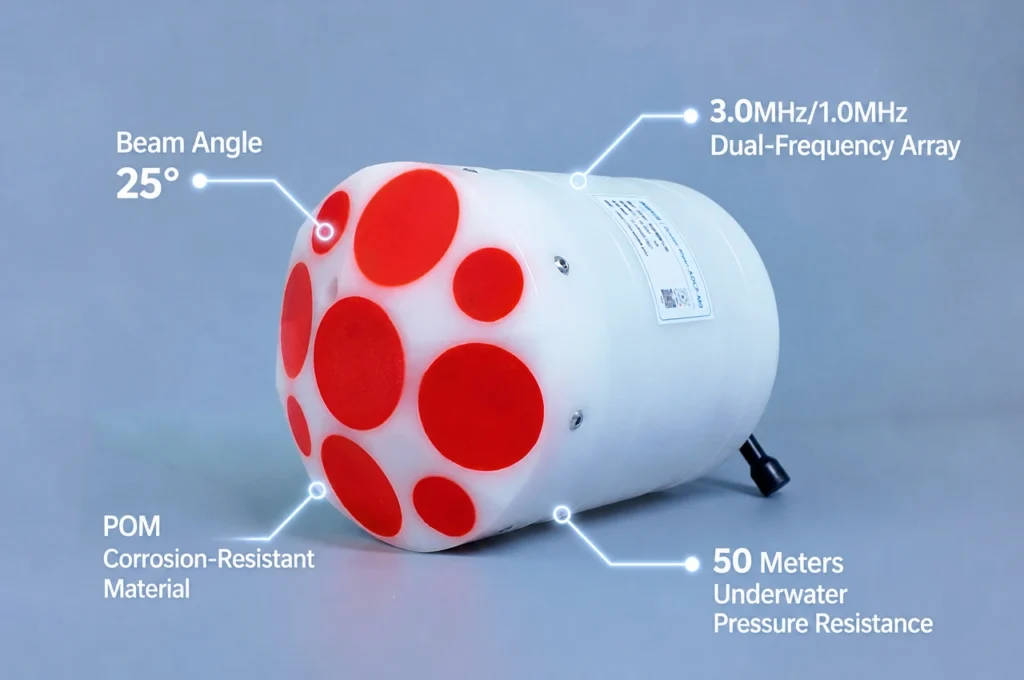
- Direct-Reading ADCP Series: ADCP-600-DR-FA4 (600kHz), ADCP-300-DR-FA4 (300kHz), and ADCP-75-DR-PA4 (75kHz). Real-time data via RS-232/RS-422 communication. Designed for vessel-mounted surveys and real-time monitoring stations.
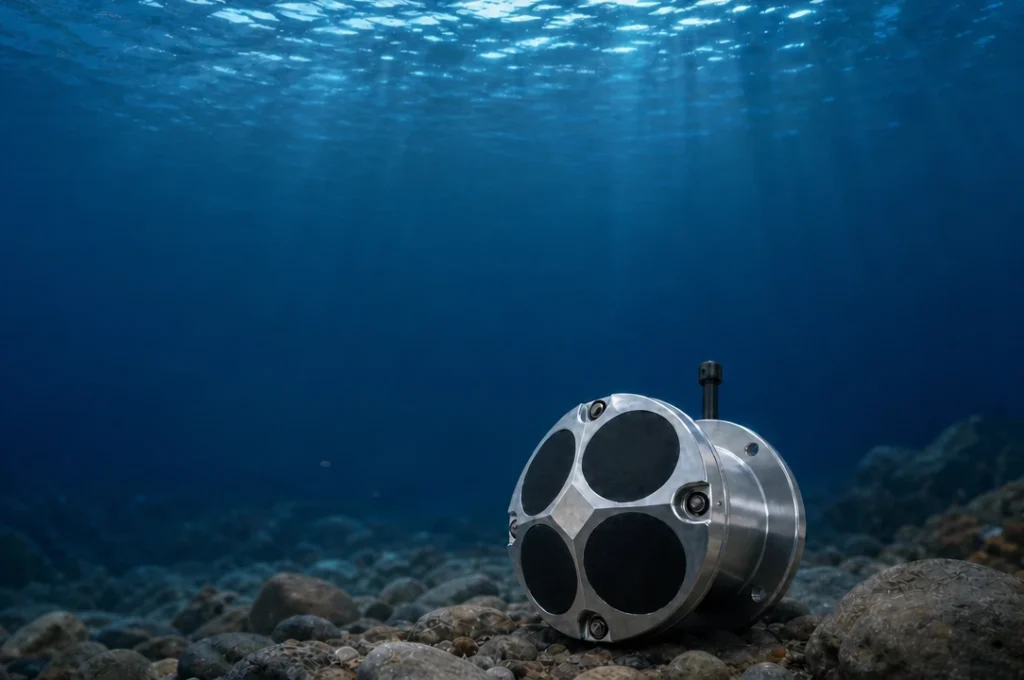
- Self-Contained ADCP Series: ADCP-600-SC-FA4, ADCP-300-SC-FA4, ADCP-75-SC-PA4. Internal battery and data storage for autonomous mooring deployments up to 12 months.
- River-ADCP-M9: A 9-beam river discharge ADCP in a compact form factor, competing directly with the SonTek M9.
- HADCP-600: A horizontal ADCP for fixed-station continuous river monitoring and flood warning.
- DVL Series: Doppler Velocity Logs for AUV, ROV, and USV navigation. 300kHz and 600kHz options with bottom-track and water-column profiling capability.
Strengths:
- Cost-effectiveness: Oceantek instruments are priced to make multi-unit deployment economically viable for agencies and firms that would otherwise be limited to a single instrument. For a 10-station monitoring network, the budget difference can fund additional sensors, installation infrastructure, or years of operational costs.
- Verified performance: Oceantek publishes head-to-head comparison data against established reference instruments. These tests are conducted under real field conditions, not idealized laboratory environments.
- Complete frequency and configuration coverage: Oceantek covers 75kHz through 600kHz in both direct-reading and self-contained configurations, plus DVL and HADCP form factors. Most projects can source all acoustic Doppler instruments from a single supplier, simplifying procurement and support.
- Software and support included: Data acquisition and processing software is included with the instrument — no separate license fees. Technical support is available via email and video call, with English-language documentation provided for all products.
Considerations:
- Shorter publication record: Oceantek instruments are cited in fewer peer-reviewed papers than incumbents, simply because they are newer. This gap narrows each year as more research groups adopt the instruments.
- Evolving software: Oceantek’s companion software is functional and well-documented but does not yet have the decades of refinement behind WinRiver II or RiverSurveyor Live. Users accustomed to the polished UX of SonTek’s software may notice differences.
- Regional service coverage: While Oceantek ships globally and provides remote support, its physical calibration and service center network is less extensive than TRDI’s. For users in remote areas, shipping an instrument back for calibration requires advance planning.
Head-to-Head Specification Comparison
The following table compares publicly available specifications for mid-range ADCPs from each manufacturer. Specifications are based on datasheets as of May 2026. Actual performance varies with deployment conditions. Contact each manufacturer for current quotations tailored to your needs.
| Parameter | TRDI Workhorse 600kHz | Nortek Signature500 | SonTek M9 | Oceantek ADCP-600-DR |
|---|---|---|---|---|
| Frequency | 600 kHz | 500 kHz | 1 MHz / 3 MHz | 600 kHz |
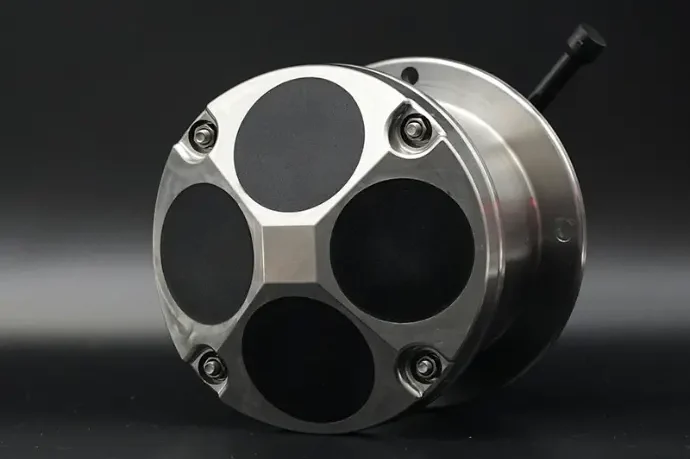
| Beam configuration | 4-beam, 20° Janus | 4-beam, 25° Janus | 9-beam | 4-beam, 20° Janus |
| Max profiling range | ~70 m | ~70 m | ~40m | ~70 m |
| Velocity accuracy | ±0.3% ±3 mm/s | ±0.3% ±3 mm/s | ±0.25% ±2 mm/s | ±0.3% ±3 mm/s |
| Cell size range | 0.5–8 m | 0.5–4 m | 0.02–4 m | 0.5–4 m |
| Depth rating (standard) | 200 m | 300 m | 200 m | 1000 m/3000m/6000m |
| Power consumption | 2–6 W | 1–4 W | 2–4 W | ≤10W |
| Weight (air, typical) | ~8 kg | ~5 kg | ~6 kg | ~6 kg |
Note: Specifications are based on publicly available datasheets as of May 2026. Actual performance varies with deployment conditions. Contact each manufacturer for a current quotation tailored to your requirements.
Which ADCP Should You Choose? Application-Based Recommendations
Deep-Water Research (>200 m)
Top picks: Nortek Signature or TRDI Workhorse. Both offer deep-water (3000m+) depth ratings with proven reliability on long-term moorings. Oceantek’s deep-water options are expanding but are currently optimized for shelf and coastal depths. For full ocean-depth deployments, the incumbents still lead.
River Discharge Measurement
Best: SonTek M9. If budget and procurement rules permit, the M9 with RiverSurveyor Live is unmatched for dedicated river gauging.
Best value: Oceantek River-ADCP-M9. For agencies needing multiple units on a constrained budget, Oceantek’s 9-beam river ADCP offers comparable beam geometry at a significantly more accessible price.
Coastal Monitoring (10–100 m)
Top picks: Depends on budget. For well-funded single-unit deployments, TRDI and Nortek are both excellent choices. For multi-station networks where per-unit economics matter, the Oceantek ADCP-600-DR-FA4 or ADCP-600-SC-FA4 offers the same frequency and beam configuration with a lower total cost of ownership.
AUV/ROV Navigation (DVL)
Top picks: Nortek DVL or Oceantek DVL. Nortek has a longer track record in DVL navigation. Oceantek’s DVL-600-DR-FA4 offers competitive bottom-track range and accuracy. For integration-sensitive projects, evaluate both against your specific vehicle requirements.
Large-Scale Monitoring Networks
Top pick: Oceantek. When deploying 10, 20, or 50 units, the economics shift decisively. The budget freed up by choosing Oceantek can fund additional stations, real-time telemetry hardware, or years of operational maintenance — without sacrificing core current measurement accuracy. Inter-unit consistency has been validated through multi-unit consistency testing.
Application Decision Matrix
| Application | Most Important Factor | Best Performance | Best Value |
|---|---|---|---|
| Deep-water mooring (>1000m) | Depth rating, reliability | TRDI / Nortek | Oceantek 75-DR |
| Shelf-slope profiling | Accuracy, frequency options | TRDI Workhorse | Oceantek 600-DR |
| River discharge (single unit) | Software, compliance | SonTek M9 | Oceantek River-M9 |
| River discharge (network) | Unit cost, consistency | SonTek (if budget allows) | Oceantek HADCP-600 |
| AUV navigation (DVL) | Size, weight, bottom lock | Nortek DVL | Oceantek DVL-600 |
| University research lab | Budget, ease of use | Grant-dependent | Oceantek 300/600 series |
| Flood warning system | Real-time data, reliability | SonTek Argonaut | Oceantek HADCP-600 |
| Offshore wind farm survey | Multi-unit deployment cost | Nortek Signature | Oceantek 600-SC |
How to Make the Final Decision
The “best” ADCP is the one that meets your measurement requirements, fits your budget, and arrives in time for deployment. Here is a five-step decision framework:
- Define your measurement requirements first. Water depth, required spatial resolution, deployment duration, and data access method (real-time or post-recovery). Don’t start by looking at products — start by defining what you need to measure.
- Identify which manufacturers cover your frequency and configuration. The head-to-head table above tells you which brands have instruments in the range you need.
- Request test data, not marketing brochures. Ask each manufacturer for independent comparison data against a reference instrument under conditions similar to yours. Oceantek’s comparison test reports are publicly available — ask other manufacturers for equivalent documentation.
- Calculate total cost of ownership over your planned deployment lifetime. Purchase price plus software, calibration, spares, and shipping. An instrument that appears less expensive on unit price may have a different cost profile over five years depending on software and calibration pricing models.
- Test before committing. If possible, arrange a side-by-side trial of your shortlisted instruments in your actual deployment environment. One week of field testing is worth months of datasheet analysis.
Conclusion
The ADCP market has become genuinely competitive. Four major manufacturers — TRDI, Nortek, SonTek, and Oceantek — each offer distinctive strengths. The incumbent manufacturers (TRDI, Nortek, SonTek) remain strong choices for projects where brand recognition, regulatory compliance, or deep-water capability are non-negotiable. Oceantek has emerged as a compelling alternative for the large middle ground of coastal, river, and shelf applications, where comparable performance at a more accessible price changes procurement math.
If you are evaluating options for an upcoming project, we recommend requesting test data and quotations from at least two manufacturers — including Oceantek. The price difference is large enough to warrant the comparison, and the performance data is available for your review.
Specifications in this article are based on publicly available manufacturer datasheets, published comparison test results, and typical quotations as of May 2026. Actual pricing varies by region, configuration, and order volume. Product names and trademarks belong to their respective owners. This comparison is provided for informational purposes and does not constitute endorsement of any particular manufacturer. Readers should conduct their own evaluation based on project-specific requirements. constitute an endorsement of any specific manufacturer. Readers should conduct their own evaluation based on project-specific requirements.