In March 2026, a landmark publication — the 2026 China ADCP (Acoustic Doppler Current Profiler) Industry Development Panoramic Insight Report (hereafter “the Report”) — was officially released. Its central thesis is unambiguous: China’s ADCP industry has reached a decisive inflection point, pivoting from an era of scale-driven expansion toward one defined by quality-led, innovation-powered growth.
Among the dozens of enterprises evaluated, one name emerged as the clear standout: Oceantek. The Report designated Oceantek as the benchmark enterprise for China’s domestic ADCP industry — a title earned through years of systematic, forward-looking strategy that directly addresses every critical bottleneck holding the sector back.
This article provides a comprehensive dissection of the Report’s findings, the five industry-wide pain points it identifies, and the specific strategies Oceantek deployed to overcome each one — offering a blueprint for the entire sector’s future.
Table of Contents
- The Five Critical Pain Points Facing China’s ADCP Industry
- Pain Point 1: Core Technology Dependency — Oceantek’s Full-Stack R&D Solution
- Pain Point 2: Low High-End Market Penetration — The Scene-Native Design Approach
- Pain Point 3: Underutilized Data Value — From Equipment Sales to Data Assetization
- Pain Point 4: Fierce Competition & Profitability Pressure — Building a Differentiated Moat
- Pain Point 5: International Market Barriers — The Technology Export Strategy
- Key Takeaways: A Blueprint for ADCP Industry Transformation
- Frequently Asked Questions
The Five Critical Pain Points Facing China’s ADCP Industry
Over the past decade, China’s ADCP sector has progressed through four distinct evolutionary phases:
- Technology Introduction — importing and learning from foreign ADCP systems
- Domestic Substitution — early attempts at locally manufactured alternatives
- Rapid Growth — scaling production and expanding market share in mid-range segments
- Intelligent Systemization — the current phase, integrating AI, cloud connectivity, and autonomous platforms
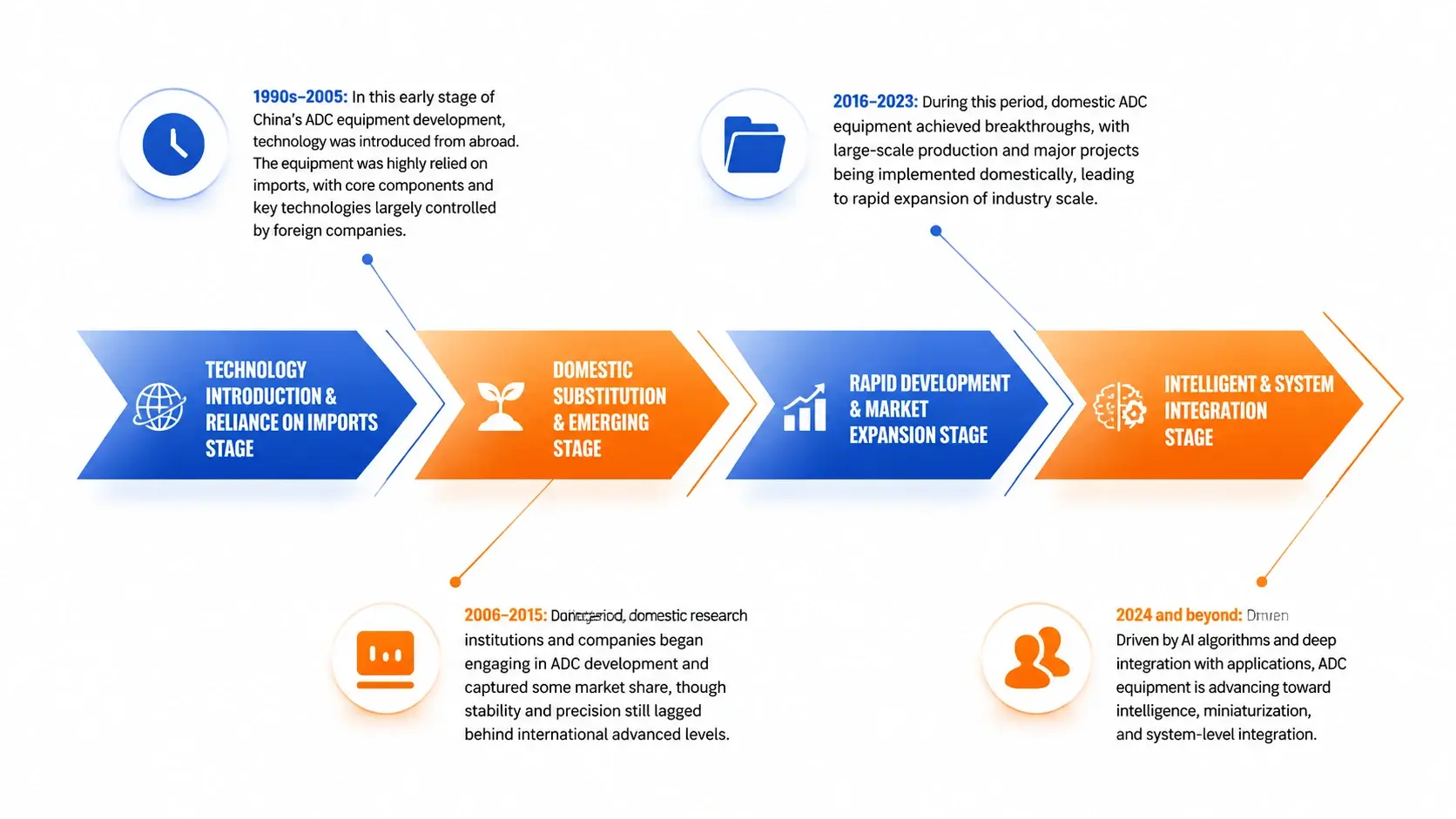
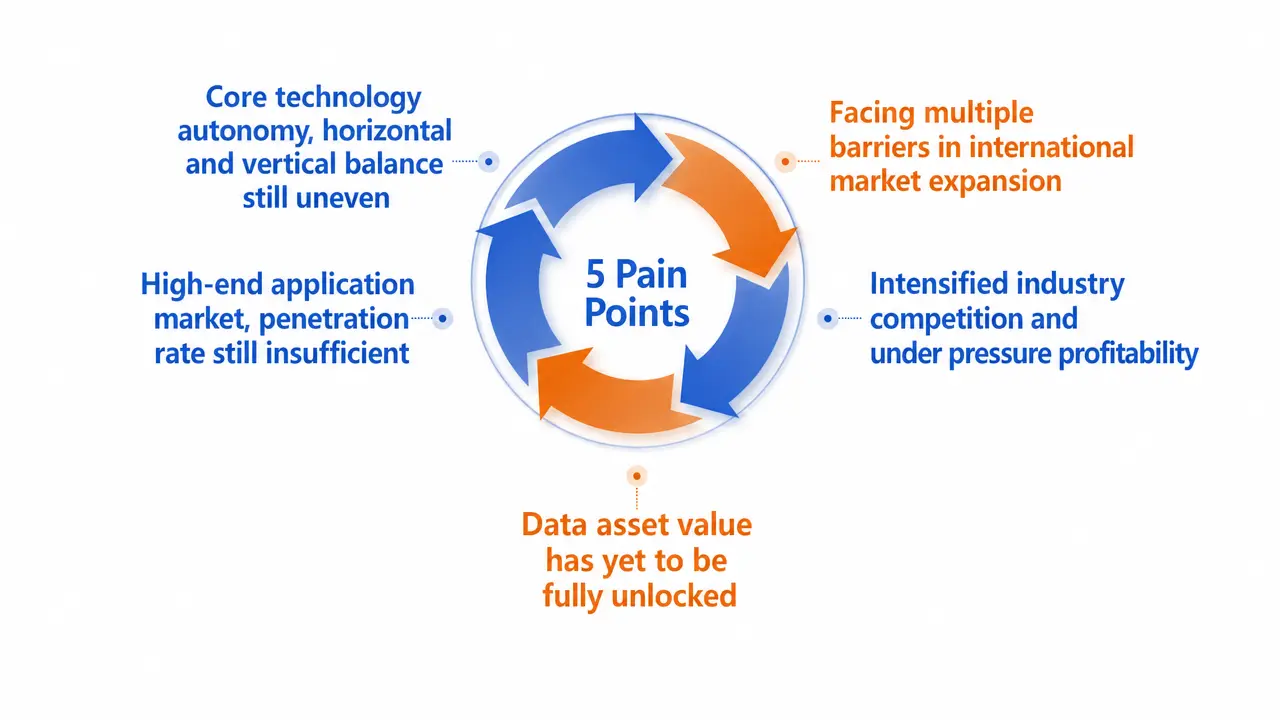
Despite this progress, the Report identifies five persistent structural weaknesses that prevent China’s ADCP manufacturers from competing at the highest level:
- Uneven core technology autonomy — critical components and algorithms still depend on foreign suppliers
- Insufficient penetration in premium application scenarios — deep-sea, polar, and oceanographic survey markets remain foreign-dominated
- Underutilized data asset value — the industry remains anchored to equipment sales while collected data goes unmonetized
- Intensifying competition paired with profitability pressure — mid-to-low-end product homogenization drives a race to the bottom
- Formidable barriers to international expansion — certification hurdles, service network gaps, and limited global tendering experience
Below, we examine each pain point in detail and reveal how Oceantek’s strategic approach systematically dismantles each one.
Pain Point 1: Core Technology Dependency — From “Foreign-Controlled” to Full Independent Mastery
The Challenge: What’s Holding Domestic ADCP Back?
The Report pinpoints core technology autonomy as the industry’s number one challenge. Four specific bottlenecks stand out:
- Miniaturized transducer manufacturing capability remains insufficient — a critical barrier for high-frequency, shallow-water applications
- Structural stability under deep-sea high-pressure conditions is not yet proven at scale — raising reliability concerns for deep-water deployments
- Core signal processing algorithms still rely on foreign frameworks not optimized for China’s unique water conditions
- Critical semiconductor chips remain vulnerable to external supply chain disruptions
Oceantek’s Solution: Full-Stack Independent R&D
Oceantek’s approach is comprehensive — spanning from bottom-layer hardware components to top-tier application algorithms, every link in the value chain is developed and controlled in-house.
Hardware Innovation: A Full-Frequency Product Portfolio
Oceantek has built a complete product lineup covering 75 kHz, 300 kHz, and 600 kHz frequency bands, with each model purpose-engineered for specific operational environments:
| Frequency Band | Primary Application | Key Engineering Achievement |
|---|---|---|
| 600 kHz (High-frequency) | Nearshore shallow-water measurement, coastal engineering | Broke through miniaturized transducer manufacturing bottleneck; enables compact form factors for deployment in constrained environments |
| 300 kHz (Mid-frequency) | General-purpose current profiling, river discharge monitoring | Balanced range-resolution trade-off suitable for diverse water conditions; the workhorse of the product line |
| 75 kHz (Low-frequency) | Deep-sea high-precision current measurement, oceanographic research | Filled the domestic gap in deep-sea ADCP capability; enables profiling at depths previously accessible only with imported equipment |
Deep-Sea Reliability: Proven by Engineering, Not Just Specifications
One of the most formidable challenges in ADCP manufacturing is ensuring structural integrity under extreme hydrostatic pressure at abyssal depths. Oceantek’s self-contained ADCP series tackled this head-on through optimized pressure-housing material selection and advanced seal structure design.
The result is a landmark engineering validation that speaks louder than any datasheet:
- 180 consecutive days of fault-free operation at a depth of 3,000 meters in the South China Sea
- 99.8% data integrity rate throughout the entire deployment duration
This real-world performance effectively addresses the long-standing criticism that Chinese-made oceanographic equipment lacks proven “deep-sea reliability.” It is a data point that no competitor — domestic or international — can dismiss.
Algorithm Independence: Built for China’s Unique Waters
Rather than adapting foreign general-purpose algorithm frameworks — which were predominantly developed for clear oceanic waters — Oceantek developed original algorithms specifically tailored to China’s indigenous water conditions. China’s rivers and coastal waters are characterized by:
- Exceptionally high suspended sediment concentration (e.g., the Yellow River)
- Strong tidal currents in estuarine and coastal zones
- Complex bathymetry that challenges conventional acoustic signal processing
Key algorithmic innovations include:
- Dynamic bottom-tracking compensation — maintains accuracy even over turbid, morphologically active riverbeds
- Multi-frequency adaptive switching — enables seamless operation across rapidly varying depth profiles
- Flow velocity measurement accuracy controlled within ±0.3% ±3 mm/s — meeting or exceeding international benchmarks
By achieving complete independence from overseas core algorithms, Oceantek has removed what was arguably the single largest barrier to China’s ADCP industry advancement.
Pain Point 2: Low High-End Market Penetration — The “Scene-Native Design” Breakthrough
The Challenge: Brand Inertia and the Credibility Gap
The Report reveals a sobering reality: in the most demanding application domains — deep-sea scientific observation, polar research expeditions, and large-scale oceanographic surveys — international brands (notably Teledyne RDI, Nortek, and SonTek) continue to command dominant market share. Domestic manufacturers face a dual challenge that cannot be overcome through specifications alone:
- Brand inertia: Deeply entrenched user preferences for established international brands, built over decades of field use
- Insufficient long-term reliability data: A credibility gap — international competitors have multi-decade deployment histories; domestic alternatives lack equivalent longitudinal datasets
Oceantek’s Solution: “Scene-Native Product Design”
Oceantek’s competitive strategy in the high-end market is elegantly simple in concept but immensely demanding in execution: don’t benchmark against imported equipment — design products that grow organically from the real-world demands of China’s complex water environments.
The company has established a three-matrix product architecture, with each product line purpose-built for distinct high-end application scenarios:
| Product Line | Form Factor | Primary Application | Deployment Example |
|---|---|---|---|
| Direct-Reading ADCP | Real-time cabled connection to surface vessel or platform | Vessel-mounted surveys, real-time monitoring, coastal engineering | Offshore wind farm site selection surveys |
| Self-Contained ADCP (e.g., ADCP-75-SC-PA4) | Autonomous battery-powered submerged deployment | Long-duration deep-sea observation, moored current profiling | 180-day South China Sea abyssal mission at 3,000m depth |
| Horizontal ADCP (e.g., H-ADCP-600) | Fixed cross-section bank-mounted installation | Smart water conservancy, river discharge monitoring, flood control | Continuous monitoring in high-turbidity Yellow River sections |
The Power of Measured Validation
Oceantek has accumulated extensive long-term reliability datasets through rigorous field testing in some of the world’s most challenging aquatic environments, including the high-turbidity reaches of the Yellow River and the abyssal South China Sea. This philosophy of “let the scene define the product, let measured performance verify capability” has yielded tangible commercial results:
- Successful import substitution in major domestic water conservancy infrastructure projects
- Preferred bidder status in offshore wind farm site selection surveys
- Emergence as the preferred brand in high-end scientific research tenders — a position once exclusively held by multinational competitors
Pain Point 3: Underutilized Data Value — From “Equipment Sales” to “Data Assetization”
The Challenge: Instruments That Collect Data But Don’t Monetize It
The Report makes a pointed observation about the ADCP industry’s business model: it remains overwhelmingly anchored to one-time equipment sales revenue, while the torrent of hydrographic data these instruments continuously collect represents a vast, largely untapped reservoir of potential value. Three factors perpetuate this gap:
- Lack of standardized data storage structures — each manufacturer uses proprietary formats, making cross-platform aggregation difficult
- Fragmented and incompatible analysis tools — no unified ecosystem for processing and deriving insights
- Underdeveloped capability for commercial data product development — the jump from raw current measurements to sellable data services is substantial
Oceantek’s Solution: Hardware + Data + Services
Oceantek’s vision extends far beyond selling measurement instruments. The company is actively driving a fundamental redefinition of what an ADCP is — transforming it from a “data collection device” into an “intelligent ocean + hydrological sensing node” within a larger, cloud-connected digital ecosystem.
Three architectural decisions enable this transformation:
- Standardized communication protocols across the entire product portfolio — enabling seamless plug-and-play integration with unmanned surface vessels (USVs), autonomous underwater vehicles (AUVs), buoy arrays, and other underwater platforms
- Direct cloud connectivity — realizing a complete data closed loop: Collection → Transmission → Analysis → Early Warning
- Standardized data storage architecture — serving as a precise, high-fidelity dynamic data foundation for digital twin watershed construction, one of the most promising frontiers in water resource management
This “Hardware + Data + Service” model fundamentally shifts the value proposition. An ADCP is no longer merely a current measurement tool that generates a one-time sale — it becomes a core asset gateway for water resource management and ocean development, generating recurring revenue streams through data services, analytics, and predictive insights.
The transformation from “data collection” to “value conversion” represents perhaps the most forward-looking dimension of Oceantek’s strategy — and one that competitors still anchored to the equipment-sales paradigm will find increasingly difficult to replicate.
Pain Point 4: Intensifying Competition & Profitability Pressure — Building a Differentiated Moat
The Challenge: The Vicious Cycle of Homogenization
The Report sounds a clear alarm about competitive dynamics in the mid-to-low-end ADCP market, where product homogenization has become rampant. A destructive cycle has taken hold:
Low Pricing → Reduced R&D Investment → Lagging Technology → Further Price Erosion → Diminishing Margins
Companies trapped in this spiral face dwindling prospects for sustainable growth. The Report warns that without strategic intervention, this dynamic could hollow out the industry’s innovation capacity.
Oceantek’s Solution: Refuse the Race to the Bottom
Oceantek’s response is principled and unambiguous: refuse to participate in low-price involution. Instead, the company pursues a dual-track strategy of differentiated R&D combined with engineered cost-effectiveness.
Industry-Academia-Research Ecosystem
Oceantek has forged deep, productive partnerships with leading Chinese research institutions, including Zhejiang University and the Harbin Institute of Technology (HIT). These collaborations serve as a continuous innovation pipeline, feeding cutting-edge research directly into Oceantek’s product development cycle while ensuring the company’s technology remains at the frontier of what is scientifically and engineeringly possible.
Engineering-Driven Cost Optimization (Not Cost-Cutting)
Rather than degrading materials or compromising on quality to reduce unit costs — the default approach in a price war — Oceantek achieves affordability through genuine engineering optimization:
- Reduced overall equipment weight by 30% through advanced manufacturing processes — lowering shipping, handling, and deployment costs
- Improved deployment efficiency by over 50% — dramatically lowering operational expenditure for end users over the equipment lifecycle
- Maintained — and in many cases extended — technological leadership while achieving meaningful total-cost-of-ownership advantages
An Organization Built for Innovation
Perhaps the most telling statistic: over 80% of Oceantek’s workforce is dedicated to R&D functions. This organizational structure is purpose-built for speed — the ability to rapidly translate identified industry pain points into deployed product features. Concrete examples include:
- Low-power, long-endurance operational modes — developed specifically in response to ecological flow monitoring requirements where battery replacement is impractical
- Optimized data compression and transmission protocols — engineered for flood control dispatch scenarios where bandwidth is constrained and latency is critical
This “Research → Feedback → Iteration” positive feedback loop has allowed Oceantek to locate the elusive equilibrium point between technological leadership and cost controllability — a balance that competitors trapped in the low-price spiral, with their diminished R&D budgets, cannot easily replicate.
Pain Point 5: International Market Barriers — Technology Export as the Path to Global Expansion
The Challenge: A Gauntlet of Global Market Entry Barriers
The fifth major pain point concerns global market access. Chinese ADCP manufacturers seeking international expansion must navigate a formidable gauntlet of obstacles:
- Stringent technical certification requirements that vary significantly across jurisdictions — CE marking in Europe, different standards in Southeast Asia, and complex compliance frameworks in other regions
- Insufficient overseas after-sales service network coverage — a critical weakness, given that ADCP equipment requires periodic calibration, maintenance, and occasional repair
- Limited experience and track record in international tendering processes — where established competitors have multi-decade relationship histories with procurement agencies
Oceantek’s Solution: “Technology Export + Global Service Ecosystem”
Oceantek’s international strategy is best characterized as “technology export underpinned by a full service ecosystem” — a deliberate departure from the traditional model of competing on price alone in overseas markets, which has historically yielded thin margins and fragile market positions.
Performance Parity as the Foundation
With its full-series product line demonstrating international-level performance benchmarks across all key specifications — range, accuracy, reliability, and data quality — Oceantek is actively entering overseas markets for both marine monitoring and hydrological monitoring applications. The product is competitive on its merits; price is positioned as a secondary advantage, not the primary selling point.
Service Infrastructure as the Differentiator
Oceantek’s approach to building global market presence is methodical and infrastructure-heavy — the kind of investment that signals long-term commitment rather than opportunistic entry:
- A nationwide technical service network across China, now being progressively extended to overseas markets — building local service capability before scaling sales
- Localized companion software that adapts to the operating habits, language preferences, and regulatory reporting requirements of overseas users
- Active participation in international oceanographic and hydrological observation projects — accumulating credentials, reference deployments, and brand recognition through demonstrated capability rather than marketing claims
This strategy — product capability as the foundation, service excellence as the differentiator — is powering a fundamental shift in how Chinese ADCP technology enters global markets: from “borrowing others’ ships to sail” (OEM/white-label approaches) to “building one’s own ship and setting course” (independent brand, independent channel, independent service).
Key Takeaways: A Blueprint for ADCP Industry Transformation
The 2026 China ADCP Industry Development Panoramic Insight Report’s designation of Oceantek as the benchmark enterprise for domestic ADCP is more than a corporate accolade — it is an authoritative validation of a systematically executed strategy for industry-wide transformation.
Oceantek’s journey offers a replicable five-point blueprint for any ADCP manufacturer seeking to break out of the mid-market and compete at the highest level:
| # | Strategic Pillar | How Oceantek Executed | Measurable Outcome |
|---|---|---|---|
| 1 | Core Technology Autonomy | Full-stack independent R&D from hardware to algorithms | ±0.3% ±3 mm/s accuracy; 180-day deep-sea deployment at 3,000m |
| 2 | High-End Market Penetration | Scene-native product design across three product matrices | Preferred brand in scientific research tenders; import substitution in major projects |
| 3 | Data Asset Value Unlocking | Hardware + Data + Service model; cloud-connected sensing nodes | Data closed loop enabling digital twin watershed applications |
| 4 | Differentiated Competitive Moat | Industry-academia partnership + engineering cost optimization | 30% weight reduction; 50% deployment efficiency gain; 80% R&D workforce |
What Oceantek’s Rise Signals for the Industry
The significance of Oceantek’s emergence as the benchmark enterprise extends well beyond the fortunes of a single company. It signals that China’s ADCP industry has definitively moved from an era of “technology catch-up” — chasing international benchmarks set by others — into a new phase defined by “indigenous innovation and integrated system capability enhancement.”
The goal is no longer to match international standards. The goal is to set them.
Notably, this marks the second time Oceantek has received such high-level recognition in 2026. Earlier in the year, the company was listed as a representative enterprise in the 2026 Global ADCP Industry White Paper — making this consecutive recognition by two authoritative industry reports a powerful corroboration of Oceantek’s position at the forefront of ADCP innovation.
Frequently Asked Questions About the China ADCP Industry and Oceantek
What is an ADCP (Acoustic Doppler Current Profiler)?
An Acoustic Doppler Current Profiler (ADCP) is a hydroacoustic instrument that measures water current velocities over a depth range using the Doppler effect of sound waves scattered back from particles within the water column. ADCPs are essential tools in oceanography, hydrology, offshore engineering, and water resource management.
Why is the 2026 China ADCP Industry Report significant?
The 2026 report is the most comprehensive assessment of China’s ADCP sector to date. It marks the industry’s transition from scale-driven expansion to quality-driven development and provides the first systematic identification of the five critical pain points constraining domestic manufacturers from competing in high-end global markets.
Why was Oceantek named the benchmark enterprise?
Oceantek was selected because it has systematically addressed all five industry pain points identified in the Report — from core technology autonomy and high-end market penetration to data assetization, competitive differentiation, and global expansion. Its full-stack R&D approach, proven deep-sea reliability (180 days at 3,000m), and innovative Hardware + Data + Service business model set it apart from competitors.
How does Oceantek’s ADCP technology compare to international brands?
Oceantek’s ADCPs demonstrate performance parity with leading international brands (Teledyne RDI, Nortek, SonTek) across key specifications, including flow velocity accuracy of ±0.3% ±3 mm/s. Where Oceantek differentiates is in its algorithms, which are purpose-built for high-sediment, high-turbidity water conditions common in China — conditions that challenge foreign general-purpose algorithms.
What are the main applications of ADCP technology?
ADCP technology is deployed across a wide range of applications including: deep-sea oceanographic research, offshore wind farm site assessment, river discharge and flood monitoring, smart water conservancy systems, port and harbor current mapping, ecological flow monitoring, and digital twin watershed construction.
What frequency ADCP should I choose for my application?
Frequency selection depends on your operational depth and resolution requirements: 600 kHz for shallow water (up to ~70m) with high resolution; 300 kHz for medium-depth applications (~160m) with balanced performance; 75 kHz for deep-water profiling (up to ~650m or more). Oceantek offers all three frequency bands with purpose-built form factors for each application scenario.