Introduction: The Three Frontiers of Flow Measurement
Water flow measurement is deceptively hard. It is not one problem — it is three, each operating at a different scale: rivers that flood and recede within hours, coastal waters where tides and sediment conspire against clean data, and deep ocean currents that drive global climate systems 6,000 meters below the surface.
Historically, hydrologists and oceanographers have been forced to piece together solutions from multiple vendors — a 600 kHz ADCP for the river gauging station, a 300 kHz unit for the coastal survey vessel, and a low-frequency phased-array system for deep-water profiling. Each instrument comes with its own software ecosystem, data format, calibration routine, and supply chain. The operational friction is enormous.
What if one instrument platform could cover all three frontiers — shallow rivers to abyssal oceans — with unified protocols, shared software, and a single support channel?
That is the proposition behind Oceantek’s ADCP product line: a one-stop hydrological monitoring solution spanning 75 kHz, 300 kHz, and 600 kHz, built on a common titanium-housed architecture with PD0 protocol compatibility, developed with the Chinese Academy of Sciences Institute of Acoustics.
1. The Pain Points: Why Hydrological Flow Monitoring Remains Difficult
1.1 The Multi-Instrument, Multi-Vendor Problem
A typical national hydrological agency manages hundreds of monitoring stations across diverse water bodies:
- Inland rivers and canals: Shallow (1–20 m), high-frequency 600 kHz ADCPs for precise discharge measurement
- Major rivers and reservoirs: Mid-depth (10–160 m), 300 kHz ADCPs balancing range and resolution
- Estuaries and coastal zones: Variable depth, requiring instruments that handle salinity gradients and tidal reversals
- Deep-water oceanographic moorings: 75 kHz or lower frequency phased-array ADCPs reaching 650+ meters
Procuring, maintaining, and operating instruments from three or four different manufacturers creates data compatibility gaps, training overhead, spare-parts sprawl, and inconsistent calibration standards across the monitoring network.
1.2 The Nonlinear Flow-Discharge Relationship
Converting ADCP velocity measurements into total river discharge is not a simple linear calculation. In natural channels — especially under tidal influence, backwater effects, flood waves, and engineering regulation — the relationship between index-velocity cells and total discharge is highly nonlinear. A 2025 study published in the Journal of Changjiang River Scientific Research Institute demonstrated that traditional linear index-velocity methods fail systematically under these conditions, motivating an entirely new class of machine-learning-driven feature-adaptive optimization models (Wang & Chen, 2025).
1.3 Sediment Transport: The Missing Half of the Picture
Measuring water flow without measuring sediment load is like monitoring traffic speed without counting vehicles — you get half the story. Suspended sediment concentration (SSC) is critical for reservoir management, dredging planning, ecological health assessment, and hydropower turbine protection. Yet most ADCP deployments use only velocity data, leaving the acoustic backscatter signal — which encodes SSC information — unprocessed and discarded. A 2025 Korean study demonstrated that H-ADCP acoustic backscatter, when corrected for hysteresis effects during flood events, achieves 87.1% accuracy versus physical sediment samplers (Son, Kim & Roh, 2025).
1.4 Calibration Drift and Compass Errors
Long-duration deployments introduce subtle but compounding errors:
- Compass deviation: Magnetic interference from mounting hardware and nearby metallic structures can introduce heading errors up to 10° — producing 10–16% errors in current velocity components, as documented in EMSO best-practice recommendations presented at OCEANS 2025 (Tomasi et al., 2025).
- Transducer aging: Piezoelectric sensitivity degrades slowly over multi-year deployments, introducing systematic velocity bias that is difficult to detect without periodic calibration.
- Biofouling: In productive waters, transducer face fouling attenuates both transmitted and received signals, degrading profiling range and accuracy.
1.5 Data Deluge, Insight Drought
A modern H-ADCP generates up to 128 velocity cells per profile, refreshed at 1–2 Hz — easily producing tens of millions of data points per day. Many cells contain redundant or invalid data. Manually selecting the optimal subset of cells for discharge computation is labor-intensive, site-specific, and rarely revisited after initial commissioning. The result: hardware operates at its rated accuracy, but the downstream data pipeline underperforms because cell selection is suboptimal.
2. Oceantek ADCP: One Platform, Three Frequencies, Every Water Body
Oceantek , headquartered in Hangzhou’s Future Sci-Tech City, has developed a unified ADCP platform. The product architecture is deliberately simple: three frequency choices — 75 kHz, 300 kHz, and 600 kHz — sharing a common titanium housing, PD0 data protocol, sensor suite, and software ecosystem.
🏗️ Platform-Wide Standards:
- ✅ Titanium alloy housing — standard across all models
- ✅ PD0 binary protocol — fully compatible with Teledyne RDI/TRDI ecosystem
- ✅ Integrated temperature (±0.1°C), pressure (±0.25% FS), and attitude/heading sensors
- ✅ RS-232 / RS-422 communication interfaces
- ✅ Direct-reading and self-contained variants for every frequency
- ✅ ≥180-day continuous operation endurance
- ✅ 60–90 day standard lead time; 12-month warranty
2.1 ADCP-600-DR-FA4 / ADCP-600-SC-FA4: High-Resolution Rivers & Coastal Profiling
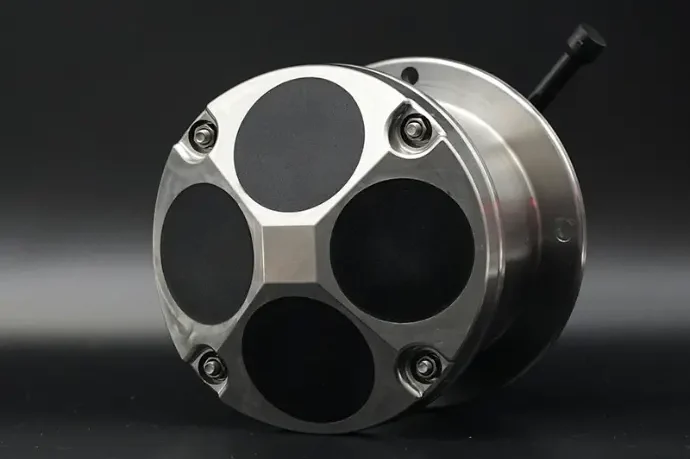
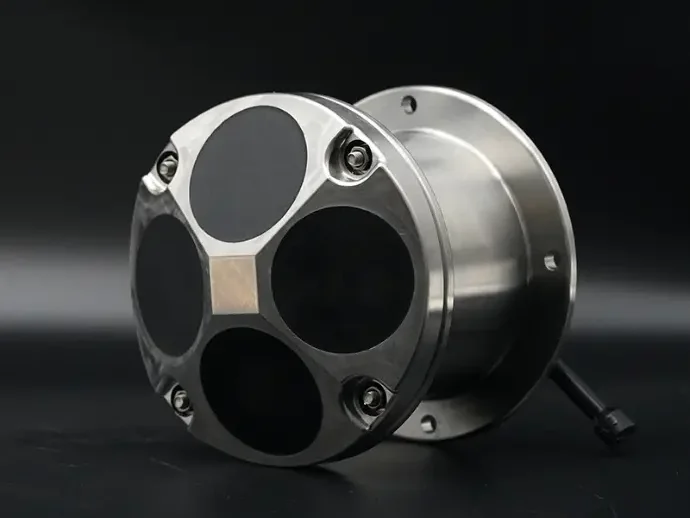
At 600 kHz, this is the workhorse for river gauging stations, irrigation canals, estuarine monitoring, and shallow coastal surveys. With 0.5–4 m configurable cell sizes and up to 128 depth cells, it resolves fine-scale velocity structure that coarser-frequency instruments miss.
| Parameter | Specification |
|---|---|
| Operating Frequency | 600 kHz |
| Beam Configuration | 4 beams, convex array, 20° beam angle, 3.5° beam width |
| Profiling Range (broadband / narrowband) | 55 m / 70 m |
| Bottom-Tracking Range | 0.8–120 m |
| Velocity Accuracy | ±0.3% ±3 mm/s |
| Velocity Range | ±5 m/s (max ±20 m/s) |
| Cell Size | 0.5–4 m (configurable) |
| Data Refresh Rate | 2 Hz (no bottom track) / 1 Hz (with bottom track) |
| Average Power Consumption | ≤10 W |
| Depth Rating | 1,000 m / 3,000 m / 6,000 m |
| Housing | Titanium alloy (standard) |
| Variants | DR (Direct Reading) / SC (Self-Contained) |
📡 Best for: River discharge monitoring, H-ADCP fixed stations, irrigation canal flow measurement, shallow-water coastal surveys, tidal inlet profiling, turbidity-current studies. At ≤10 W average power, it is exceptionally well-suited for solar-powered remote gauging stations with limited energy budgets.
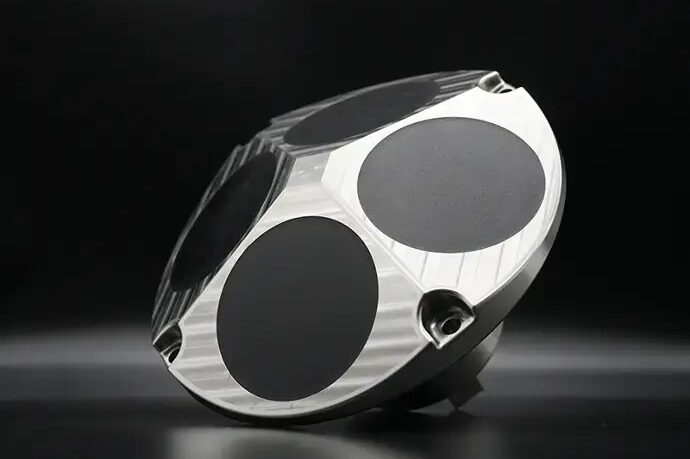
2.2 ADCP-300-DR-FA4: The Mid-Range Workhorse for Rivers, Lakes & Shelf Seas
300 kHz occupies the sweet spot between range and resolution. With broadband profiling to 120 m and narrowband extending to 160 m, it handles major rivers (Yangtze, Amazon, Mississippi scale), large reservoirs, lakes, and continental shelf survey transects — the broadest set of use cases in the hydrological and oceanographic toolkit.
| Parameter | Specification |
|---|---|
| Operating Frequency | 300 kHz |
| Beam Configuration | 4 beams, convex array, 20° beam angle, 3.5° beam width |
| Profiling Range (broadband / narrowband) | 120 m / 160 m |
| Bottom-Tracking Range | 2–220 m |
| Velocity Accuracy | ±0.5% ±5 mm/s |
| Velocity Range | ±5 m/s (max ±20 m/s) |
| Cell Size | 1–8 m (configurable) |
| Data Refresh Rate | 2 Hz (no bottom track) / 1 Hz (with bottom track) |
| Depth Rating | 1,000 m / 3,000 m / 6,000 m |
| Housing | Titanium alloy (standard) |
📡 Best for: Major river discharge measurement, reservoir flow mapping, lake circulation studies, continental shelf current surveys, moving-boat ADCP transects, offshore wind farm pre-construction hydrodynamic characterization, brine plume dispersion monitoring.
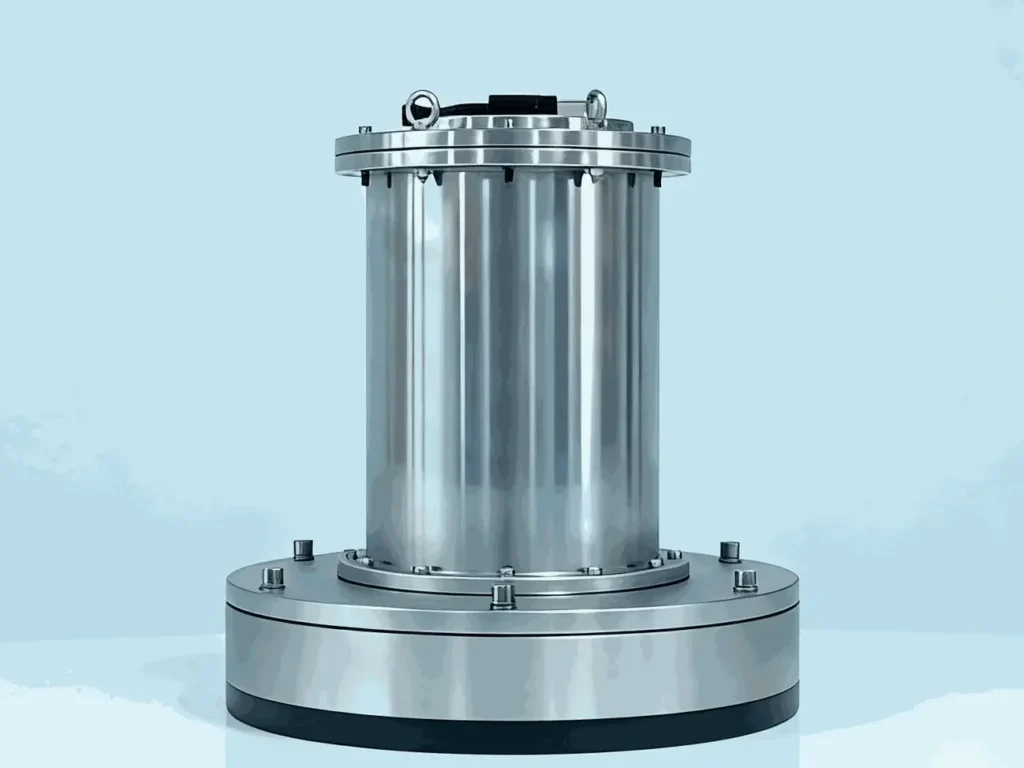
2.3 ADCP-75-DR-PA4 / ADCP-75-SC-PA4: Deep-Ocean Phased-Array Profiling
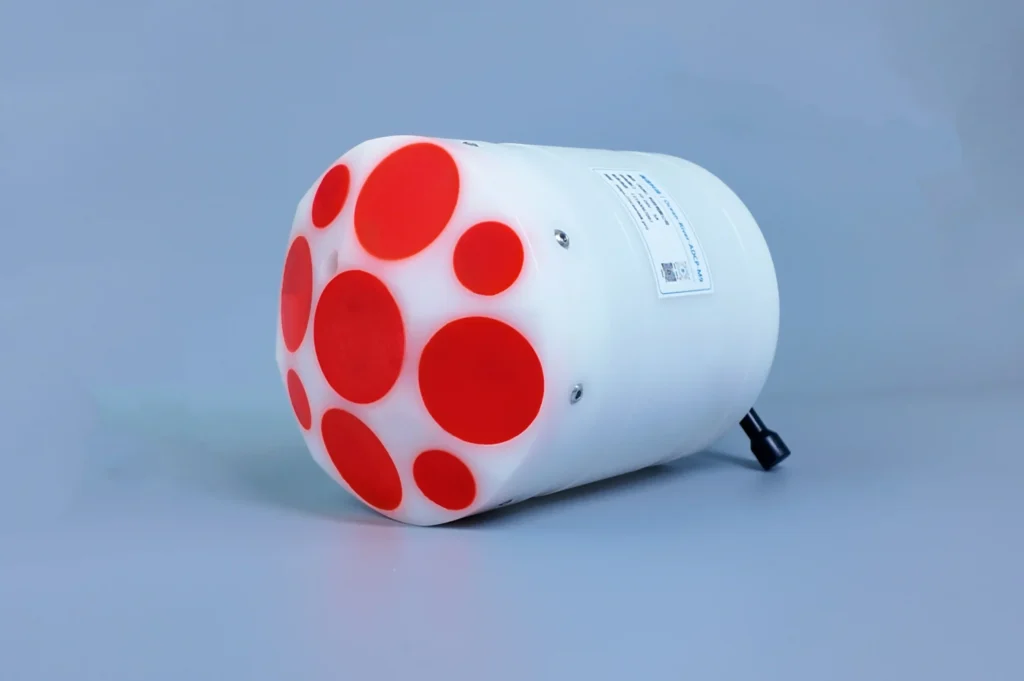
The 7ADCP-75-DR-PA45 kHz phased-array ADCP represents the deep-water frontier. Using a 4-beam Janus phased-array transducer — where beam steering is accomplished electronically rather than through fixed physical beam angles — it achieves profiling ranges of 550 m (broadband) to 650 m (narrowband) and bottom-tracking out to 1,000 m. This is the instrument for deep-water moorings, ocean basin circulation studies, and full-depth current profiling from research vessels.
| Parameter | Specification |
|---|---|
| Operating Frequency | 75 kHz |
| Beam Configuration | 4 beams, Janus phased array, 30° beam angle, 3.5° beam width |
| Profiling Range (broadband / narrowband) | 550 m / 650 m |
| Bottom-Tracking Range | 1,000 m |
| Velocity Accuracy | ±1% ±5 mm/s |
| Velocity Range | ±5 m/s (max ±10 m/s) |
| Cell Size | 4–32 m (configurable) |
| Data Refresh Rate | 1 Hz (no bottom track) / 0.5 Hz (with bottom track) |
| Depth Rating | 1,500 m |
| Housing | Titanium alloy (standard) |
| Variants | DR (Direct Reading) / SC (Self-Contained) |
📡 Best for: Deep-ocean mooring deployments, full-depth current profiling from research vessels, ocean basin circulation monitoring, internal wave studies, deep-water oil & gas metocean characterization, climate-scale ocean observing systems (e.g., tropical mooring arrays).
3. Model Comparison: Selecting the Right ADCP for Your Water Body
| Parameter | ADCP-600 Series | ADCP-300 Series | ADCP-75 Series |
|---|---|---|---|
| Frequency | 600 kHz | 300 kHz | 75 kHz |
| Transducer Type | Convex piston array | Convex piston array | Phased array (electronic steering) |
| Profiling Range | 55–70 m | 120–160 m | 550–650 m |
| Bottom-Tracking Range | 0.8–120 m | 2–220 m | 1,000 m |
| Velocity Accuracy | ±0.3% ±3 mm/s | ±0.5% ±5 mm/s | ±1% ±5 mm/s |
| Max Profiling Depth | 70 m | 160 m | 650 m |
| Cell Size Range | 0.5–4 m | 1–8 m | 4–32 m |
| Beam Angle | 20° | 20° | 30° |
| Typical Power | ≤10 W | Moderate | Higher (phased array) |
| Max Depth Rating | 6,000 m | 6,000 m | 1,500 m |
| Primary Application | Rivers, canals, shallow coastal | Major rivers, lakes, shelf seas | Deep ocean, basin-scale |
📌 Quick Selection Logic:
- Water depth < 50 m, need highest resolution? → ADCP-600
- Water depth 50–160 m, or need bottom-track from a survey vessel? → ADCP-300
- Water depth > 160 m, deep-ocean mooring or full-depth profiling? → ADCP-75 (phased array)