Current is king in offshore engineering. Whether you are routing a submarine cable, siting a wind turbine monopile, or designing scour protection for a jacket foundation, getting the flow field wrong is not an option. A single unaccounted tidal eddy can shift a cable off-route by meters. Underestimated bottom currents can scour a foundation in weeks. In this high-stakes environment, the Acoustic Doppler Current Profiler (ADCP) has become the surveyor’s non-negotiable tool — and Oceantek is carving out a serious position in the global ADCP market with its direct-reading ADCP-300-DR-FA4.
This article takes a technically grounded, vendor-neutral look at how Oceantek’s 300 kHz ADCP performs in offshore engineering survey applications — where it excels, how it compares to established names like Teledyne RDI and Nortek, and what surveyors and metocean engineers should know before specifying a system.
Why ADCP Data Is Mission-Critical for Offshore Engineering
Before diving into the instrument itself, let’s establish why current profiling matters in the nearshore and offshore engineering context — because understanding the “why” makes the “what” far more actionable.
1. Foundation and Structural Design
Offshore wind monopiles, jacket foundations, and gravity-based structures all require site-specific current data spanning at least a full spring-neap tidal cycle (typically 30–90 days). Engineers use this data to calculate hydrodynamic loads, predict scour depth, and size scour protection. The widely cited DNV-ST-0126 standard for offshore wind support structures explicitly requires metocean data including current profiles through the full water column. A 300 kHz ADCP — profiling 120–160 m with 1–8 m depth cells — sits squarely in the sweet spot for these surveys.
2. Submarine Cable and Pipeline Route Surveys
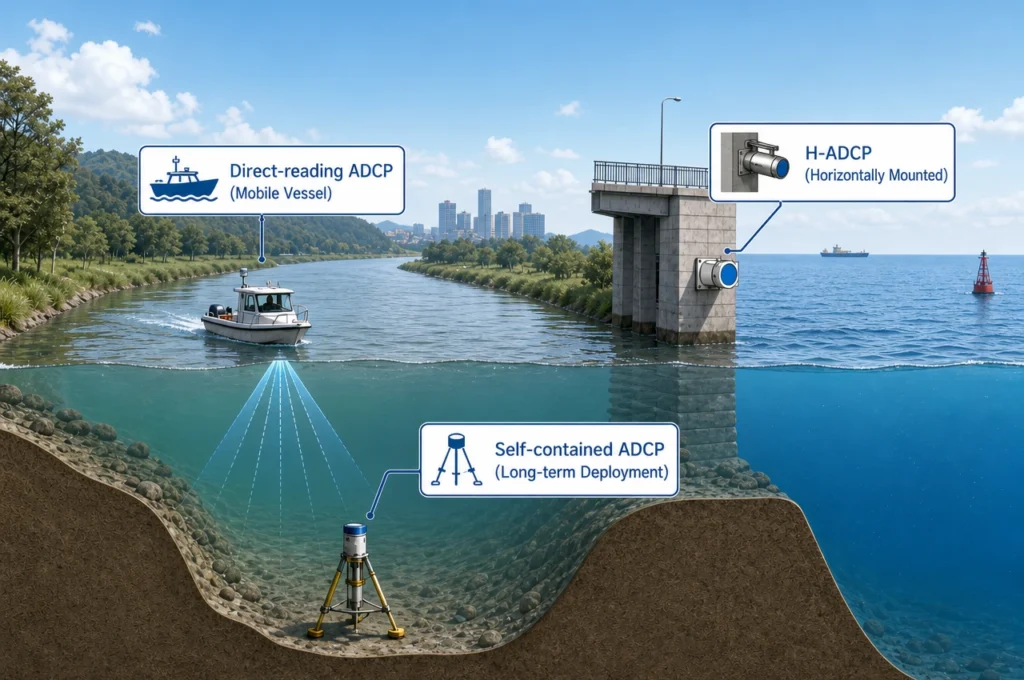
When laying a submarine power cable or pipeline, knowing the near-bed current regime is essential for cable burial assessment, route optimization, and long-term stability predictions. Bottom-tracked ADCP data combined with vessel-mounted GPS provides the spatially resolved flow field that desk-based modeling cannot replicate. A direct-reading ADCP — streaming real-time data to the survey vessel — allows the hydrographic team to make on-the-spot routing decisions rather than waiting for post-processed results from a moored deployment.
3. Port, Harbor, and Coastal Infrastructure
Dredging operations, breakwater design, and navigation channel maintenance all depend on understanding how tides, river discharge, and coastal currents interact. A direct-reading ADCP mounted on a survey launch provides synoptic transects of current velocity across harbor entrances or shipping channels — data that feeds directly into hydrodynamic models like MIKE 21, Delft3D, and ADCIRC.
4. Offshore Wind Metocean Campaigns
The global offshore wind pipeline exceeded 500 GW by 2025, with floating wind projects pushing into deeper waters (>60 m). Every single project requires a metocean measurement campaign. For floating wind in particular, current profiles through the entire water column — including the wind turbine generator (WTG) rotor-affected layer — are critical inputs to coupled aero-hydro-servo-elastic models. Manufacturers like Nortek have marketed purpose-built instruments (e.g., Signature250) for this deep-water niche, but a well-specified 300 kHz ADCP remains the workhorse for continental-shelf-depth surveys.
Meet the Instrument: Oceantek ADCP-300-DR-FA4 — Technical Deep Dive
The ADCP-300-DR-FA4 is Oceantek’s direct-reading, vessel-deployed 300 kHz ADCP. The “DR” in the model name stands for Direct Reading — meaning it is cable-powered and streams data in real time to a topside computer, rather than logging internally to be retrieved later (the self-contained, or “SC,” configuration). This makes it purpose-built for vessel-mounted surveys, towed operations, and real-time monitoring scenarios where immediate data access is required.
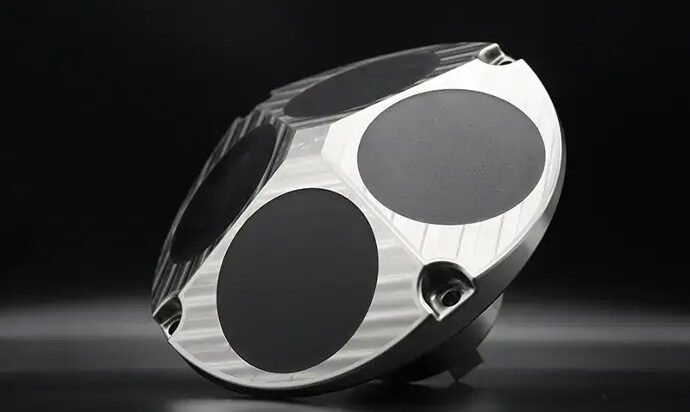
| Parameter | Oceantek ADCP-300-DR-FA4 Specification |
|---|---|
| Acoustic Frequency | 300 kHz |
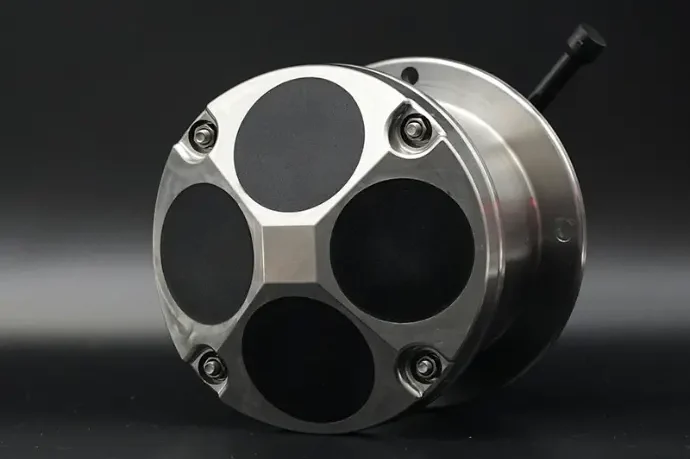
| Beam Configuration | 4-beam, convex Janus array |
| Beam Angle | 20° |
| Beam Width | 3.5° |
| Profiling Range (Broadband) | 120 m |
| Profiling Range (Narrowband) | 160 m |
| Bottom Tracking Range | 2 m – 220 m |
| Velocity Accuracy | ±0.5% ±5 mm/s |
| Velocity Resolution | 1 mm/s |
| Velocity Range | ±5.0 m/s (default); ±20.0 m/s (max) |
| Flow Direction Accuracy | ±2° |
| Depth Cells | 1 – 255 (configurable) |
| Cell Size | 1 m – 8 m |
| Data Refresh Rate | 2 Hz (no bottom track); 1 Hz (with bottom track) |
| Depth Rating | 1,000 m / 3,000 m / 6,000 m (configurable) |
| Housing Material | Titanium alloy (standard) |
| Temperature Sensor | -5°C to +45°C; accuracy ±0.1°C |
| Pressure Sensor | Accuracy ±0.25% FS |
| Attitude Sensor | Roll/Pitch ±85°, accuracy 0.2° RMS; Heading 0–360°, accuracy 0.8° RMS |
| Altitude Measurement | Accuracy ±1% ±0.5 cm |
| Communication | RS-232 or RS-422 |
| Power Supply | 20–50 V DC (cable-powered) |
| Operating Temperature | -5°C to +45°C |
| Protocol Compatibility | Compatible with established ADCP communication protocols |
Table 1: Key specifications of the Oceantek ADCP-300-DR-FA4 direct-reading acoustic Doppler current profiler. Source: Oceantek product documentation (oceanadcp.com).
What Sets the Oceantek ADCP Apart? Four Engineering Details That Matter
Having covered the spec sheet, let’s zoom in on the design choices that differentiate this instrument from the established players — and why those differences translate into practical survey advantages.
1. Titanium Alloy Housing — Standard, Not an Upgrade
This is arguably the most consequential specification on the sheet. While major competitors offer titanium or aluminum-bronze housings as optional upgrades (often at significant additional cost), Oceantek ships every ADCP with a titanium alloy housing as standard. For offshore survey work, this matters in three concrete ways:
- Galvanic corrosion resistance: Titanium’s position on the galvanic series means it does not require sacrificial anodes in seawater — eliminating a maintenance headache and a common failure mode for long-duration deployments.
- Biofouling resilience: Titanium surfaces are inherently less hospitable to marine growth than aluminum-bronze or stainless steel, extending the interval between transducer cleaning.
- Strength-to-weight ratio: Titanium is approximately 40% lighter than stainless steel at equivalent strength, making the instrument more manageable for vessel-mounted deployment and recovery — a non-trivial consideration when working from a small survey launch in 2-meter seas.
2. Compact Form Factor, Small Blind Zone
Oceantek explicitly positions the 300kHz ADCP as being more compact than comparable instruments in its class. A smaller acoustic transducer head translates into a smaller near-field blind zone — the region immediately in front of the transducer where valid velocity measurements cannot be obtained. For nearshore surveys in shallow water (10–30 m depth), this is particularly valuable: every meter of recovered profile near the surface or seabed is a meter of data that would otherwise be interpolated or lost. The instrument’s 255 depth cells (vs. 128 on older-generation instruments like the Teledyne RDI Workhorse Monitor) also provide finer vertical sampling, which is critical for resolving sharp velocity gradients near the pycnocline or benthic boundary layer.
3. Protocol Compatibility — Drop-In Replacement Potential
Switching ADCP vendors is not a trivial decision for a survey company. Existing data processing pipelines, acquisition software, and reporting templates are often built around a specific manufacturer’s binary protocol. Oceantek has addressed this head-on by engineering compatibility with established ADCP communication protocols. In practice, this means the 300kHz ADCP can be integrated into a workflow that was originally built around instruments from Teledyne RDI or similar manufacturers — reducing the switching cost and allowing survey teams to evaluate the instrument without rebuilding their entire software stack.
4. Multi-Depth-Rating Options — One Platform, Any Project
The ADCP-300-DR-FA4 is available in three depth ratings: 1,000 m, 3,000 m, and 6,000 m. This modular approach — using the same core acoustic engine and electronics across different pressure housing configurations — gives survey contractors a single platform they can specify across projects ranging from coastal cable route surveys (1,000 m rating) to deep-water metocean campaigns (6,000 m rating). The ±0.25% FS pressure sensor provides sufficient accuracy for tidal analysis and depth-referenced profiling across all three configurations.
Competitive Landscape: How Oceantek Compares to Teledyne RDI and Nortek
No objective discussion of ADCPs is complete without acknowledging the two dominant incumbents in the oceanographic ADCP market. Let’s place the Oceantek ADCP-300-DR-FA4 in context — not to declare a “winner,” but to help survey engineers make an informed specification decision.
Teledyne RDI Workhorse 300 kHz
The Teledyne RDI Workhorse series is the de facto industry benchmark, with thousands of units deployed globally since the 1990s. The 300 kHz Workhorse (and its updated Workhorse II variant) offers a broadband profiling range of approximately 110–116 m (8 m cells) and a long-range mode extending to 154 m — broadly comparable to the Oceantek’s 120 m / 160 m split. Velocity accuracy is specified at ±0.5% ±5 mm/s — identical to the Oceantek. Where the Workhorse II has an edge is in its extensive field-proven track record, global service network, and deep integration with third-party software (e.g., WinRiver II, VmDas, QPS Qinsy).
Where Oceantek differentiates: standard titanium housing (Workhorse defaults to aluminum-bronze or plastic), 255 depth cells (some Workhorse variants are limited to 128), attitude sensor range (±85° vs. ±15° on older Workhorse models — a meaningful difference for vessel-mounted deployments in rough seas), and competitive pricing for organizations seeking a cost-effective alternative to the established player.
Nortek Signature Series
Nortek’s Signature series represents the high-end, research-grade segment of the ADCP market, with advanced features like broadband–narrowband hybrid processing, the “Signature VM” vessel-mounted package, and the “Signature250” specifically targeting deep-water floating wind applications. Nortek instruments are widely regarded for their user-friendly software ecosystem (Signature VM Coastal) and superior acoustic processing.
Where Oceantek positions itself relative to Nortek: value-driven specification. While the Signature series targets the premium research and high-end industrial segment, the Oceantek ADCP-300-DR-FA4 offers specifications that approach research-grade accuracy (±0.5% ±5 mm/s velocity, ±2° direction, 1 mm/s resolution) at a price point that makes it accessible for routine survey work, developing-country research programs, and organizations building multi-instrument fleets.
Other Contenders: SonTek, Aanderaa, and CHCNAV
The ADCP market is diversifying rapidly. SonTek (a Xylem brand) offers the RiverSurveyor and ADP lines, though primarily targeting hydrology and shallow-water applications. Aanderaa (a Xylem brand) produces the RDCP 600 for deeper deployments. CHCNAV has entered the space with its RS3600D dual-frequency ADCP — a Chinese-manufactured alternative that, alongside Oceantek, signals the growing maturity of the Asian marine instrumentation sector. This broadening of the supply base is ultimately good for the end user: more competition drives faster innovation, shorter lead times, and more attractive pricing across the board.
| Specification | Oceantek ADCP-300-DR-FA4 | Teledyne RDI Workhorse 300kHz | Nortek Signature (comparable config) |
|---|---|---|---|
| Frequency | 300 kHz | 300 kHz | 250–500 kHz (platform-dependent) |
| Broadband Range | 120 m | ~110–116 m | Variable (200 m with 250 kHz) |
| Velocity Accuracy | ±0.5% ±5 mm/s | ±0.5% ±5 mm/s | ±1% ±5 mm/s (typical) |
| Depth Cells | 1 – 255 | 1 – 255 (variant-dependent) | Configurable, up to 200+ cells |
| Standard Housing | Titanium alloy | Aluminum / plastic (Ti optional) | Titanium / POM (model-dependent) |
| Max Depth Rating | 6,000 m | 6,000 m (optional) | 3,000 m (standard models) |
| Attitude Sensor Range | ±85° Roll/Pitch | ±90° (Tilt) | ±90° (Signature VM) |
| Direct-Reading Mode | Yes (standard) | Yes (standard) | Yes (Signature VM) |
| Protocol Compatibility | Compatible with established protocols | Proprietary (RDI binary) | Proprietary (AWAC/Signature) |
| Procurement cost | $$ | $$$$ | $$$$ |
Table 2: Comparative overview of 300 kHz-class ADCP specifications across three manufacturers. Specifications drawn from publicly available datasheets and should be verified with manufacturers for project-specific requirements.
Real-World Applications: Where the ADCP-300-DR-FA4 Excels
Specifications are necessary but not sufficient. What ultimately matters is whether the instrument delivers in the field. Here are the use cases where a direct-reading 300 kHz ADCP with these specifications is the right tool for the job.
Vessel-Mounted Current Transects for Cable Route Surveys
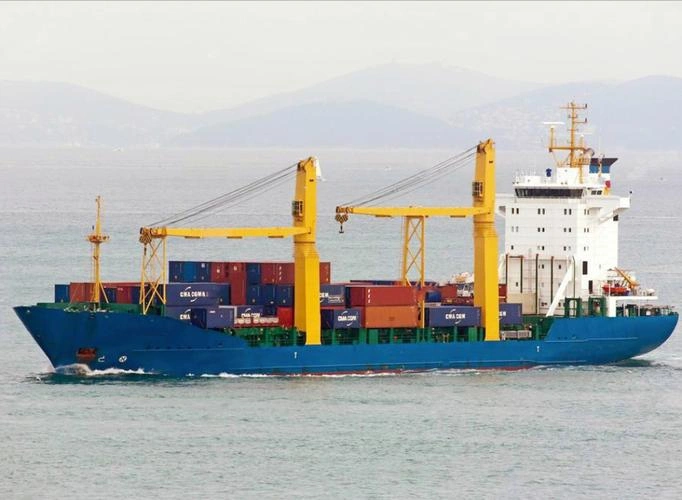
A submarine power cable connecting an offshore wind farm to the grid typically runs 20–80 km across the seabed. Along that route, the current regime can vary dramatically — from strong tidal streams in shallow channels to stratified flow in deeper sections. A direct-reading ADCP mounted through-hull or over-the-side on a survey vessel collects continuous current profiles along the entire route, synchronized with GPS position and vessel heading. The 300 kHz frequency provides sufficient range for continental-shelf depths (20–150 m) while maintaining the vertical resolution needed to resolve near-bed currents for burial risk assessment (BRA).
Offshore Wind Foundation Metocean Surveys
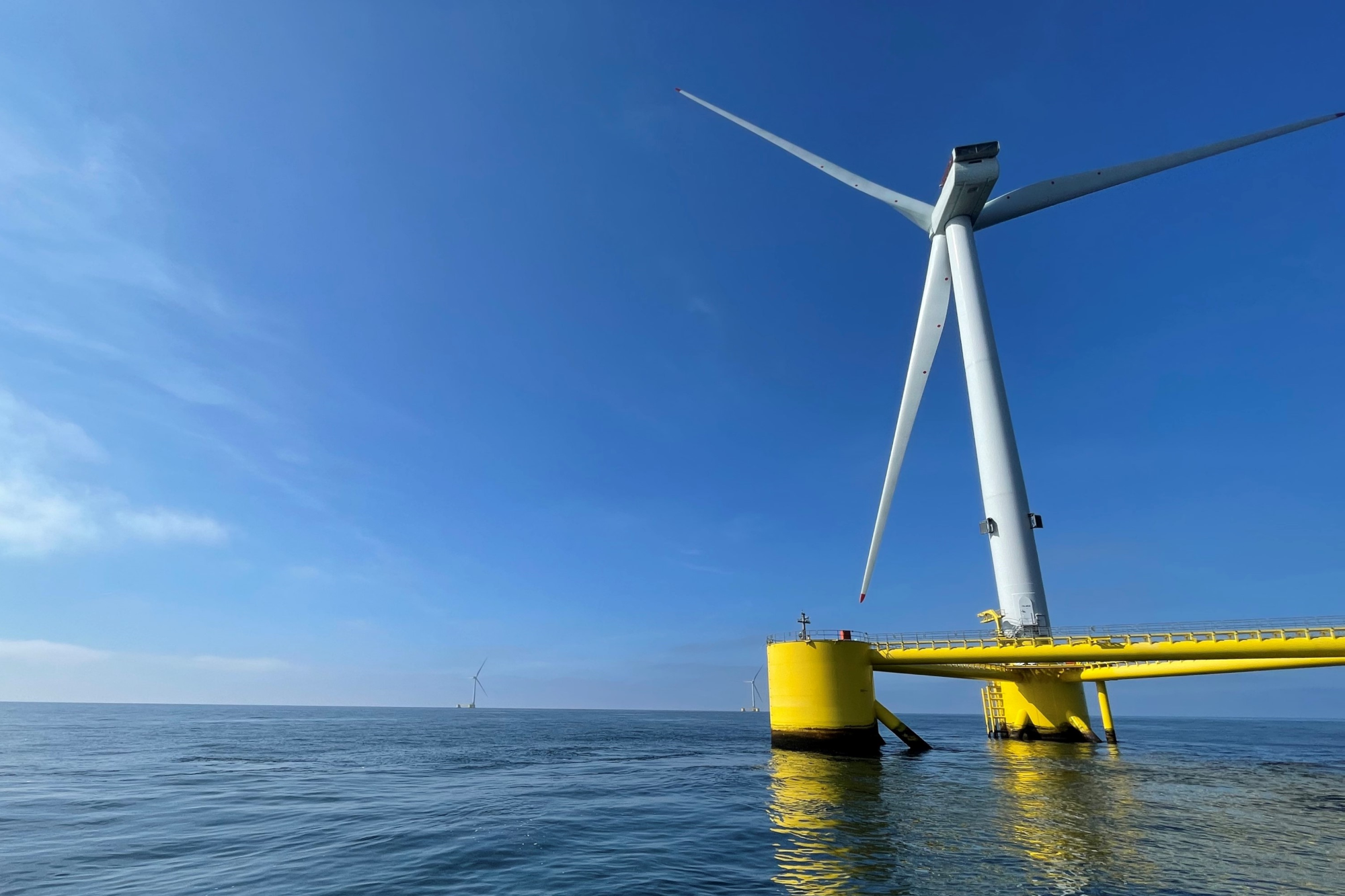
For a fixed-bottom offshore wind project in 20–60 m water depth, the ADCP-300-DR-FA4 can be deployed either as a vessel-mounted system for spatial surveys or mounted on a seabed frame for point measurements. In direct-reading mode on a seabed frame — powered and communicated through an armored cable to a surface buoy or platform — it provides real-time current profiles across the full water column. This is particularly valuable during the construction phase, when operators need to make go/no-go decisions based on current conditions for lifting and pile-driving operations.
Port Expansion and Dredging Support
Port expansion projects require pre-dredge and post-dredge flow assessments to predict siltation patterns and optimize navigation channel alignment. A direct-reading ADCP deployed from a small survey vessel can complete a full tidal-cycle transect survey (13 hours) across a harbor entrance, producing the spatially resolved current data that feeds directly into sedimentation models. The ADCP-300-DR-FA4’s 2 Hz data refresh rate (without bottom tracking) enables high-density spatial sampling even at typical survey vessel speeds of 4–6 knots.
Environmental Impact Assessment (EIA) for Coastal Developments
Coastal developments — desalination plants, LNG terminals, aquaculture concessions — increasingly require quantitative hydrodynamic data as part of the EIA process. Regulators want to see measured current data, not just model outputs. A campaign of vessel-mounted ADCP transects combined with short-term seabed deployments provides the empirical basis for model calibration and validation, strengthening the credibility of the EIA submission.
Data Quality and Best Practices: Getting Reliable Flow Field Measurements
Even the best ADCP is only as good as the survey that deploys it. Here are the practical considerations that separate reliable flow field data from questionable results — written for the survey engineer or project manager specifying the campaign.
1. Sidelobe Interference: Know Your Blind Spot
Every ADCP has a sidelobe interference zone near the boundary (seabed or surface). The rule of thumb is that the top 6–10% of the water column (measured from the transducer face) may be contaminated by surface-reflected sidelobes. For a vessel-mounted deployment in 50 m of water, this means the top ~3–5 m of data should be treated with caution. Good survey practice: configure your depth cells so that the near-surface zone of interest falls outside the sidelobe-contaminated region.
2. Vessel Motion Compensation
In vessel-mounted mode, the ADCP’s attitude sensor (pitch, roll, heading) is critical for transforming beam coordinates to Earth coordinates. The Oceantek ADCP-300-DR-FA4’s attitude sensor — with ±85° range and 0.2° accuracy — provides a wide operational envelope. However, in rough sea states (sea state 4+), even the best attitude sensor cannot fully compensate for vessel heave. Best practice: log raw attitude data alongside velocity data, flag periods where pitch/roll exceed ±15°, and apply post-processing filters as needed. Coupling the ADCP with an external MRU (Motion Reference Unit) can further improve accuracy in demanding conditions.
3. Magnetic Declination Correction
The ADCP’s internal compass reports heading relative to magnetic north. Converting to true north requires a magnetic declination correction specific to the survey location and date. This is a simple but frequently overlooked step — and an uncorrected declination of even 5° can introduce systematically biased current direction vectors across the entire dataset. Tools like the NOAA Magnetic Field Calculator or BGS Geomagnetism service provide location-specific declination values.
4. Quality Control During Acquisition
With a direct-reading ADCP like the ADCP-300-DR-FA4, the survey team can monitor data quality in real time — a significant advantage over self-contained deployments where you discover data issues only after recovery. Key real-time QC metrics to watch:
- Signal-to-Noise Ratio (SNR): Declining SNR with range is expected, but abrupt drops may indicate transducer obstruction, air bubbles entrained under the hull, or sediment in suspension.
- Correlation magnitude: Low correlation (<70%) suggests unreliable velocity estimates. Most ADCP processing software flags low-correlation bins automatically.
- Error velocity: The difference between redundant vertical velocity estimates from opposing beam pairs. Elevated error velocity indicates flow inhomogeneity or instrument issues.
- Bottom track status: Verify that bottom-track range agrees with independently measured water depth (from the vessel’s echo sounder). Discrepancies suggest acoustic interference or a soft/mobile seabed.
Behind the Instrument: Oceantek’s Position in the Marine Technology Ecosystem
Understanding who builds your instrument matters — especially in offshore engineering, where instrument failure can delay a multi-million-dollar construction campaign. Oceantek is a Hangzhou-based marine technology company specializing in underwater acoustics. The company has rapidly developed a product portfolio spanning ADCPs (75 kHz, 300 kHz, 600 kHz), Doppler Velocity Logs (DVLs), self-contained hydrophones, single-point current meters, and Beidou beacon systems.
Key points for the prospective buyer:
- Manufacturing: Direct manufacturer (not a reseller or integrator), with in-house transducer design and acoustic signal processing expertise.
- Standard warranty: 12 months.
- Lead time: 60–90 days from order — competitive compared to industry norms of 90–180 days for some premium manufacturers.
- Continuous operation: Rated for deployments exceeding 180 days — a data point that speaks to power management and system reliability.
- Website: oceanadcp.com — full product specifications, datasheets, and deployment guides available online.
As a relatively new entrant, Oceantek does not yet have the multi-decade deployment track record of Teledyne RDI or Nortek. That said, the company’s engineering choices — standard titanium housings, protocol compatibility with established systems, and modular depth-rating architecture — suggest a deliberate strategy to lower the barriers to adoption for survey contractors and research institutions evaluating alternatives to the incumbents.
What to Consider Before Specifying: A Decision Framework
No single ADCP is the right tool for every job. Here is a structured decision framework for the survey engineer or project manager evaluating the Oceantek ADCP-300-DR-FA4 against alternatives:
| If Your Priority Is… | Consider This |
|---|---|
| Proven track record and global service network | Teledyne RDI Workhorse II or Nortek Signature — both have decades of field deployments, ISO-certified calibration facilities, and service centers on multiple continents. |
| Standard titanium housing without the upgrade cost | Oceantek ADCP-300-DR-FA4 — titanium is standard, not an optional extra. |
| Cost-effective fleet expansion or multi-instrument campaigns | Oceantek — competitive pricing and 60–90 day lead times make it practical to field multiple instruments simultaneously. |
| Drop-in compatibility with existing ADCP software workflows | Oceantek (by design) or stay within your existing manufacturer ecosystem. |
| Shallow-water (<30 m) high-resolution profiling | The 300 kHz frequency + 255 depth cells + small blind zone make Oceantek’s offering well-suited. Also consider 600 kHz options (Oceantek ADCP-600-DR-FA4) for sub-meter cell sizes. |
| Deep-water (>1,500 m) metocean campaigns | Verify the 3,000 m or 6,000 m depth-rated configuration. Compare with the Nortek Signature250 for floating-wind-specific deep-water applications. |
Conclusion: A Credible Contender in the 300 kHz ADCP Space
The offshore engineering survey community has long operated with a shortlist of trusted ADCP manufacturers. That shortlist is expanding — and for good reasons. The growth of offshore wind, the increasing regulatory demand for site-specific current data, and the proliferation of survey contractors in emerging markets are all driving demand for reliable, well-specified ADCPs at accessible price points.
The Oceantek ADCP-300-DR-FA4 deserves a place on the evaluation shortlist. Its specifications are competitive with — and in several dimensions (standard titanium housing, attitude sensor range, depth cell count) exceed — comparable instruments from the established players. Its direct-reading architecture, protocol compatibility, and multi-depth-rating platform make it a practical choice for vessel-mounted surveys, real-time monitoring, and cable route investigations.
That said, Oceantek is a young company. Prospective buyers should request a demonstration deployment, validate data against a co-located reference instrument, and evaluate build quality and documentation firsthand before committing to a fleet purchase. These are standard due-diligence steps for any new instrument supplier — and Oceantek’s 12-month warranty and direct-manufacturer support provide a reasonable basis for that evaluation.
As the global offshore engineering market continues its trajectory past $100 billion in annual capital expenditure, the instruments that measure the ocean — the ADCPs, the CTDs, the wave buoys — will only grow in importance. Having more competent manufacturers in the market, each pushing the others on price, performance, and delivery, is unequivocally good news for the engineers, surveyors, and project managers who depend on them.
Explore Oceantek’s Full ADCP & Marine Instrument Portfolio
If you are evaluating the ADCP-300-DR-FA4 for your project, these related Oceantek marine instruments may also be relevant to your survey requirements:
- ADCP-600-DR-FA4 — 600 kHz Direct-Reading ADCP: For shallow-water (5–70 m) high-resolution profiling with 0.5–4 m cell sizes. Ideal for estuary surveys, harbor engineering, and near-shore cable landfall investigations where sub-meter vertical resolution is required.
- ADCP-75-DR-PA4 — 75 kHz Self-Contained Phased-Array ADCP: For deep-water (up to 650 m profiling range) metocean campaigns. Phased-array beamforming delivers extended range for full-depth current profiles on the continental slope and deep-water floating wind sites.
- Oceantek DVL (Doppler Velocity Log): For AUV, ROV, and USV navigation applications requiring precision bottom-tracking and water-layer velocity in a compact form factor.
- OCEAN-SPCM Single-Point Current Meter: Cost-effective single-point Eulerian current measurement for environmental monitoring, aquaculture site assessment, and supplemental data collection alongside ADCP deployments.
Visit the Oceantek product center for complete specifications, deployment guides, and procurement information across the full instrument portfolio.
Frequently Asked Questions
What is a direct-reading ADCP?
A direct-reading (DR) ADCP is cable-powered and transmits data in real time to a surface computer, as opposed to a self-contained (SC) ADCP, which logs data internally on battery power for later retrieval. Direct-reading ADCPs are ideal for vessel-mounted surveys, real-time monitoring, and applications requiring immediate data access.
What is the profiling range of the Oceantek ADCP-300-DR-FA4?
The ADCP-300-DR-FA4 profiles up to 120 m in broadband mode and 160 m in narrowband mode, with a bottom tracking range of 2–220 m. Actual range depends on water conditions, suspended sediment concentration, and depth cell size configuration.
How does Oceantek ADCP compare to Teledyne RDI Workhorse?
The two instruments share comparable core specifications — both are 300 kHz, 4-beam Janus-configuration ADCPs with ±0.5% ±5 mm/s velocity accuracy. Key differences: Oceantek ships with titanium alloy housing as standard (an upgrade on Workhorse), offers 255 depth cells and ±85° attitude range (vs. 128 cells and ±15° on older Workhorse models), and is positioned at a more accessible price point. The Workhorse has a longer field-proven track record and broader third-party software ecosystem.
What depth rating is available for the Oceantek ADCP-300-DR-FA4?
Three depth ratings are available: 1,000 m, 3,000 m, and 6,000 m, all with the same titanium alloy housing platform and ±0.25% FS pressure sensor.
Can the Oceantek ADCP replace a Teledyne RDI or Nortek ADCP in an existing workflow?
Oceantek has designed the ADCP-300-DR-FA4 with protocol compatibility in mind, meaning its communication protocol is compatible with those used by established ADCP manufacturers. This facilitates integration into existing data acquisition and processing pipelines. However, full software compatibility should be verified with your specific acquisition software (e.g., QPS Qinsy, Hypack, WinRiver II) before procurement.
What applications is the 300 kHz direct-reading ADCP best suited for?
Primary applications include: submarine cable and pipeline route surveys, offshore wind farm metocean campaigns, port and harbor current assessments, dredging support surveys, environmental impact assessments, and any application requiring real-time current profile data in water depths from ~5 m to 160 m.
Disclaimer: This article is written for informational and educational purposes. Specifications are drawn from publicly available manufacturer documentation and should be verified with Oceantek or authorized distributors for project-specific requirements. The author has no commercial relationship with Oceantek, Teledyne RDI, Nortek, or any other manufacturer mentioned. Product names and trademarks belong to their respective owners.
Published: June 8, 2026. For the latest product specifications, pricing, and availability, visit the ADCP-300-DR-FA4 product page or contact the Oceantek sales team for a project-specific quotation and demonstration deployment.