
Published: August 5, 2026 | Category: Product Review | Reading Time: 13 minutes
Here is a fact that surprises many newcomers to acoustic Doppler current profiling: the vast majority of ADCP deployments worldwide happen in water shallower than 100 meters. Coastal surveys, river discharge monitoring, offshore wind resource assessment, harbor engineering, aquaculture site evaluation, pipeline route inspection — nearly every commercially and environmentally critical application sits in this depth band. If you're reading this, there is an excellent chance your project lives here too.
But "below 100m" is not one scenario — it is a spectrum. A 3m-deep inland river and a 90m coastal shelf deployment place radically different demands on frequency, transducer design, deployment mode, and budget. This guide breaks that spectrum into segments and maps the right Oceantek instrument to each one.
📊 Executive Summary
For water depths below 100m, the acoustic physics flips from the deep-water rule: here, higher frequency = better resolution, and range is rarely the limiting factor. Oceantek's sub-100m portfolio spans five product categories:
- Very shallow (<5m): River-ADCP-M9 (1000kHz) for ultra-fine profiling and HADCP-600 (600kHz horizontal) for bank-mounted channel monitoring.
- Shallow to mid (25–50m): Ocean-ADCP-600-FA4 and Ocean-ADCP-600-PA5 — the 600kHz workhorses with 0.5–1m depth cells and bottom-tracking.
- Mid to transitional (50–100m): Ocean-ADCP-300-FA4 — 300kHz for the deeper end of the band, offering profiling range headroom and robust performance in clear water.
- Navigation (0–100m): DVL-600-FA4 and DVL-600-PA5 — 600kHz Doppler Velocity Logs for AUV/ROV bottom-tracking at altitudes to 80–120m.
- Point measurement: OCEAN-SPCM — single-point current meter deployable at any depth within this band.
< 25m | 0.02m cells
25–50m | 0.5–4m cells
50–100m | 1–2m cells
for Sub-100m Depths
FA4 / PA5 / M9
📑 Table of Contents
- Depth Bands Below 100m: Why One ADCP Cannot Cover Everything
- Oceantek Sub-100m Product Lineup at a Glance
- Very Shallow (<5m): River-ADCP-M9 & HADCP-600
- Shallow to Mid-Depth (5–50m): The 600kHz Workhorses
- Mid to Transitional (50–100m): When 300kHz Makes Sense
- 600-FA4 vs. 600-PA5: Two 600kHz ADCPs, Two Different Missions
- DVL-600 Series: Navigation-Grade Velocity Logs for Sub-100m Platforms
- OCEAN-SPCM: The Single-Point Alternative
- Deployment Modes: Vessel, Mooring, Riverbank, or AUV?
- Decision Matrix: Which Product at Which Depth?
- Frequently Asked Questions
1. Depth Bands Below 100m: Why One ADCP Cannot Cover Everything
The sub-100m world contains at least four distinct acoustic environments, each favoring a different ADCP configuration:
| Depth Band | Typical Environments | Key Acoustic Challenge | Optimal Frequency |
|---|---|---|---|
| < 5m | Rivers, irrigation canals, tidal creeks, aquaculture ponds | Side-lobe contamination from surface and bottom boundaries; need ultra-fine depth cells to resolve thin water column | 1000 kHz (M9) 600 kHz (HADCP) |
| 5–30m | Nearshore coastal, estuaries, harbors, shallow lakes, inland waterways | Strong boundary reflections; high spatial resolution still important; bottom-tracking essential | 600 kHz |
| 30–70m | Coastal shelf, offshore wind sites, subsea pipeline corridors, medium-depth reservoirs | Good scatterer density typically available; balance between resolution and profiling coverage | 600 kHz (primary) 300 kHz (alt.) |
| 70–100m | Outer continental shelf, deep coastal basins, offshore platform sites, shelf-break transition | 600kHz approaching its range limit in clear water; bottom-tracking still functional; 300kHz gains advantage | 600 kHz or 300 kHz (see Section 5) |
2. Oceantek Sub-100m Product Lineup at a Glance
Seven Oceantek instruments are relevant to the sub-100m depth band. Here they are side by side:
| Product | Frequency | Transducer | Profiling Range | Modes | Best Depth Window | Category |
|---|---|---|---|---|---|---|
| River-ADCP-M9 | 1000/3000 kHz | 9-beam piston array | 0.06–40 m | DR (BT) | < 5m (river) | River-Type ADCP |
| HADCP-600 | 600 kHz | Horizontal 2-beam | Horizontal: 90m across channel | DR | < 100m (channel width) | Horizontal ADCP |
| Ocean-ADCP-600-FA4 | 600 kHz | Piston Array ×4 | 55-70m | DR + SC (BT) | 5–70m | Ocean ADCP |
| Ocean-ADCP-600-PA5 | 600 kHz | Phased Array ×5 | 55-70m | DR (BT) | 5–80m | Ocean ADCP |
| Ocean-ADCP-300-FA4 | 300 kHz | Piston Array ×4 | 120-160m | DR + SC (BT) | 50–100m | Ocean ADCP |
| DVL-600-FA4 | 600 kHz | Piston Array ×4 | BT: 0.7-110m altitude | BT + WT | AUV/ROV, 0–100m altitude | DVL |
| DVL-600-PA5 | 600 kHz | Phased Array ×5 | BT: 0.7-110m altitude | BT + WT | AUV/ROV, 0–100m altitude | DVL |
The OCEAN-SPCM single-point current meter also operates in this depth band — see Section 8.
3. Very Shallow (<5m): River-ADCP-M9 & HADCP-600
When the water column is less than 5 meters deep, conventional vessel-mounted ADCPs face two problems: side-lobe interference from the surface and bottom boundaries contaminates the outer ~6–15% of the profile on each end, and standard depth cells (1m+) are too coarse to resolve meaningful vertical structure in so thin a column. Instruments purpose-built for this environment solve both problems differently.
River-ADCP-M9: The Ultra-Shallow Profiler
The River-ADCP-M9 operates at 1000 / 3000 kHz — the highest frequency in Oceantek's lineup. This gives it:
- Ultra-fine depth cells down to 0.02m — meaning a 3m-deep river yields 150 vertical measurement bins, enough to construct a meaningful velocity profile.
- 9-beam piston transducer — four standard Janus beams for current profiling plus a vertical beam for depth sounding and ice draft measurement, plus four angled beams at a second frequency for redundant bottom-tracking.
- Pulse-coherent processing for the near-bed bins, delivering mm/s-level precision where standard broadband processing would lose lock.
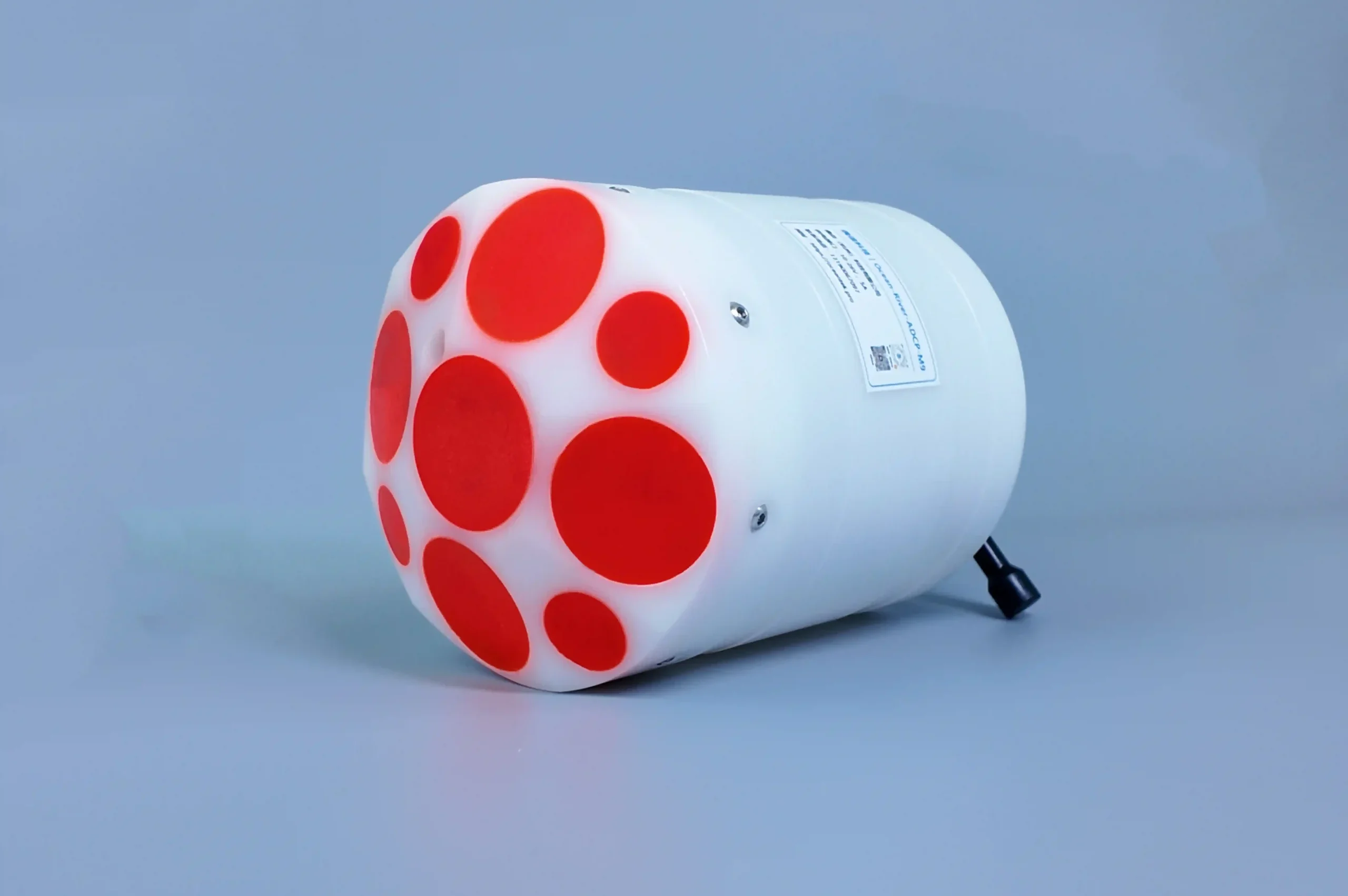
The M9 is designed for moving-boat discharge measurement — the operator traverses the river cross-section while the instrument continuously profiles and bottom-tracks, computing total discharge in real time via the companion software. This is the standard method for hydrological agencies worldwide (USGS, WMO, national water authorities) and the M9 is built specifically for this workflow.
HADCP-600: The Fixed Station for Continuous Monitoring
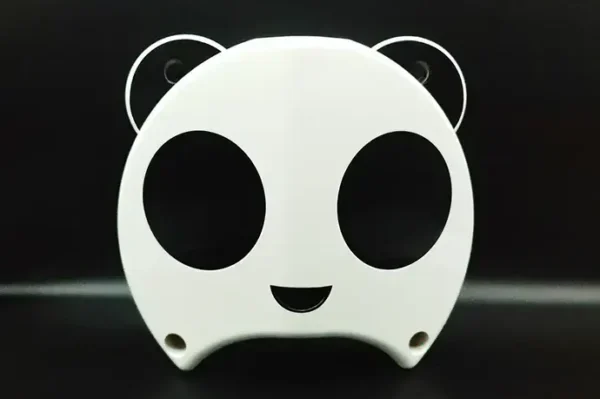
If the River-ADCP-M9 is the survey tool, the HADCP-600 is the permanent sentinel. Mounted horizontally on a riverbank, bridge pier, or channel wall, it sends two 600kHz acoustic beams across the channel and measures the index velocity — a representative horizontal velocity that correlates to total channel discharge via a rating curve established during a moving-boat survey.
| Parameter | River-ADCP-M9 | HADCP-600 |
|---|---|---|
| Deployment | Moving-boat survey (manual or tethered) | Fixed bank / structure mount |
| Measurement | Full vertical velocity profile + discharge | Horizontal index velocity → discharge (via rating) |
| Temporal coverage | Snapshot (individual survey transects) | Continuous (months to years) |
| Frequency | 1000/3000 kHz | 600 kHz |
| Typical site | River cross-section, bridge, cableway | Riverbank, bridge pier, canal wall |
| Data output | Discharge (m³/s), velocity profile | Index velocity → real-time discharge |
4. Shallow to Mid-Depth (5–50m): The 600kHz Workhorses
For the depth band where the majority of coastal, estuarine, and harbor ADCP work happens, 600kHz is the undisputed standard. At this frequency:
- The entire water column — from surface to seabed — is well within the profiling range (50–100m), so there is no risk of losing the bottom bins.
- Depth cell resolution of 0.5–4m gives you 50–100 velocity bins across a 50m profile — more than enough to resolve shear layers, thermocline-driven jets, and near-bed boundary dynamics.
- Bottom-tracking is solid across the entire depth range, so vessel-mounted surveys get accurate earth-referenced velocities without GPS-based heading correction.
Oceantek offers two 600kHz Ocean ADCPs for this band:
Ocean-ADCP-600-FA4
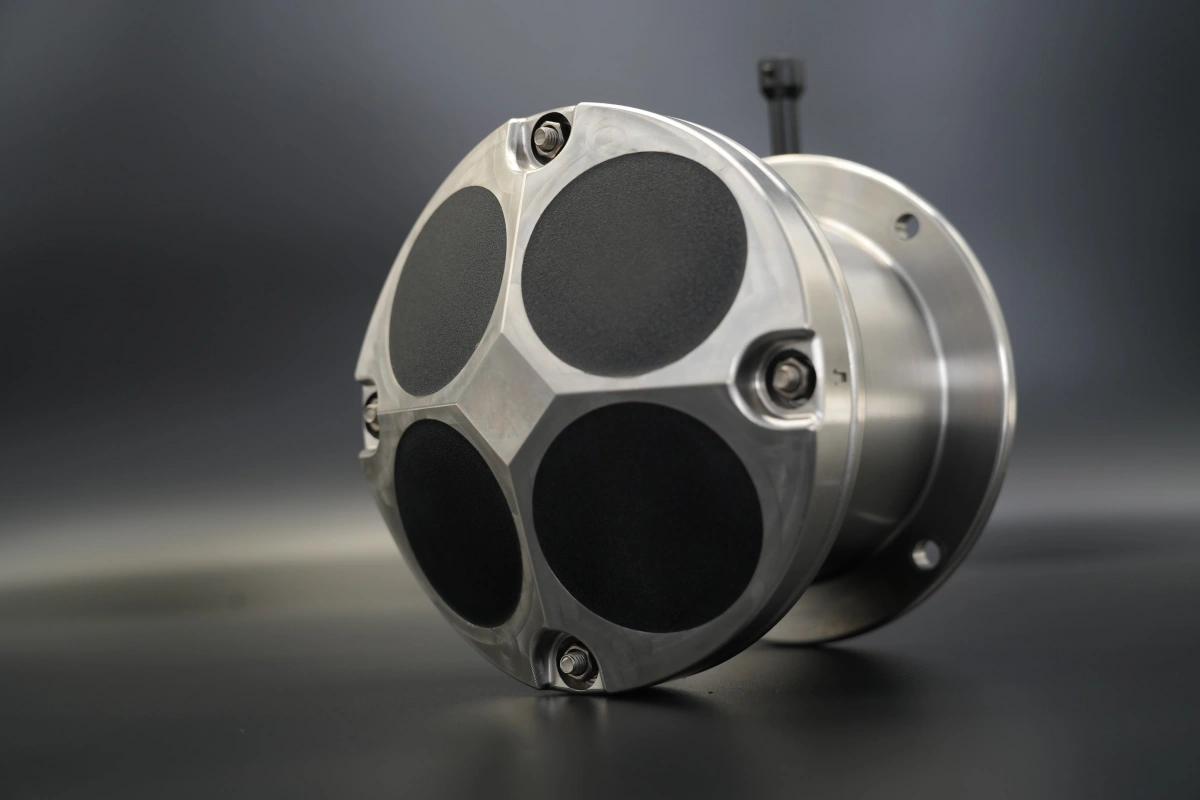
The 600-FA4 is the versatile, dual-mode option. Its 4-beam flat array (four individual ceramic piston transducers in Janus configuration) is the industry's most proven architecture — validated across decades of deployments in every ocean. Key attributes:
- DR + SC dual mode. Use it vessel-mounted with a cable for real-time data, or deploy it autonomously on a mooring for months. One instrument, two workflows.
- Individually replaceable transducers. Damage one ceramic element, replace just that element — not the entire acoustic head.
- 1,500m physical depth rating. While its profiling range is sub-100m, its pressure housing can go much deeper — relevant if you are mounting it on a deep structure in shallow water.
Ocean-ADCP-600-PA5
The 600-PA5 is the ultra-compact, high-performance alternative. Its 5-beam phased array replaces four separate ceramic pistons with a single flat plate, giving it:
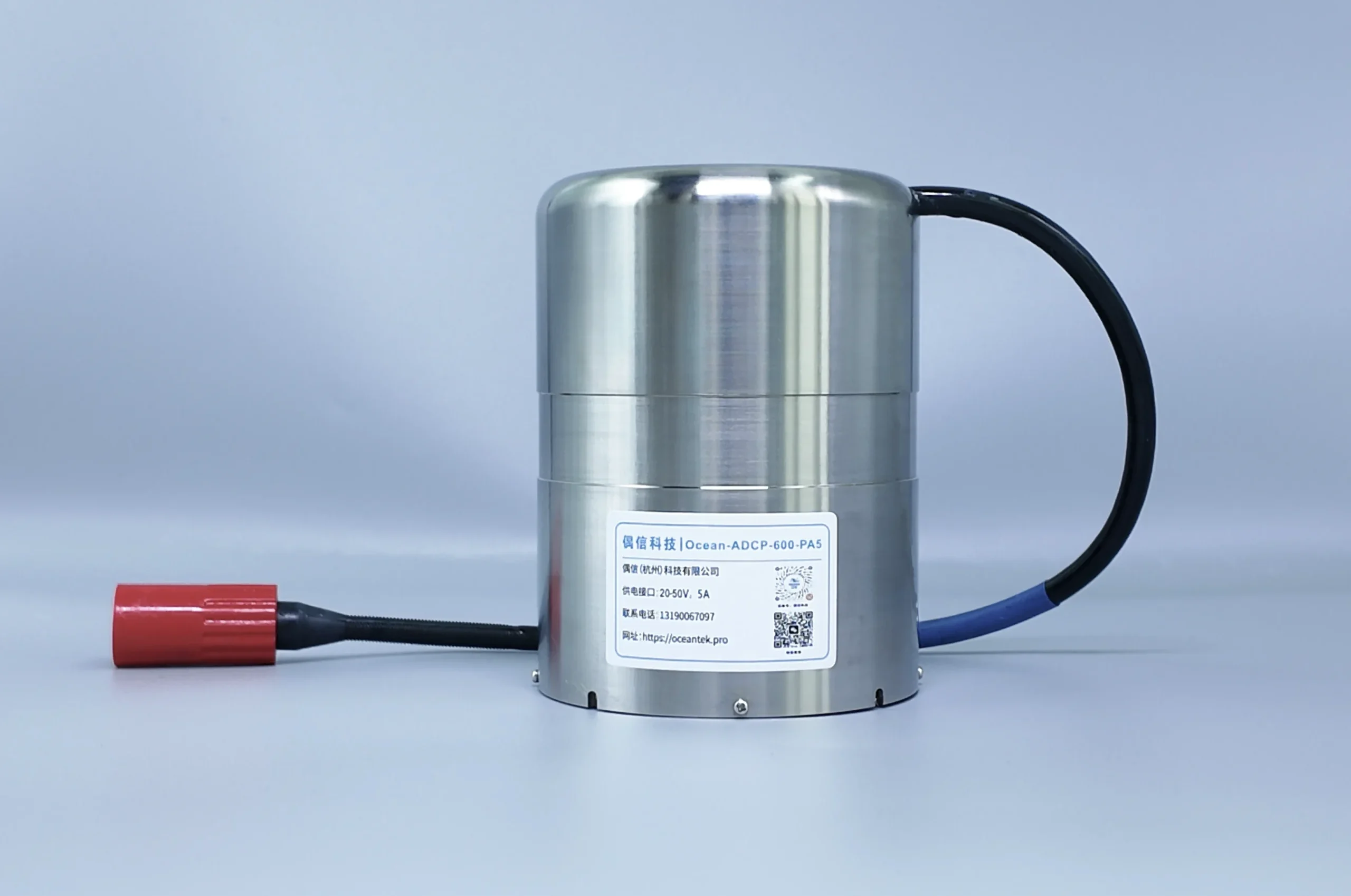
- Smaller and lighter — less drag on vessel mounts, easier one-person handling on small boats.
- 5th vertical beam — the center beam provides a direct depth reading and can serve as a reference for beam angle calibration.
- DR-only — it is optimized for vessel-mounted and cabled deployments. If you need SC mode for autonomous mooring, choose the FA4.
A detailed head-to-head comparison is in Section 6.
5. Mid to Transitional (50–100m): When 300kHz Makes Sense
This is the decision zone. At 50m depth, a 600kHz ADCP is firmly within its comfort zone. By 100m, it is at the edge of its capability — and in clear water, it may not reach the seabed at all. The question is: at what depth do you switch to 300kHz?
The Crossover Logic
The answer depends on three variables specific to your site:
| Variable | Favors 600kHz | Favors 300kHz |
|---|---|---|
| Water clarity | Turbid (estuary, river plume, high plankton) | Clear (oligotrophic, open shelf, winter mixing) |
| Required depth cell size | ≤ 1m (boundary layer studies, engineering design) | ≥ 2m (operational monitoring, bulk transport) |
| Margin requirement | Profiling to exactly the seabed is not required | Must profile full water column with range to spare |
The 300-FA4 at Sub-100m Depths
The Ocean-ADCP-300-FA4 at 50–100m depth is operating far inside its capability envelope. With a profiling range of 120-160m, a 300kHz unit at 80m depth has 40–80m of range headroom. This means:
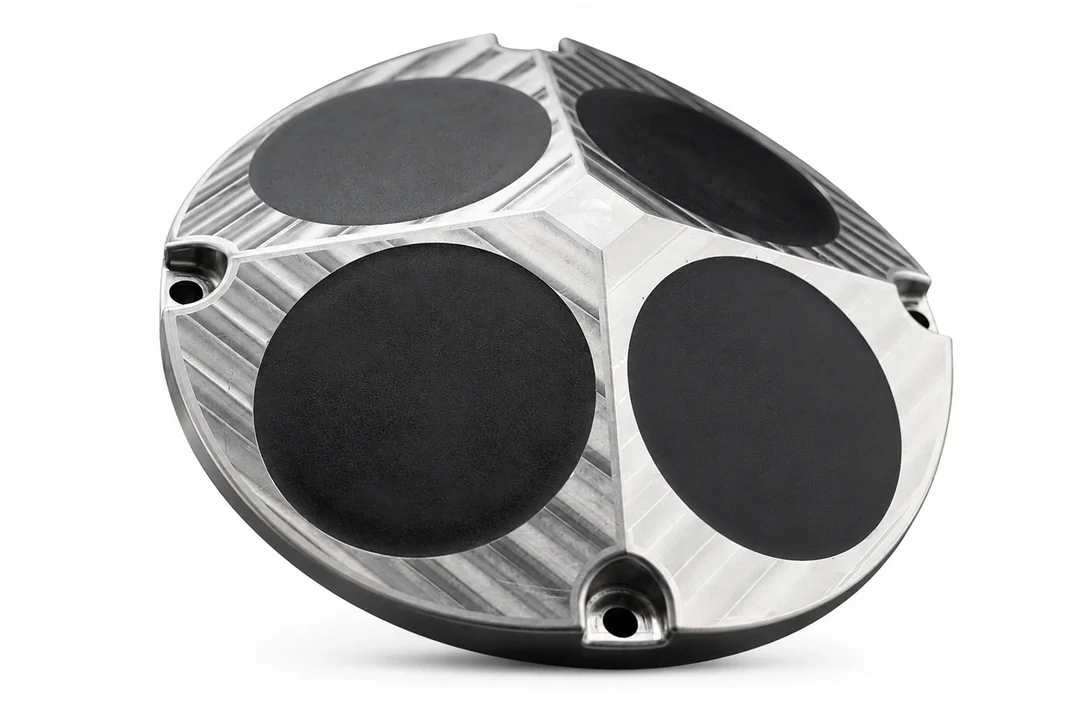
- Zero dropout risk. Even in the clearest water, the 300-FA4 will profile the full water column at sub-100m depths with solid SNR in every bin.
- Lower ping rate acceptable. Because you are not fighting for signal, you can average fewer pings per ensemble and still get clean data — extending battery life in SC mode.
- Coarser vertical resolution. The tradeoff: 1–2m depth cells instead of 0.5–1m. For operational monitoring and bulk transport, this is fine. For near-bed boundary-layer studies, it may not be.
Quick Crossover Guide
| Your Depth | Water Type | Recommendation |
|---|---|---|
| 50–70m | Turbid coastal / estuarine | 600kHz (FA4 or PA5) |
| 50–70m | Clear shelf water | 600kHz acceptable; 300kHz adds margin |
| 70–90m | Turbid coastal / estuarine | 300kHz safer |
| 70–90m | Clear shelf water | 300kHz (Ocean-ADCP-300-FA4) |
| 90–100m | Any water type | 300kHz (Ocean-ADCP-300-FA4) |
6. 600-FA4 vs. 600-PA5: Two 600kHz ADCPs, Two Different Missions
Since 600kHz is the dominant frequency for sub-100m work, the most common product-choice question is: FA4 or PA5? Both profile the same water column. The differences are in how you deploy them and what else you need.
| Parameter | Ocean-ADCP-600-FA4 | Ocean-ADCP-600-PA5 |
|---|---|---|
| Transducer architecture | 4 individual ceramic pistons (Janus) | 5-beam phased array (single flat plate) |
| Profiling range (nominal) | 55-70 m | 55-70 m |
| Depth cell size | 0.5–4 m | 0.5–4 m |
| Physical size & weight | Larger; protruding elements | Ultra-compact; flat face |
| Modes | DR + SC | DR only |
| Vertical beam | No (4 beams) | Yes (5th center beam) |
| Transducer serviceability | Individual element replacement | Full array replacement |
| Housing material | Titanium | Titanium |
| Depth rating (physical) | 1,000/3,000/6,000 m | 1,000/3,000/6,000 m |
| Bottom-tracking | Standard | Standard |
Choose the 600-FA4 When:
- You need Self-Contained mode for autonomous mooring deployments.
- You operate in environments where transducer damage is possible (debris, ice, accidental impact) and want repairability.
- You value the proven flat-array architecture with its extensive published validation record.
Choose the 600-PA5 When:
- You operate from small vessels with limited deck space — the compact, lightweight form factor matters.
- You are vessel-mount only and don't need SC mode — the PA5 is optimized for exactly this workflow.
- You value the 5th vertical beam for independent depth verification and beam-angle calibration.
7. DVL-600 Series: Navigation-Grade Velocity Logs for Sub-100m Platforms
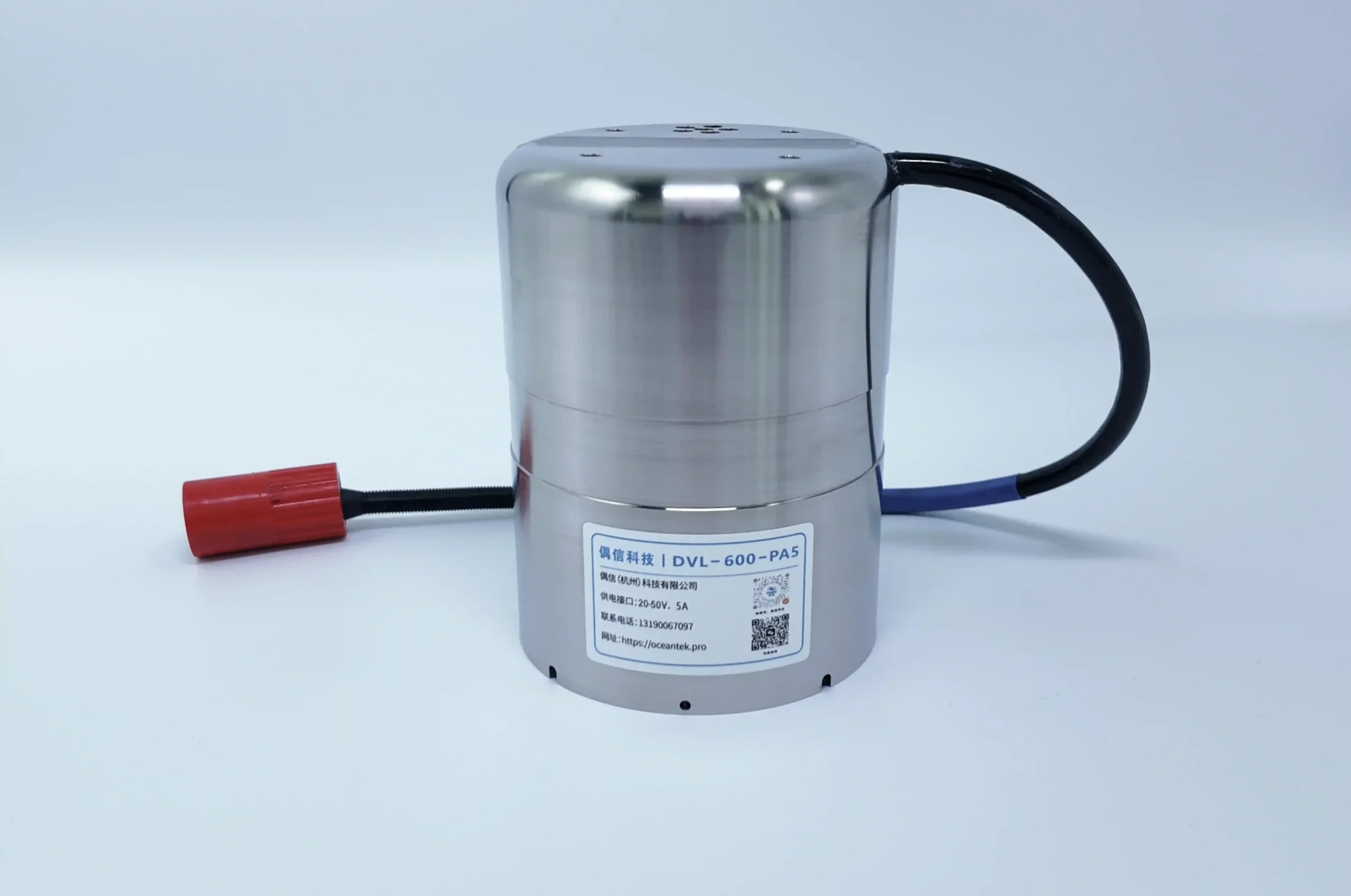
If your sub-100m operation involves an AUV, ROV, or towed body, the instrument you need is not an ADCP — it is a Doppler Velocity Log (DVL). A DVL measures vehicle velocity relative to the seabed (bottom-track) rather than current profiles, providing the drift-free navigation that inertial navigation systems (INS) depend on to control position error growth.
DVL-600-FA4 vs. DVL-600-PA5
Oceantek offers two 600kHz DVLs for the sub-100m altitude band:
| Parameter | DVL-600-FA4 | DVL-600-PA5 |
|---|---|---|
| Frequency | 600 kHz | 600 kHz |
| Transducer | Piston Array ×4 | Phased Array ×5 |
| Max bottom-track altitude | ~110 m | ~110 m |
| Velocity accuracy | ±0.3% ±3 mm/s | ±0.3% ±3 mm/s |
| Physical depth rating | 1,000 m | 1,000 m |
| Protocol output | PD0, PD6 | PD0, PD6 |
| Form factor | Larger; individual elements | Ultra-compact; flat face |
Bottom-Tracking vs. Water-Tracking
Both DVL-600 models provide two concurrent measurement layers:
- Bottom-track: Doppler shift from the seabed → vehicle velocity over ground. This is the primary navigation data fed to the INS.
- Water-track: Doppler shift from mid-water scatterers at a configurable range gate → vehicle velocity relative to the water mass. Used for current profiling during transit and for detecting water-mass drift when bottom-lock is lost.
8. OCEAN-SPCM: The Single-Point Alternative
Not every sub-100m measurement needs a full current profile. If you know the depth you care about — for example, the intake pipe depth of a desalination plant at 15m, or the mid-water depth of an aquaculture cage at 25m — deploying a single-point current meter can be more practical and cost-effective than a full ADCP.
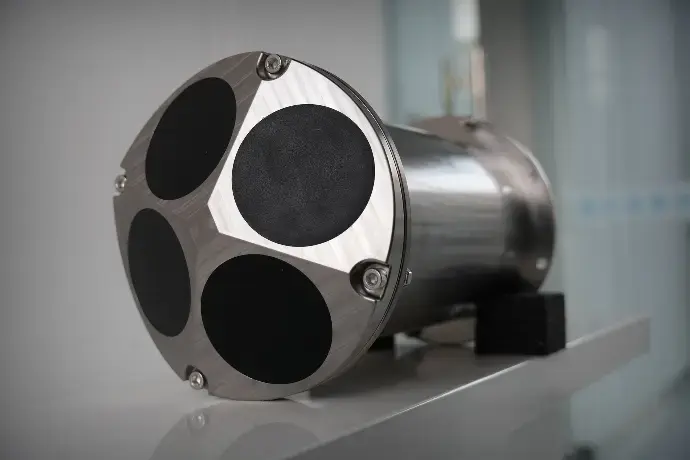
The OCEAN-SPCM measures current speed and direction at a single point using acoustic Doppler:
- 12–18 month autonomous endurance on internal batteries — deploy it, leave it, retrieve it next year.
- No frequency–range tradeoff to navigate. It measures at exactly the depth you place it — no profiling, no bin spacing decisions, no side-lobe calculations.
- 1,000m physical depth rating. While your target depth may be 20m, the housing is engineered to the same standard as Oceantek's deep-water instruments.
- Cost-effective for multi-depth arrays. Five SPCMs at 20m, 40m, 60m, 80m, and 100m on one mooring give you velocity at each depth for less than the cost of multiple profiling ADCPs.
9. Deployment Modes: Vessel, Mooring, Riverbank, or AUV?
Sub-100m deployments span the full range of platforms. Here is how each maps to Oceantek's lineup:
Vessel-Mounted Surveys
The most common sub-100m configuration. The ADCP is mounted through the hull, over the side on a pole, or in a towed body. Real-time data streams to the acquisition computer. Recommended: Ocean-ADCP-600-FA4 or 600-PA5 (DR mode). For deeper-end surveys (70–100m in clear water): Ocean-ADCP-300-FA4.
Moored / Bottom-Mounted (Autonomous)
The ADCP sits on a seabed frame or in-line on a mooring, logging internally for months. Recovery brings the data home. Recommended: Ocean-ADCP-600-FA4 (SC mode) for 5–70m; Ocean-ADCP-300-FA4 (SC mode) for 50–100m. The 600-PA5 is not suitable (DR-only).
Riverbank / Fixed Structure
Permanent installation on a riverbank, bridge pier, or canal wall for continuous discharge monitoring. Recommended: HADCP-600 for horizontal index-velocity measurement; River-ADCP-M9 for periodic moving-boat rating-curve surveys.
AUV / ROV / Towed Platform
Mobile underwater platforms requiring navigation-grade velocity data. Recommended: DVL-600-PA5 (preferred for range headroom) or DVL-600-FA4. If the vehicle also carries an ADCP payload for science: Ocean-ADCP-600-FA4 (DR mode, integrated as payload sensor).
| Platform | Primary Instrument | Mode | Depth Range (Water) |
|---|---|---|---|
| Survey vessel (hull/pole mount) | Ocean-ADCP-600-PA5 or 600-FA4 | DR | 5–100m |
| Small boat / RHIB | Ocean-ADCP-600-PA5 | DR | 5–80m |
| Seabed frame (upward-looking) | Ocean-ADCP-600-FA4 | SC | 5–70m |
| Mid-water mooring | Ocean-ADCP-600-FA4 or 300-FA4 | SC | 30–100m |
| River cross-section (moving boat) | River-ADCP-M9 | DR | 0.06–40m |
| Riverbank / bridge pier (fixed) | HADCP-600 | SC | < 90m channel width |
| AUV / ROV | DVL-600-PA5 or DVL-600-FA4 | BT + WT | 1–100m altitude |
10. Decision Matrix: Which Product at Which Depth?
The table below is the quick-reference answer. Find your depth range and application, and it gives you the primary instrument recommendation:
| Depth | Application | Platform | Primary Pick | Alternative |
|---|---|---|---|---|
| < 3m | River discharge survey | Moving boat / tethered | River-ADCP-M9 | — |
| < 5m | Continuous river monitoring | Bank / pier mount | HADCP-600 | — |
| 5–30m | Coastal / harbor survey | Vessel-mounted | Ocean-ADCP-600-PA5 | Ocean-ADCP-600-FA4 |
| 5–30m | Autonomous mooring | Seabed frame / mooring | Ocean-ADCP-600-FA4 | — |
| 30–70m | Offshore wind / pipeline survey | Vessel-mounted | Ocean-ADCP-600-PA5 | Ocean-ADCP-600-FA4 (DR) |
| 30–70m | Long-term mooring | Mid-water / seabed frame | Ocean-ADCP-600-FA4 (SC) | Ocean-ADCP-300-FA4 (SC) |
| 70–100m | Clear-water shelf survey | Vessel-mounted | Ocean-ADCP-300-FA4 | Ocean-ADCP-600-PA5 |
| 70–100m | Turbid water survey | Vessel-mounted | — | Ocean-ADCP-300-FA4 |
| 70–100m | Autonomous mooring | Seabed frame / mooring | Ocean-ADCP-300-FA4 (SC) | — |
| 15–100m | AUV/ROV navigation | AUV / ROV | DVL-600-PA5 | DVL-600-FA4 |
| 5–100m | Discrete-depth monitoring | Mooring (×N depths) | OCEAN-SPCM | — |
Budget Snapshot
| Tier | Instrument | Approximate Budget Range | Best For |
|---|---|---|---|
| Entry | OCEAN-SPCM (×1–3) | $15,000 – $45,000 | Point monitoring, budget-constrained compliance |
| River | River-ADCP-M9 | $25,000 – $30,000 | Hydrological agency discharge surveys |
| Fixed Station | HADCP-600 | $~9,800 | Continuous channel/river discharge |
| Mid-Range | Ocean-ADCP-600-FA4 | $17,000 – $25,000 | Coastal profiling with SC capability |
| Compact Premium | Ocean-ADCP-600-PA5 | $17,000 – $25,000 | Vessel-mounted surveys, small-boat operations |
| Extended Range | Ocean-ADCP-300-FA4 | $25,000 – $30,000 | 50–100m zone, clear-water profiling |
| Navigation | DVL-600-FA4 / DVL-600-PA5 | $17,000 – $25,000 | AUV/ROV velocity logs |
Note: Budget ranges are indicative. Contact Oceantek for a formal quotation tailored to your configuration.
Frequently Asked Questions
Q: What frequency ADCP is best for water depths under 100m?
For water depths below 100m, 600kHz is the go-to frequency — it delivers fine resolution (0.5–4m depth cells) across the full water column with solid bottom-tracking. 300kHz is preferred at the deeper end (70–100m) when you need extended profiling range or operate in very clear water. 1000kHz (River-ADCP-M9) is reserved for rivers and very shallow applications under 25m requiring the highest possible spatial resolution.
Q: What is the difference between the Ocean-ADCP-600-FA4 and Ocean-ADCP-600-PA5?
Both are 600kHz profilers for sub-100m depths. The FA4 uses a 4-beam piston array (four individual ceramic elements in Janus configuration) and supports both DR and SC modes — your choice if you need autonomous mooring capability. The PA5 uses a 5-beam phased array (single flat plate), is more compact and lighter, includes a vertical center beam, and is DR-only — optimized for vessel-mounted surveys.
Q: Which ADCP should I use for a river less than 5m deep?
For moving-boat discharge surveys in rivers under 5m depth, the River-ADCP-M9 (1000kHz, 9-beam) is purpose-built for this scenario with ultra-fine 0.06m depth cells. For continuous, fixed-station monitoring, the HADCP-600 mounted on the riverbank or a bridge pier provides real-time index-velocity discharge data 24/7. These two instruments complement each other: the M9 establishes and maintains the rating curve; the HADCP provides the continuous record.
Q: Do I need bottom-tracking for shallow-water ADCP surveys?
Yes. Bottom-tracking is essential in water under 100m because it provides the vessel's true speed over ground — which is subtracted from measured water velocities to produce earth-referenced currents. All Oceantek Ocean-ADCP and DVL products include bottom-tracking as standard. In the rare case that bottom-lock is lost (e.g., extremely soft sediment at 100m), GPS heading and speed compensation serves as a fallback — but bottom-tracking is always more accurate when available.
Disclosure: Pricing ranges vary by region, configuration, and order volume. Always request a formal quotation for your specific requirements.
© 2026 Ocean (Hangzhou) Technology Co., Ltd., All rights reserved. Last updated: August 5, 2026.