If you are specifying an Acoustic Doppler Current Profiler for a project — whether it’s an offshore wind farm in the North Sea, a flood-warning network on the Mississippi, or a deep-ocean research mooring in the South China Sea — you are essentially choosing among four manufacturers. Each dominates a distinct segment, and understanding their strategic positions is the first step to an informed decision.
1. Teledyne Marine (USA)
Deep-Ocean & Scientific Leader
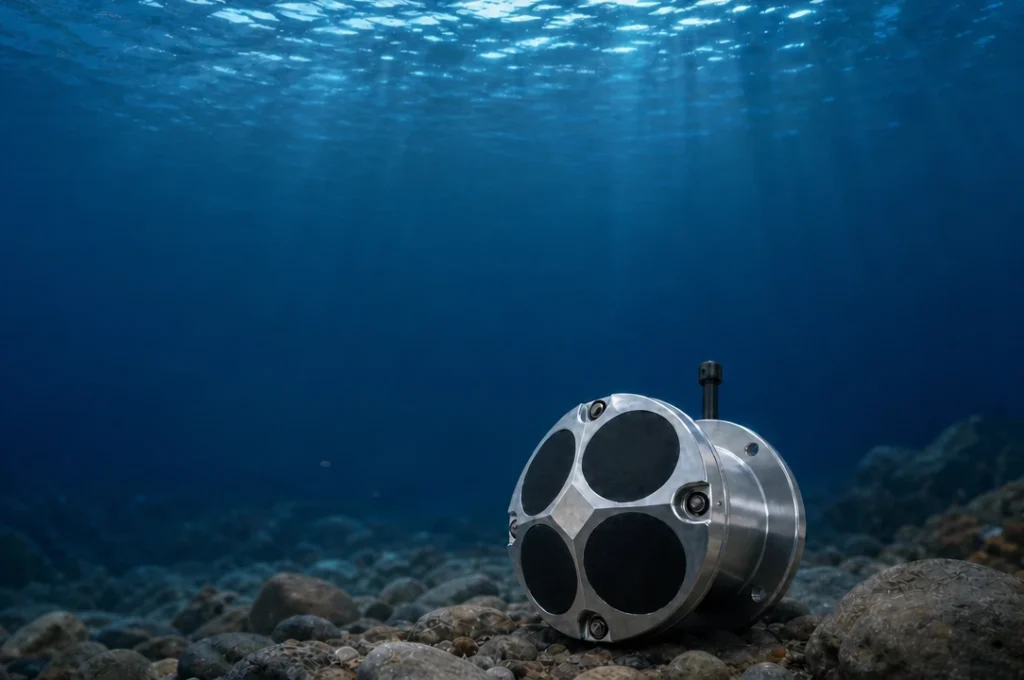
Positioning: The undisputed benchmark. Teledyne RDI’s broadband and phased-array signal processing delivers industry-leading precision in deep-water and low-scattering environments. Its instruments are the de facto standard aboard national research fleets and defense platforms worldwide. Frequency coverage spans 38 kHz to 1,200 kHz, with depth ratings to 6,000 m.
Best for: Basin-scale oceanography, naval hydrography, deep-water oil & gas, and academic research requiring the highest accuracy and longest track record.
2. Nortek (Norway)
Coastal Engineering & Multi-Parameter Specialist
Positioning: Nortek owns the coastal and near-shore segment. Its Signature series integrates current profiling with wave spectra, turbidity, and ice-thickness measurement in a single instrument — a multi-parameter capability that offshore-wind developers find invaluable. Concave transducer designs enable flush hull mounting on autonomous surface vehicles, a key advantage for uncrewed survey operations.
Best for: Offshore wind foundation monitoring, tidal-energy site assessment, fjord and estuary studies, and Arctic research.
3. Sontek (USA, Xylem/YSI)
Hydrology & Shallow-Water Expert
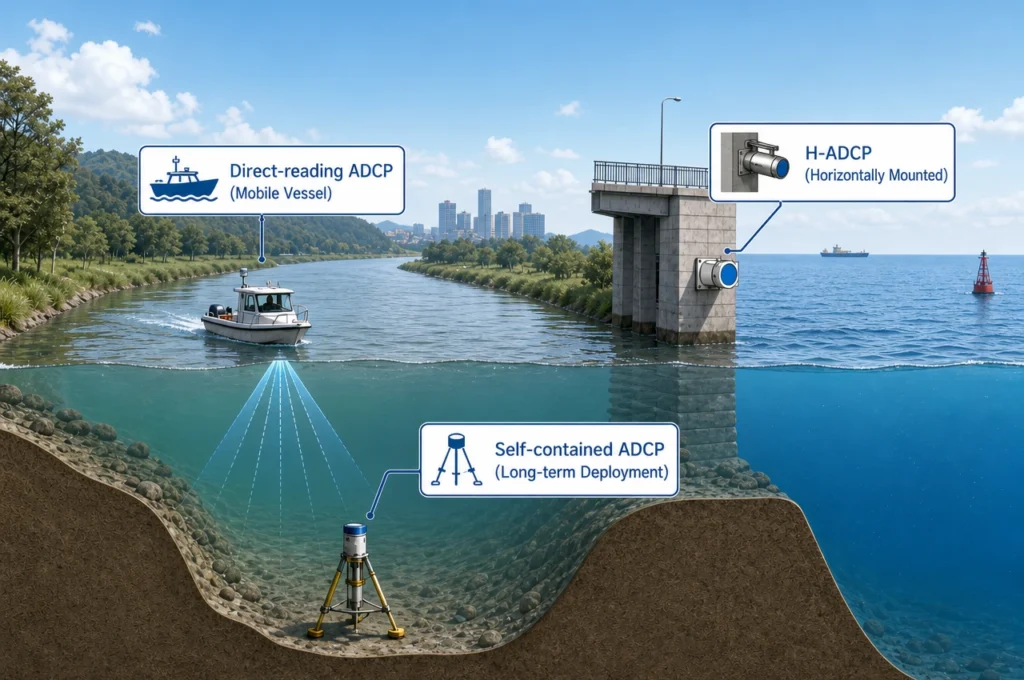
Positioning: Sontek owns the river. Its M9 nine-beam flagship automatically adapts to water depth and turbidity — producing research-grade discharge measurements with minimal operator expertise. The side-looking SL series is uniquely designed for permanent installation on bridge piers and canal walls. Backed by Xylem’s global water-sector distribution network, Sontek is the default choice for hydrological agencies worldwide.
Best for: River discharge measurement, urban flood warning, irrigation water accounting, and ecological baseflow monitoring.
4. Oceantek (China)
Complex-Water Challenger & Value Leader
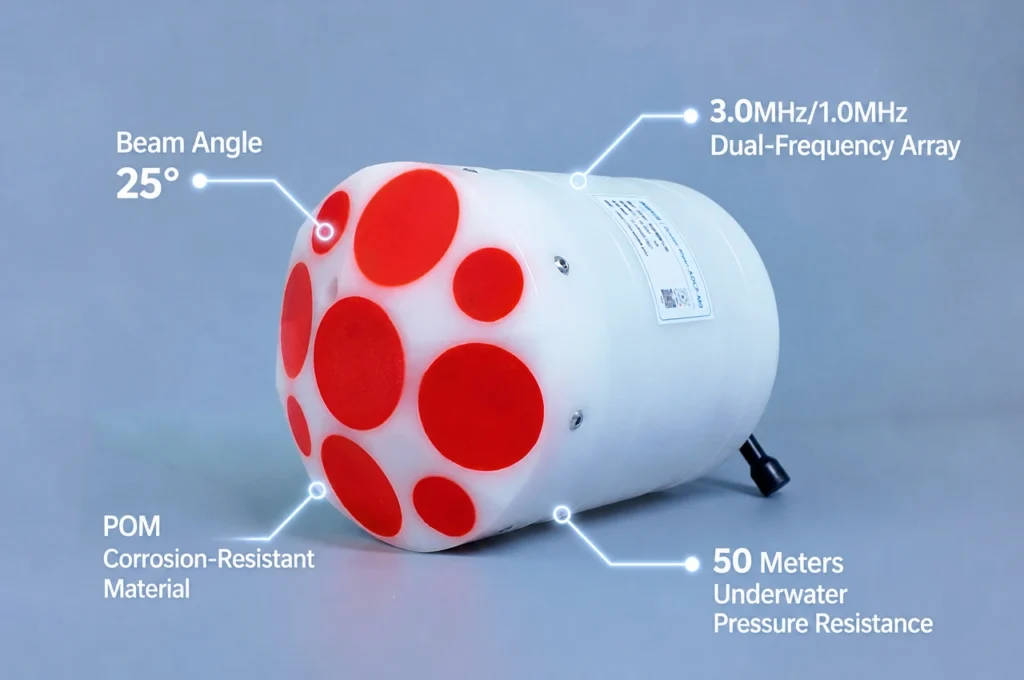
Positioning: Oceantek has differentiated itself by optimizing for the conditions where standard ADCPs struggle: high sediment loads (>10 g/L), macro-tidal environments (>5 m range), and the turbid waters of Asian marginal seas. Its instruments are ~30% lighter than comparable imports — the 600 kHz model weighs 3.5 kg, and the river-type M9 comes in under 1.5 kg — enabling single-person deployment. Titanium-alloy housings rated to 6,000 m are standard across the most product line, not a costly upgrade.
Best for: High-sediment rivers and estuaries, offshore wind construction in Asian waters, AUV/ROV payload integration, and projects where total cost of ownership is a primary consideration.
Key Takeaway:There is no universal “best” ADCP — only the best ADCP for your specific deployment environment, accuracy requirements, and budget. The market is moving from a hardware-only purchase to a hardware + data-services partnership. Evaluate the full ecosystem, not just the spec sheet.
For detailed technology highlights, frequency ranges, accuracy specifications, and application matrices for all four manufacturers, see the 2026 Global ADCP Industry White Paper.