Navigating underwater is a complex task. It requires precise instruments to ensure accuracy and safety. One such instrument is the Doppler Velocity Log (DVL).
DVLs are essential for underwater navigation. They measure a vessel’s speed relative to the seabed. This data is crucial for maintaining accurate positioning.
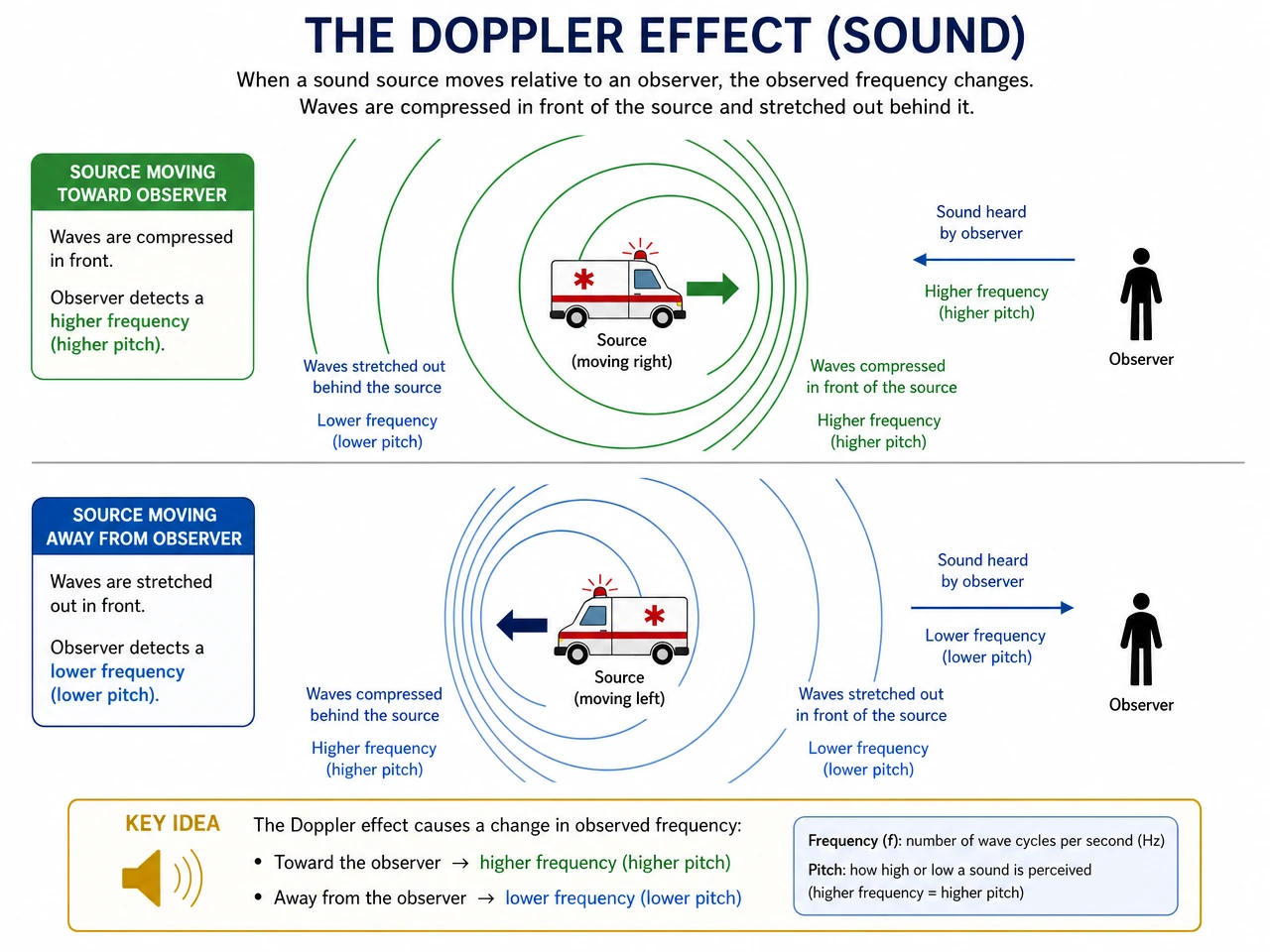
The technology behind DVLs is fascinating. It uses the Doppler effect to calculate velocity. Sound waves are sent out and their frequency shift is measured upon reflection.
DVLs are versatile. They work in various water conditions, from shallow to deep. This makes them indispensable for many underwater missions.
Autonomous Underwater Vehicles (AUVs) rely heavily on DVLs. They ensure these vehicles maintain their course and reach their destinations accurately.
Choosing the right DVL is important. Factors like range, accuracy, and power consumption must be considered. The right choice enhances mission success.
Chinese suppliers, such as Oceantek, offer competitive DVL options. They provide advanced features and cost-effectiveness. This makes them a popular choice in the market.
Understanding DVLs is key for marine engineers and researchers. It helps in making informed decisions for underwater navigation. This guide will explore how to choose the best DVL for your needs.
What is a Doppler Velocity Log (DVL)?
The Doppler Velocity Log (DVL) is a cutting-edge instrument. It’s designed to measure how fast a vessel moves relative to the sea floor. This makes it a key tool in underwater navigation.
How does it work? The DVL sends acoustic waves towards the seabed. When these waves bounce back, the frequency change, known as the Doppler shift, is analyzed. This shift helps to determine speed.
DVLs serve various purposes. They aid in navigation, data collection, and survey operations. Their accuracy is unparalleled in challenging underwater environments.
A DVL system typically includes:
- Transducers that emit sound waves.
- Signal processing units to decode the received data.
- A user interface for real-time monitoring.
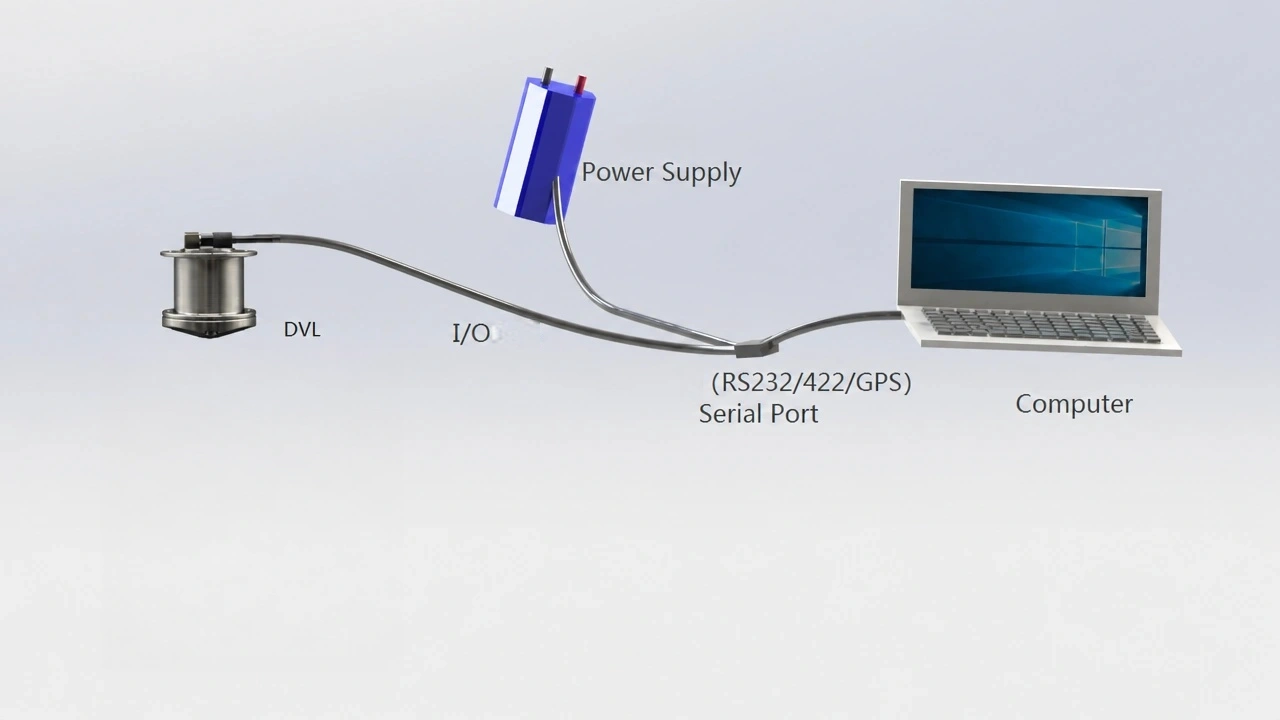
The demand for DVLs is increasing. As underwater exploration expands, precise navigation becomes more vital. The global market for these instruments is thriving.
DVL technology is ever-evolving. Recent advancements have improved accuracy and minimized power consumption. This progression allows smaller vessels to benefit from DVL capabilities.
Understanding the DVL’s role is crucial for marine professionals. It enables them to select the right models for their tasks. In the next sections, we’ll dive deeper into how DVLs function and their diverse applications.
How Does a DVL Work? The Science Behind Doppler Velocity Logs
At the heart of a Doppler Velocity Log (DVL) is the Doppler effect. This scientific principle allows the DVL to measure velocity with precision. Let’s delve into how this remarkable process unfolds underwater.
A DVL emits acoustic waves downward towards the seafloor. These waves travel as pulses and reflect back to the device. The frequency of these returned waves shifts based on the vessel’s movement.
This frequency shift is the Doppler effect in action. It provides data on how fast the vessel is moving relative to the bottom. The greater the frequency change, the faster the movement.
Factors affecting DVL measurements include:
- The angle at which waves hit the seabed.
- Water conditions like salinity and depth.
- The DVL’s frequency and beam setup.
DVLs often use multiple beams to enhance accuracy. Each beam is oriented at a specific angle, covering a wider area. This multi-beam approach yields comprehensive velocity data.
One significant advantage is that DVLs can operate in diverse waters. From shallow coastal zones to the deep oceanic abyss, DVLs maintain their efficacy.
Signal processing is a vital step in the DVL’s operation. It involves converting the received acoustic signals into usable velocity data. Advanced algorithms ensure this process remains rapid and precise.
Understanding these fundamental workings helps in appreciating the DVL’s role. It underscores why the DVL is indispensable in modern underwater navigation and exploration.
Key Applications of DVLs in Underwater Navigation
Doppler Velocity Logs (DVLs) serve numerous roles in underwater settings. They enhance precision in navigation, which is critical for accurate underwater surveying. One of the most vital applications involves mapping the seafloor with precision.
Marine researchers heavily rely on DVLs for data collection. They provide accurate locati0n information, aiding in the study of marine ecosystems. This precision is vital for monitoring environmental changes over time.
In underwater construction, DVLs ensure structures are built on firm ground. Precise velocity data helps in laying stable foundations for subsea installations. Offshore oil and gas industries benefit significantly from this capability.
For autonomous underwater vehicles (AUVs), DVLs are indispensable. They guide these unmanned vehicles with remarkable accuracy. Whether exploring wrecks or conducting scientific research, AUVs depend on DVLs for navigation.
DVLs are also crucial in naval operations. Military applications include submarine navigation and mine countermeasures. Their reliability under varying conditions makes them ideal for defense strategies.
In the commercial sector, DVLs assist in cable laying and pipeline inspection. They ensure that routes are followed precisely, minimizing potential disruptions.
Key applications of DVLs include:
- Seafloor mapping
- Marine research and data collection
- Underwater construction and foundation stabilization
- AUV navigation and mission execution
- Naval operations and military navigation
- Commercial activities like cable laying

Overall, the versatility of DVLs supports a wide range of underwater activities. Their capacity to offer detailed navigation data remains unrivaled. This capability is what makes them pivotal in the ever-expanding field of underwater exploration and operation.
DVLs and Autonomous Underwater Vehicles (AUVs)
Doppler Velocity Logs (DVLs) are paramount for the functionality of Autonomous Underwater Vehicles (AUVs). These vehicles traverse the ocean depths unmanned, relying heavily on accurate navigation data. DVLs supply this crucial velocity and position information.
AUVs utilize DVLs to maintain precise trajectories. Without proper guidance, they risk veering off course, jeopardizing mission success. DVLs ensure stability by providing real-time feedback on the vehicle’s movement relative to the seabed.
During operations, DVLs help AUVs adapt to environmental changes. This feature is crucial when encountering currents or obstacles. They help maintain a steady course and thus preserve the mission’s integrity.
In complex missions, such as deep-sea exploration, AUVs rely on DVLs for seamless execution. These logs enable precise positioning even in the absence of external GPS signals. Such capabilities are indispensable in remote ocean areas.
The versatility of DVLs enhances AUV applications, making them suitable for various tasks. Examples include underwater surveying, biological sampling, and shipwreck exploration.
Key functions of DVLs for AUVs include:
- Accurate trajectory maintenance
- Real-time environmental adaptation
- Precise positioning in GPS-denied environments
- Versatile application for multiple underwater tasks
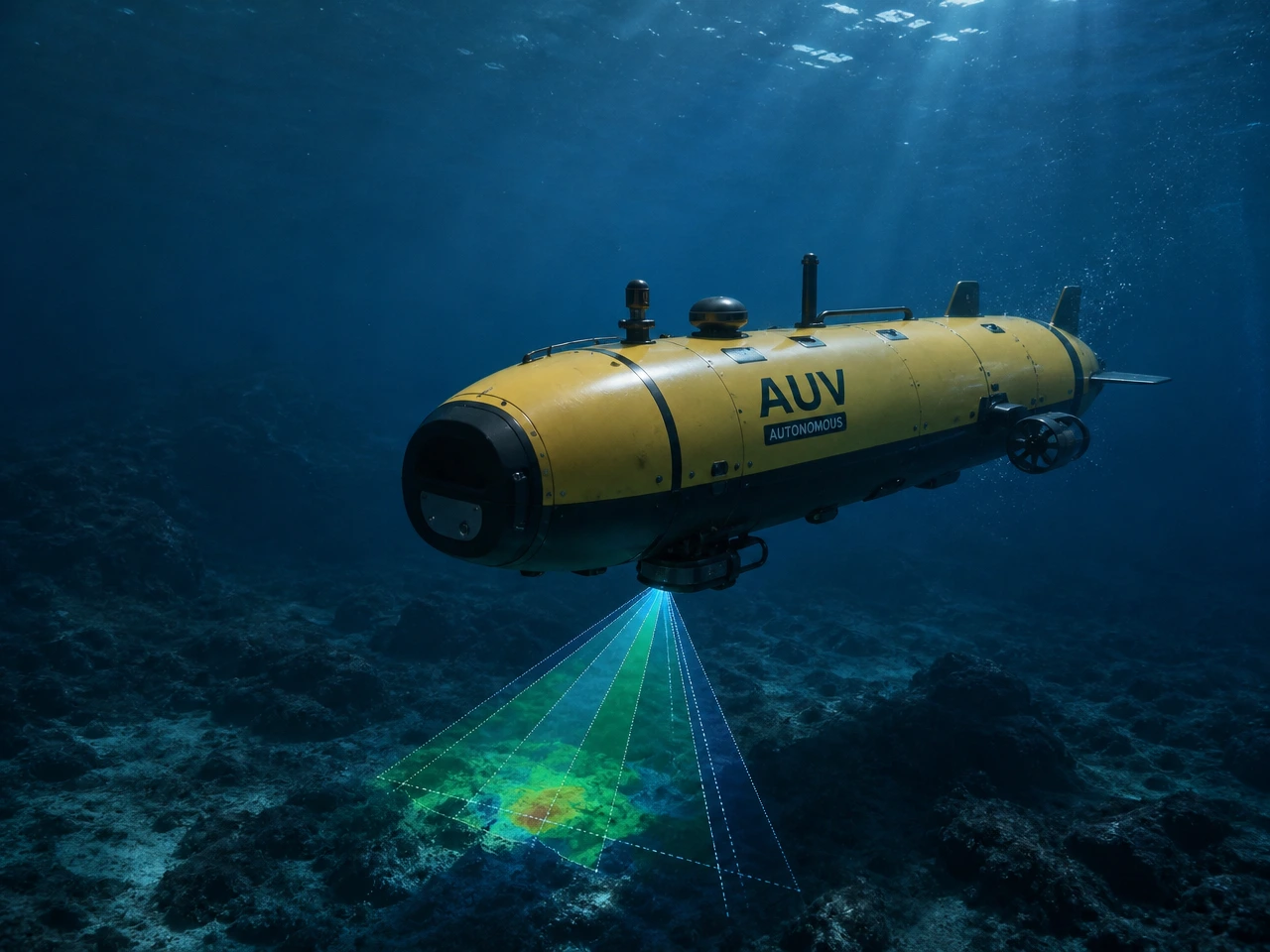
Overall, DVLs empower AUVs to operate independently and efficiently. Their integration results in heightened performance and broader exploration possibilities. As a result, AUVs have become indispensable tools in underwater research and industry.
Types of DVLs: Configurations and Technologies
Doppler Velocity Logs (DVLs) come in various configurations tailored for diverse underwater applications. Each type offers unique benefits, meeting specific operational needs and environmental challenges.
Single-beam DVLs are compact and cost-effective. They suit small-scale operations where space and budget constraints exist. These DVLs focus on achieving essential velocity measurements.
Multi-beam DVLs provide a broader and more detailed data set. Equipped with multiple beams, they deliver enhanced accuracy and coverage. Consequently, they are preferred for complex missions requiring detailed analysis.
Some DVLs integrate additional sensors, offering comprehensive data fusion. These models incorporate pressure sensors, compasses, or gyroscopes. This integration allows for a more complete navigation solution.
Advancements in technology have led to portable DVL designs. These lightweight models cater to smaller vessels needing flexibility and ease of deployment. Their portability does not compromise the performance quality.
In summary, available DVL configurations include:
- Single-beam DVLs: Basic and economical, ideal for small operations
- Multi-beam DVLs: Offer superior accuracy and wide coverage
- Integrated sensor DVLs: Provide full navigation solutions
- Portable DVLs: Lightweight and versatile for various operations
When selecting a DVL, consider your mission’s requirements and environment. Each configuration offers distinct advantages tailored for specific underwater tasks. Choose based on the scope and complexity of the intended operations.
Essential Features to Consider When Choosing a DVL
Selecting the right DVL for your underwater vessel involves examining key features. Each feature influences performance, efficiency, and suitability for specific missions.
Accuracy tops the list of essential DVL features. It ensures precise navigation, especially critical in challenging environments. An accurate DVL contributes significantly to mission success.
Range capabilities vary among DVLs. A wider range allows better functionality in different depths. It’s crucial for missions in both shallow and deep waters.
The size and weight of a DVL affect vessel operation. Compact designs are preferable for smaller vehicles. This consideration is vital to avoid affecting the vessel’s balance and maneuverability.
Power consumption impacts operational duration. Efficient power usage allows extended mission times. It’s especially important for long-duration underwater expeditions.
Durability and robust construction enable operation in harsh conditions. A reliable DVL withstands saltwater corrosion and pressure. This feature is necessary for consistent and long-term performance.
Consider these features when choosing a DVL:
- Accuracy: Ensures precise data and successful missions
- Range capability: Vital for varying underwater depths
- Size and weight: Important for balance and ease of use
- Power efficiency: Extends operational time and reduces energy needs
- Durability: Essential for enduring harsh maritime environments
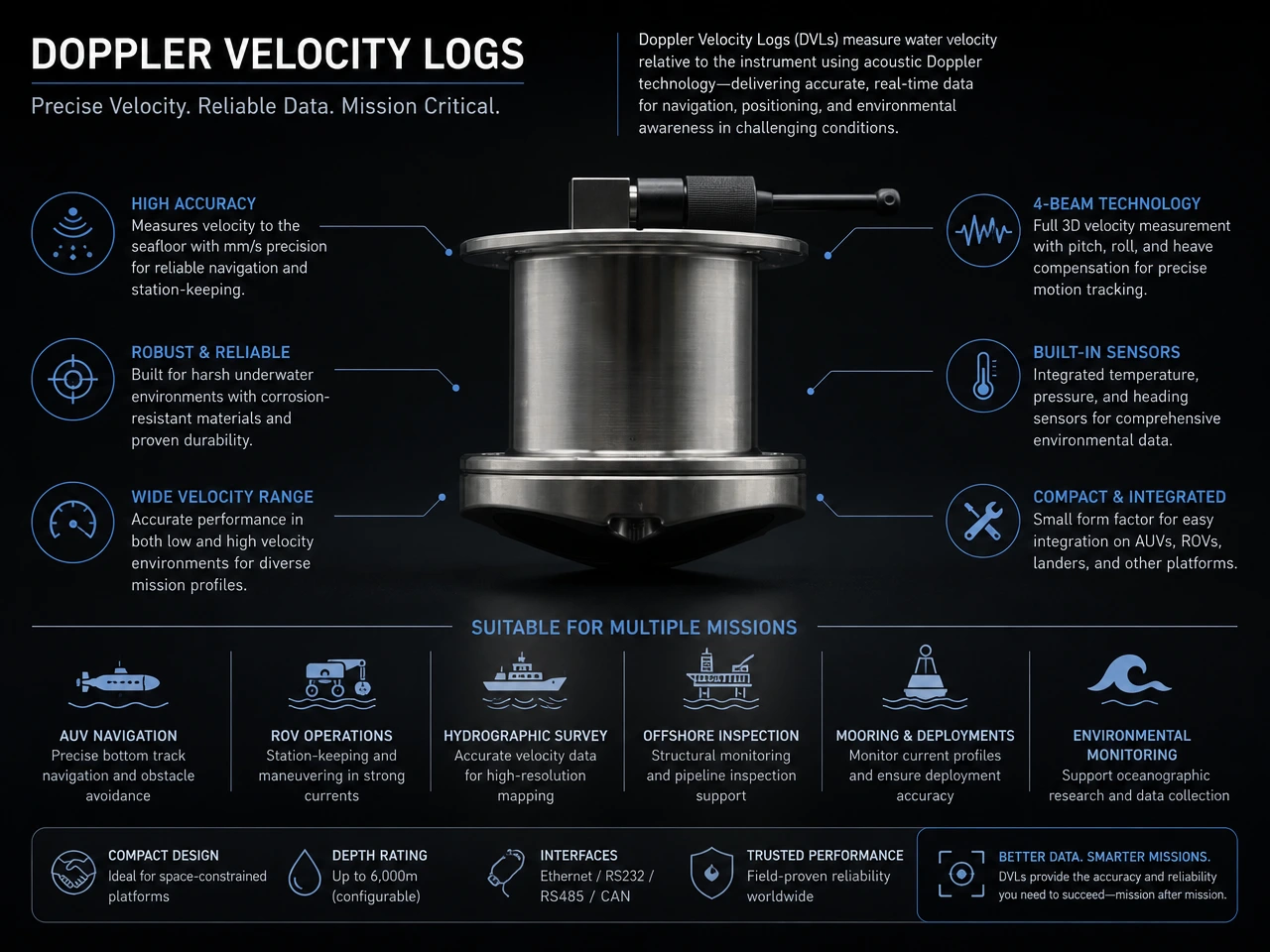
Evaluating these aspects ensures that you select a DVL aligning with your operational needs. Each feature plays a part in optimizing underwater navigation and mission efficiency. Consider all these aspects to make an informed decision.
Comparing DVLs: Performance, Size, and Cost
When choosing a DVL for underwater navigation, comparing different models is crucial. Performance, size, and cost are the main criteria. Each factor can significantly impact your decision.
Performance is often the foremost concern. It encompasses accuracy, range, and reliability. High-performance DVLs provide precise data and can function efficiently under variable conditions.
Size is another important consideration. Smaller DVLs are easier to integrate with compact underwater vehicles. However, larger units may offer advanced features that are not available in smaller models.
Cost is a decisive factor for many buyers. High-performance DVLs typically come with a higher price tag. Budget constraints might limit options, but it’s crucial not to compromise on essential features.
Balancing these elements can be challenging. Buyers often face a trade-off between cost and performance. Deciding on priorities before purchasing can simplify the selection process.
To aid the decision-making, consider the following elements:
- Performance metrics: Accuracy, range, reliability in various conditions
- Physical size: Suitability for intended vehicles and missions
- Cost: Investment versus performance features
Understanding these factors helps in making an informed decision. Align the DVL capabilities with your operational needs. This approach ensures that you get the best value for your investment.
The Role of Chinese Suppliers in the DVL Market
Chinese suppliers have become prominent in the DVL market. Their importance continues to grow as they deliver competitive and innovative solutions. This expansion is driven by several key factors.
Cost-effectiveness is one of the main reasons behind their success. Chinese manufacturers often offer DVLs at lower prices than Western counterparts, making them appealing to budget-conscious buyers. Despite being more affordable, these products maintain acceptable quality standards.
Innovation and technological advancements have also played a pivotal role. Many Chinese suppliers prioritize research and development, leading to significant improvements in DVL technology. As a result, they can offer advanced features and efficient performance.
Global recognition is increasing for Chinese DVL suppliers. They are gaining a reputation for reliability and quality, which attracts international customers. This growing reputation encourages more buyers to consider Chinese-made DVLs.
To summarize, Chinese suppliers offer:
- Competitive pricing without sacrificing quality
- Ongoing investment in research and technology
- An expanding global presence and reputation for reliability

The influence of Chinese suppliers in the DVL market is significant. Their competitive edge lies in balancing cost and innovation. As they continue to develop, their role in the market is expected to strengthen further, presenting valuable opportunities for potential buyers.
Spotlight: Oceantek and Leading Chinese DVL Manufacturers
Oceantek stands out among Chinese DVL manufacturers for its commitment to innovation. The company is a major player in producing high-quality DVLs. Their products are known for both reliability and cutting-edge technology.
See product details: Oceantek DVLs.
Oceantek invests heavily in research, ensuring their technology evolves rapidly. They focus on developing systems that meet diverse marine needs. This dedication positions them as leaders in the industry.
Many other Chinese manufacturers are gaining ground too. They strive to improve the precision and versatility of their DVLs. Such manufacturers are setting new standards in the underwater navigation industry.
Several factors contribute to their success. These include:
- Advanced research and development initiatives
- A strong focus on customer satisfaction
- Competitive pricing models
Chinese manufacturers are growing in global appeal. Their focus on innovation is driven by a desire to meet international expectations. As a result, they are increasingly seen as reliable options.

Oceantek and its peers are reshaping the DVL market. Their impact can be seen in the availability of superior, cost-effective options. By continuing to innovate, they ensure a stronghold in the global market for underwater navigation systems.
How to Evaluate and Select the Right DVL Supplier
Selecting the right DVL supplier is essential for successful underwater navigation. It requires a careful examination of each supplier’s strengths and weaknesses. Understanding key criteria can simplify this decision-making process.
First, assess the supplier’s reputation in the industry. A well-regarded supplier often delivers reliable and high-quality products. Look for customer reviews and feedback on their service and support.
Next, consider the range of products and technologies they offer. A supplier with diverse options can cater to various operational needs. Ensure they provide the specific configuration your vessel requires.
Additionally, evaluate the supplier’s after-sales support and warranty policies. Responsive support can prevent costly downtime. A good warranty indicates confidence in their product’s durability.
Key factors in evaluating a DVL supplier include:
- Reputation and industry standing
- Range of products and configurations
- After-sales support and warranty
- Competitive pricing and value for money
Pricing is always important but should not be the sole deciding factor. It’s crucial to balance cost with quality and support. Choose a supplier who offers the best overall value.
A thorough evaluation ensures you select a DVL supplier that aligns with your mission’s needs. This careful selection enhances operational effectiveness and investment returns.
Integrating DVLs with Other Navigation Systems
Integrating Doppler Velocity Logs (DVLs) with other navigation systems enhances their performance. This combination provides improved accuracy and reliability for underwater vessels. Multiple systems working together offer complementary data and cross-verification.
GPS is a common system that integrates well with DVLs. While DVLs manage subsurface navigation, GPS excels on the surface. This partnership ensures precise positioning in varying conditions. Additionally, Inertial Navigation Systems (INS) can complement DVLs by supplying data during signal interruptions.
During integration, ensure compatibility with existing systems. Firmware and software must communicate seamlessly. This communication ensures data flows smoothly between devices.
When combining DVLs with other navigation tools, consider:
- Compatibility with current systems
- Software and firmware integration
- Data accuracy and timeliness
Effective integration minimizes navigation errors and improves mission success rates. It requires careful planning and expert implementation. Such integration expands the capabilities of underwater exploration and operations.
Maintenance, Calibration, and Long-Term Performance
Proper maintenance and calibration are critical for ensuring the reliability of DVLs. Regular checks can prevent unexpected failures. This improves the longevity of these navigation systems.
Calibration must be performed periodically to maintain accuracy. Environmental factors can affect readings over time. Adjustments ensure that the DVL continues to provide precise data.
Key maintenance practices include:
- Routine cleaning and inspection
- Firmware updates
- Calibration adjustments
Sticking to a maintenance schedule extends the operational life of your DVL. It also optimizes performance, providing consistent and reliable data for your missions. Regular upkeep is a small investment for significant performance returns.
Future Trends in DVL Technology
DVL technology is continuously evolving to meet new challenges in underwater navigation. Innovation is driven by the demand for more efficient and compact systems. Recent trends are reshaping the way DVLs function in the marine environment.
Emerging technologies are set to enhance DVL capabilities. Integration with artificial intelligence and machine learning could revolutionize navigation accuracy. These advances promise smarter, more adaptive systems for complex underwater missions.
Some key future trends include:
- Enhanced data processing with AI
- Miniaturization of DVL components
- Increased integration with other systems
The pursuit of these innovations will likely lead to more autonomous operations. As these trends mature, DVLs will become even more vital in exploring the ocean’s depths. The future of underwater exploration looks promising, thanks to these technological strides.
Conclusion: Making the Best Choice for Your Underwater Vessel
Selecting the right Doppler Velocity Log (DVL) is a crucial decision for any underwater operation. Understanding your specific needs and constraints will guide this process. Consider factors such as water conditions, vehicle type, and mission goals.
Evaluating features like accuracy, size, and integration capabilities is essential. Collaborating with reputable suppliers, including Chinese manufacturers like Oceantek, can offer cost-effective and advanced options. Remember, the right DVL can significantly enhance your vessel’s performance and safety.
In the rapidly evolving field of underwater navigation, staying informed about advancements is beneficial. As technology progresses, choosing a DVL that adapts to future trends ensures long-term success in underwater ventures. Making an informed choice today sets the foundation for exploration achievements tomorrow.