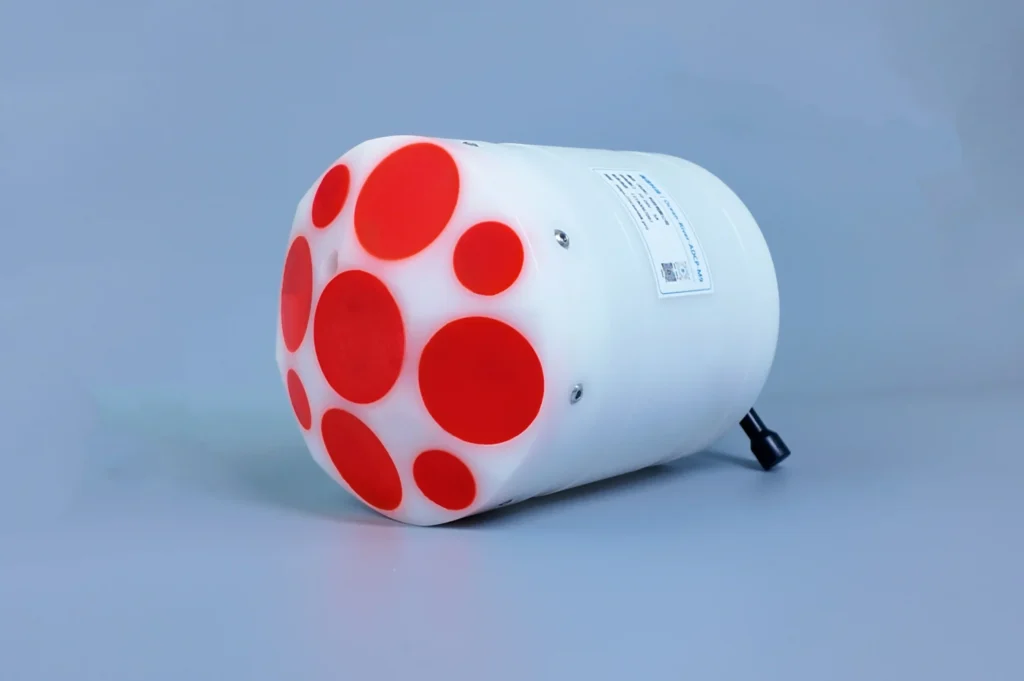
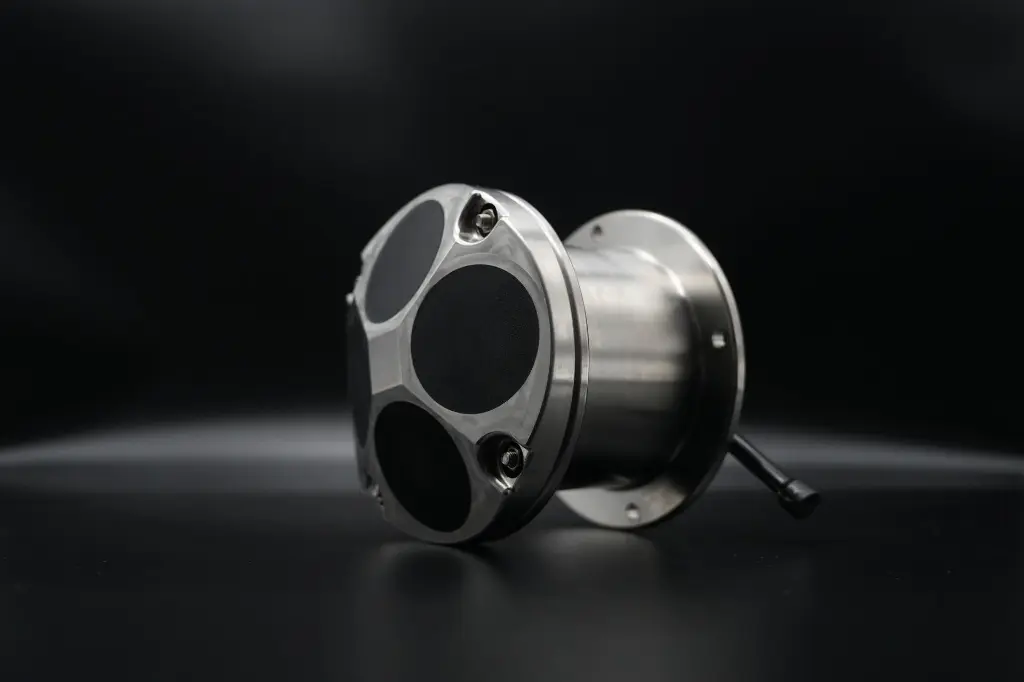
In flood control and disaster reduction missions, time determines response efficiency, and accurate data forms the foundation of scientific decision-making. Traditional single-point flow monitoring is limited and one-sided, failing to cope with complex and rapidly changing flood flow patterns. As a core perception device for smart water conservancy, Oceantek HADCP-600 (Horizontal Acoustic Doppler Current Profiler) adopts exclusive horizontal profile monitoring technology, building a precise data line of defense for river safety and flood resilience.
How does Oceantek HADCP-600 achieve full cross-section perspective monitoring amid rapidly evolving flood peaks?
During flood events, flow velocity distribution across river sections is highly uneven. Conventional single-point or vertical-line flow measurement cannot reflect the real overall discharge, often leading to delayed early warnings.
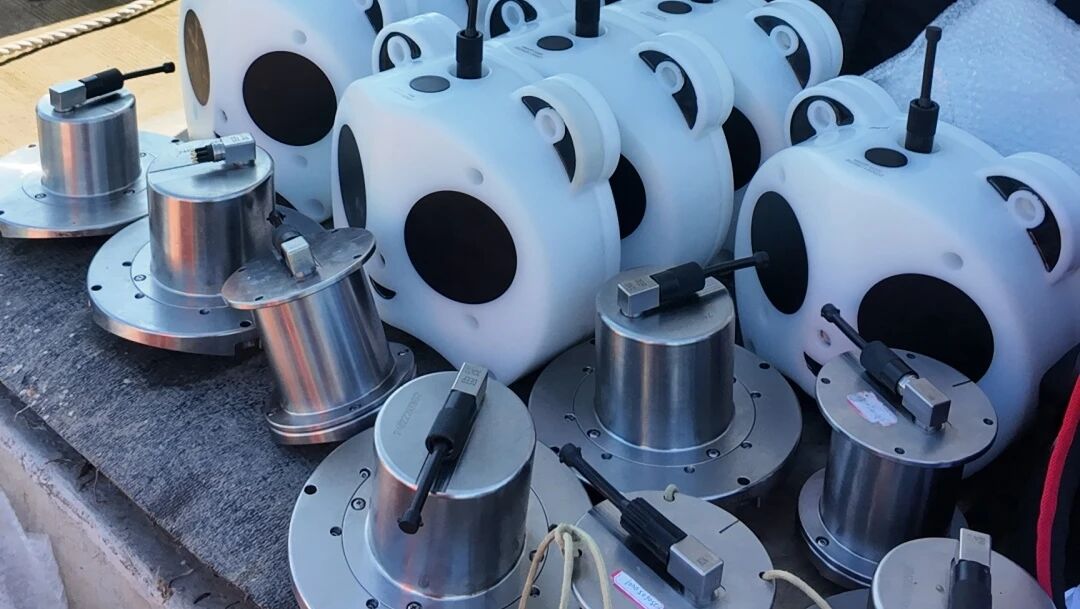
Breaking such limitations, Oceantek HADCP-600 acts as a tireless underwater monitoring sentinel. It is horizontally mounted on river banks or bridge piers, transmitting acoustic signals across the entire river channel.
Unlike traditional devices, HADCP-600 enables full cross-section profiling of the watercourse. It divides the water flow horizontally into dozens or even hundreds of independent measurement cells, accurately capturing the velocity and flow direction of each zone — from slow near-shore currents to rapid mainstream flows.
This evolutionary upgrade from single-point sampling to full-profile measurement allows the system to reconstruct complete real-time flow velocity distribution. Even under sharply rising and falling flood levels with highly turbulent flow conditions, Oceantek HADCP-600 calculates instantaneous cross-section discharge accurately via representative velocity algorithms combined with real-time water level data. It delivers full-vision data support for flood command and eliminates monitoring blind spots completely.
How does Oceantek HADCP-600 guarantee undistorted data in extreme high-sediment and low-flow environments?
Inland water environments are extremely harsh. Flood seasons are typically accompanied by high sediment concentration, massive air bubbles and floating debris, posing severe challenges to signal stability for acoustic monitoring devices. Meanwhile, capturing ultra-low flow velocity accurately during dry seasons and urban inland river monitoring remains another technical difficulty. Oceantek HADCP-600 perfectly solves these pain points through in-depth algorithm innovation.
Optimized signal processing algorithms deliver powerful noise suppression for highly turbid water. The system effectively extracts weak water echo signals from complex background noise, filtering interference caused by air bubbles, sediment and suspended solids. It maintains stable velocity detection even in heavy sediment-laden water.
For subtle low-flow conditions, it features a flow velocity resolution up to 1mm/s and measurement accuracy of ±0.3%±0.3cm/s. It sensitively captures minimal flow changes, ensuring authentic and reliable data output and providing high-quality input for hydrological modeling and forecasting systems.
How does Oceantek HADCP-600 build solid reliability for long-term unattended operation?
Flood monitoring equipment is usually deployed underwater for extended periods, exposed to high humidity, strong corrosion, continuous water impact and potential vessel collision risks. Equipment reliability directly decides the continuity of the entire monitoring network. Oceantek HADCP-600 adopts high-standard industrial hardware design to ensure stable long-term field operation.
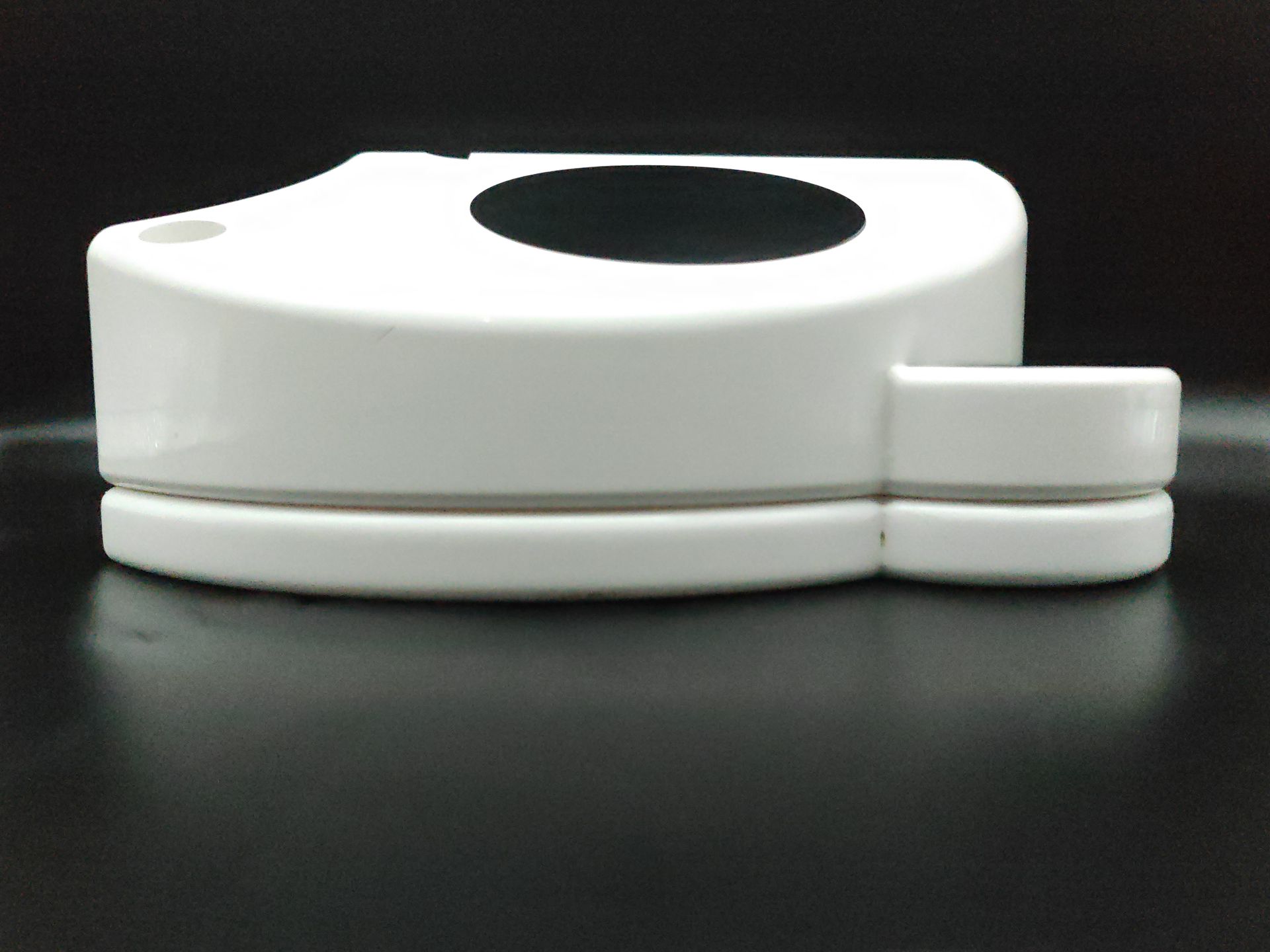
The main body is made of high-strength corrosion-resistant special engineering plastic (POM). Lightweight yet robust, it offers outstanding impact resistance and wear resistance, maintaining stable performance long-term in alternating fresh-saltwater and highly corrosive environments.
With IP68 protection grade and a compact streamlined structure, it effectively resists collision from floating debris and scouring during flood periods. Its low-power design enables continuous operation for months under unattended conditions. Equipped with intelligent sleep and self-diagnosis functions, it greatly reduces operation and maintenance costs, achieving reliable long-term deployment with stable and consistent measurement performance.
How does Oceantek convert monitoring data into practical flood prevention capabilities from data collection to intelligent decision-making?
Accurate data collection is only the first step; converting real-time data into actionable flood scheduling decisions represents the ultimate value of technical empowerment. Beyond instrument manufacturing, Oceantek Technology builds a complete closed-loop system for efficient data application.
Supporting multiple communication interfaces such as RS232 / RS422, Oceantek HADCP-600 can seamlessly connect with multi-level hydrological monitoring systems and smart water conservancy platforms. Raw data is preprocessed via edge computing, directly outputting core indicators including flow velocity, discharge and flow direction without complicated post-processing.
Once monitored values exceed predefined warning thresholds, the system automatically activates early warning alerts via SMS, platform pop-ups and other notification methods to inform management teams instantly.
Conclusion
In the future smart water conservancy ecosystem, Oceantek HADCP-600 serves not only as a data collector but also as a critical neural terminal for digital twin river basins. It continuously captures real-time hydrological dynamics of waterways, supporting the industry’s transition from passive flood response to active flood prevention and early intervention.