
About Products
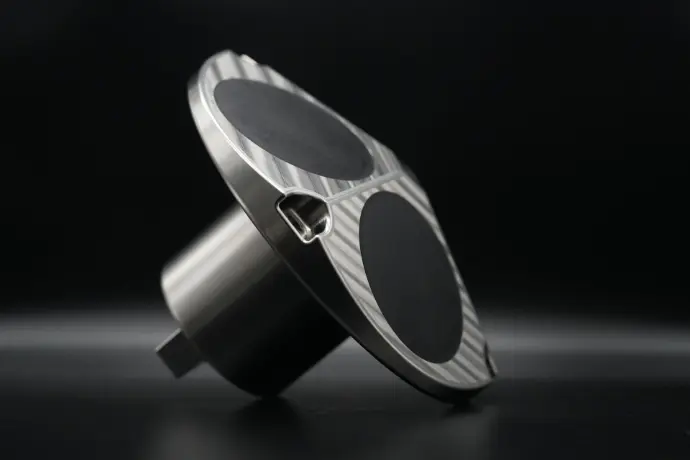
ADCP Acoustic Doppler Current Profiler Series
It is a core instrument that measures water velocity and discharge using the acoustic Doppler effect.
Featuring non-contact measurement and the ability to obtain profile velocity data, it plays an irreplaceable role in both marine and hydrological fields, serving as critical technical support for hydrological monitoring, marine surveys, engineering construction and other applications.
FAQ
1.What is ADCP?
ADCP stands for Acoustic Doppler Current Profiler. It is a high-precision instrument that non-intrusively measures water flow velocity using the acoustic Doppler effect. By transmitting ultrasonic waves into water and receiving signals reflected by suspended particles, it calculates the three-dimensional flow velocity based on the frequency shift.
2.What are the main applications of ADCP?
ADCP is widely used for discharge measurement in rivers, waterways and reservoirs; flow pattern observation at sluices and dams; velocity distribution measurement in irrigation canals; tidal current observation; waterway siltation analysis; dock scour monitoring; and ecological applications such as river habitat velocity assessment and wetland water exchange studies. It is also applied in flume experiments and turbulence research for scientific research and teaching.
3.What is the operation procedure of ADCP?
The operation of ADCP mainly includes hardware installation and software configuration. Hardware installation requires proper mounting of the ADCP with secure connection of cables and power supply. For software configuration, the correct ADCP model should be selected, and communication ports, baud rate and other parameters set properly. Before each measurement, the ADCP status must be checked to ensure normal operation.
4.What precautions should be taken during ADCP installation?
Avoid installation near strong reflective surfaces. The transducer should be kept at least 0.1–0.3 m away from the riverbed, hull or pipe wall to prevent sidelobe interference. Use tripods, weights or special brackets to ensure stable mounting and reduce vibration. For vessel-mounted ADCPs, install them on a flat area of the hull, far away from propellers.
5.What assumptions is ADCP measurement based on?
- The velocity of suspended particles (scatterers) in water is the same as the water flow velocity;
- Flow velocity is uniform and horizontally constant at a given depth;
- Water salinity is constant.
6.What may cause data loss in ADCP measurements?
Possible causes include:
- The ADCP stops acoustic transmission — check cables, connectors, communication and power supply of the deck unit;
- GPS input failure — inspect serial input and communication ports;
- Gyro input failure — similarly check serial input and communication ports.