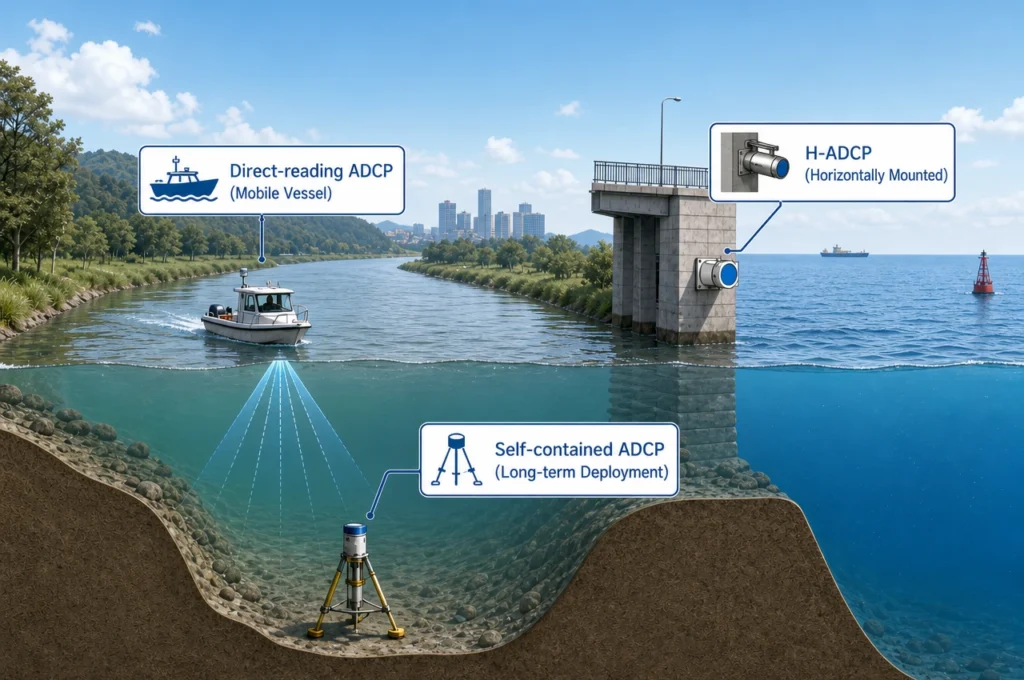
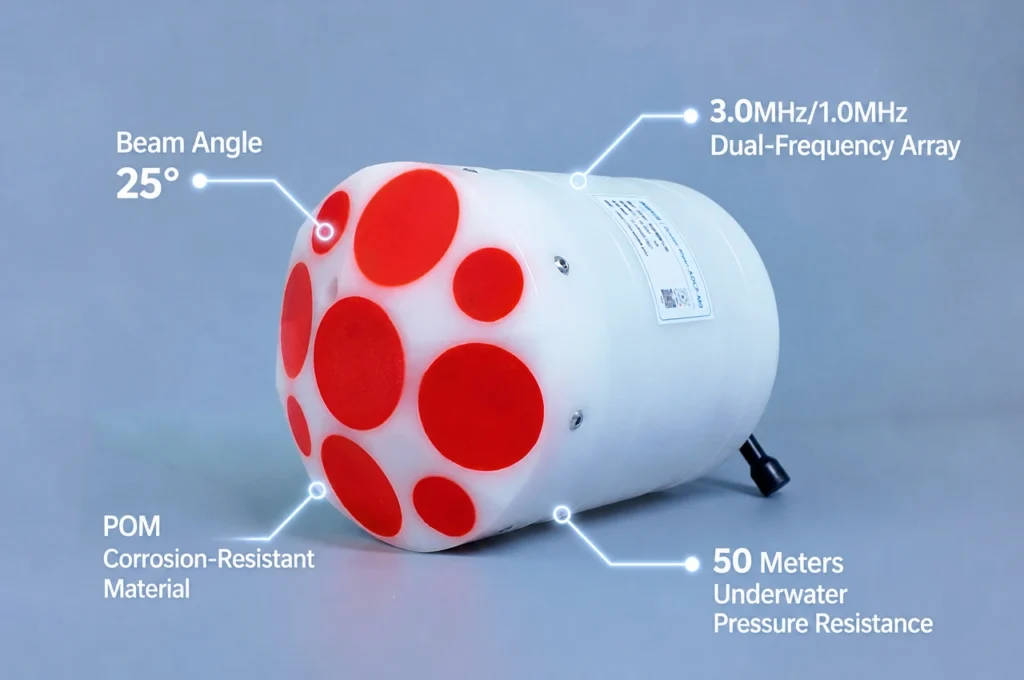
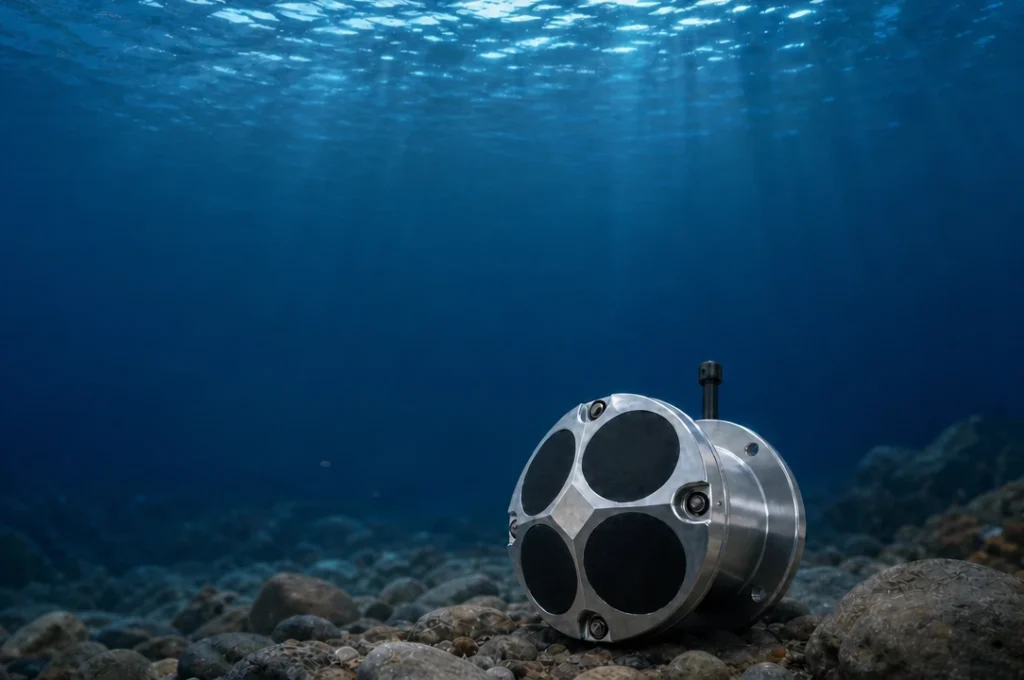
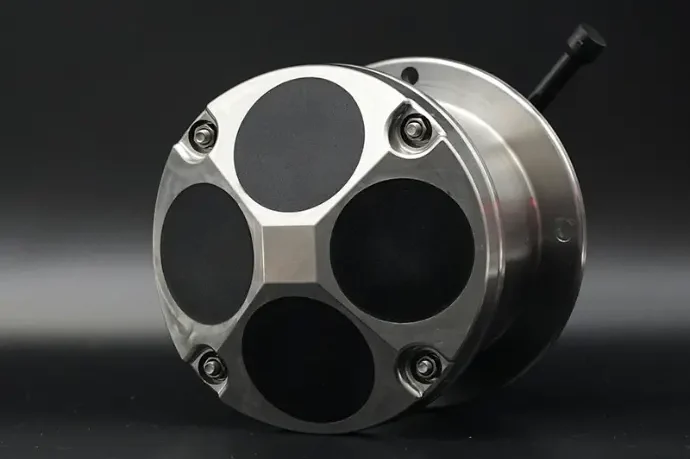
Many field engineers struggle to pick the right Doppler current profiler for varied water environments. Different water depth, flow rate and site conditions require matched equipment to ensure accurate flow velocity measurement. Oceantek provides complete direct reading ADCP solutions to cover shallow rivers, coastal zones and deep water areas, meeting diverse hydrological monitoring demands across projects.
1. Overview of Oceantek Direct Reading ADCP Product Line
If you want to know the full range of real-time monitoring devices, check our direct reading ADCP collection. This product family adopts mature Doppler technology to deliver instant flow data. All models feature simple operation, fast data output and strong on-site adaptability. They work stably in conventional water bodies and complex turbid waters, becoming mainstream tools for daily hydrological surveys and routine flow tests.
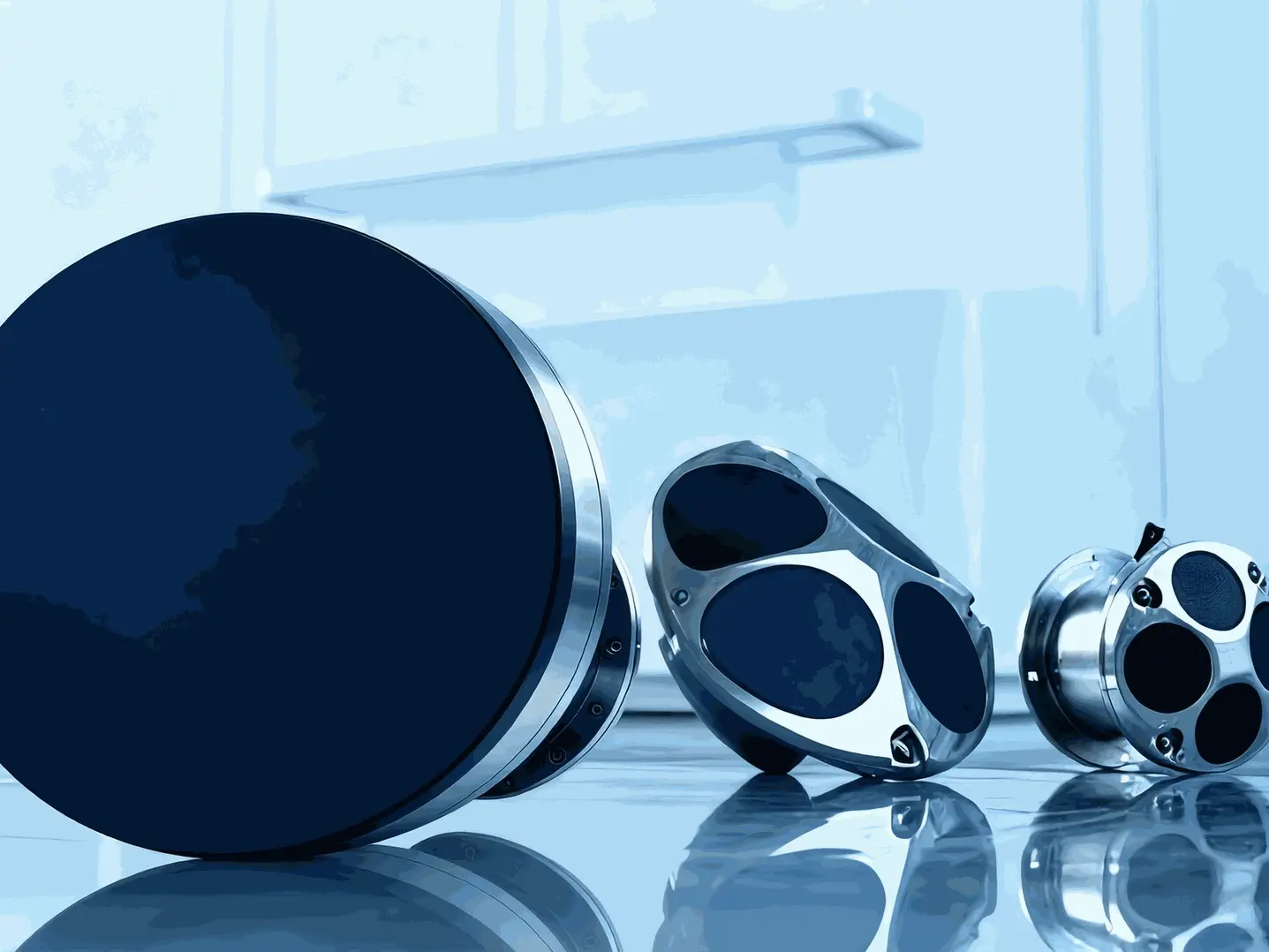
2. Introduction to Each Direct Reading ADCP Model
2.1 ADCP-600-DR-FA4 (600K Direct Reading ADCP)
The 600K direct reading ADCP balances detection range and measurement precision perfectly. It is the most widely used model for conventional hydrological monitoring. This unit performs well in medium-depth rivers, reservoirs and nearshore waters. It captures real-time flow velocity and flow direction data steadily, even under normal sediment conditions. Field teams prefer it for regular section testing and long-term fixed-point observation tasks.
2.2 ADCP-300-DR-FA4 (300K Direct Reading ADCP)
Designed for longer detection distance, the 300K direct reading ADCP extends effective profiling depth compared with higher frequency models. It suits large rivers, wide estuaries and offshore shallow sea areas. Relying on optimized Doppler signal processing, it maintains reliable data quality in relatively deep water layers. This model is a top choice for basin-scale flow surveys and large water area daily monitoring projects.
2.3 ADCP-75-DR-PA4 (75K Direct Reading ADCP)
The 75K direct reading ADCP features ultra-low frequency design for deep-water operation. It focuses on deep sea, large lakes and extra-deep channel monitoring scenarios. Its powerful acoustic signal penetrates thick water layers and resists signal attenuation effectively. Professional marine research institutes and large water conservancy projects often select this model for deep-water flow velocity measurement and long-term underwater observation.
2.4 River-ADCP-M9 (River Type M9 ADCP)
Built specifically for inland water environments, the River ADCP M9 targets small and medium rivers, urban watercourses and flood control monitoring sites. It adopts compact structure and anti-turbulence design to adapt to rapid currents and shallow water conditions. This river-specialized profiler simplifies field deployment and ensures stable data output during flood seasons. It has become a standard device for grassroots hydrological stations and river ecological monitoring work.
3. Core Differences in Application Scenarios
Each direct reading ADCP model has its exclusive positioning based on frequency and hardware design. High-frequency 600K units excel at medium shallow water with high precision requirements. 300K versions fit medium to large water areas for extended detection range. The 75K model takes charge of deep-sea and ultra-deep channel tasks. Meanwhile, River M9 focuses on inland river systems and flood early warning. Users can select corresponding devices according to actual water depth, site type and monitoring objectives.
4. Get Detailed Specifications & Professional Support
To help you select the most suitable Doppler current profiler for your project, we prepare detailed parameter sheets and application guides for all models. You can download the full PDF document for reference, or contact our technical team for customized quotes and one-on-one solution consultation.
For more professional knowledge about flow monitoring equipment and systematic solutions, visit our main product pillar page to explore our complete marine and hydrological monitoring product ecosystem.