As water conservancy, water affairs and marine environmental management move toward intelligence, long-term stable operation maintenance and emergency response have become two core pillars of the hydrological monitoring system. Traditional monitoring models are often constrained by fragmented devices, data silos and delayed response, failing to meet dual demands of daily operational assurance and emergency decision-making.
With deep expertise in underwater acoustic technology, Oceantek centers on its full-range ADCP product lineup, integrating fixed station monitoring, mobile vessel cruising and rapid deployment modes. It connects data links across shore, vessel, aerial and underwater dimensions, building an integrated hydrological monitoring network featured with full-scenario coverage, multi-data fusion and full-process intelligence, delivering solid technical support for smart water conservancy and emergency disaster mitigation.
1. Full Product Portfolio: Cover Global Scenarios to Consolidate Monitoring Foundation
The premise of an integrated monitoring network lies in seamless coverage from deep sea to shallow water, major rivers to small and medium streams, and long-term fixed monitoring to emergency rapid measurement. Adopting scenario-based customized design rather than one-size-fits-all solutions, Oceantek develops a full-spectrum ADCP portfolio with diversified frequencies and configurations. Each model precisely matches targeted application scenarios, jointly forming the neural terminals of the entire monitoring network.
River Shallow Water Sentinel: River-ADCP-M9
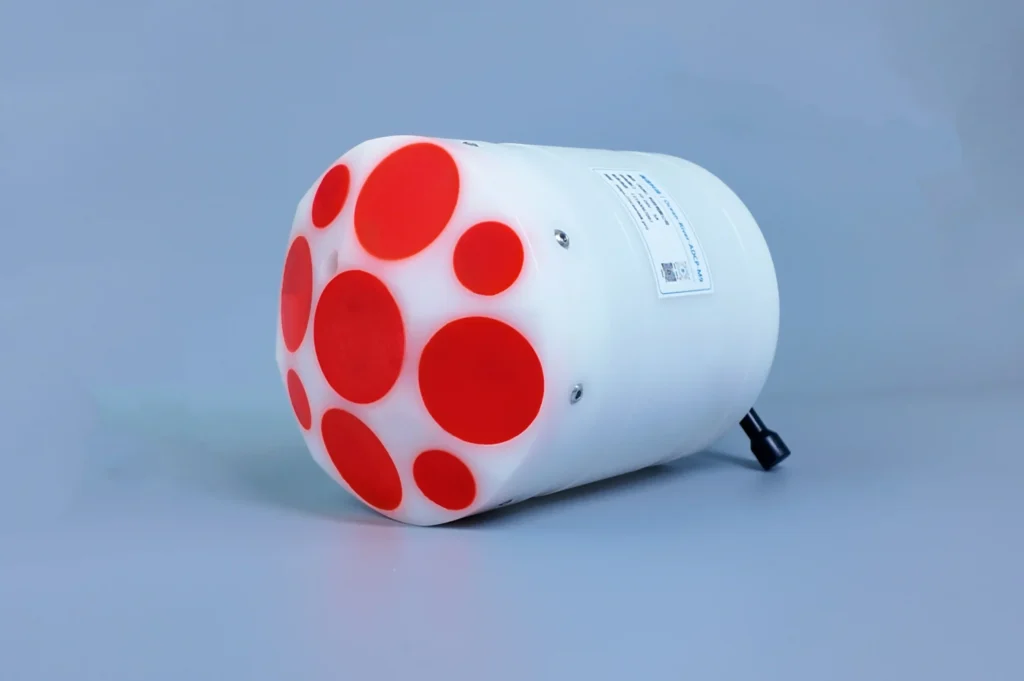
Customized specifically for shallow-water conditions of small and medium rivers with water depth 0.1–0.5m during dry seasons. Adopting self-developed nine-beam architecture, it covers water depth from 0.06m to 40m. Weighing only 1.5kg, it supports single-person deployment within 5 minutes. It maintains over 95% valid data rate under high sediment conditions, ideal for ecological flow monitoring and river flood early warning, serving as a lightweight rapid-response unit for emergency monitoring.
General Shallow Water Main Unit: ADCP-600-DR-FA4
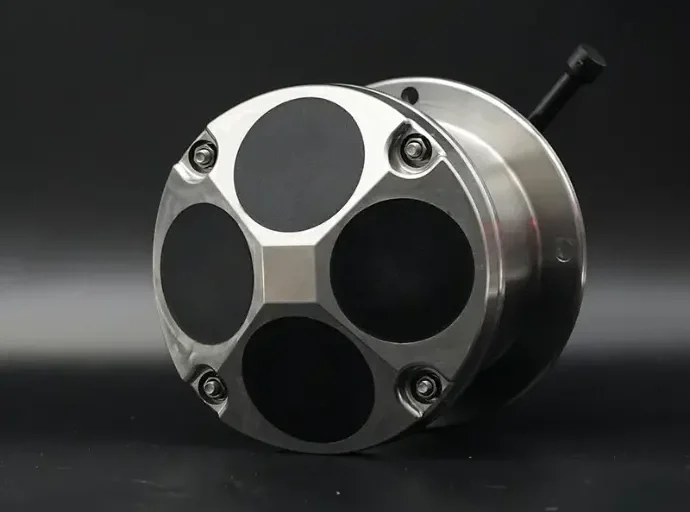
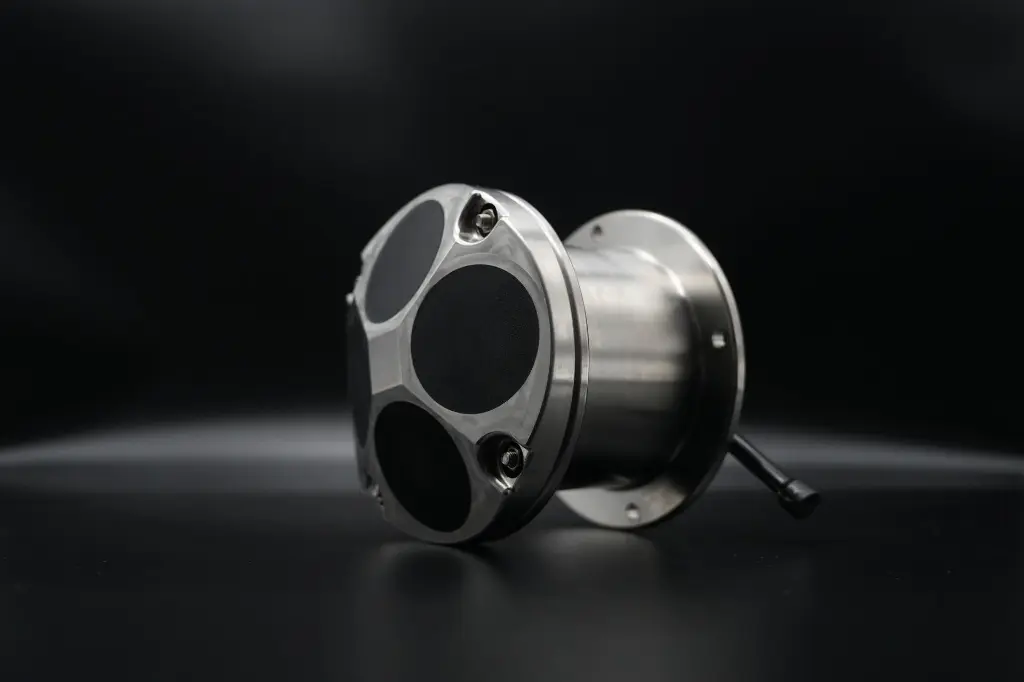
Equipped with 600kHz high-frequency four-beam design, bottom tracking depth ranges from 0.8m to 120m, with flow measurement accuracy of ±0.3%±3mm/s. The titanium alloy unit weighs 3.5kg, supporting vessel-mounted, handheld and bottom-resting deployment. Suitable for fixed-section and cruising monitoring in coastal zones, harbors and irrigation areas, it acts as a stable fixed monitoring node for intelligent operation.
Medium & Deep Water All-Rounder: ADCP-300-DR-FA4
300kHz intermediate frequency model with profile range up to 120m / 160m (broadband / narrowband). Optimized algorithms stably capture weak wind-driven current in lakes. Perfect for long-term fixed monitoring and dynamic surveying in large lakes, estuaries and medium-sized reservoirs, filling data gaps in medium-deep water scenarios.
Deep Sea Flagship Model: ADCP-75-DR-PA4
75kHz low-frequency design with bottom tracking depth up to 1000m and pressure resistance rating of 6000m. Adaptable to deep-sea scientific research, subsea pipeline inspection and offshore wind farm operation. It operates stably in long-term deep-sea high-pressure environments, supporting marine resource exploration and environmental monitoring.
Horizontal Monitoring Specialist: H-ADCP-600
Horizontally installed on bridge piers or bank walls, transmitting acoustic signals across river channels. It divides water flow into dozens of refined measurement units and reconstructs full cross-section velocity distribution in real time. Enabling 24/7 unattended monitoring at sluice gates, pump stations and drainage channels, it supports urban waterlogging early warning and irrigation water metering, functioning as a core hub of intelligent operation networks.
2. Emergency Response: Rapid Deployment & Real-Time Data Transmission to Complete Emergency Monitoring
Emergency monitoring acts as the task force of the integrated network, requiring fast arrival, quick setup, instant data output and real-time decision support. Oceantek’s full-range ADCP features lightweight, portable and rapid-deployment design for emergency scenarios, establishing a response system with hour-level deployment, minute-level data output and second-level signal transmission. During floods, dam breaks and water pollution incidents, it quickly fills monitoring blind spots and delivers real-time data for emergency command.
2.1 Lightweight Portable Design for Single-Person Fast Deployment
Core emergency models including River-ADCP-M9 and ADCP-600-DR-FA4 weigh only 1.5–3.5kg with compact size, easy to carry in portable cases. No complex calibration is required after unpacking, and field deployment can be finished within 5 minutes. Compatible with hiking, boat delivery and UAV dropping, it can be rapidly deployed to emergency sites.
2.2 Multi-Mode Data Transmission Ensures Uninterrupted Real-Time Feedback
Emergency scenarios often face unstable communication conditions. Oceantek ADCP supports multi-channel data transmission and automatically switches to the optimal link. For on-site emergency missions, wired direct connection with laptops enables real-time viewing of velocity profile data, ensuring continuous and uninterrupted emergency monitoring.
2.3 Full-Scenario Emergency Adaptation Covers All Sudden Operating Conditions
- Flood Prevention & Control: River-ADCP-M9 is rapidly deployed at small and medium river sections; H-ADCP-600 monitors flood peak discharge of major waterways in real time, accurately capturing flood fluctuation and supporting scheduling and early warning.
- Water Pollution Traceability: ADCP-600-DR-FA4 mounted on emergency monitoring vessels tracks pollution diffusion paths via cruising measurement, correlating flow velocity and turbidity to support pollution disposal.
- Engineering Emergency Rescue: ADCP-300-DR-FA4 conducts real-time monitoring at reservoirs and dams, capturing flow regime changes and providing early warning of dam breach risks to ensure personnel safety.
3. Integrated Fusion: Data Interconnection & Collaborative Linkage Build Global Unified Monitoring Network
Through unified data protocols, standardized interfaces and platform fusion, Oceantek breaks data barriers of full-range ADCP products. It achieves data interconnection and collaborative linkage among shore-based fixed monitoring, vessel-mounted cruising survey, emergency rapid deployment and deep-sea long-term observation, forming an integrated hydrological monitoring system with sky-sea-land-water coordination and seamless daily-emergency switching.
Data Fusion & Sharing
All device data is centrally uploaded to the Oceantek intelligent hydrological platform and stored in standardized formats. It supports seamless docking with global water conservancy, environmental protection and emergency management platforms, eliminating data silos and realizing one-time collection and multi-department shared application.
Scenario Collaborative Linkage
Shore-based H-ADCP-600 monitors real-time discharge of major rivers and triggers early warnings. Vessel-mounted ADCP-300-DR-FA4 conducts cruising verification immediately, while emergency River-ADCP-M9 supplements monitoring at tributary sections. Multi-device synergy fully captures flood evolution and supports scientific decision-making.
Seamless Switch Between Daily Operation & Emergency Mode
In routine periods, all ADCP models perform standardized monitoring and intelligent maintenance. Once emergencies occur, lightweight devices can be rapidly allocated to supplement monitoring blind spots, achieving seamless transition between daily stable operation and rapid emergency response, maximizing the overall value of the monitoring network.
Conclusion
From shallow coastal waters to deep-sea zones, from long-term fixed observation to emergency rapid survey, Oceantek full-range ADCP solves traditional monitoring pain points of fragmentation, low efficiency and delayed response through full-scenario coverage, intelligent operation, fast emergency capability and integrated data fusion. It builds a holistic hydrological monitoring network with blind-spot-free coverage, full-cycle stable operation and full-process rapid response.
Amid the global trend of deep integration between smart water conservancy and emergency disaster mitigation, Oceantek will continuously iterate ADCP technologies and product performance, optimize intelligent operation and emergency response capabilities. With comprehensive integrated monitoring solutions, it promotes the upgrading of global hydrological monitoring systems toward intelligence, high efficiency and safety, and consolidates technical foundations for river basin stability and global water security.