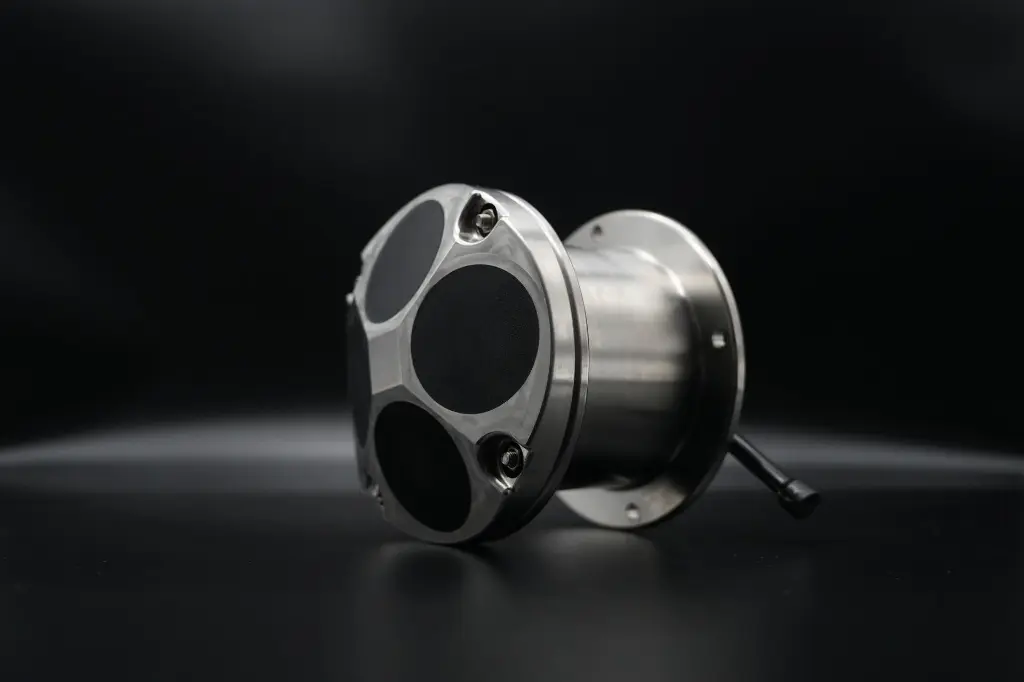
Water connects oceans, rivers and lakes, serving as the core carrier for both hydrological monitoring and marine exploration. From ocean current tracking at depths of thousands of meters to cross-section mapping in shallow waters less than one meter deep, different water environments place vastly different requirements on monitoring equipment in terms of pressure resistance, measurement accuracy and scenario adaptability.
For a long time, the industry has faced prominent pain points: inaccurate measurement in shallow water and undetectable flow in deep water, making cross-scenario full coverage monitoring a global challenge. With more than a decade of in-depth research in underwater acoustic technology, Oceantek has built a complete ADCP product matrix through full-band technical layout, scenario-based product design and self-developed algorithm breakthroughs.
Relying on core models including 75K, 300K, 600K ADCP and the newly launched River-ADCP-M9, the company realizes full monitoring coverage from deep ocean to inland shallow water, laying a solid domestic technical foundation for river safety protection and marine exploration.
I. Homologous Technology: Deep-Sea Core Capability Underpins Full-Scenario Coverage
Oceantek’s path to full coverage starts with independent control of core marine monitoring technologies. Marine monitoring operates under extreme conditions such as high water pressure, strong turbulence and long-distance signal transmission, demanding equipment with ultimate stability, anti-interference performance and high precision.
The core R&D team has long focused on acoustic transducer design, signal processing algorithms and high-pressure sealing technology, achieving full-chain independent R&D and breakthroughs. It completely gets rid of reliance on overseas core technologies and builds a solid foundation for cross-scenario adaptive application.
Deep-sea scenarios prioritize strong signal penetration and long-term stable operation, while shallow water scenarios focus on high precision and minimal measurement blind zones. Although their requirements seem different, shallow water application is essentially a lightweight scenario extension of mature deep-sea technology.
The high-pressure stability proven in deep sea is directly transformed into impact resistance during river flood seasons; high-precision current measurement algorithms for marine environments are perfectly adapted to slow-flow and high-sediment shallow water working conditions. Adopting the technical strategy of one frequency, one solution and customized scenario design, Oceantek establishes a full-band product system covering 75kHz, 300kHz, 600kHz and multi-frequency fusion. It enables deep-sea technology to be downgraded and adapted for shallow water needs, realizing full-coverage layout with homologous core technology and differentiated scenario performance.
II. Three-Dimensional Layout: Full Product Line Precisely Covers Rivers, Lakes and Oceans
Oceantek ADCP portfolio adopts a three-dimensional layout of deep sea — coastal shallow sea — inland river. Each model is precisely tailored to the water depth, flow pattern and accuracy requirements of specific scenarios, forming a seamless global monitoring network.
Three flagship products build the core pillar of full coverage: River-ADCP-M9, ADCP-600-DR-FA4 and ADCP-75-DR-PA4.
2.1 Deep-Sea Flagship: ADCP-75-DR-PA4
As the deep-water flagship of the product matrix, ADCP-75-DR-PA4 is designed for deep sea, offshore areas and large water conservancy hubs. Its 75kHz low-frequency acoustic architecture delivers superior signal penetration, with underwater profile range reaching 550m (broadband) / 650m (narrowband), easily capturing weak ocean current signals at hundreds of meters depth.
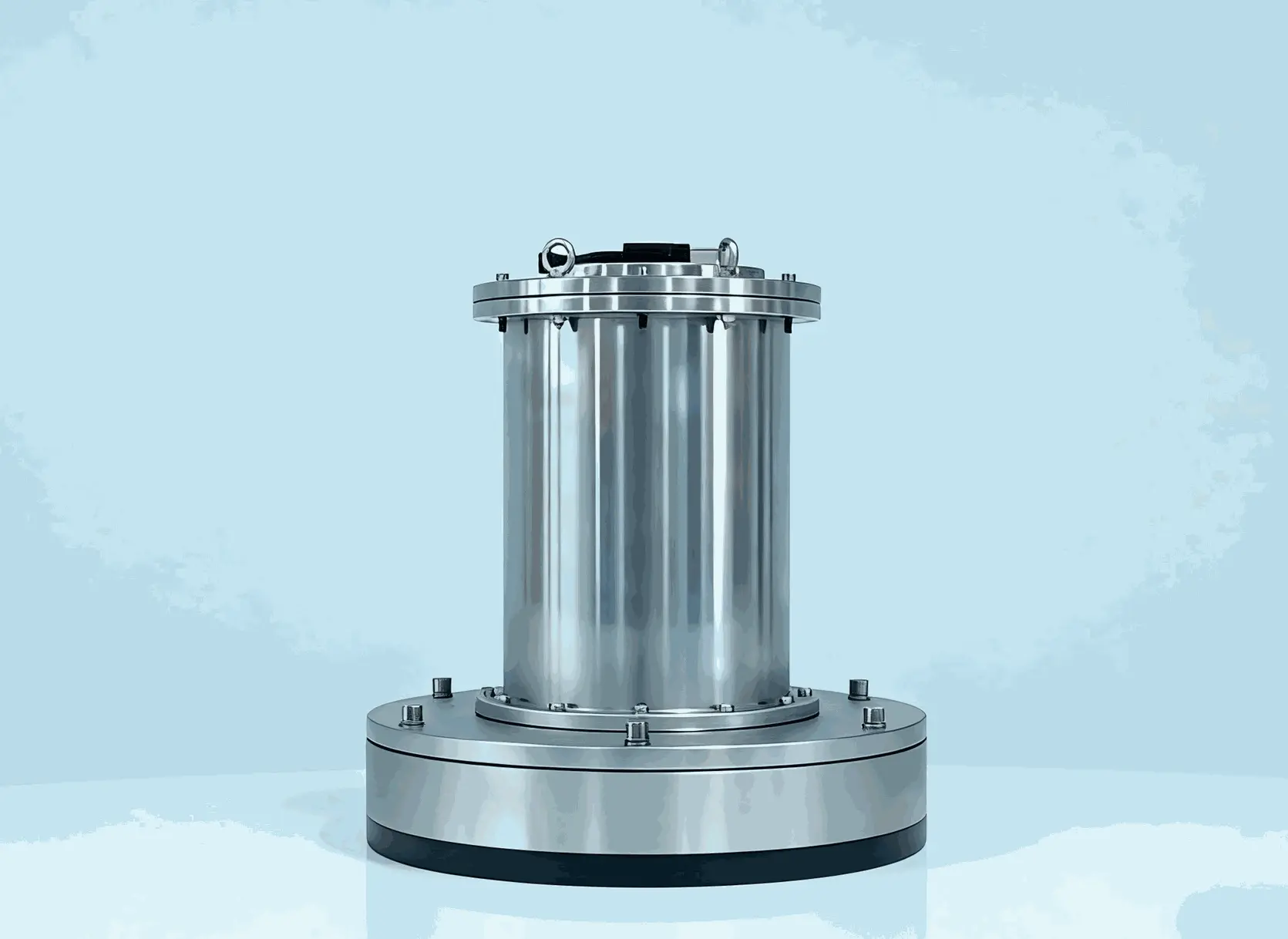
Figure 2.1 ADCP-75-DR-PA4
Equipped with a titanium alloy housing to withstand extreme water pressure, it supports long-term stable operation in 1000-meter-level deep sea with continuous working duration of no less than 100 days and current measurement accuracy of ±1.0%±5mm/s. It acts as core equipment for marine scientific research, deep-sea engineering and large hydraulic hub monitoring, filling the technical gap of domestic high-performance deep-sea ADCP.
2.2 Shallow Water Benchmark: ADCP-600-DR-FA4
Transitioning from deep sea to inland waters, shallow water monitoring is the most frequent yet challenging scenario, troubled by signal attenuation, sidelobe interference and large near-bottom blind zones that easily cause data distortion.
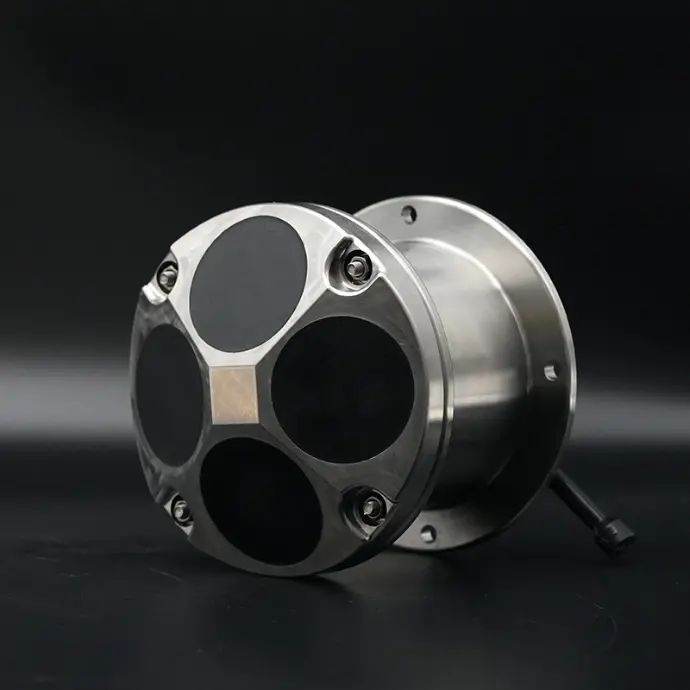
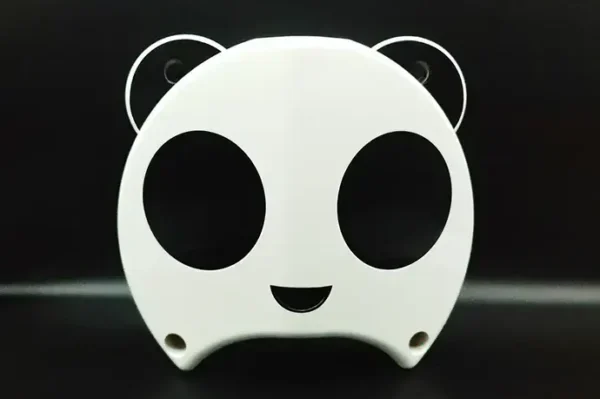
Figure 2.2 ADCP-600-DR-FA4
As the core shallow water model, ADCP-600-DR-FA4 adopts a 600kHz high-frequency 4-beam Janus structure with a 20° beam angle and only 3.5° beam width, greatly reducing measurement blind zones and suppressing sidelobe interference. It achieves current measurement accuracy of ±0.3%±3mm/s and flow velocity resolution up to 1mm/s, enabling stable bottom tracking in extremely shallow water of only 0.8m.
Supporting 1–255 adjustable profile layers with a minimum layer thickness of 0.5m, it meets refined profiling demands for rivers, reservoirs and urban inland waters, fundamentally solving the industry bottleneck of inaccurate and incomplete shallow water measurement.
2.3 River Monitoring All-Rounder: River-ADCP-M9
As the newly launched flagship river-type ADCP, River-ADCP-M9 focuses on voyage-based full cross-section monitoring for small and medium rivers with shallow and slow flow, serving as the key link connecting marine and inland shallow water monitoring.
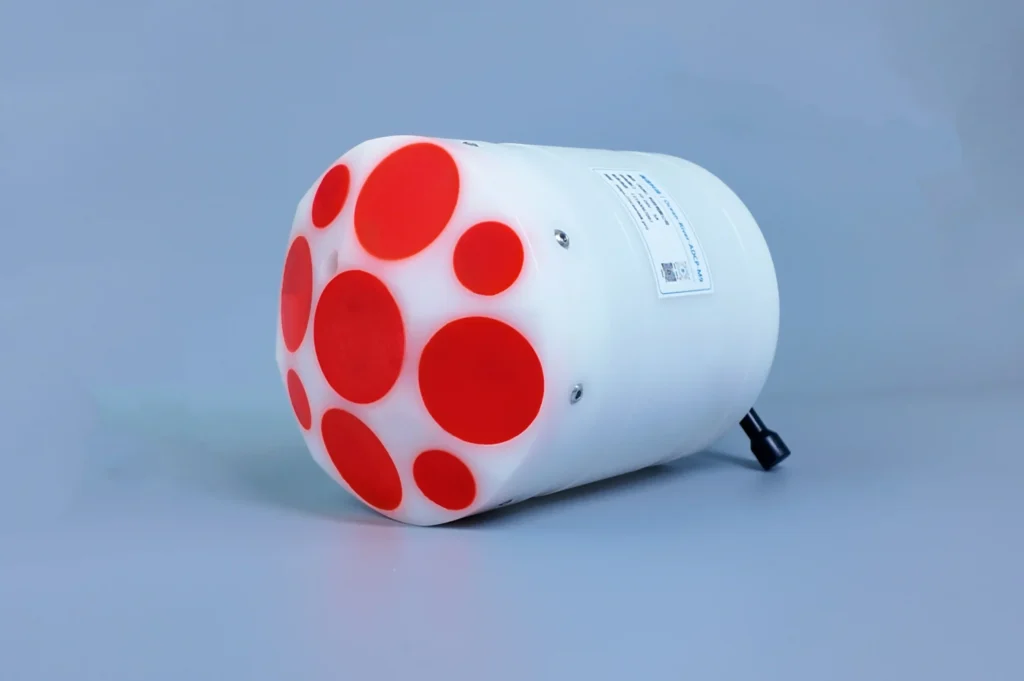
Figure 2.3 River-ADCP-M9
It adopts nine-beam multi-frequency fusion technology, covering a water depth range of 0.06–40m, balancing high precision in shallow water and strong penetration in medium and deep water. The minimum layer thickness is only 0.02m, enabling fine capture of subtle changes in vertical flow velocity profiles in rivers.
The voyage-type design adapts to ship-based cross-section operation. A single voyage can obtain full-section flow velocity distribution and discharge data. With outstanding performance and compact structure, it provides efficient solutions for flood census, ecological flow monitoring and irrigation district water metering of small and medium rivers, completing the last mile coverage from deep sea to inland tributaries.
III. Algorithm Empowerment: Self-Developed Core Technology Solves Cross-Scenario Adaptation Challenges
Complete hardware coverage lays the foundation, while adaptive algorithm capability is the key. Water flow patterns vary greatly across different environments: stable and slow current in deep sea, rapid flow and high sediment concentration in coastal waters, and variable flow patterns disturbed by sediment and bubbles in shallow river areas.
Oceantek independently develops dynamic bottom tracking compensation algorithm, intelligent clutter filtering algorithm and real-time attitude compensation technology. The equipment automatically adapts operational parameters for different scenarios to ensure stable and reliable monitoring data.
For high-sediment rivers and coastal zones, the algorithm automatically filters clutter interference from sediment and bubbles to avoid data distortion. For weak ocean currents in deep sea, dynamic bottom tracking technology accurately identifies weak flow velocity signals and improves data integrity. For variable shallow water flow, real-time attitude compensation corrects measurement errors caused by hull shaking and guarantees profile data accuracy.
This self-developed algorithm system allows ADCP devices to adapt to complex working conditions from deep sea to shallow water without hardware replacement, truly achieving one set of core technology applicable to all rivers, lakes and oceans.
IV. Global Application Value: Full-Coverage Monitoring Empowers Water Security and Water Economy
Full-scenario coverage from ocean to shallow water monitoring not only reflects technical strength, but also undertakes Ocean tek’s responsibility to serve national water security strategy.
In marine fields, ADCP-75-DR-PA4 supports deep-sea resource exploration, marine environmental monitoring and coastal defense security. In offshore and lake scenarios, ADCP-600-DR-FA4 provides reliable support for waterway monitoring, lake ecological protection and reservoir regulation. In river basins, River-ADCP-M9 serves flood control, drought relief, water resource management and ecological civilization construction of small and medium rivers.
From thousands of meters of deep sea to shallow water less than one meter deep, from national marine scientific research to local hydrological monitoring, Oceantek ADCP delivers comprehensive coverage capability. It provides solid independent technical support for global river and water ecological safety, and promotes the intelligent, precise and fully covered development of global hydrological and marine monitoring industry.