North Sea Offshore Wind (Hywind)
Offshore Scotland / Dogger Bank
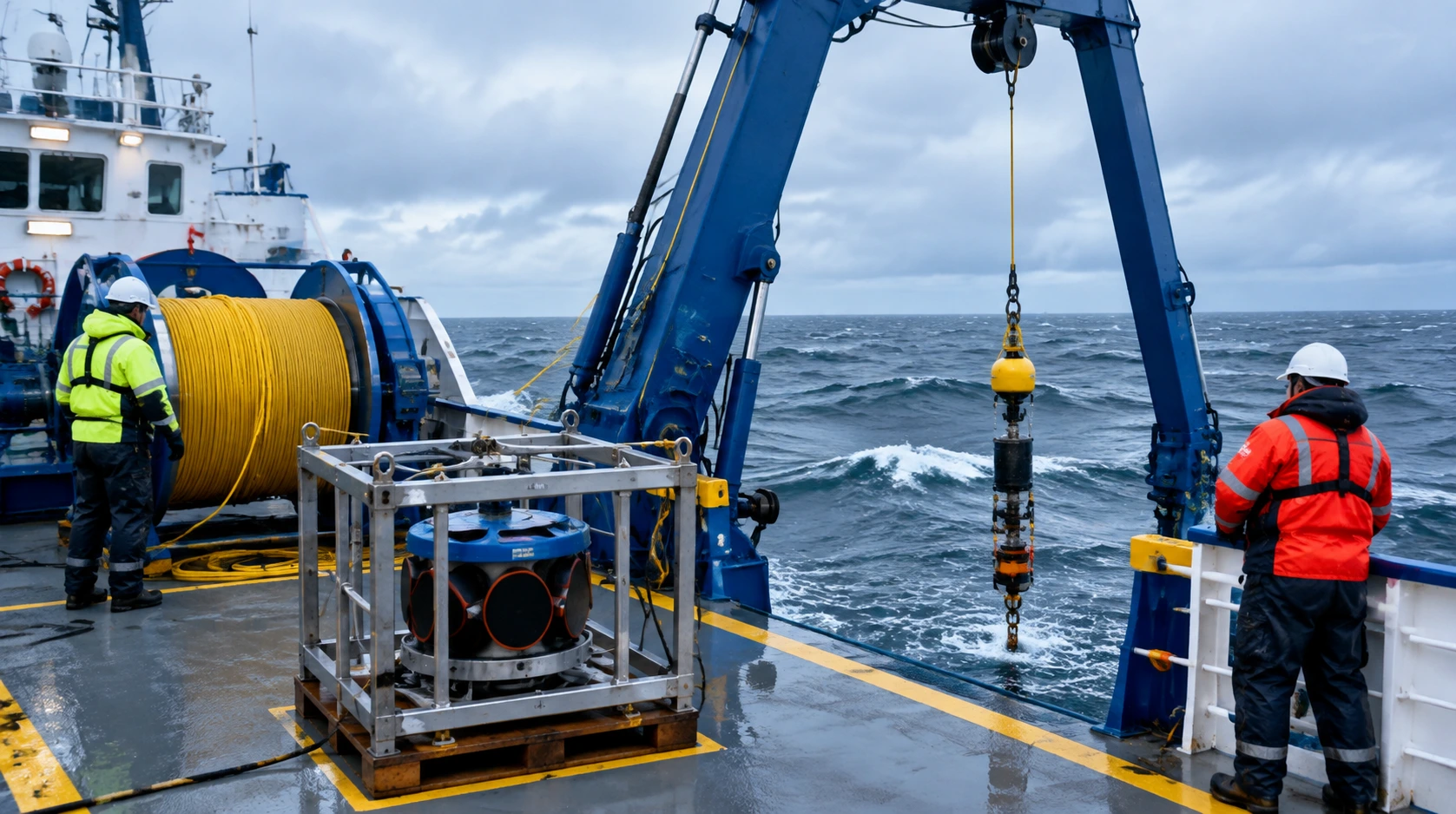
The North Sea offshore wind build-out created the modern metocean campaign — and with it, a standardized ADCP measurement recipe. The Hywind campaign set the template; Dogger Bank scaled it. This is what a wind-farm current program actually looks like.
01 THE SETTING
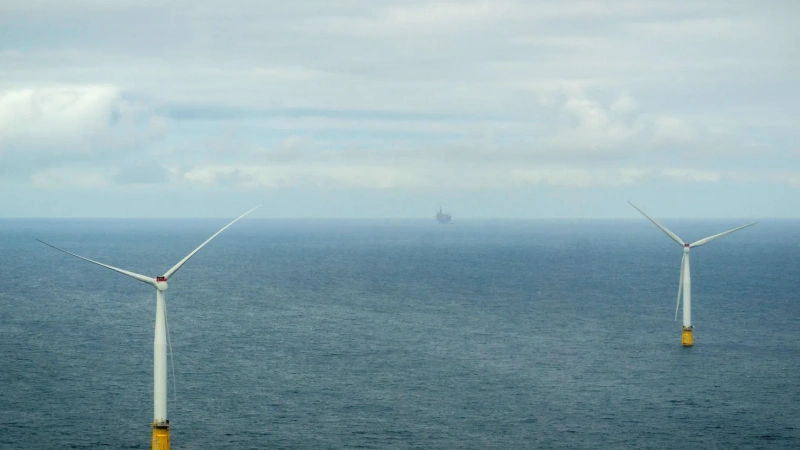
The North Sea's wind-energy zones sit in water 20–200 m deep where tides, storm surges and wind-driven flows combine into a current environment that touches every phase of a project. Currents load foundations and cables during construction; they scour seabeds and re-suspend sediment during operation; they set the windows when installation vessels can work at all. For floating projects like Hywind — the first commercial floating wind farm — the current profile is a first-order input to the mooring and dynamic-cable design itself.
Metocean campaigns are the industry's answer: dedicated measurement programs, run one to two years ahead of final design, that pin down the site's wave, wind and current climate with enough statistical confidence to justify hundreds of millions in capex.
02 WHAT THE DATA SHOW
The Hywind campaign's published configuration is elegantly minimal — and has been copied across the industry since:
- An upward-looking 300 kHz ADCP on the seabed mooring at 110 m, profiling the full water column from a single instrument;
- A single-point current meter near the seabed, capturing boundary-layer flow and providing redundancy at the depth where scour and cable-burial design concentrate.
At Dogger Bank — the world's largest planned wind-farm zone — the pattern scaled across a lease area: field measurement (bathymetry, waverider buoys, current baselines) combined with a fully calibrated MIKE3-FM hydrodynamic model covering the North Sea and refined around the zone. The pattern is measurement → calibration → model coverage: a handful of well-placed instrument positions ground a model that covers hundreds of square kilometers.
03 WHERE CURRENTS THREATEN OPERATIONS
Design criteria
Foundation and transition-piece loading, monopile and jacket fatigue, dynamic-cable and mooring design for floating projects — all keyed to measured current climatology.
Construction windows
Installation vessels' workability limits are current-dependent, especially for cable laying and trenching where positioning tolerance is tight.
Scour & sediment
Scour protection sizing and environmental sediment-dispersal assessments run on measured current data — under-sizing protection costs millions later.
Marine-mammal impact
Piling and construction-noise assessment is a legal EIA requirement, and it uses the same current data — the same deployment can host acoustic monitoring alongside the profiler.
04 MEASUREMENT STRATEGY BY LAYER
| Layer | Requirement | Approach |
|---|---|---|
| Full column (110 m) | Current profile for design and operations | Upward-looking 300 kHz ADCP on a seabed mooring — the Hywind standard geometry |
| Near-bed | Boundary-layer flow, scour and cable depths | Single-point current meter near the seabed, co-deployed |
| Real-time surface | Campaign risk visibility, operations | Compact profiler in a metocean buoy well with telemetry |
| Acoustics | Marine-mammal monitoring for EIA | Self-contained hydrophone on the same mooring |
05 THE OCEANTEK SOLUTION
The Hywind pairing, buoy telemetry and co-deployed acoustics — everything a wind-farm campaign needs on one mooring plan:
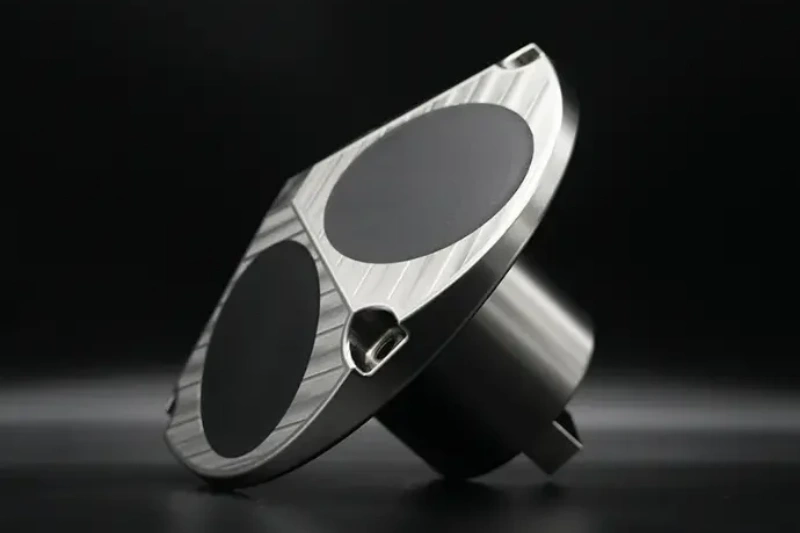
Ocean-ADCP-300-FA4
Ocean ADCP · 300 kHz- 160 m profiling range
- 1–8 m cells
- ≤10 W · self-contained ≥100 days
- ±20 m/s velocity range
Role: the Hywind-standard seabed profiler — one instrument covers 50–200 m sites, with external packs for longer campaigns.
View product →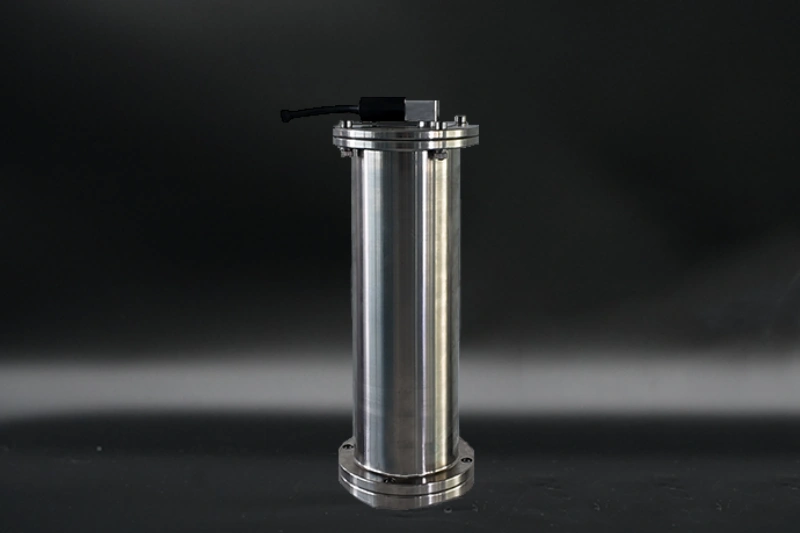
OCEAN-SPCM
Single-Point Current Meter- Single-point current records
- Low-power long deployments
- Array-friendly
Role: the second half of the Hywind pairing — boundary-layer flow and redundancy at scour and cable depths.
View product →
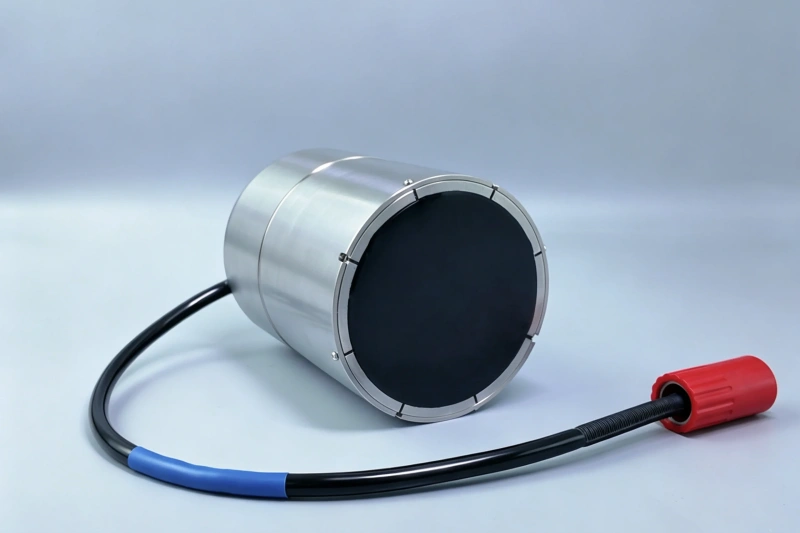
Ocean-ADCP-600-PA5
Ocean ADCP · 600 kHz phased array- 70 m profiling range
- 1.8 kg · ≤5 W
- ±20 m/s velocity range
- Titanium to 6000 m
Role: buoy-well telemetry for daily campaign risk visibility in high-flow environments.
View product →
For the acoustic leg of the EIA, the H3-OCEAN-6000 self-contained hydrophone co-deploys on the same mooring — one vessel visit serves the engineering and environmental workstreams together.
06 FIELD NOTES
- One mooring, multiple missions — combining the current pair with wave, wind and acoustic sensors on a single deployment cuts vessel days, the dominant campaign cost.
- Watch the biofouling budget — North Sea sites foul rapidly; endurance claims must survive 6–12 month soak times. Titanium housings and long-life batteries are the difference between one campaign and two.
- Design moorings for fishing gear — wind zones overlap fishing grounds; frame profiles and acoustic releases must be chosen for recovery under snag risk.
- Feed the model as you measure — the Dogger Bank pattern means every instrument position is chosen for model leverage, not convenience.
🎯 Planning an Offshore Wind Metocean Campaign?
The Hywind pairing, buoy telemetry and co-deployed acoustics — everything a wind-farm campaign needs on one mooring plan.
🔍 Explore Ocean ADCP SeriesAlso see: OCEAN-SPCM · H3-OCEAN-6000 Hydrophone · Questions? Contact our technical team