
300kHz Doppler Velocity Log
DVL-300-FA4
The DVL-300-FA4 is the deep-water specialist in the DVL lineup. With a 300kHz operating frequency and 220m bottom-track range — double the altitude of 600kHz DVLs — it keeps your INS fed with seabed-referenced velocity where higher-frequency instruments have long since lost lock and fallen back to water-track.
Overview
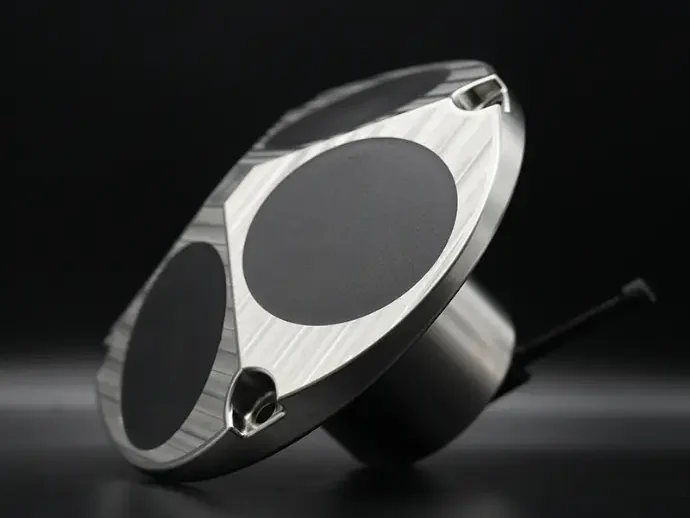
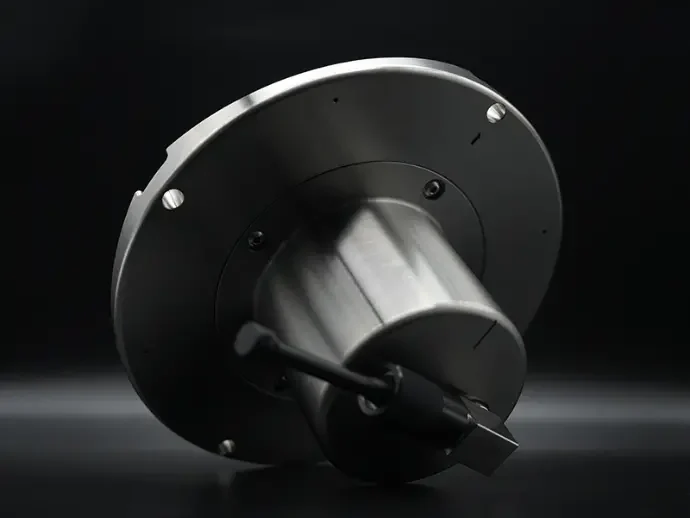
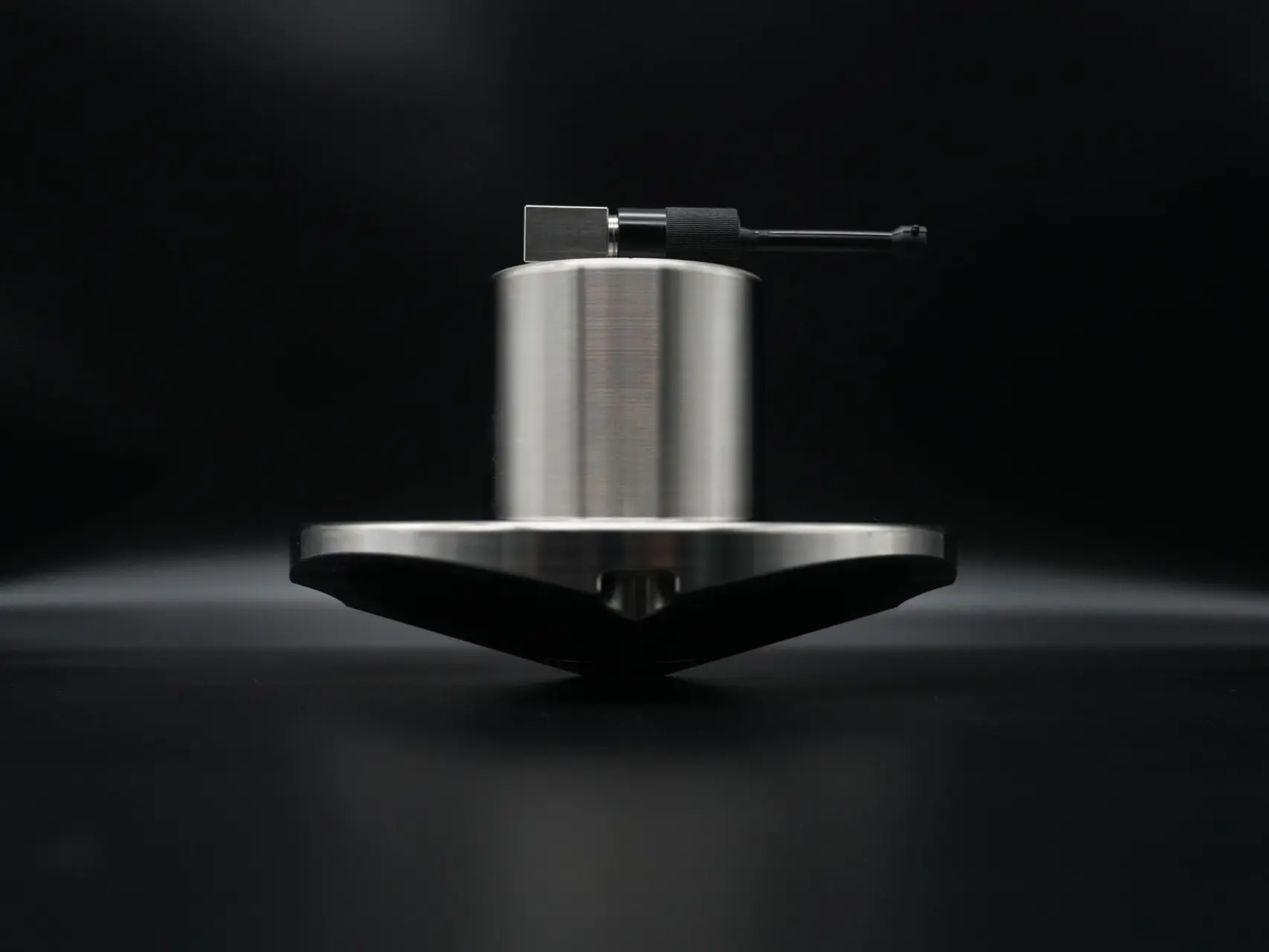
Built around a 4-beam Janus piston transducer with a 20° beam angle, the FA4 delivers stable bottom-echo returns across the extended altitude range. Three selectable titanium depth ratings — 1,000m, 3,000m, or 6,000m — cover everything from coastal survey AUVs to full-ocean-depth work-class ROVs. Standard RS-232/RS-422 serial output in PD0/PD6 format with 64GB onboard storage. Integrated temperature, pressure, and attitude sensors complete the navigation suite.
Key Features
220m Bottom-Track Range
Twice the altitude of 600kHz DVLs. Maintains bottom-lock from 1m to 220m — covering shelf-edge, slope, and deep-water worksites where 600kHz instruments lose the seabed.
300kHz Low-Frequency Penetration
Lower frequency travels further through water with less attenuation. The 300kHz signal reaches the seabed and returns at altitudes where 600kHz signals dissipate before making the round trip.
Three Depth Ratings · Titanium Housing
1,000m (5.3 kg) / 3,000m (6.6 kg) / 6,000m (7.7 kg). Φ224–230mm diameter. Match the rating to your vehicle’s maximum operating depth.
Dual-Tracking: Bottom + Water
Bottom-track to 220m, then automatic fallback to water-track beyond. Seamless transition — your INS stays updated at any depth.
Altitude Output
Real-time height-above-seabed with ±1% ± 0.5cm accuracy. Essential for deep-water terrain following, auto-altitude during descent, and landing operations on abyssal plains.
4-Beam Janus Configuration
Classic piston transducer array with four beams in Janus geometry. Redundant velocity measurement — three beams compute a valid solution if one is momentarily obscured by terrain or turbulence.
Two Tracking Modes, One Instrument
Automatic switching based on altitude. All DVL models are Direct-Reading: real-time serial output, vehicle-powered.
Bottom-Track Mode
1m – 220m Altitude
- 4-beam velocity relative to seabed
- ±0.5% ± 5mm/s navigation-grade accuracy
- Simultaneous altitude measurement
- 220m range — double a 600kHz DVL
- 20° beam angle for deep-water echo strength
Water-Track Mode
>220m Altitude · Automatic Fallback
- Velocity relative to water column
- Activates when bottom-lock is lost
- Keeps INS updated during deep-water transit
- Resumes bottom-track automatically when seabed returns
- Current profile output available as secondary data
Direct-Reading only. The DVL-300-FA4 outputs real-time velocity and altitude via RS-232/RS-422 in PD0/PD6 format.
Compatible with all major INS platforms
Specifications
| Technical Specification | DVL-300-FA4 |
|---|---|
| Model | DVL-300-FA4 |
| Pressure Rating | 1000m, 3000m, 6000m |
| Operating Frequency | 300kHz |
| Bottom Track Depth (Relative to Seabed Height) | 1 - 220m |
| Bottom Track Accuracy | ±0.5% ± 5mm/s (Cumulative Accuracy) |
| Water Tracking Depth (Relative to Seabed Height) | >220m |
| Height Measurement Accuracy | ±1% ± 0.5cm |
| Velocity Measurement Range | ±10m/s |
| Data Refresh Rate | 2Hz |
| Velocity Resolution | 1mm/s |
| Heading Accuracy | ±2° |
| Beam Angle | 20° |
| Beam Width | 3.5° |
| Beam Configuration | 4 Beams Janus |
| Internal Storage | 64 GB Micro SD Card |
| Communication Interface | RS-232 or RS-422 |
| Temperature Sensor | Range: -5°C to 45°C; Accuracy: ±0.1°C |
| Pressure Sensor | Range: According to depth rating; Accuracy: ±0.25% |
| Attitude Heading Reference Sensor | Range: Roll ±85° | Pitch ±85° | Heading 0-360°; Accuracy (RMS): Roll 0.2° | Pitch 0.2° | Heading 0.8°; Resolution: 0.1° |
| Average Power Consumption | ≤10W |
| Operating Temperature | -5°C - 45°C |
| Storage Temperature | -40°C - 70°C |
| Power Supply Interface | 20V - 50V |
| Maximum Transmit Power Consumption | ≤10W |
| Housing Material | Titanium Alloy |
| Weight (in Air / in Water) | 5.3 kg / 3.9 kg (1000m) | 6.6 kg / 5.0 kg (3000m) | 7.7 kg / 5.9 kg (6000m) |
| Dimensions (Excluding Top Connector) | Φ224 × 158 mm (1000m) | Φ230 × 158 mm (3000m) | Φ230 × 161 mm (6000m) |
Applications
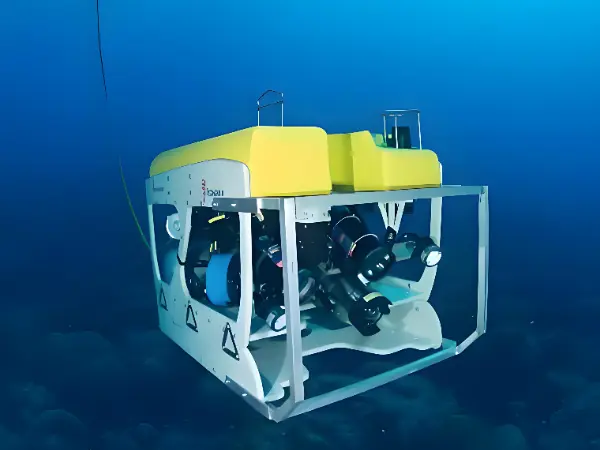
ROV underwater robot
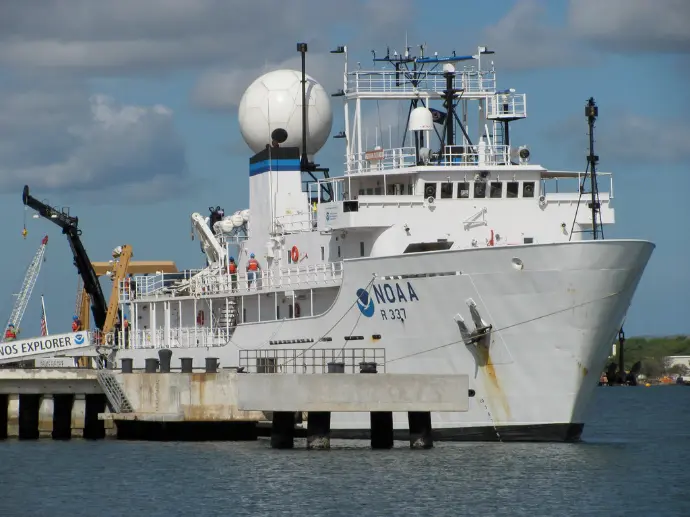
Oceanographic research vessel
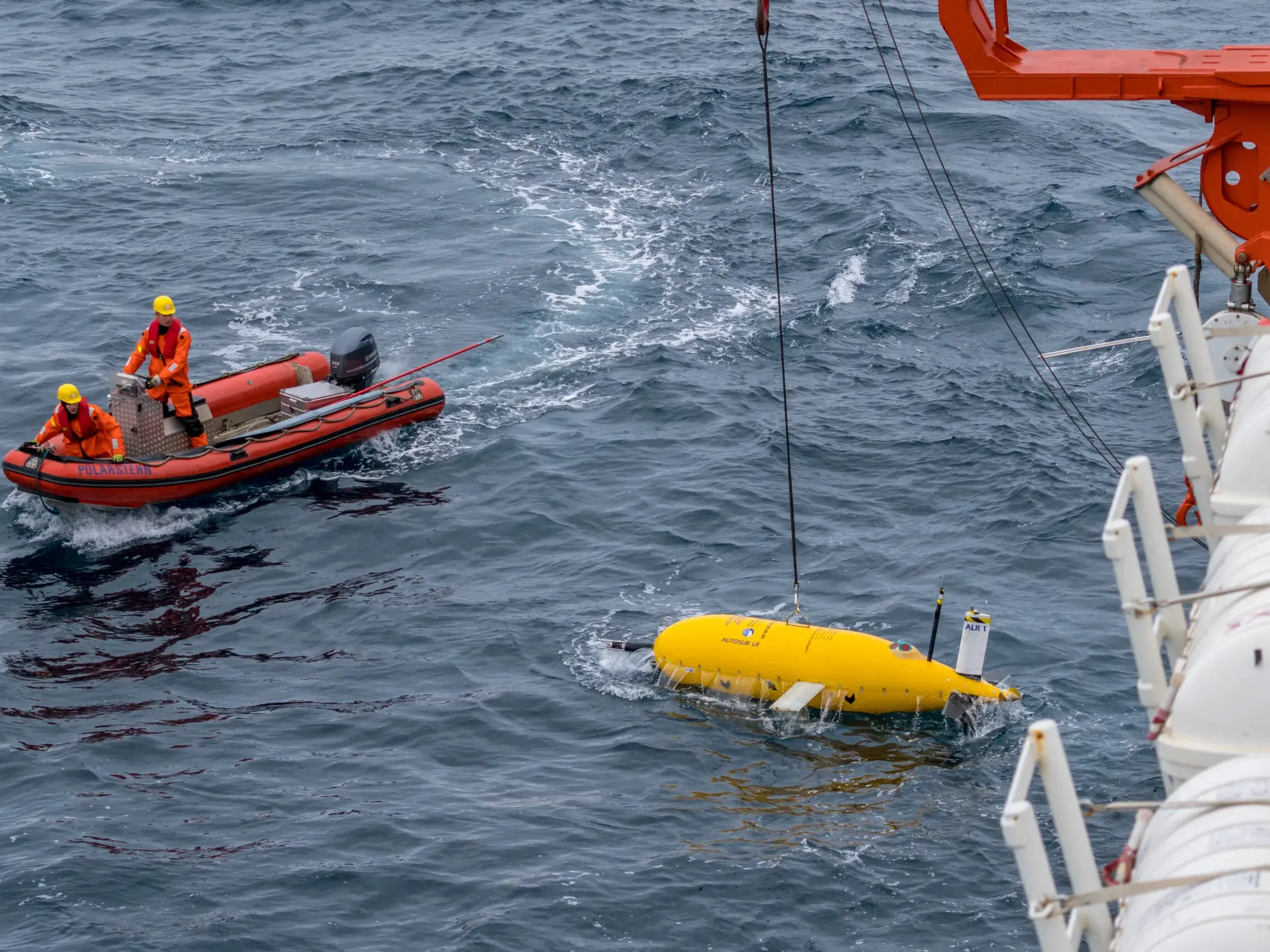
Autonomous Underwater Vehicle
Why Choose the DVL-300-FA4
Three reasons the 300-FA4 is the right DVL for deep-water vehicles.
Double the Bottom-Lock of 600kHz DVLs
220m vs 110m. If your vehicle routinely operates at 100m+ altitude, a 600kHz DVL is running on water-track most of the mission — which means your INS is drifting. The 300-FA4 stays in bottom-lock through the full working depth, giving your navigation filter the best possible velocity input.
300kHz Physics — Range Over Resolution
Lower frequency means less acoustic attenuation in seawater. The 300kHz signal travels further and returns stronger at extended altitudes. The trade-off is slightly coarser velocity accuracy (±0.5% vs ±0.3% for 600kHz), but at 200m altitude, ±0.5% bottom-lock is far better than water-track.
Rugged Enough for Full Ocean Depth
Titanium housing rated to 6,000m. Φ230mm diameter — larger than 600kHz DVLs, as expected for a lower-frequency transducer. But still compact enough for work-class ROV tooling frames and large AUV hull sections. Built for pressure cycles, not delicate handling.
Frequently Asked Questions
Quick answers about the DVL-300-FA4
When should I choose the 300-FA4 over a 600kHz DVL?
The decision is simple: look at your typical operating altitude above the seabed. If you routinely work above 100m altitude — deep-water survey AUVs, work-class ROVs at deep fields, deep-tow platforms — choose the 300-FA4. At those altitudes, a 600kHz DVL has already lost bottom-lock and is running on water-track, which is subject to currents and offers lower accuracy. The 300-FA4’s 220m bottom-lock keeps your INS fed with seabed-referenced velocity.
If you rarely exceed 80–100m altitude — coastal AUVs, inspection-class ROVs, shallow-water operations — a 600kHz DVL (FA4 or PA5) gives you finer accuracy and a more compact package at a lower price.
Why is the velocity accuracy lower than the 600kHz DVLs?
Which depth rating should I choose?
Match your vehicle’s maximum operating depth. 1,000m (5.3 kg): coastal and shelf-depth vehicles. 3,000m (6.6 kg): deep-water ROVs and most survey AUVs. 6,000m (7.7 kg): full-ocean-depth submersibles and scientific platforms. The housing diameter is consistent (Φ224–230mm); the wall thickness and length increase with rating. At 5.3–7.7 kg, the 300-FA4 is heavier than 600kHz DVLs — this is expected for a lower-frequency instrument with a larger transducer face.
Can the 300-FA4 be used in shallow water?
Technically yes — minimum bottom-track altitude is 1m. But it’s not the right tool. The 300-FA4 is larger, heavier, and more expensive than a 600kHz DVL. If your vehicle never operates beyond 100m altitude, the DVL-600-FA4 or DVL-600-PA5 gives you the same navigation function in a smaller, lighter, more cost-effective package. The 300-FA4 earns its premium when depth demands it.
What INS platforms does the 300-FA4 integrate with?
Standard RS-232/RS-422 output in PD0 and PD6 binary — directly compatible with Kearfott, iXblue (Phins/Atlans), Sonardyne (SPRINT), Applanix POS MV, KVH, and Advanced Navigation.
Get a Quick quote
Tell us about your project and we’ll provide a customized quotation within 24 hours — including recommended configuration, lead time, and shipping.
Other DVLs
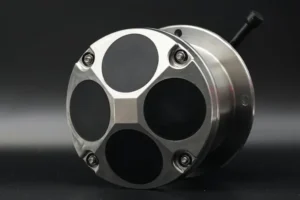
DVL-600-FA4
600kHz piston DVL with 4-beam Janus configuration. 110m bottom-track, 20° beam angle for strong returns on soft seabeds. The cost-effective workhorse for work-class ROVs and large AUVs. Direct-Reading.
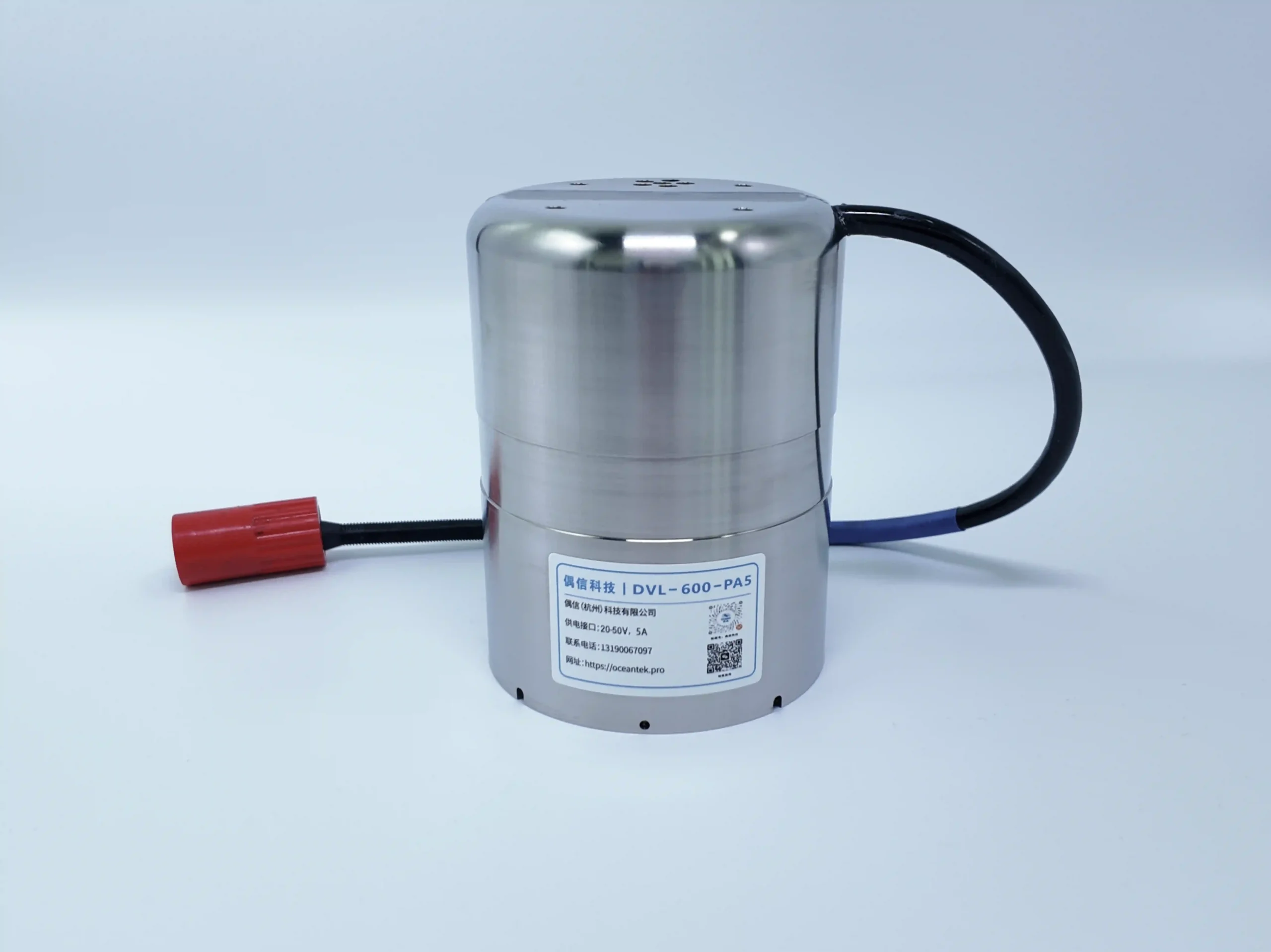
DVL-600-PA5
600kHz phased-array DVL — the most compact in its class. Φ92mm, ≤1.8 kg, ≤5W. 110m bottom-track at ±0.3% ± 3mm/s. For small AUVs, gliders, and inspection-class ROVs. Direct-Reading.