
Single-Point Current Meter — OCEAN-SPCM
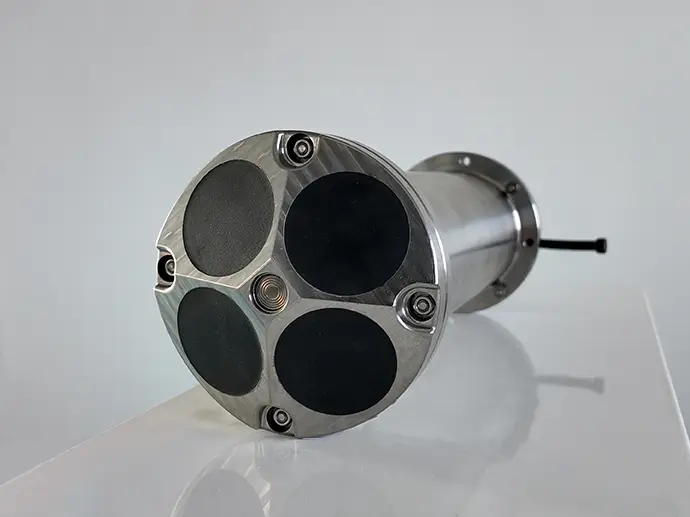
The OCEAN-SPCM is a single-point acoustic current meter for when you need accurate current speed and direction at one depth — without the cost or complexity of a full ADCP profile. With ±0.3% ± 3mm/s accuracy, up to 5 configurable measurement cells, and 0–360° directional sensing at ±2°, it delivers the data you need in the simplest possible package.
Overview
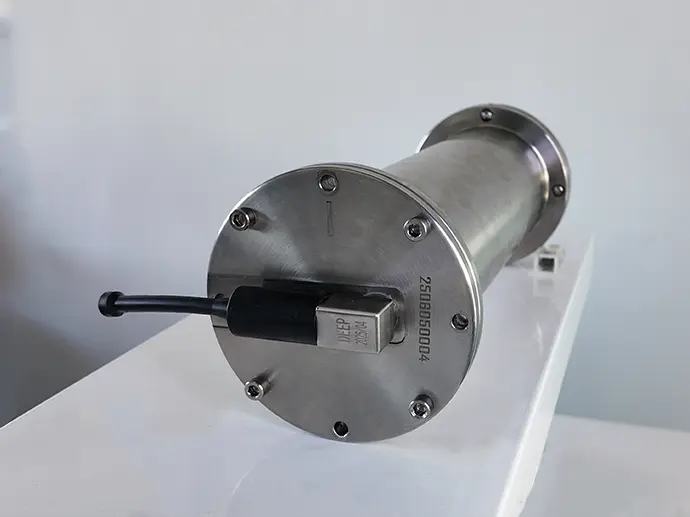
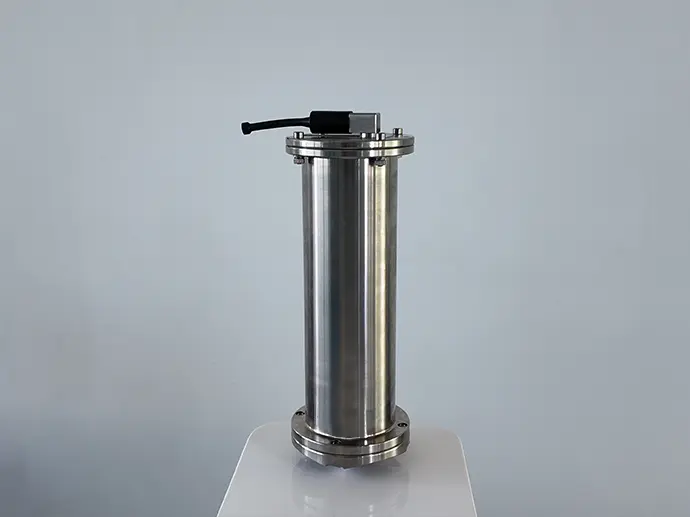
Available in both Direct-Reading (cabled, real-time) and Self-Contained (battery, autonomous) configurations. Titanium alloy housing with selectable depth ratings of 1,000m, 3,000m, or 6,000m. Built-in temperature, pressure, and attitude sensors. 64GB onboard storage. A 504Wh lithium battery in the SC configuration supports months of unattended current monitoring on moorings, seabed frames, and coastal platforms.
Key Features
±0.3% ± 3mm/s Single-Point Accuracy
Survey-grade velocity and direction at one depth. ±0.15cm/s velocity accuracy, 0.1mm/s resolution, 0–360° direction at ±2° — same precision as a full ADCP, at a fraction of the cost.
Up to 5 Measurement Cells
Not limited to a single cell — configure up to 5 layers for a coarse near-point profile. Useful for verifying that the measurement point is representative of the surrounding water.
1Hz Data Output Rate
Once-per-second velocity and direction updates. Sufficient for the vast majority of single-point monitoring applications — mooring, platform, and coastal observatory deployments.
DR & SC Configurations
Direct-Reading for real-time cabled output from platforms, vessels, and shore-connected stations. Self-Contained with a 504Wh lithium battery for autonomous mooring deployments lasting months.
Cost-Effective Point Monitoring
When you need current data at one depth, a full ADCP profile is overkill — and over budget. The SPCM gives you the same velocity accuracy as our ADCPs, at a single point, for significantly less.
Integrated Attitude & Environmental Sensors
Built-in temperature (±0.1°C), pressure (±0.25%), and attitude/heading sensors (0.2° roll/pitch, 0.8° heading). One instrument replaces three separate sensors on your mooring or platform.
Choose Your Configuration
The OCEAN-SPCM is available in two configurations — same measurement performance, different power and data approach.
Direct-Reading (DR)
- Real-time velocity and direction via RS-232/422 cable
- Lighter: 3.5–5.7 kg (no internal battery)
- Shorter housing: 150–167mm
- For vessels, platforms, shore-connected stations
Self-Contained (SC)
- 504Wh internal lithium battery
- 5.5–8.1 kg with battery section
- Longer housing: 350–367mm
- For moorings, seabed frames, remote sites
- Months of autonomous recording
DR and SC have different physical dimensions and weights — the SC adds a battery section.
Choose DR for cabled real-time use; SC for autonomous deployments where power is not available.
See full specs below for weight and dimension tables by configuration and depth rating.
Specifications
| Technical Specification | OCEAN-SPCM Single-Point Current Meter |
|---|---|
| Model | OCEAN-SPCM |
| Product Type | Single-Point Current Meter |
| Pressure Rating | 1000m, 3000m, 6000m |
| Measurement Cell Thickness | 0.5-4 meters (optional) |
| Maximum Number of Measurement Cells | 5 |
| Current Measurement Accuracy | ±0.3% ± 3mm/s |
| Velocity Accuracy | ±0.15cm/s |
| Velocity Resolution | 0.1mm/s |
| Velocity Range | ±5.0 m/s (Default); ±20.0 m/s (Max) |
| Data Refresh Rate | 1Hz |
| Beam Angle | 20° |
| Flow Direction Range | 360° |
| Flow Direction Resolution | 0.01° |
| Flow Direction Measurement Accuracy | ±2° |
| Battery Capacity | Lithium Battery (504Wh) |
| Internal Storage | 64 GB Micro SD Card |
| Communication Interface | RS-232 or RS-422 |
| Temperature Sensor | Range: -5°C to 45°C; Accuracy: ±0.1°C |
| Pressure Sensor | Range: According to depth rating; Accuracy: ±0.25% |
| Attitude Heading Reference Sensor | Range: Roll ±85° | Pitch ±85° | Heading 0-360°; Accuracy (RMS): Roll 0.2° | Pitch 0.2° | Heading 0.8°; Resolution: 0.1° |
| Operating Temperature | -5°C to 45°C |
| Storage Temperature | -40°C to 70°C |
| Power Supply Interface | 20V-50V, 5A |
| Housing Material | Titanium Alloy |
| Self-contained Weight (in Air / in Water) | 5.5 kg / 3.9 kg (1000m) | 6.8 kg / 6.4 kg (3000m) | 8.1 kg / 7.8 kg (6000m) |
| Self-contained Dimensions (Excluding Top Connector) | Φ148 × 350 mm (1000m) | Φ148 × 357 mm (3000m) | Φ148 × 367 mm (6000m) |
| Direct Reading Weight (in Air / in Water) | 3.5 kg / 2.8 kg (1000m) | 4.8 kg / 3.8 kg (3000m) | 5.7 kg / 4.6 kg (6000m) |
| Direct Reading Dimensions (Excluding Top Connector) | Φ148 × 150 mm (1000m) | Φ148 × 157 mm (3000m) | Φ148 × 167 mm (6000m) |
Applications
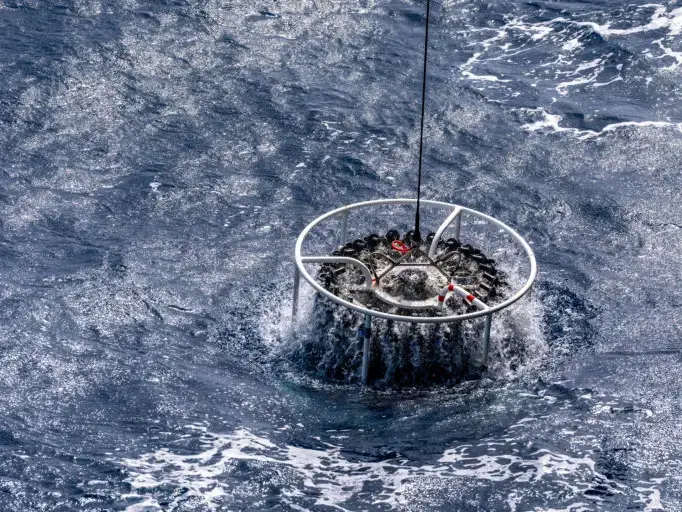
Ocean Observation
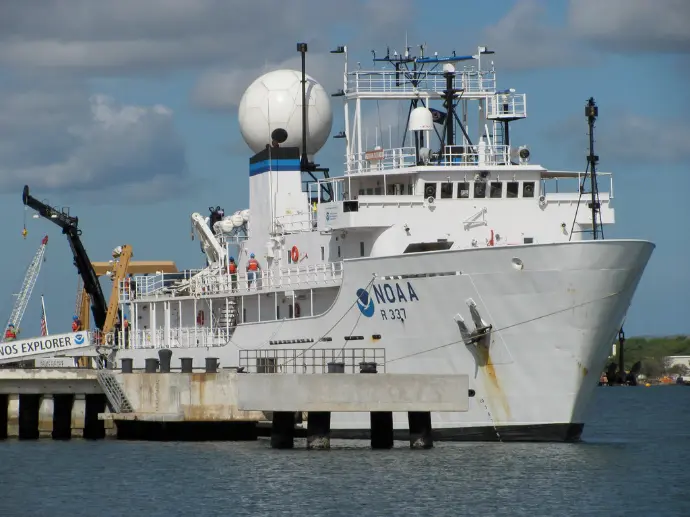
Oceanographic Research Vessel
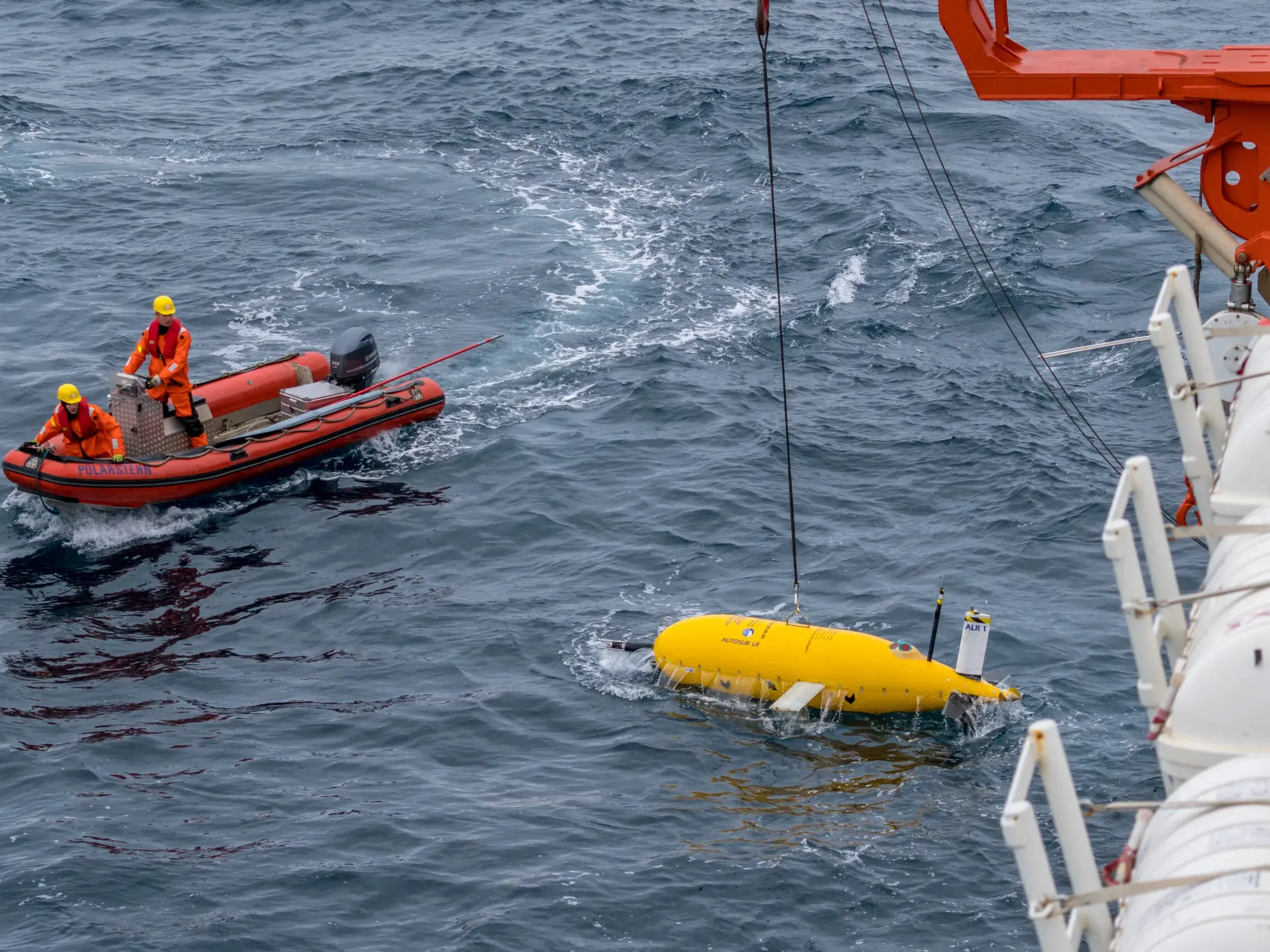
AUV/ROV
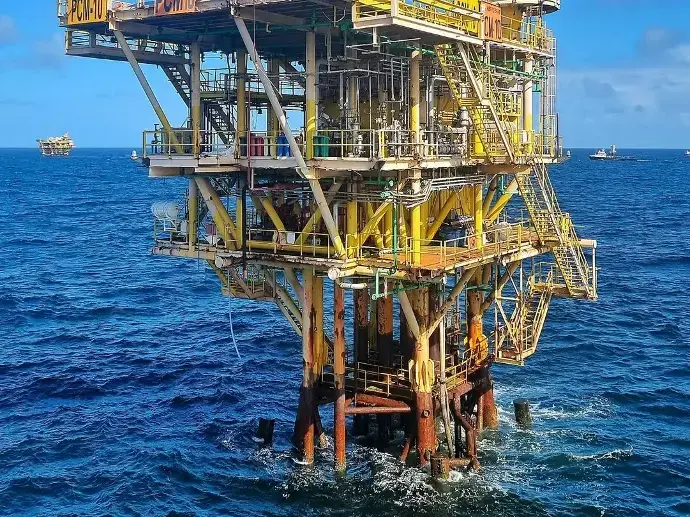
Deepwater Oil and Gas

Renewable Energy
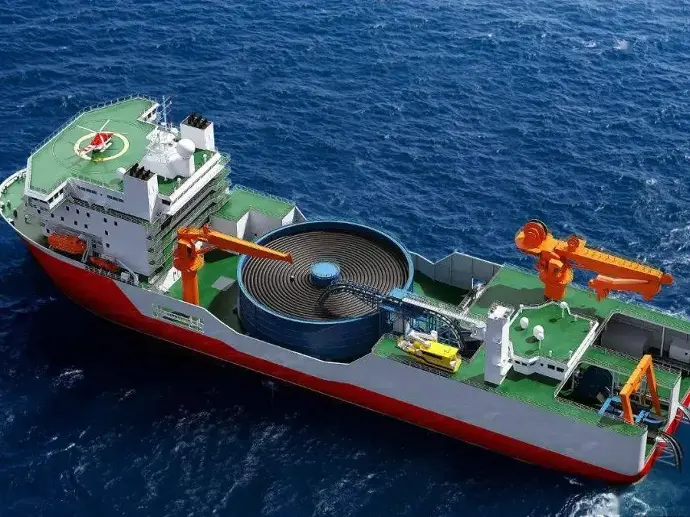
Cable and pipeline laying
Why Choose the OCEAN-SPCM
Three reasons to choose a single-point meter over a full ADCP.
Right-Sized for the Job
If you only need current data at one depth, a full ADCP is paying for vertical resolution you’ll never use. The SPCM delivers the same velocity accuracy — ±0.3% ± 3mm/s — at a single point, for significantly less. Deploy two SPCMs at different depths and you’ve still spent less than one ADCP.
Built for the Long Haul
504Wh battery in SC configuration. No external power, no surface cable, no solar panel to maintain. Deploy on a mooring, close the hatch, and come back months later. The SPCM is the instrument you deploy when the site is too remote for anything more complicated.
Same Software, Same Workflow
Outputs standard PD0 binary — the same format as our ADCPs. Same software (WinRiver II, QRev), same data processing pipeline, same QA/QC workflow. If your team already runs ADCP surveys, adding an SPCM to your instrument pool requires zero additional training.
Frequently Asked Questions
Quick answers about the OCEAN-SPCM
When should I choose the SPCM over an Ocean ADCP?
What's the difference between DR and SC configurations in terms of physical size?
Can the SPCM measure more than one depth?
Is the SPCM compatible with the same deployment frames and mooring cages as your ADCPs?
Get a Quick quote
Tell us about your project and we’ll provide a customized quotation within 24 hours — including recommended configuration, lead time, and shipping.